Key Laboratory of Carcinogenesis and Translational Research (Ministry of Education/Beijing), Beijing, China.
Department of Biochemistry & Molecular Biology, Peking University Cancer Hospital & Institute, Beijing, China.
J Exp Clin Cancer Res. 2018 Jun 15;37(1):117. doi: 10.1186/s13046-018-0783-6.
Increasing evidence reveals a significant correlation between gamma-synuclein (SNCG) level and tumor invasion and metastasis in various human cancers. Our previous investigation showed that SNCG could secrete into extracellular environment and promoted tumor cell motility, but the mechanism is unknown.
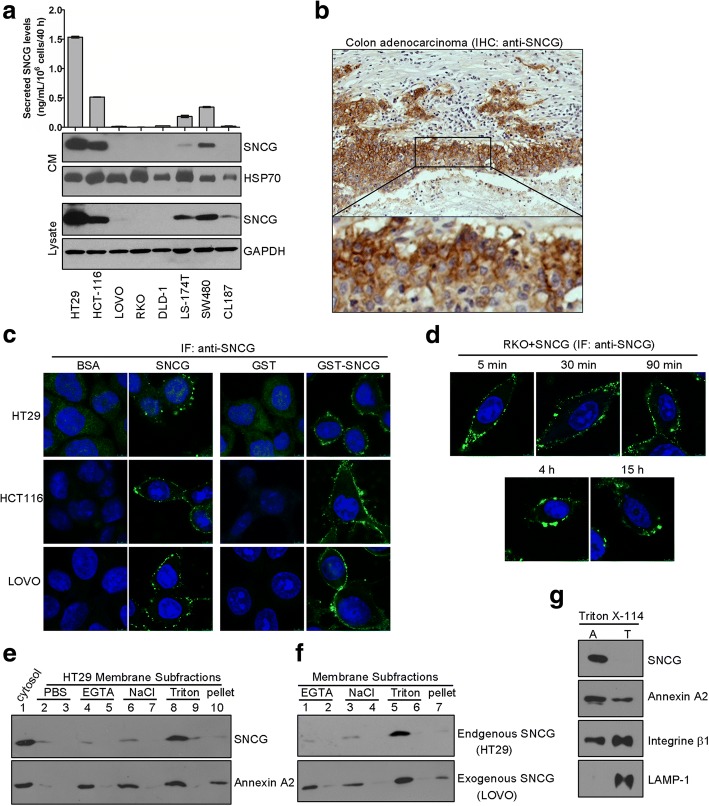
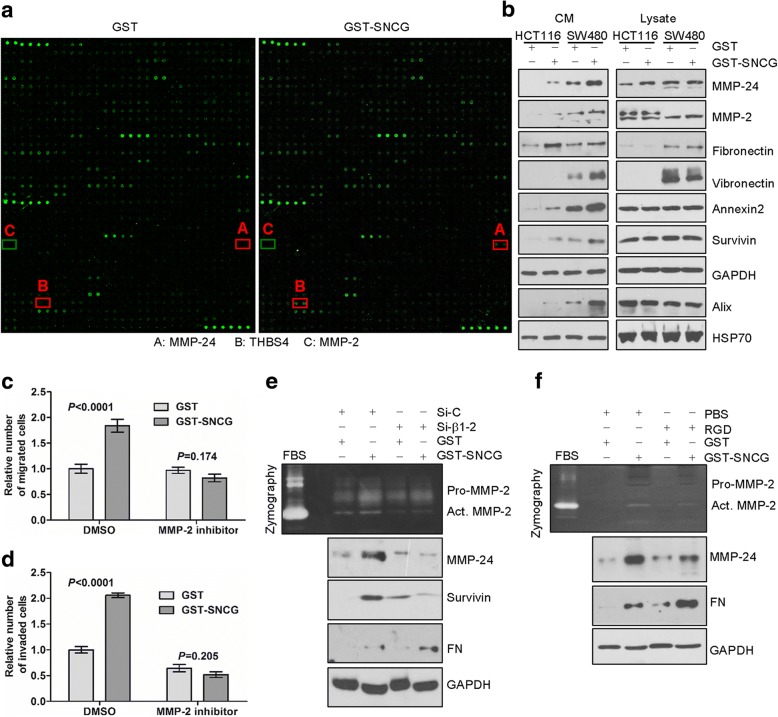
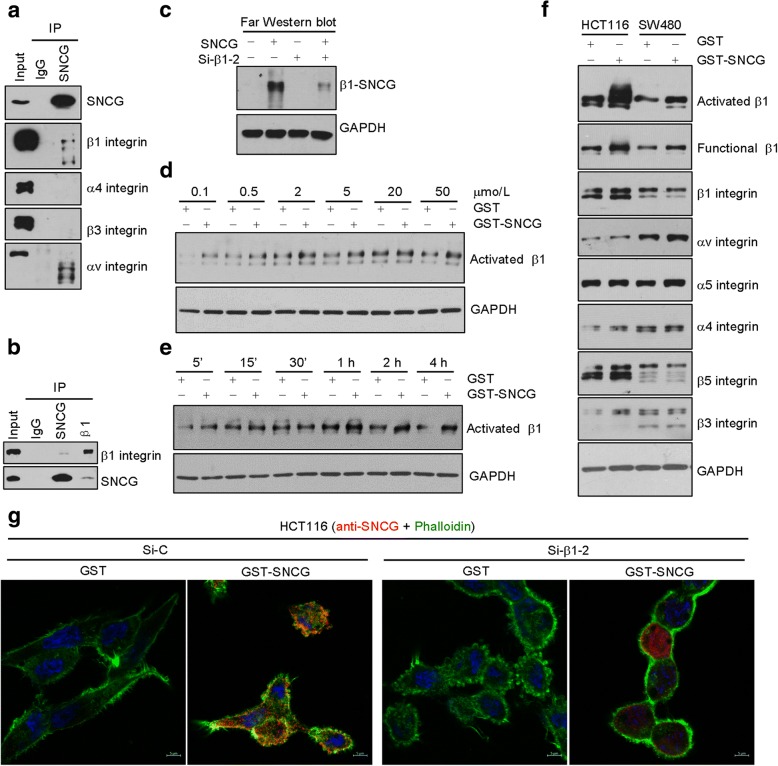
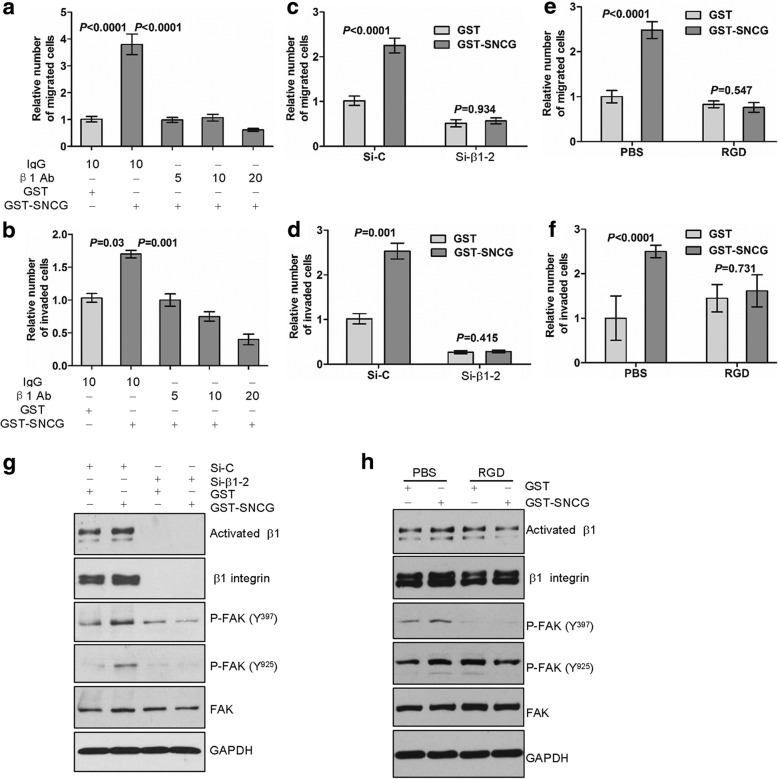
The membrane binding ability of SNCG was characterized by immunohistochemical staining, immunofluorescence staining and fractionation of colorectal cancer (CRC) cell membrane. Association between SNCG and β1 integrin was validated by coimmunoprecipitation and far Western blot. After inhibition of β1 integrin and focal adhesion kinase (FAK), effect of SNCG on cell motility was measured by transwell chamber assays and changes of protein levels were detected by Western blot. Association between SNCG and activated β1 integrin levels in human CRC tissues was determined by Spearman's rank correlation analysis. Secreted proteins in conditioned medium (CM) were screened by antibody array.
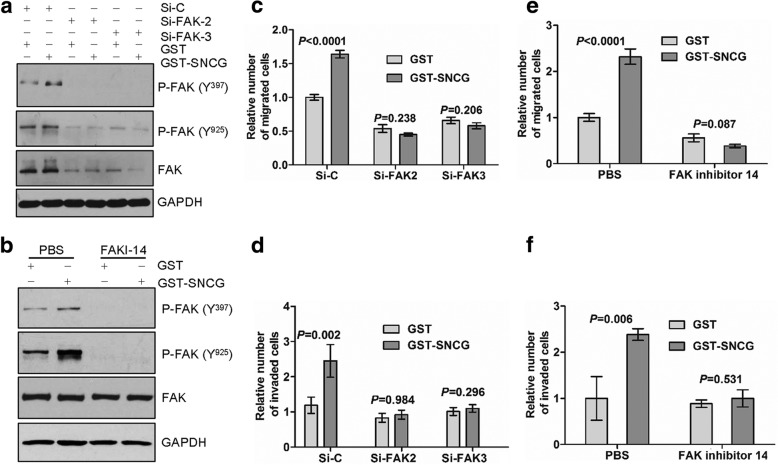
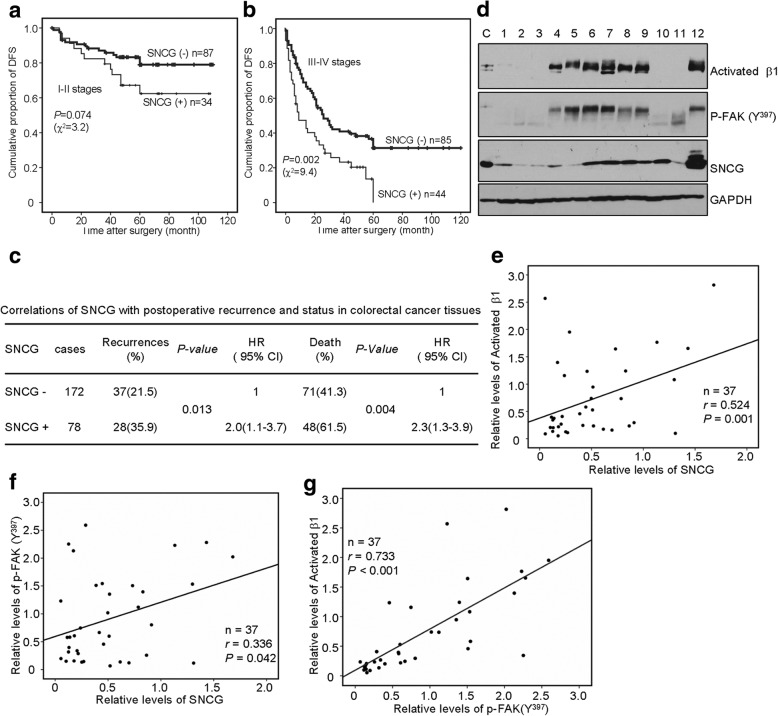
Extracellular SNCG bound β1 integrin on CRC cell membrane and increased levels of activated β1 integrin and FAK. Correspondingly, SNCG-enhanced cell motility was counteracted by knockdown or inhibition of β1 integrin or FAK. Further study revealed that high SNCG level indicated poor outcome and SNCG levels positively correlated with those of activated β1 integrin and phospho-FAK (Tyr) in human CRC tissues. Additionally, extracellular SNCG promoted secretion of fibronectin (FN), vitronectin (VN), matrix metalloproteinase (MMP)-2, and MMP-24 from HCT116 cells. Protease activity of MMP-2 in the CM of HCT116 cells was increased by treatment with SNCG, which was abolished by inhibiting β1 integrin.
Our results highlight the potential role of SNCG in remodeling extracellular microenvironment and inducing β1 integrin-FAK signal pathway of CRC cells.
越来越多的证据表明,γ-突触核蛋白(SNCG)水平与多种人类癌症的肿瘤侵袭和转移之间存在显著相关性。我们之前的研究表明,SNCG 可以分泌到细胞外环境中,并促进肿瘤细胞的迁移,但具体机制尚不清楚。
通过免疫组织化学染色、免疫荧光染色和结直肠癌细胞(CRC)细胞膜的分级分离来描述 SNCG 的膜结合能力。通过共免疫沉淀和远 Western blot 验证 SNCG 与β1 整合素之间的关联。在抑制β1 整合素和粘着斑激酶(FAK)后,通过 Transwell 室测定 SNCG 对细胞迁移的影响,并通过 Western blot 检测蛋白水平的变化。通过 Spearman 等级相关分析确定 SNCG 与人类 CRC 组织中激活的β1 整合素水平之间的关联。通过抗体阵列筛选条件培养基(CM)中的分泌蛋白。
细胞外 SNCG 与 CRC 细胞膜上的β1 整合素结合,并增加了激活的β1 整合素和 FAK 的水平。相应地,通过敲低或抑制β1 整合素或 FAK,SNCG 增强的细胞迁移作用被抵消。进一步的研究表明,高 SNCG 水平表明预后不良,SNCG 水平与人类 CRC 组织中激活的β1 整合素和磷酸化 FAK(Tyr)水平呈正相关。此外,细胞外 SNCG 促进了 HCT116 细胞中纤维连接蛋白(FN)、玻连蛋白(VN)、基质金属蛋白酶(MMP)-2 和 MMP-24 的分泌。用 SNCG 处理后,HCT116 细胞 CM 中的 MMP-2 蛋白酶活性增加,而用抑制β1 整合素处理后则被消除。
我们的研究结果强调了 SNCG 在重塑 CRC 细胞细胞外微环境和诱导β1 整合素-FAK 信号通路中的潜在作用。