Croft Cara L, Noble Wendy
Center for Translational Research in Neurodegenerative Disease, Department of Neuroscience, University of Florida, Gainesville, FL, 32610, USA.
Department of Basic and Clinical Neuroscience, Maurice Wohl Clinical Neuroscience Institute, Institute of Psychiatry, Psychology & Neuroscience, King's College London, London, SE5 9RX, UK.
F1000Res. 2018 May 15;7:592. doi: 10.12688/f1000research.14500.2. eCollection 2018.
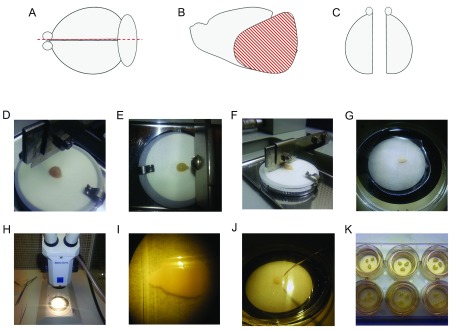
Alzheimer's disease, the most common cause of dementia, is a progressive neurodegenerative disorder characterised by amyloid-beta deposits in extracellular plaques, intracellular neurofibrillary tangles of aggregated tau, synaptic dysfunction and neuronal death. Transgenic rodent models to study Alzheimer's mimic features of human disease such as age-dependent accumulation of abnormal beta-amyloid and tau, synaptic dysfunction, cognitive deficits and neurodegeneration. These models have proven vital for improving our understanding of the molecular mechanisms underlying AD and for identifying promising therapeutic approaches. However, modelling neurodegenerative disease in animals commonly involves aging animals until they develop harmful phenotypes, often coupled with invasive procedures. We have developed a novel organotypic brain slice culture model to study Alzheimer's disease using 3xTg-AD mice which brings the potential of substantially reducing the number of rodents used in dementia research from an estimated 20,000 per year. Using a McIllwain tissue chopper, we obtain 36 x 350 micron slices from each P8-P9 mouse pup for culture between 2 weeks and 6 months on semi-permeable 0.4 micron pore membranes, considerably reducing the numbers of animals required to investigate multiple stages of disease. This tractable model also allows the opportunity to modulate multiple pathways in tissues from a single animal. We believe that this model will most benefit dementia researchers in the academic and drug discovery sectors. We validated the slice culture model against aged mice, showing that the molecular phenotype closely mimics that displayed , albeit in an accelerated timescale. We showed beneficial outcomes following treatment of slices with agents previously shown to have therapeutic effects and we also identified new mechanisms of action of other compounds. Thus, organotypic brain slice cultures from transgenic mouse models expressing Alzheimer's disease-related genes may provide a valid and sensitive replacement for studies that do not involve behavioural analysis.
阿尔茨海默病是痴呆最常见的病因,是一种进行性神经退行性疾病,其特征为细胞外斑块中有β-淀粉样蛋白沉积、细胞内有聚集的tau蛋白形成的神经原纤维缠结、突触功能障碍和神经元死亡。用于研究阿尔茨海默病的转基因啮齿动物模型模拟了人类疾病的特征,如异常β-淀粉样蛋白和tau蛋白的年龄依赖性积累、突触功能障碍、认知缺陷和神经退行性变。这些模型已被证明对于增进我们对阿尔茨海默病潜在分子机制的理解以及确定有前景的治疗方法至关重要。然而,在动物中模拟神经退行性疾病通常需要使动物老化直至它们出现有害表型,这往往还伴随着侵入性操作。我们利用3xTg-AD小鼠开发了一种用于研究阿尔茨海默病的新型器官型脑片培养模型,这有可能将痴呆研究中每年估计使用的20000只啮齿动物数量大幅减少。使用麦克伊温组织切片机,我们从每只P8 - P9小鼠幼崽获取36×350微米的脑片,在0.4微米孔径的半透膜上培养2周 至6个月,大大减少了研究疾病多个阶段所需的动物数量。这个易于操作的模型还提供了调节来自单个动物组织中多种途径的机会。我们相信这个模型将使学术和药物研发领域的痴呆研究人员受益最大。我们针对老年小鼠验证了脑片培养模型,表明其分子表型尽管在加速的时间尺度上,但与老年小鼠所显示的表型非常相似。我们在用先前已证明具有治疗效果的药物处理脑片后显示出有益结果,并且我们还确定了其他化合物的新作用机制。因此,来自表达阿尔茨海默病相关基因的转基因小鼠模型的器官型脑片培养物可能为不涉及行为分析的研究提供一种有效且灵敏的替代方法。