Laboratory of Applied Biochemistry, Division of Biotechnology Review and Research III, Office of Biotechnology Research, Center for Drug Evaluation and Research, U.S. Food and Drug Administration, 10903 New Hampshire Ave., Bldg., Silver Spring, MD, 20993, USA.
Division of Process Assessment III, Office of Process and Facilities, Office of Pharmaceutical Quality, Center for Drug Evaluation and Research, U.S. Food and Drug Administration, Silver Spring, MD, USA.
Biol Sex Differ. 2018 Jun 15;9(1):25. doi: 10.1186/s13293-018-0183-9.
Doxorubicin (DOX), an anthracycline therapeutic, is widely used to treat a variety of cancer types and known to induce cardiomyopathy in a time and dose-dependent manner. Postmenopausal and hypertensive females are two high-risk groups for developing adverse effects following DOX treatment. This may suggest that endogenous reproductive hormones can in part suppress DOX-induced cardiotoxicity. Here, we investigated if the endogenous fluctuations in 17β-estradiol (E2) and progesterone (P4) can in part suppress DOX-induced cardiomyopathy in SST-2 tumor-bearing spontaneously hypersensitive rats (SHRs) and evaluate if exogenous administration of E2 and P4 can suppress DOX-induced cardiotoxicity in tumor-bearing ovariectomized SHRs (ovaSHRs).
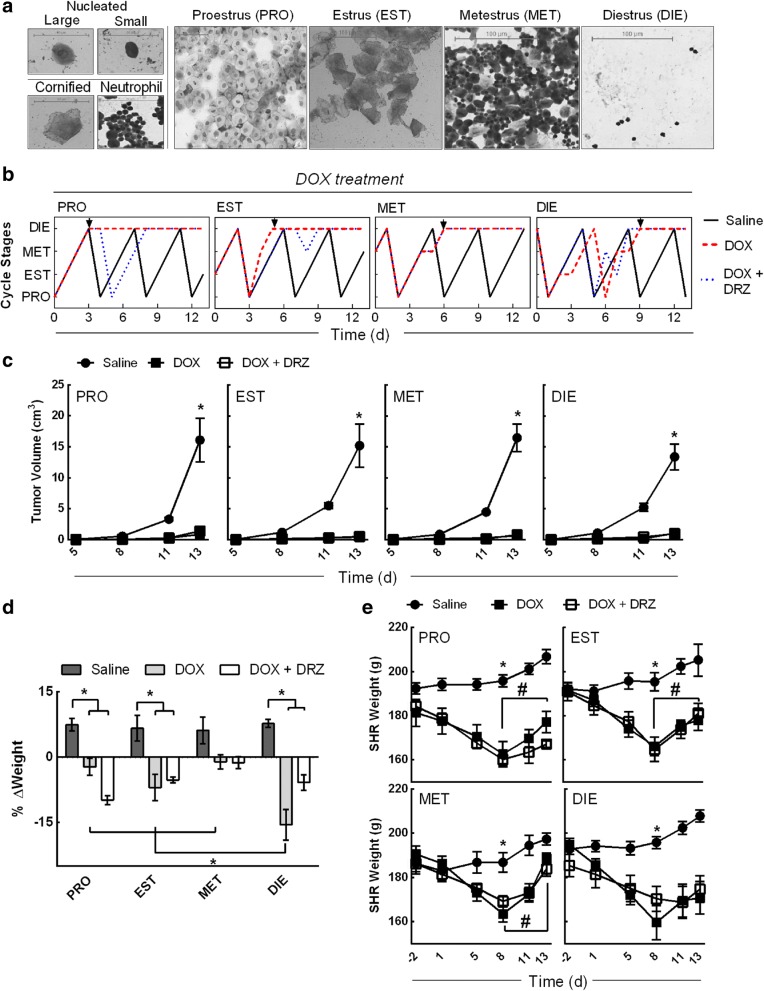
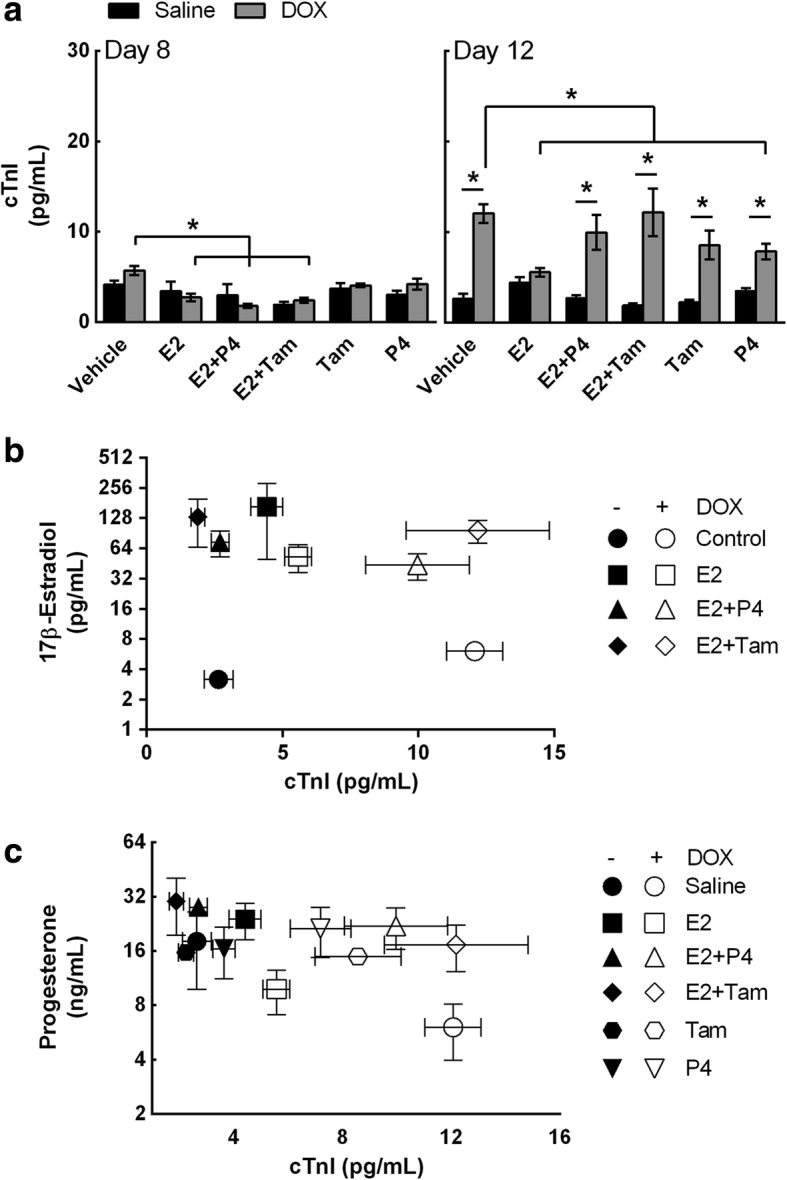
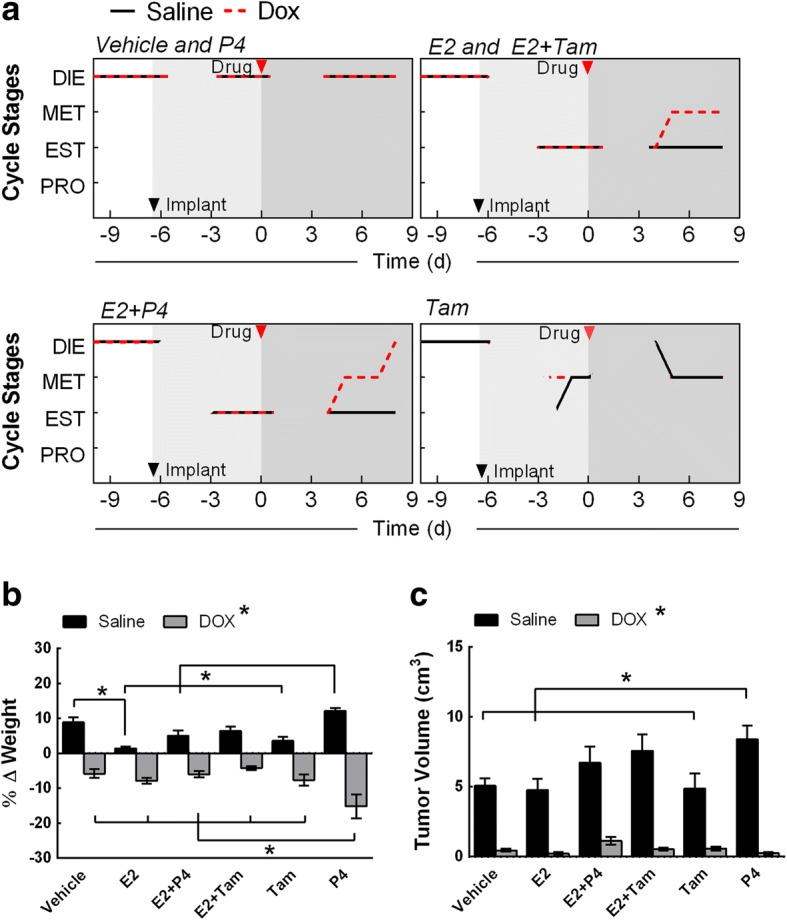
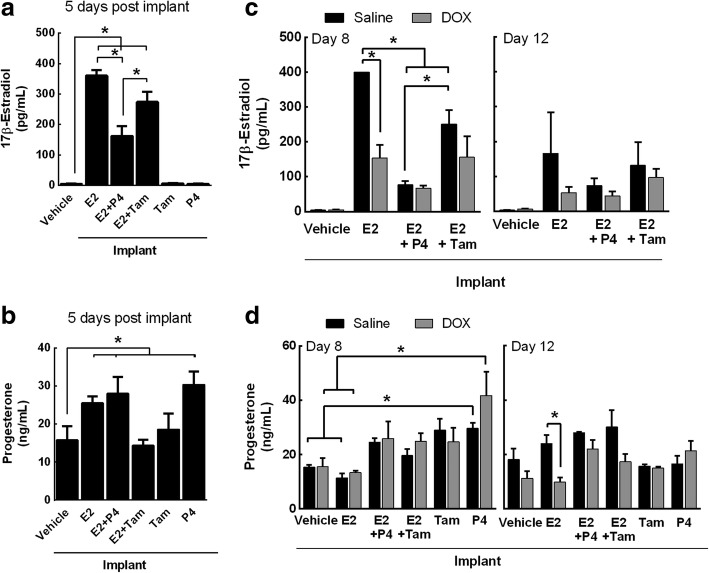
Vaginal cytology was performed on all animals to identify the stage of the estrous cycle. Estrous-staged SHRs received a single injection of saline, DOX, dexrazoxane (DRZ), or DOX combined with DRZ. OvaSHRs were implanted with time-releasing pellets that contained a carrier matrix (control), E2, P4, Tamoxifen (Tam), and combinations of E2 with P4 and Tam. Hormone pellet-implanted ovaSHRs received a single injection of saline or DOX. Cardiac troponin I (cTnI), E2, and P4 serum concentrations were measured before and after treatment in all animals. Cardiac damage and function were further assessed by echocardiography and histopathology. Weight, tumor size, and uterine width were measured for all animals.
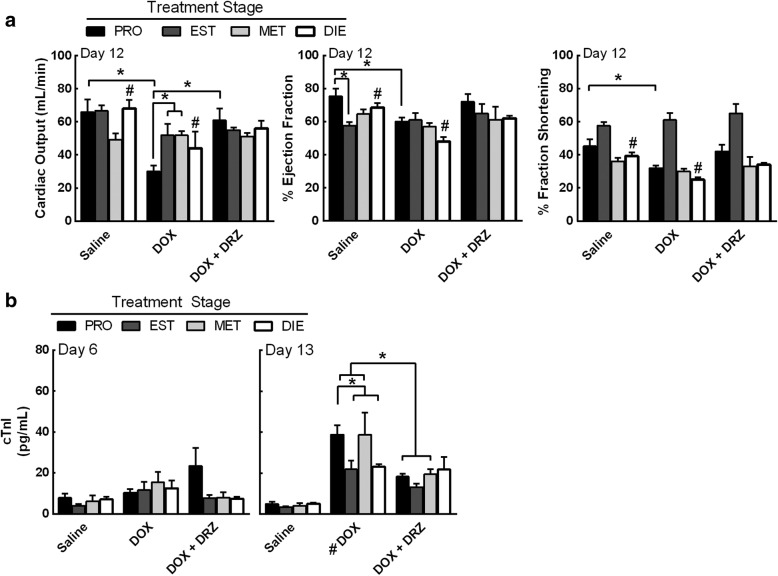
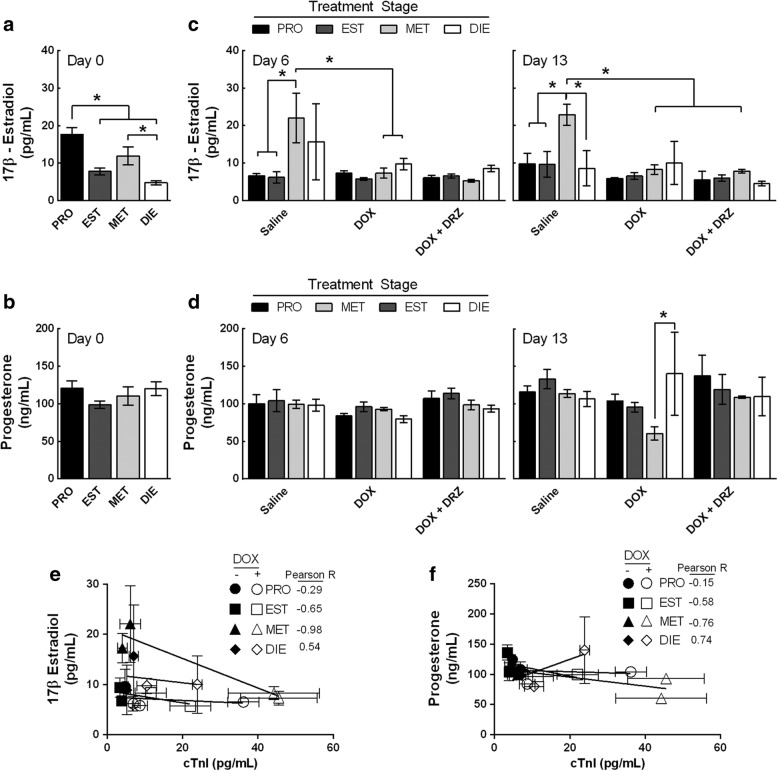
In SHRs, estrous-staged DOX treatment altered acute estrous cycling that ultimately resulted in prolonged diestrus. Twelve days after DOX administration, all SHRs had comparable endogenous circulating E2. Thirteen days after DOX treatment, SHRs treated during proestrus had decreased cardiac output and increased cTnI as compared to animals treated during estrus and diestrus. DOX-induced tumor reduction was not affected by estrous-staged treatments. In ovaSHRs, exogenous administration of E2 suppressed DOX-induced cardiotoxicity, while P4-implanted ovaSHRs were partly resistant. However, ovaSHRs treated with E2 and P4 did not have cardioprotection against DOX-induced damage.
This study demonstrates that estrous-staged treatments can alter the extent of cardiac damage caused by DOX in female SHRs. The study also supports that exogenous E2 can suppress DOX-induced myocardial damage in ovaSHRs.
多柔比星(DOX)是一种蒽环类治疗药物,广泛用于治疗多种癌症类型,已知其具有时间和剂量依赖性诱导心肌病的作用。绝经后和高血压女性是接受 DOX 治疗后发生不良反应的两个高危群体。这可能表明内源性生殖激素在一定程度上可以抑制 DOX 诱导的心脏毒性。在这里,我们研究了 17β-雌二醇(E2)和孕酮(P4)的内源性波动是否可以部分抑制 SST-2 肿瘤荷瘤自发性敏感大鼠(SHRs)中的 DOX 诱导的心肌病,并评估了外源性给予 E2 和 P4 是否可以抑制肿瘤荷瘤去卵巢 SHR(ovaSHRs)中的 DOX 诱导的心脏毒性。
对所有动物进行阴道细胞学检查以确定发情周期的阶段。发情期 SHR 接受单次生理盐水、DOX、右雷佐生(DRZ)或 DOX 联合 DRZ 注射。ovaSHRs 植入了含有载体基质(对照)、E2、P4、他莫昔芬(Tam)以及 E2 与 P4 和 Tam 组合的缓释丸。接受生理盐水或 DOX 单次注射的激素丸植入 ovaSHRs。所有动物在治疗前后测量血清中心肌钙蛋白 I(cTnI)、E2 和 P4 浓度。通过超声心动图和组织病理学进一步评估心脏损伤和功能。所有动物均测量体重、肿瘤大小和子宫宽度。
在 SHR 中,发情期 DOX 处理改变了急性发情周期,最终导致发情期延长。DOX 给药后 12 天,所有 SHR 的内源性循环 E2 水平相当。DOX 治疗后 13 天,与发情和发情期相比,发情期接受 DOX 治疗的 SHR 的心输出量降低,cTnI 升高。发情期治疗对 DOX 诱导的肿瘤减少没有影响。在 ovaSHRs 中,外源性给予 E2 可抑制 DOX 诱导的心脏毒性,而 P4 植入的 ovaSHRs 部分抵抗。然而,接受 E2 和 P4 治疗的 ovaSHRs 并没有对 DOX 诱导的损伤产生心脏保护作用。
本研究表明,发情期治疗可以改变 DOX 在雌性 SHR 中引起的心脏损伤程度。该研究还支持外源性 E2 可抑制 ovaSHRs 中 DOX 诱导的心肌损伤。