Department of Obstetrics and Gynecology, Teikyo University School of Medicine, 2-11-1, Kaga, Itabashi-ku, Tokyo, 173 0003, Japan.
Department of Obstetrics and Gynecology, The University of Tokyo, Tokyo, Japan.
BMC Cancer. 2018 Jun 15;18(1):657. doi: 10.1186/s12885-018-4570-8.
A previous report showed that a glucagon-like peptide-1 receptor (GLP-1R) agonist (exenatide) induced apoptosis in endometrial cancer cells. However, the pathophysiological role of GLP-1R in endometrial cancer has not been fully elucidated. Here, we investigated the effects of the GLP-1R agonist liraglutide in endometrial cancer cells and examined the association between GLP-1R expression and clinicopathological characteristics in endometrial cancer patients.
Human Ishikawa endometrial cancer cells were treated with different concentrations of liraglutide. To assess the effects of liraglutide, cell viability, colony formation, flow cytometry, Western blotting, and immunofluorescence assays were performed. Autophagy induction was examined by analyzing LC3 and p62 expression and autophagosome accumulation. Moreover, using a tissue microarray, we analyzed GLP-1R expression in 154 endometrial cancer tissue samples by immunohistochemistry.
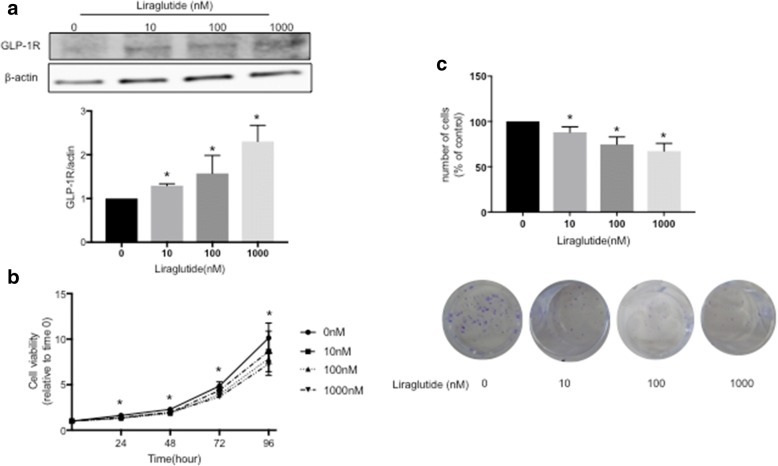
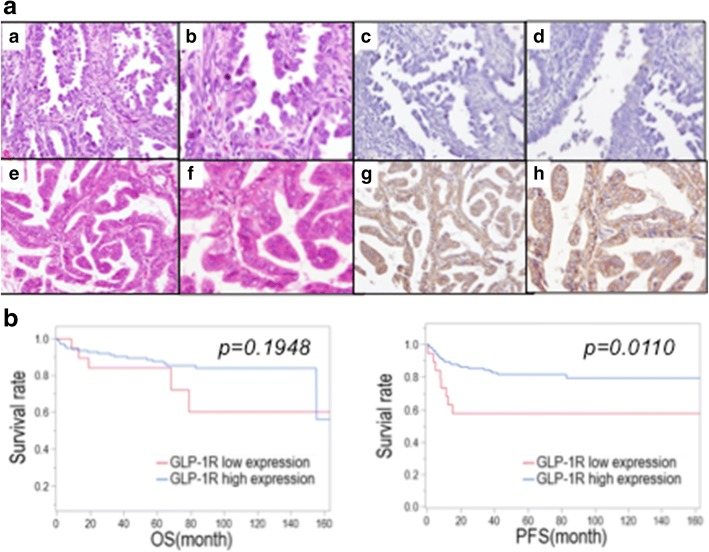
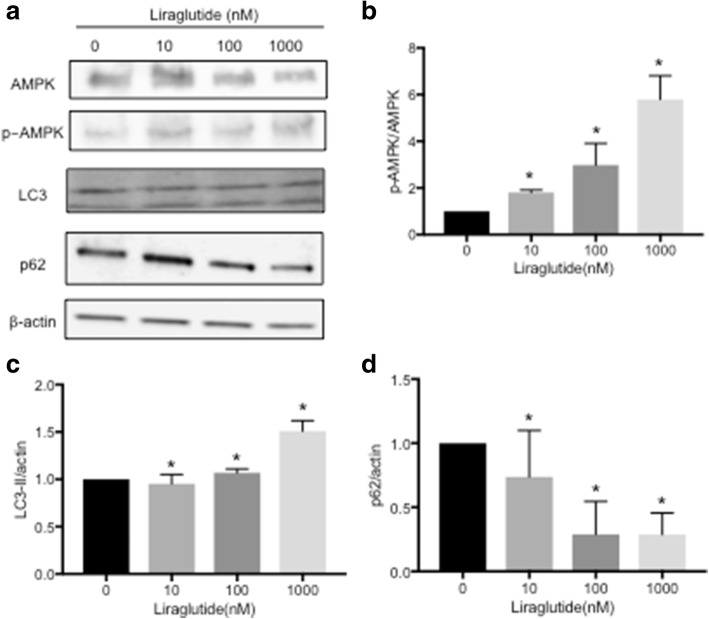
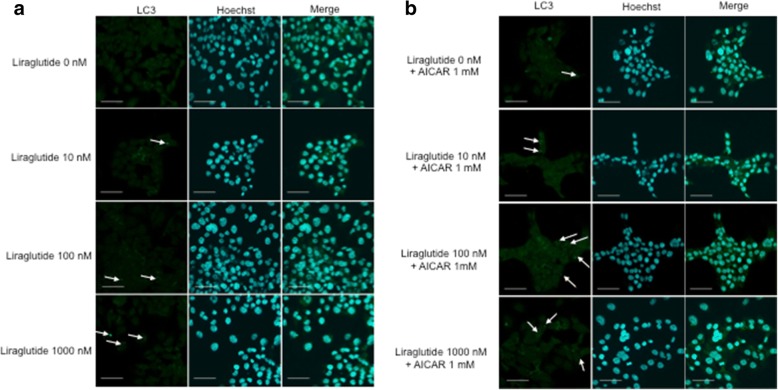
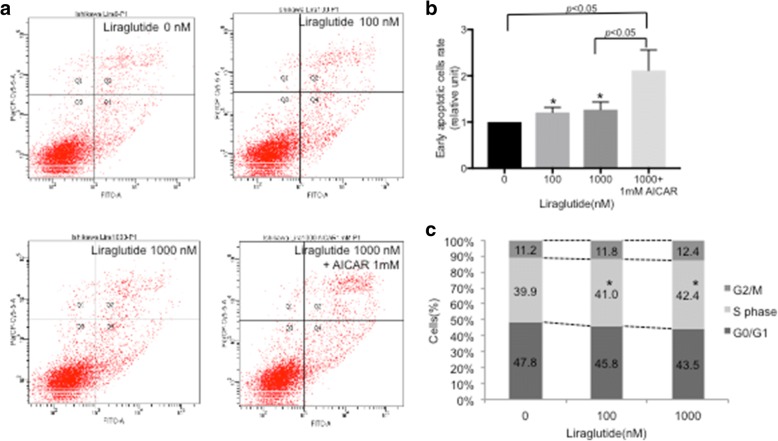
In accordance with the previous report, liraglutide inhibited Ishikawa cell growth in a dose-dependent manner. Liraglutide significantly induced autophagy, and phosphorylated AMPK expression was elevated. Immunohistochemical analysis revealed that GLP-1R expression was associated with positive estrogen receptor and progesterone receptor status, and higher GLP-1R expression was significantly correlated with better progression-free survival.
The use of liraglutide to target autophagy in endometrial cancer cells may be a novel potential treatment for endometrial cancer. Furthermore, higher GLP-1R expression may be associated with better prognosis in endometrial cancer patients.
先前的一份报告显示,胰高血糖素样肽-1 受体 (GLP-1R) 激动剂(艾塞那肽)可诱导子宫内膜癌细胞凋亡。然而,GLP-1R 在子宫内膜癌中的病理生理作用尚未完全阐明。在这里,我们研究了 GLP-1R 激动剂利拉鲁肽对子宫内膜癌细胞的影响,并检查了 GLP-1R 表达与子宫内膜癌患者临床病理特征之间的关联。
用人 Ishikawa 子宫内膜癌细胞株用不同浓度的利拉鲁肽处理。为了评估利拉鲁肽的作用,进行了细胞活力、集落形成、流式细胞术、Western blot 和免疫荧光分析。通过分析 LC3 和 p62 表达和自噬体积累来检测自噬诱导。此外,使用组织微阵列,我们通过免疫组织化学分析了 154 个子宫内膜癌组织样本中的 GLP-1R 表达。
与先前的报告一致,利拉鲁肽以剂量依赖性方式抑制 Ishikawa 细胞生长。利拉鲁肽显著诱导自噬,并且磷酸化 AMPK 表达升高。免疫组织化学分析显示,GLP-1R 表达与雌激素受体和孕激素受体状态阳性相关,并且较高的 GLP-1R 表达与更好的无进展生存期显著相关。
使用利拉鲁肽靶向子宫内膜癌细胞中的自噬可能是子宫内膜癌的一种新的潜在治疗方法。此外,较高的 GLP-1R 表达可能与子宫内膜癌患者的更好预后相关。