Center for Reproductive Medicine, Amsterdam Research Institute Reproduction and Development, Academic Medical Center, University of Amsterdam, Amsterdam, The Netherlands.
Department of Oncogenomics, Academic Medical Center, University of Amsterdam, Amsterdam, The Netherlands.
Oncogene. 2018 Oct;37(42):5694-5700. doi: 10.1038/s41388-018-0357-2. Epub 2018 Jun 15.
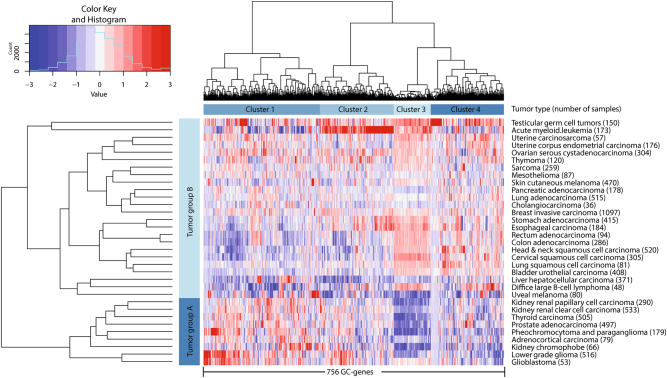
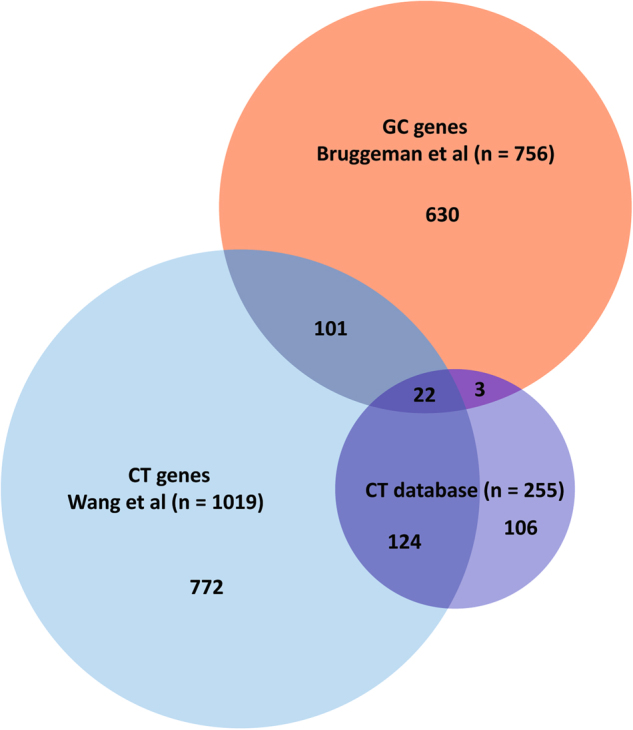
Cancer cells have been found to frequently express genes that are normally restricted to the testis, often referred to as cancer/testis (CT) antigens or genes. Because germ cell-specific antigens are not recognized as "self" by the innate immune system, CT-genes have previously been suggested as ideal candidate targets for cancer therapy. The use of CT-genes in cancer therapy has thus far been unsuccessful, most likely because their identification has relied on gene expression in whole testis, including the testicular somatic cells, precluding the detection of true germ cell-specific genes. By comparing the transcriptomes of micro-dissected germ cell subtypes, representing the main developmental stages of human spermatogenesis, with the publicly accessible transcriptomes of 2617 samples from 49 different healthy somatic tissues and 9232 samples from 33 tumor types, we here discover hundreds of true germ cell-specific cancer expressed genes. Strikingly, we found these germ cell cancer genes (GC-genes) to be widely expressed in all analyzed tumors. Many GC-genes appeared to be involved in processes that are likely to actively promote tumor viability, proliferation and metastasis. Targeting these true GC-genes thus has the potential to inhibit tumor growth with infertility being the only possible side effect. Moreover, we identified a subset of GC-genes that are not expressed in spermatogonial stem cells. Targeting of this GC-gene subset is predicted to only lead to temporary infertility, as untargeted spermatogonial stem cells can recover spermatogenesis after treatment. Our GC-gene dataset enables improved understanding of tumor biology and provides multiple novel targets for cancer treatment.
研究发现,癌细胞经常表达通常仅限于睾丸的基因,这些基因通常被称为癌症/睾丸(CT)抗原或基因。由于生殖细胞特异性抗原不会被先天免疫系统识别为“自身”,因此 CT 基因之前被认为是癌症治疗的理想候选靶点。然而,迄今为止,CT 基因在癌症治疗中的应用并未取得成功,这很可能是因为它们的鉴定依赖于整个睾丸中的基因表达,包括睾丸体细胞,从而排除了真正的生殖细胞特异性基因的检测。通过比较微切割生殖细胞亚型的转录组,这些亚型代表了人类精子发生的主要发育阶段,与 2617 个来自 49 种不同健康体组织和 9232 个来自 33 种肿瘤类型的公开可访问转录组进行比较,我们在这里发现了数百个真正的生殖细胞特异性癌症表达基因。引人注目的是,我们发现这些生殖细胞癌基因(GC 基因)在所有分析的肿瘤中广泛表达。许多 GC 基因似乎参与了可能积极促进肿瘤存活、增殖和转移的过程。因此,针对这些真正的 GC 基因有可能在不产生生育副作用的情况下抑制肿瘤生长。此外,我们还鉴定了一组在精原干细胞中不表达的 GC 基因。针对该 GC 基因亚组的靶向治疗预计只会导致暂时性不育,因为未靶向的精原干细胞在治疗后可以恢复精子发生。我们的 GC 基因数据集有助于更好地理解肿瘤生物学,并为癌症治疗提供了多个新的靶点。