Collaborative Innovation Center of Yangtze River Delta Region Green Pharmaceuticals, Zhejiang University of Technology, #18 Chao Wang Road, Hangzhou, 310014, People's Republic of China.
Inflammation. 2018 Aug;41(4):1557-1567. doi: 10.1007/s10753-018-0802-y.
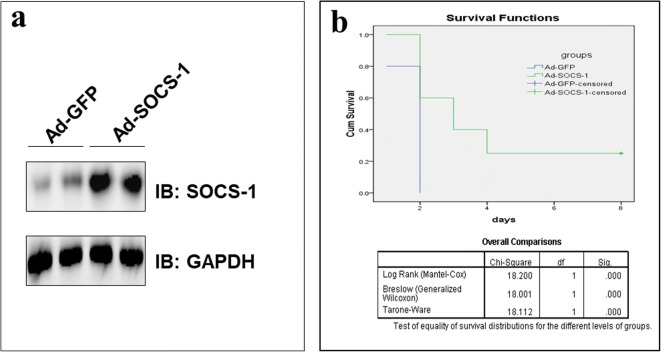
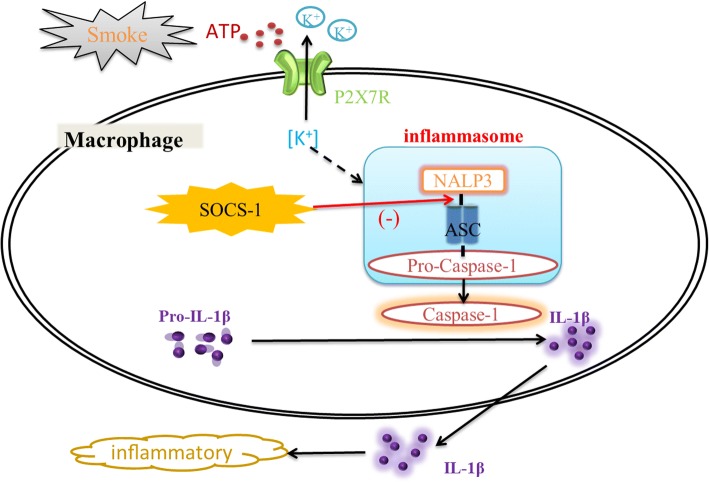
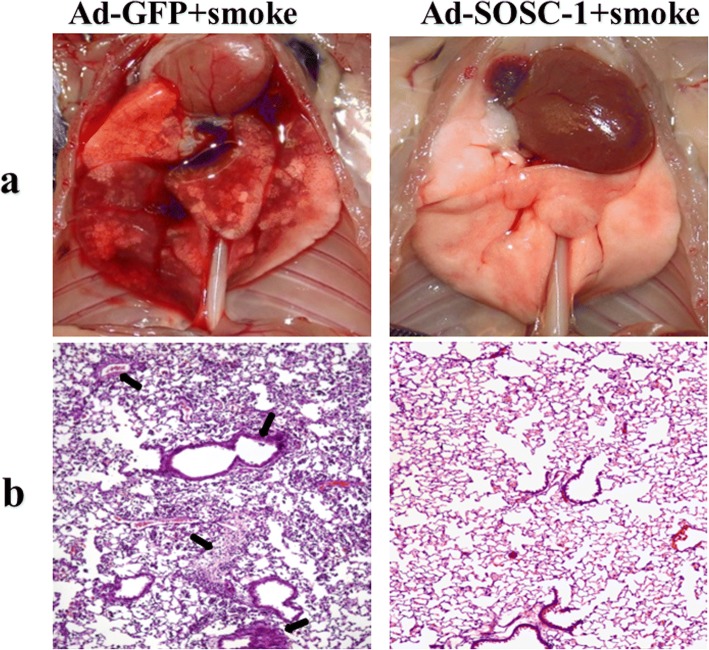
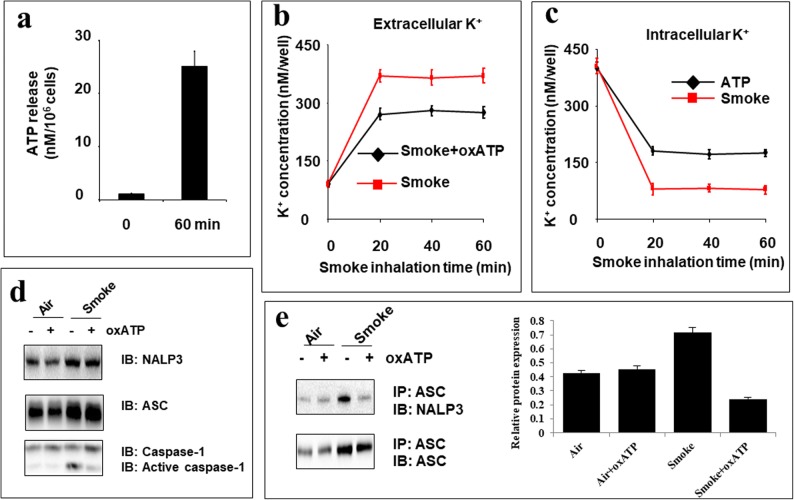
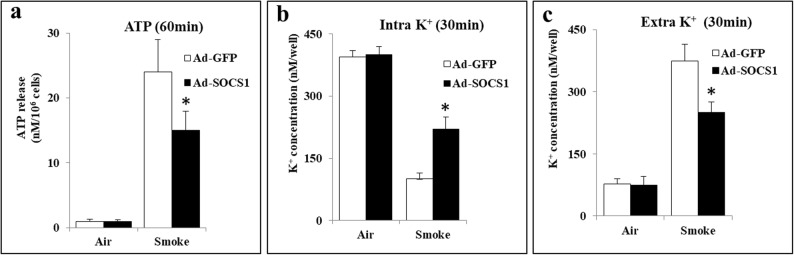
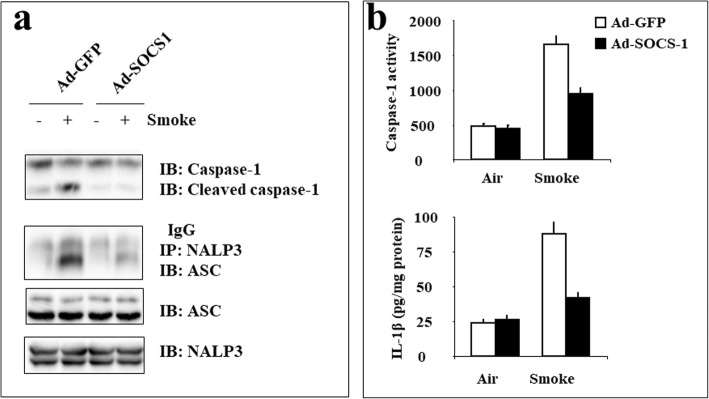
Smoke inhalation leads to acute lung injury (ALI), a devastating clinical problem associated with high mortality rates. Suppressor of cytokine signaling-1 (SOCS-1) is a negative regulator of proinflammatory cytokine signaling. We have found that adenoviral gene transfer of SOCS-1 ameliorates smoke inhalation-induced lung injury in C57BL/6 mice. We also found that the release of adenosine triphosphate (ATP) was increased post smoke exposure, while oxidized ATP, an inhibitor of purinergic P2X7 receptor, suppressed smoke-induced NALP3 inflammasome assembly, caspase-1 activation, and K efflux. Similar to oxidized ATP, high protein level of SOCS-1 dampened the formation of NALP3 inflammasome and the activation of caspase-1 and IL-1β induced by smoke exposure in mouse alveolar macrophages. In conclusion, SOCS-1 relieves smoke inhalation-induced pulmonary inflammation and injury by inhibiting NALP3 inflammasome formation.
烟雾吸入导致急性肺损伤(ALI),这是一种与高死亡率相关的破坏性临床问题。细胞因子信号转导抑制因子-1(SOCS-1)是促炎细胞因子信号的负调节剂。我们发现,SOCS-1 的腺病毒基因转移可改善 C57BL/6 小鼠烟雾吸入引起的肺损伤。我们还发现,烟雾暴露后三磷酸腺苷(ATP)的释放增加,而氧化型 ATP,一种嘌呤能 P2X7 受体抑制剂,抑制了烟雾诱导的 NALP3 炎性体组装、半胱天冬酶-1 激活和 K+外流。与氧化型 ATP 类似,SOCS-1 的高蛋白水平抑制了烟雾暴露诱导的小鼠肺泡巨噬细胞中 NALP3 炎性体的形成和半胱天冬酶-1 和 IL-1β 的激活。总之,SOCS-1 通过抑制 NALP3 炎性体的形成来缓解烟雾吸入引起的肺部炎症和损伤。