The Milner Centre for Evolution, Department of Biology and Biochemistry, University of Bath, Claverton Down, Bath, BA2 7AY, UK.
Department of Neurobiology, Max Planck Institute for Biophysical Chemistry, Am Fassberg 11, 37077 Göttingen, Germany.
Curr Biol. 2018 Jul 9;28(13):2046-2057.e5. doi: 10.1016/j.cub.2018.04.085. Epub 2018 Jun 18.
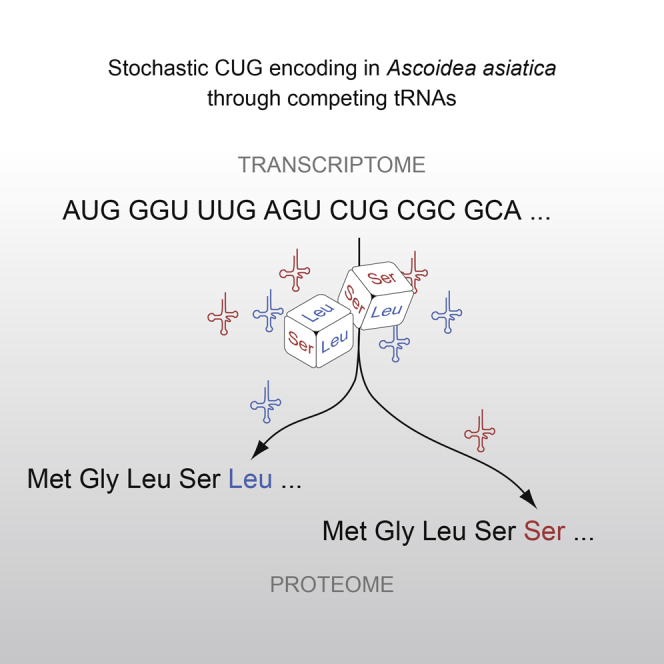
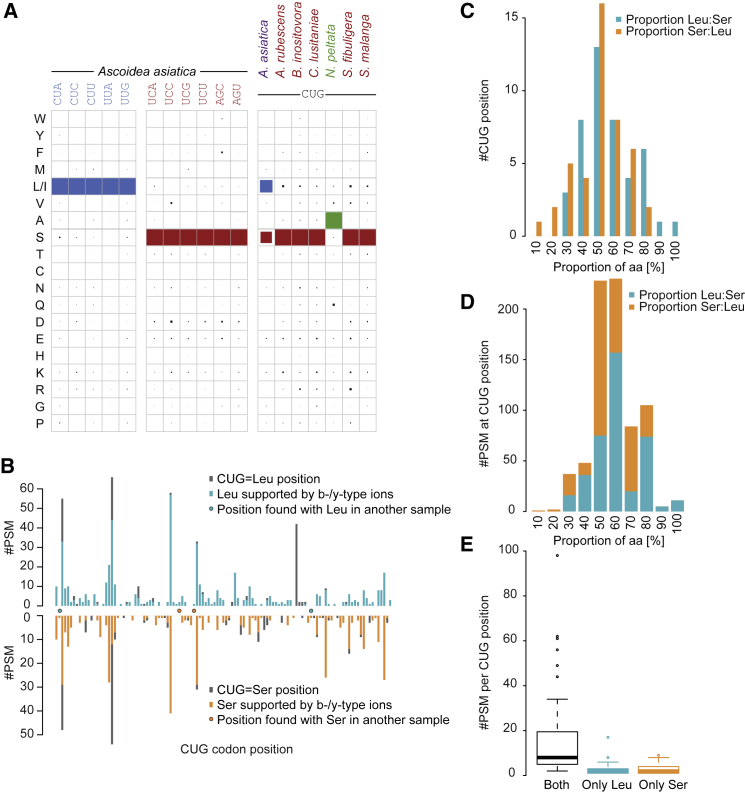
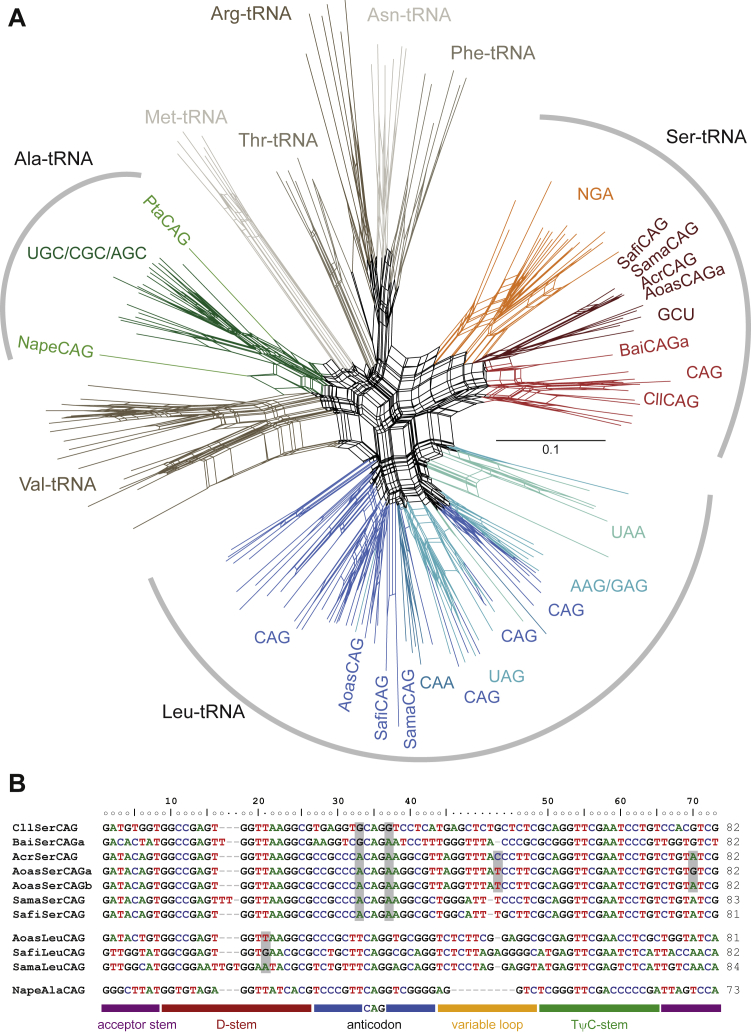
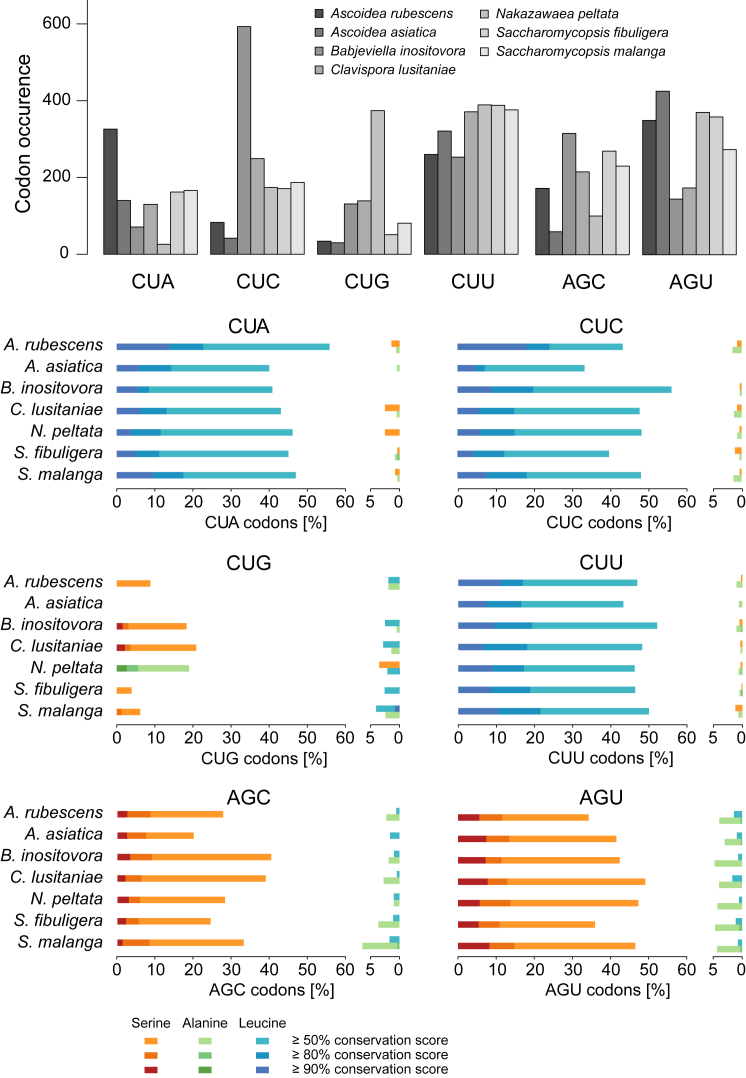
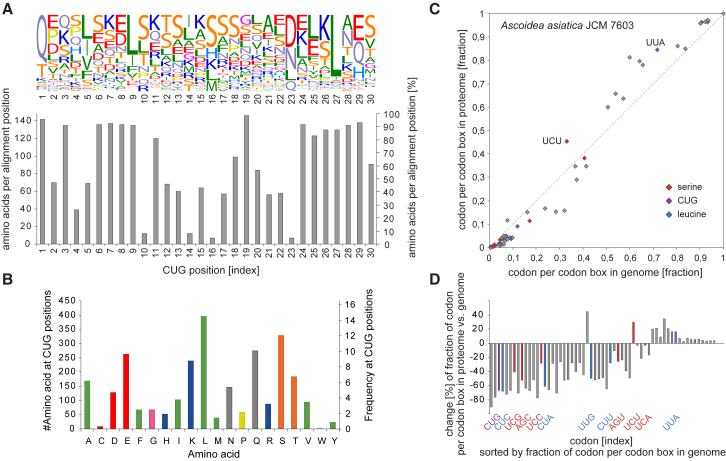
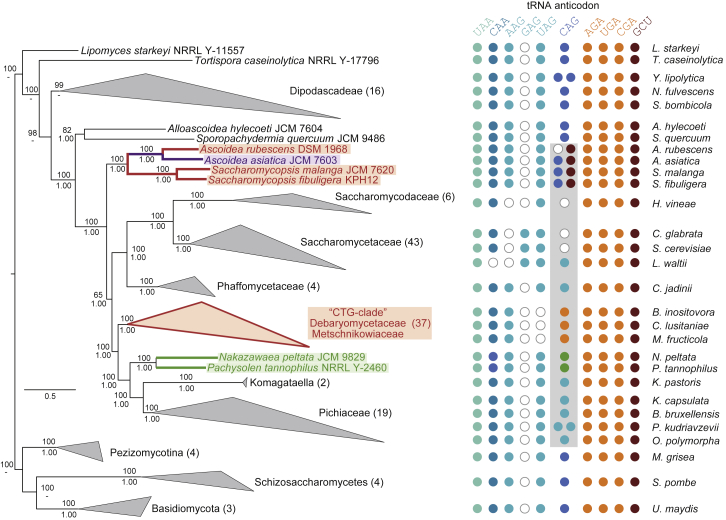
Although the "universal" genetic code is now known not to be universal, and stop codons can have multiple meanings, one regularity remains, namely that for a given sense codon there is a unique translation. Examining CUG usage in yeasts that have transferred CUG away from leucine, we here report the first example of dual coding: Ascoidea asiatica stochastically encodes CUG as both serine and leucine in approximately equal proportions. This is deleterious, as evidenced by CUG codons being rare, never at conserved serine or leucine residues, and predominantly in lowly expressed genes. Related yeasts solve the problem by loss of function of one of the two tRNAs. This dual coding is consistent with the tRNA-loss-driven codon reassignment hypothesis, and provides a unique example of a proteome that cannot be deterministically predicted. VIDEO ABSTRACT.
尽管现在已知“通用”遗传密码并非通用,且终止密码子可能有多种含义,但仍存在一个规律,即对于给定的有意义密码子,其翻译是唯一的。在已将 CUG 从亮氨酸转移出去的酵母中研究 CUG 的使用情况时,我们在此报告了双重编码的第一个例子:亚洲地衣酵母随机将 CUG 编码为丝氨酸和亮氨酸,比例大致相等。这是有害的,因为 CUG 密码子很少见,从未出现在保守的丝氨酸或亮氨酸残基上,并且主要存在于低表达基因中。相关酵母通过两种 tRNA 之一的功能丧失来解决这个问题。这种双重编码与 tRNA 丢失驱动的密码子重分配假说一致,并提供了一个无法确定性预测蛋白质组的独特例子。视频摘要。