Pratali Raphael de Rezende, Martins Samuel Machado, Santos Francisco Prado Eugenio Dos, Barsotti Carlos Eduardo Gonçales, Oliveira Carlos Eduardo Algaves Soares de
Hospital do Servidor Público Estadual, São Paulo, SP, Brazil.
Rev Bras Ortop. 2018 Feb 23;53(2):213-220. doi: 10.1016/j.rboe.2017.03.016. eCollection 2018 Mar-Apr.
To analyze and characterize data about clinical outcome and complication rates in three-column osteotomies (3 CO) for treatment of rigid adult spine deformity (ASD).
Baseline and postoperative clinical outcomes, considering the Oswestry Disability Index (ODI) and Scoliosis Research Society-22 (SRS-22) questionnaires, radiographic parameters, and demographic data of patients who underwent 3 CO procedure for fixed ASD treatment were collected. Surgical characteristics and reports of perioperative complications were recorded, as well as those that occurred at a minimum follow-up of 12 months.
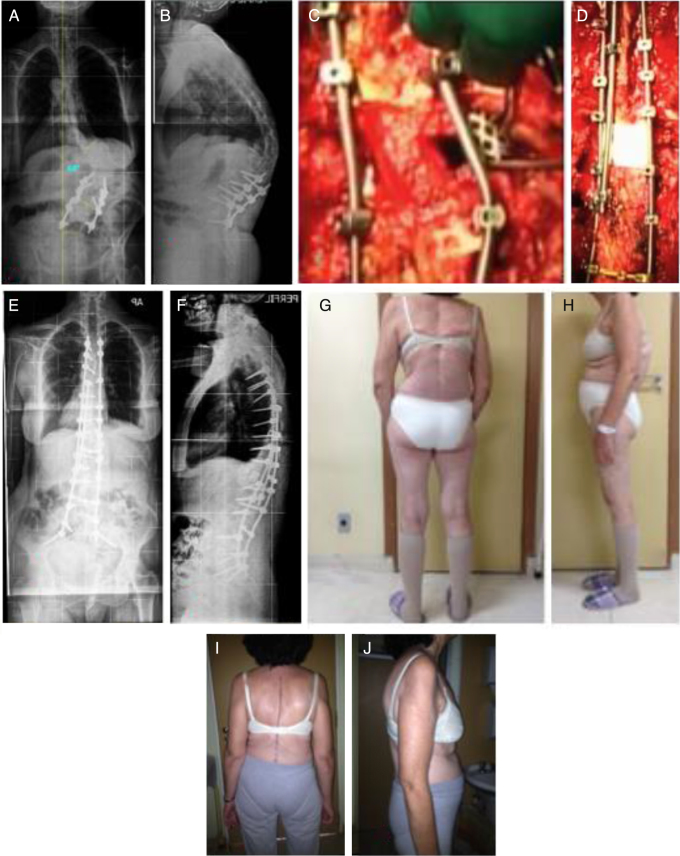
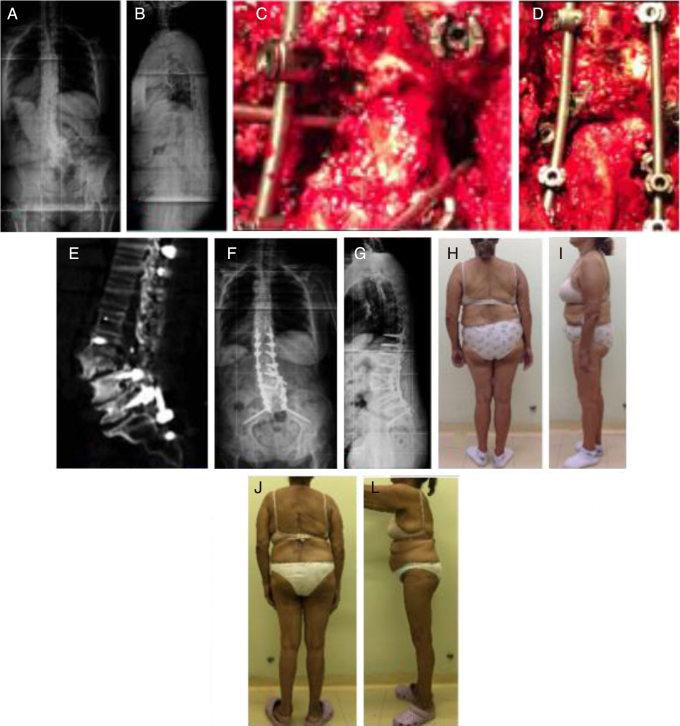
Ten patients underwent 3 CO and had a minimum follow-up of 12 months (mean 24 months). The patients showed significantly improved health-related quality of life scores (ODI, SRS-22 total, function/activity, pain, and appearance). They also presented a significant improvement in all radiographic parameters considered in the study. Taking into account the surgical procedure, the operative time was significantly higher in patients with staged procedure than in patients with single-stage surgery ( = 0.003), with similar estimated blood loss and complication incidence. There were ten complications in six patients (60%), with a mean of 1.0 complication per patient.
Despite of the high complication rates, 3 CO was an effective technique, considering clinical and radiographic outcomes, to treat complex cases of rigid ASD in a sample of patients operated in a Brazilian spine center, with a minimum follow-up of 12 months.
分析和描述用于治疗僵硬性成人脊柱畸形(ASD)的三柱截骨术(3 CO)的临床结果和并发症发生率数据。
收集接受3 CO手术治疗固定性ASD患者的基线和术后临床结果,包括奥斯威斯功能障碍指数(ODI)和脊柱侧凸研究学会-22(SRS-22)问卷、影像学参数以及人口统计学数据。记录手术特征和围手术期并发症报告,以及至少随访12个月时发生的并发症。
10例患者接受了3 CO手术,最短随访12个月(平均24个月)。患者的健康相关生活质量评分(ODI、SRS-22总分、功能/活动、疼痛和外观)显著改善。他们在研究中考虑的所有影像学参数方面也有显著改善。考虑到手术方式,分期手术患者的手术时间显著高于一期手术患者(P = 0.003),估计失血量和并发症发生率相似。6例患者发生了10例并发症(60%),平均每位患者1.0例并发症。
尽管并发症发生率较高,但在巴西一家脊柱中心接受手术的患者样本中,考虑到临床和影像学结果,对于治疗复杂的僵硬性ASD病例,3 CO是一种有效的技术,最短随访时间为12个月。