Department of Biological Sciences, Seoul National University, Seoul, Republic of Korea.
Institute of Microbiology, Seoul National University, Seoul, Republic of Korea.
PLoS One. 2018 Jun 18;13(6):e0198619. doi: 10.1371/journal.pone.0198619. eCollection 2018.
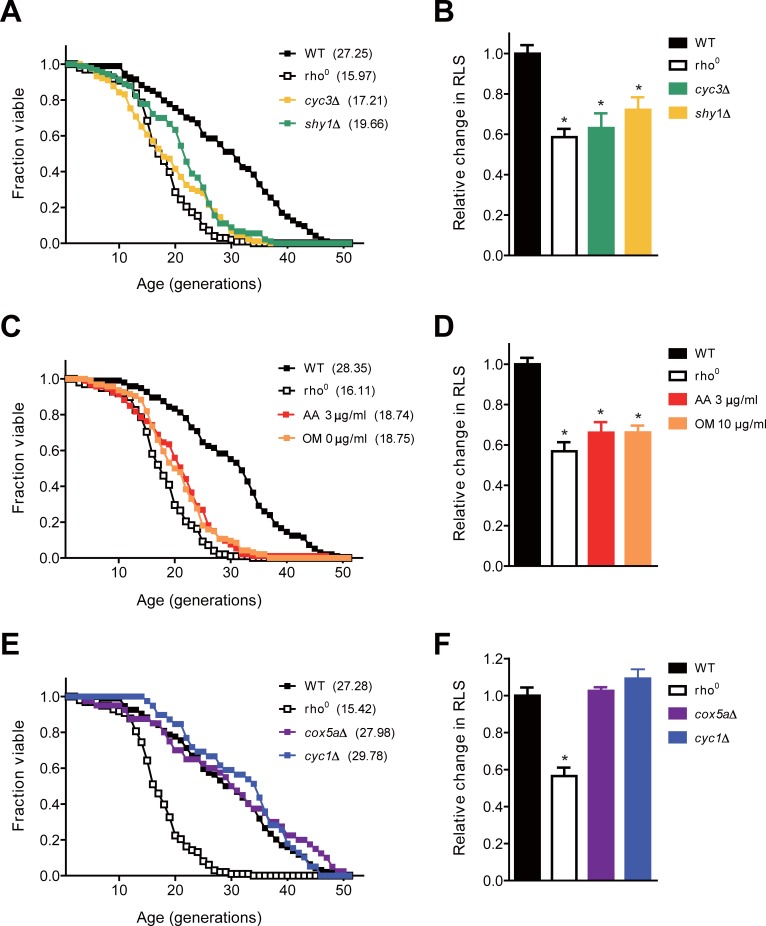
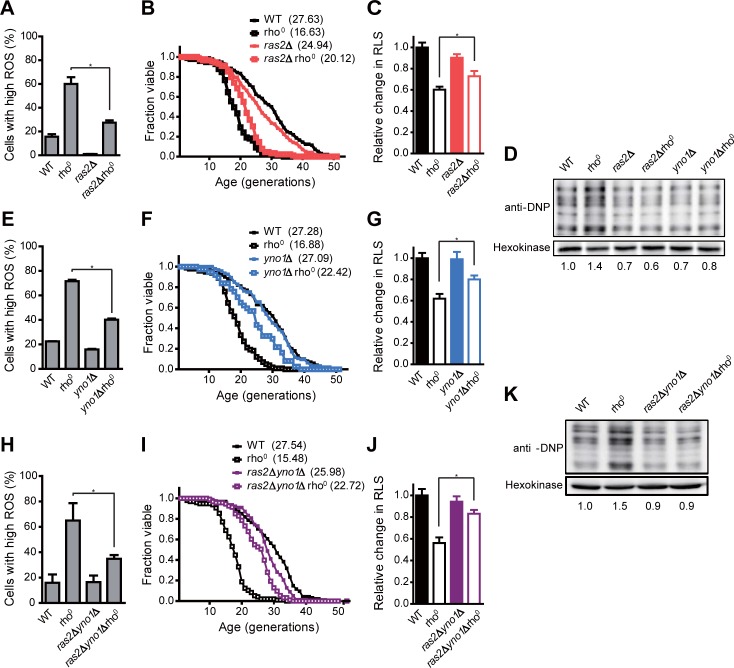
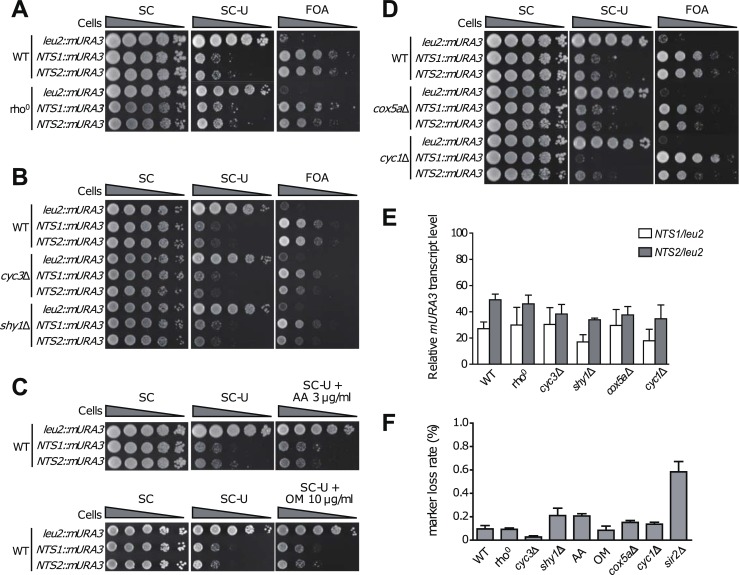
Mitochondrial dysfunction leads to the accumulation of reactive oxygen species (ROS) which is associated with cellular dysfunction, disease etiology, and senescence. Here, we used the eukaryotic model Saccharomyces cerevisiae, commonly studied for cellular aging, to demonstrate how defective mitochondrial function affects yeast replicative lifespan (RLS). We show that RLS of respiratory-deficient cells decreases significantly, indicating that the maintenance of RLS requires active respiration. The shortening of RLS due to mitochondrial dysfunction was not related to the accumulation of extrachromosomal ribosomal DNA circles, a well-known cause of aging in yeast. Instead, intracellular ROS and oxidatively damaged proteins increased in respiratory-deficient mutants. We show that, while the protein kinase A activity is not elevated, ROS generation in respiratory-deficient cells depends on RAS signaling pathway. The ER-localized NADPH oxidase Yno1 also played a role in producing ROS. Our data suggest that a severe defect in mitochondrial respiration accelerates cellular aging by disturbing protein homeostasis in yeast.
线粒体功能障碍导致活性氧(ROS)的积累,这与细胞功能障碍、疾病病因和衰老有关。在这里,我们使用真核模式生物酿酒酵母,通常用于研究细胞衰老,来证明缺陷的线粒体功能如何影响酵母复制寿命(RLS)。我们发现呼吸缺陷细胞的 RLS 显著降低,表明 RLS 的维持需要活跃的呼吸作用。线粒体功能障碍导致的 RLS 缩短与染色体外核糖体 DNA 环的积累无关,后者是酵母衰老的一个众所周知的原因。相反,呼吸缺陷突变体中的细胞内 ROS 和氧化损伤蛋白增加。我们表明,虽然蛋白激酶 A 活性没有升高,但呼吸缺陷细胞中的 ROS 生成依赖于 RAS 信号通路。定位于内质网的 NADPH 氧化酶 Yno1 也在产生 ROS 中发挥作用。我们的数据表明,线粒体呼吸的严重缺陷通过扰乱酵母中的蛋白质稳态加速了细胞衰老。