School of Forestry and Environmental Studies, Yale University, New Haven, CT 06511.
School of Forestry and Environmental Studies, Yale University, New Haven, CT 06511
Proc Natl Acad Sci U S A. 2018 Jul 3;115(27):6970-6975. doi: 10.1073/pnas.1720898115. Epub 2018 Jun 18.
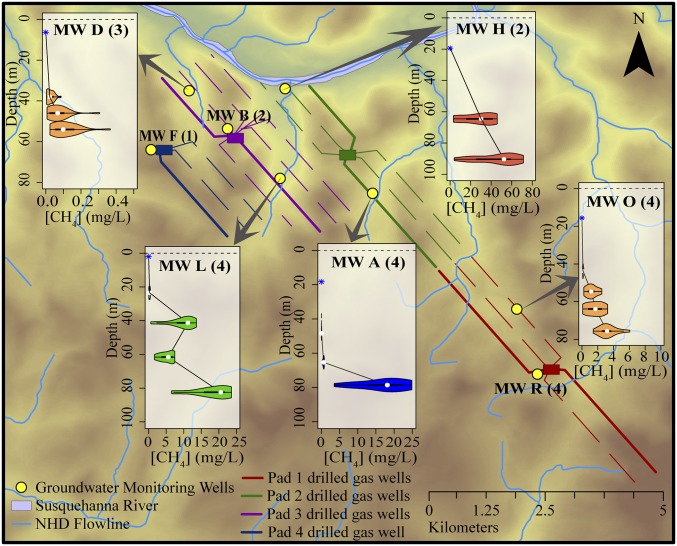
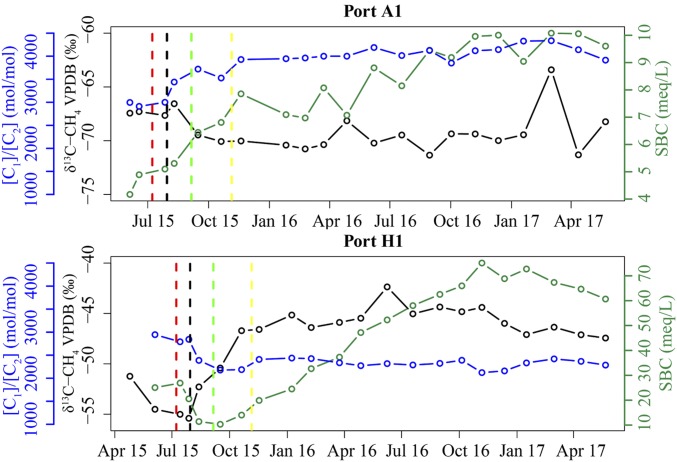
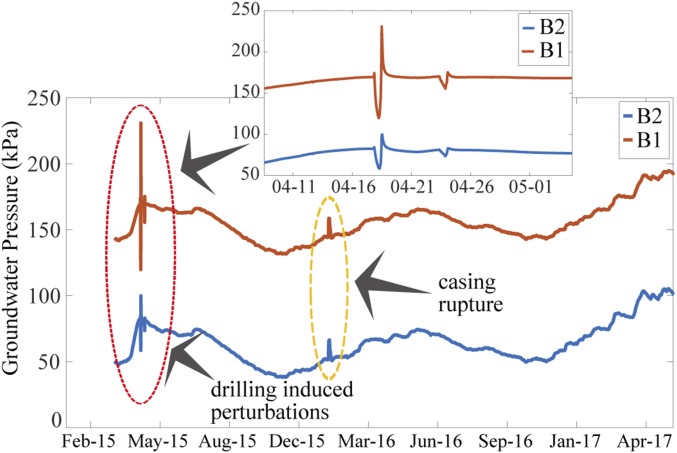
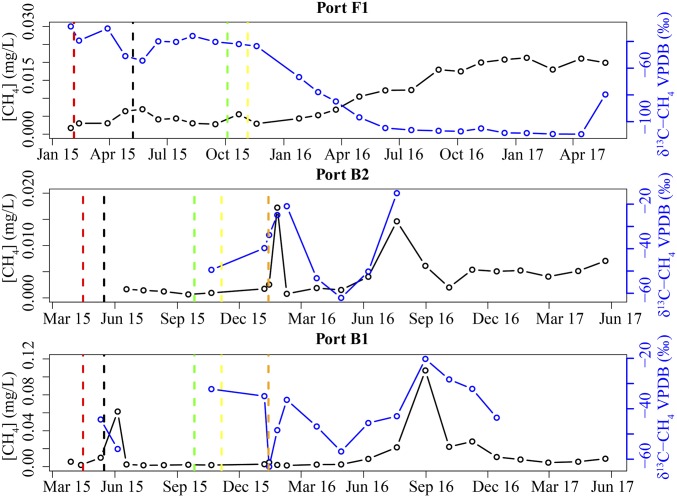
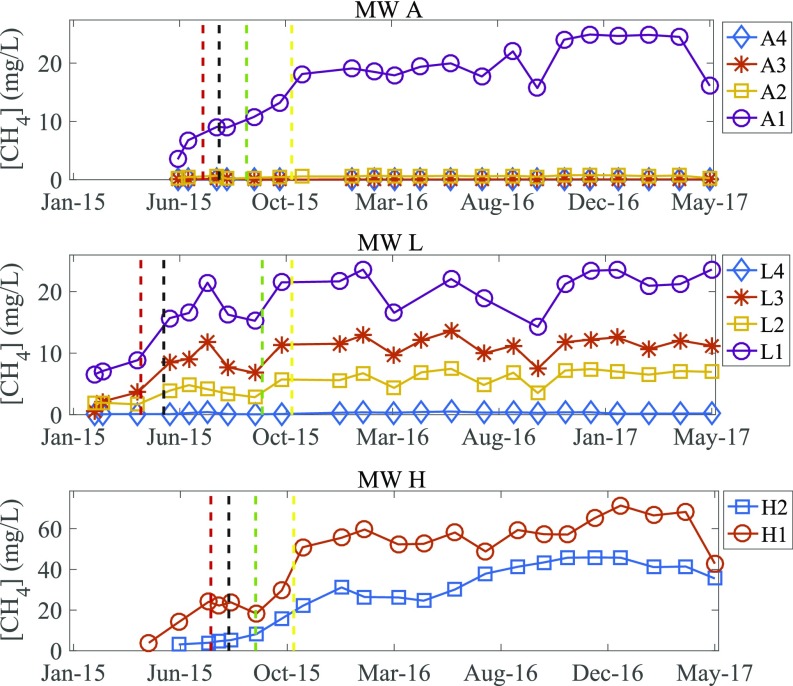
Concern persists over the potential for unconventional oil and gas development to contaminate groundwater with methane and other chemicals. These concerns motivated our 2-year prospective study of groundwater quality within the Marcellus Shale. We installed eight multilevel monitoring wells within bedrock aquifers of a 25-km area targeted for shale gas development (SGD). Twenty-four isolated intervals within these wells were sampled monthly over 2 years and groundwater pressures were recorded before, during, and after seven shale gas wells were drilled, hydraulically fractured, and placed into production. Perturbations in groundwater pressures were detected at hilltop monitoring wells during drilling of nearby gas wells and during a gas well casing breach. In both instances, pressure changes were ephemeral (<24 hours) and no lasting impact on groundwater quality was observed. Overall, methane concentrations ([CH]) ranged from detection limit to 70 mg/L, increased with aquifer depth, and, at several sites, exhibited considerable temporal variability. Methane concentrations in valley monitoring wells located above gas well laterals increased in conjunction with SGD, but CH isotopic composition and hydrocarbon composition (CH/CH) are inconsistent with Marcellus origins for this gas. Further, salinity increased concurrently with [CH], which rules out contamination by gas phase migration of fugitive methane from structurally compromised gas wells. Collectively, our observations suggest that SGD was an unlikely source of methane in our valley wells, and that naturally occurring methane in valley settings, where regional flow systems interact with local flow systems, is more variable in concentration and composition both temporally and spatially than previously understood.
人们一直担心非常规油气开发可能会使甲烷和其他化学物质污染地下水。这些担忧促使我们进行了为期两年的马里兰州页岩地下水质量前瞻性研究。我们在一个 25 公里范围内的基岩含水层中安装了 8 口多层监测井,该地区是页岩气开发(SGD)的目标区域。在两年内,我们每月对这些井中的 24 个隔离段进行采样,并在 7 口页岩气井钻井、水力压裂和投产前后记录地下水压力。在附近气井钻井和一口气井套管破裂期间,山顶监测井检测到地下水压力的波动。在这两种情况下,压力变化都是短暂的(<24 小时),没有观察到对地下水质量的持久影响。总体而言,甲烷浓度([CH])范围从检测限到 70mg/L,随含水层深度增加而增加,并且在几个地点表现出相当大的时间变异性。位于气井支管上方的山谷监测井中的甲烷浓度随着 SGD 的增加而增加,但 CH 同位素组成和碳氢化合物组成(CH/CH)与该气田的马塞勒斯起源不一致。此外,盐度与[CH]同时增加,排除了结构受损的气井中逸散甲烷气相迁移造成的污染。总的来说,我们的观察结果表明,SGD 不太可能是我们山谷井中甲烷的来源,并且在山谷环境中,区域流动系统与局部流动系统相互作用,甲烷的自然存在无论是在浓度还是组成上,在时间和空间上都比以前认为的更加多变。