Department of Animal Ecology, Netherlands Institute of Ecology, Wageningen, the Netherlands.
Nat Ecol Evol. 2018 Jul;2(7):1093-1103. doi: 10.1038/s41559-018-0577-4. Epub 2018 Jun 18.
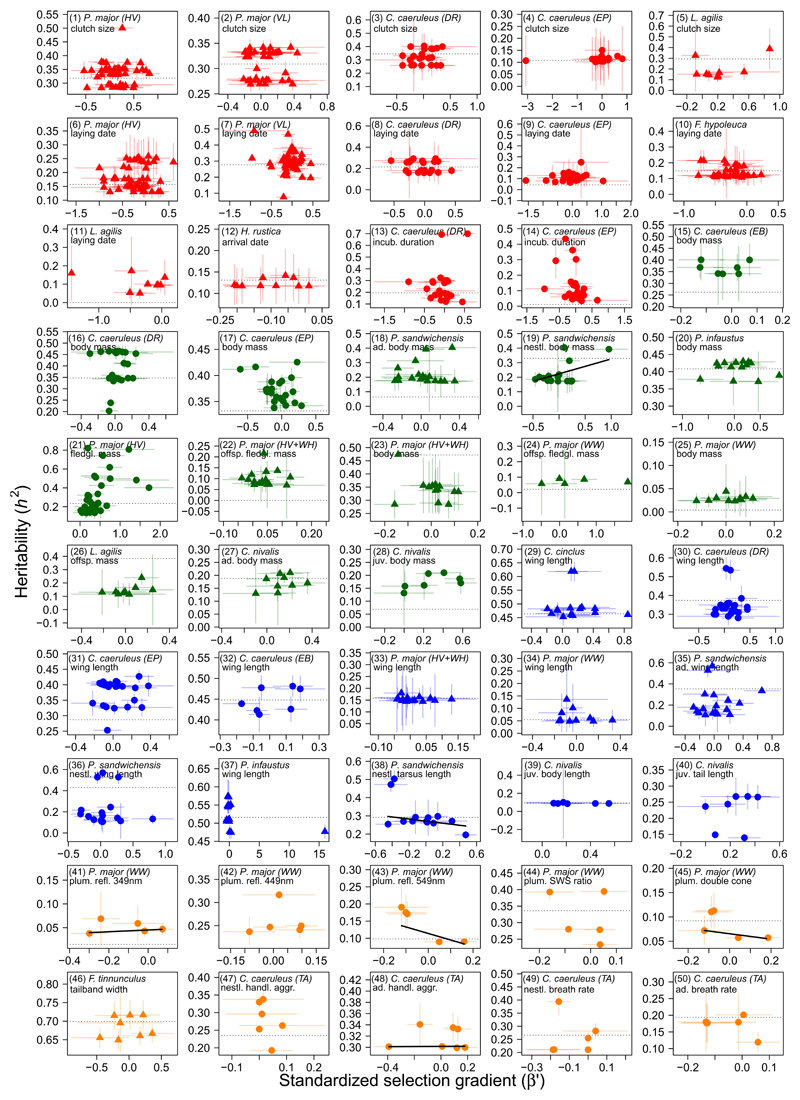
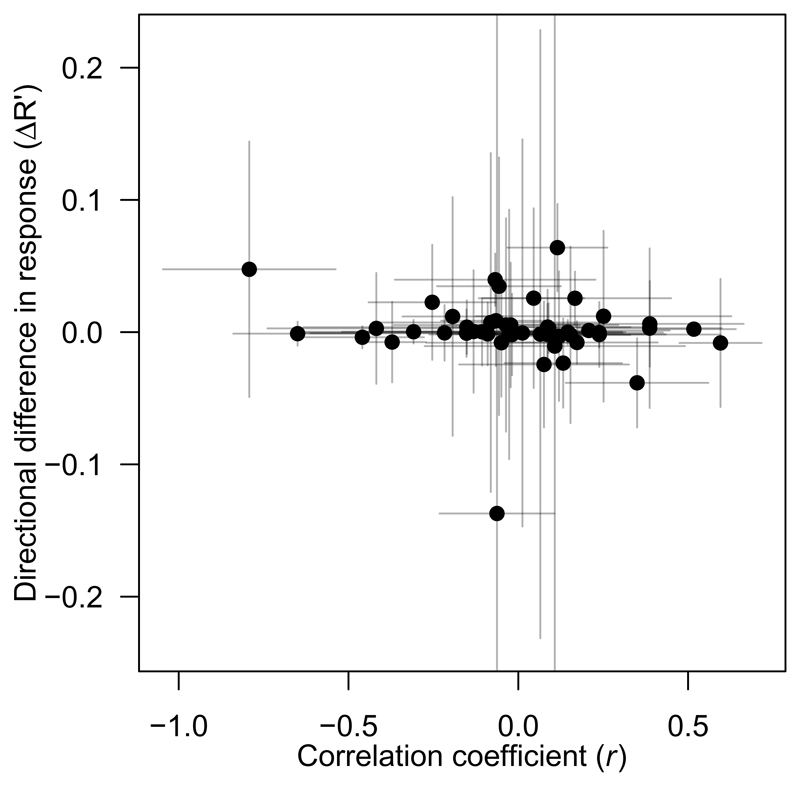
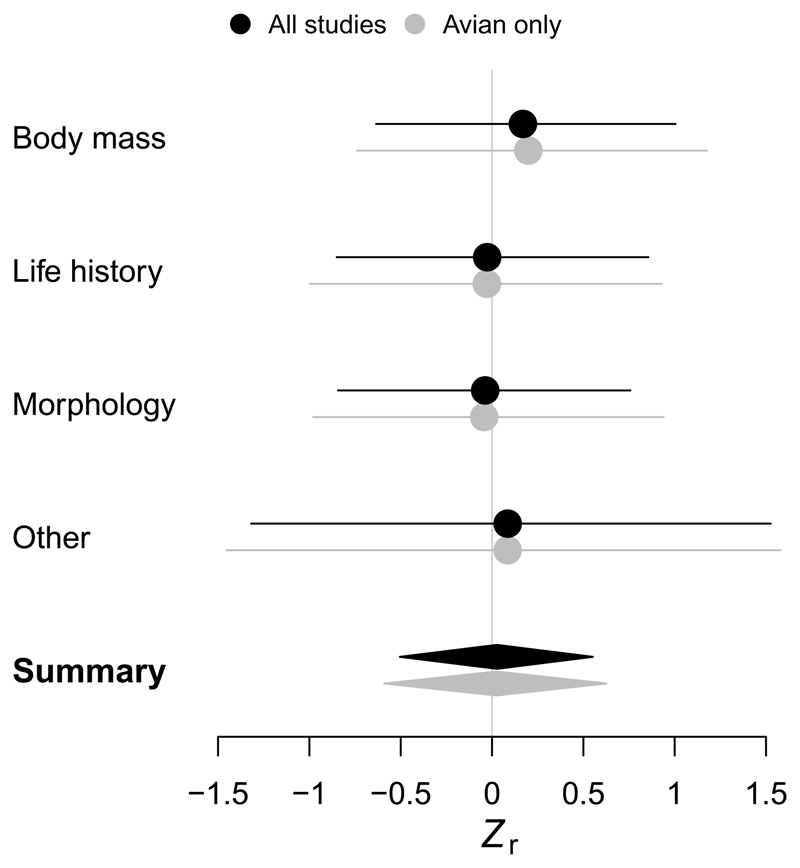
Predicting the rate of adaptation to environmental change in wild populations is important for understanding evolutionary change. However, predictions may be unreliable if the two key variables affecting the rate of evolutionary change-heritability and selection-are both affected by the same environmental variable. To determine how general such an environmentally induced coupling of heritability and selection is, and how this may influence the rate of adaptation, we made use of freely accessible, open data on pedigreed wild populations to answer this question at the broadest possible scale. Using 16 populations from 10 vertebrate species, which provided data on 50 traits (relating to body mass, morphology, physiology, behaviour and life history), we found evidence for an environmentally induced relationship between heritability and selection in only 6 cases, with weak evidence that this resulted in an increase or decrease in the expected selection response. We conclude that such a coupling of heritability and selection is unlikely to strongly affect evolutionary change, even though both heritability and selection are commonly postulated to be dependent on the environment.
预测野生种群对环境变化的适应速度对于理解进化变化很重要。然而,如果影响进化变化速度的两个关键变量——遗传力和选择——都受到相同环境变量的影响,那么预测可能是不可靠的。为了确定遗传力和选择之间这种由环境引起的耦合在多大程度上是普遍存在的,以及这可能如何影响适应速度,我们利用可自由获取的、公开的 pedigreed 野生种群数据,在尽可能广泛的范围内回答了这个问题。使用来自 10 种脊椎动物的 16 个种群的数据,这些数据提供了 50 个特征(与体重、形态、生理、行为和生活史有关),我们仅在 6 种情况下发现了遗传力和选择之间存在由环境引起的关系的证据,并且有微弱的证据表明这导致了预期选择反应的增加或减少。我们的结论是,遗传力和选择之间的这种耦合不太可能强烈影响进化变化,尽管遗传力和选择通常都被假设依赖于环境。