Gusliakova Olga, Atochina-Vasserman Elena N, Sindeeva Olga, Sindeev Sergey, Pinyaev Sergey, Pyataev Nikolay, Revin Viktor, Sukhorukov Gleb B, Gorin Dmitry, Gow Andrew J
Remote Controlled Theranostic Systems Lab, Saratov State University, Saratov, Russia.
RASA Center in Tomsk, Tomsk Polytechnic University, Tomsk, Russia.
Front Pharmacol. 2018 Jun 4;9:559. doi: 10.3389/fphar.2018.00559. eCollection 2018.
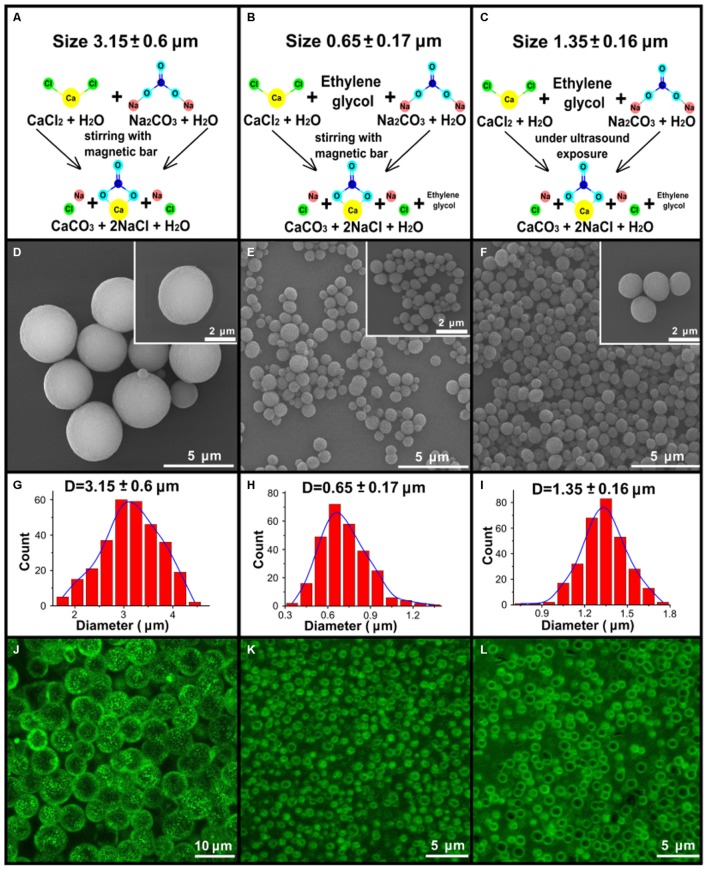
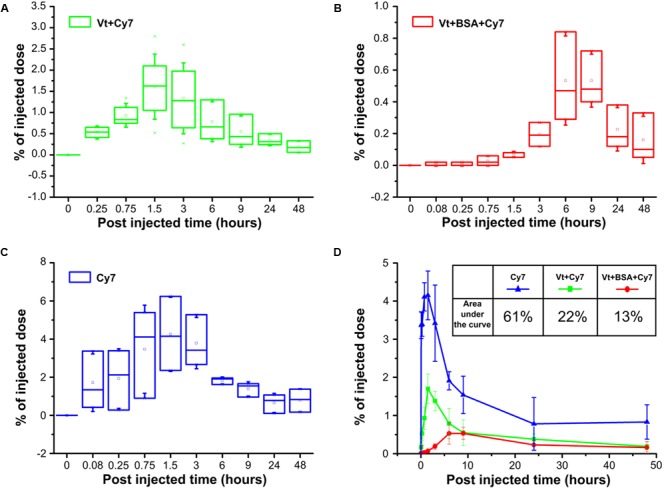
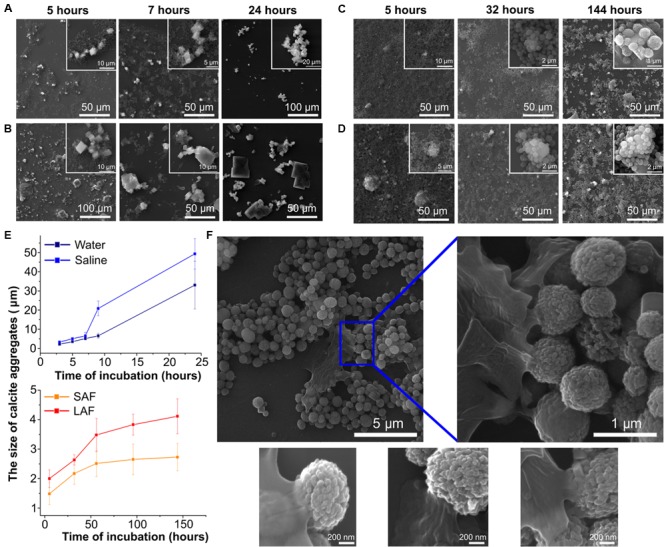
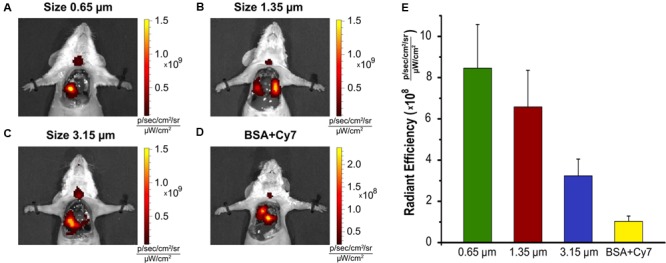
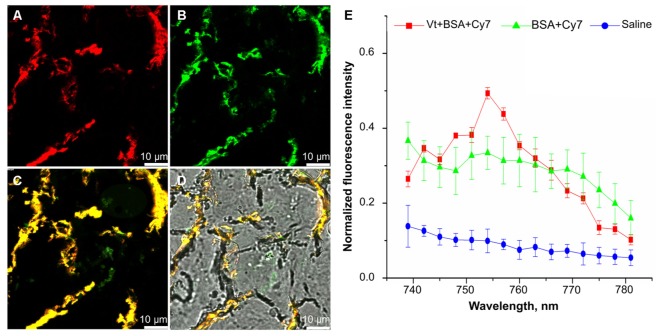
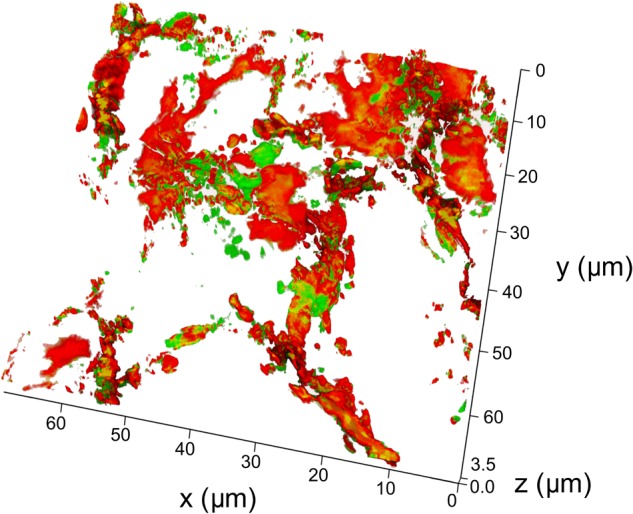
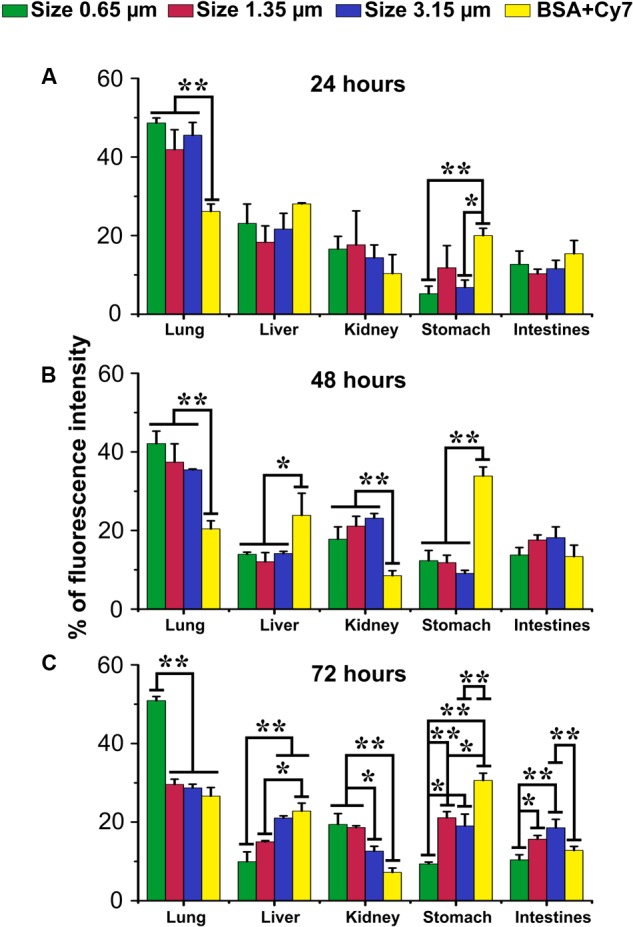
Nano- and microencapsulation has proven to be a useful technique for the construction of drug delivery vehicles for use in vascular medicine. However, the possibility of using these techniques within the lung as an inhalation delivery mechanism has not been previously considered. A critical element of particle delivery to the lung is the degree of penetrance that can be achieved with respect to the airway tree. In this study we examined the effectiveness of near infrared (NIR) dye (Cy7) labeled calcium carbonate (vaterite) particles of 3.15, 1.35, and 0.65 μm diameter in reaching the respiratory portion of the lung. First of all, it was shown that, interaction vaterite particles and the components of the pulmonary surfactant occurs a very strong retardation of the recrystallization and dissolution of the particles, which can subsequently be used to create systems with a prolonging release of bioactive substances after the particles penetrate the distal sections of the lungs. Submicro- and microparticles, coated with Cy7 labeled albumin as a model compound, were delivered to mouse lungs via tracheostomy with subsequent imaging performed 24, 48, and 72 h after delivery by fluorescence. 20 min post administration particles of all three sizes were visible in the lung, with the deepest penetrance observed with 0.65 μm particles. biodistribution was confirmed by fluorescence tomography imaging of excised organs post 72 h. Laser scanning confocal microscopy shows 0.65 μm particles reaching the alveolar space. The delivery of fluorophore to the blood was assessed using Cy7 labeled 0.65 μm particles. Cy7 labeled 0.65 μm particles efficiently delivered fluorescent material to the blood with a peak 3 h after particle administration. The pharmacokinetics of NIR fluorescence dye will be shown. These studies establish that by using 0.65 μm particles loaded with Cy7 we can efficiently access the respiratory portion of the lung, which represents a potentially efficient delivery mechanism for both the lung and the vasculature.
纳米和微囊化已被证明是一种用于构建血管医学中药物递送载体的有用技术。然而,此前尚未考虑过将这些技术用于肺部作为吸入给药机制的可能性。颗粒递送至肺部的一个关键因素是在气道树中能够实现的穿透程度。在本研究中,我们研究了直径为3.15、1.35和0.65μm的近红外(NIR)染料(Cy7)标记的碳酸钙(球霰石)颗粒到达肺部呼吸部分的有效性。首先,研究表明,球霰石颗粒与肺表面活性剂的成分之间的相互作用会使颗粒的重结晶和溶解非常强烈地延迟,这随后可用于创建在颗粒穿透肺部远端部分后具有生物活性物质延长释放的系统。用Cy7标记的白蛋白作为模型化合物包被的亚微米和微米颗粒通过气管切开术递送至小鼠肺部,在给药后24、48和72小时通过荧光进行后续成像。给药后20分钟,所有三种尺寸的颗粒在肺部均可见,其中0.65μm颗粒的穿透最深。72小时后通过对切除器官的荧光断层成像确认了生物分布。激光扫描共聚焦显微镜显示0.65μm颗粒到达肺泡腔。使用Cy7标记的0.65μm颗粒评估荧光团向血液中的递送。Cy7标记的0.65μm颗粒在给药后3小时达到峰值,有效地将荧光物质递送至血液中。将展示近红外荧光染料的药代动力学。这些研究表明,通过使用负载Cy7的0.65μm颗粒,我们可以有效地进入肺部的呼吸部分,这代表了一种对肺部和脉管系统都潜在有效的递送机制。