Lineberger Comprehensive Cancer Center, University of North Carolina at Chapel Hill, Chapel Hill, North Carolina, USA.
Janssen Research & Development, The Janssen Pharmaceutical Companies of Johnson & Johnson, Spring House, Pennsylvania, USA.
mBio. 2018 Jun 19;9(3):e00959-18. doi: 10.1128/mBio.00959-18.
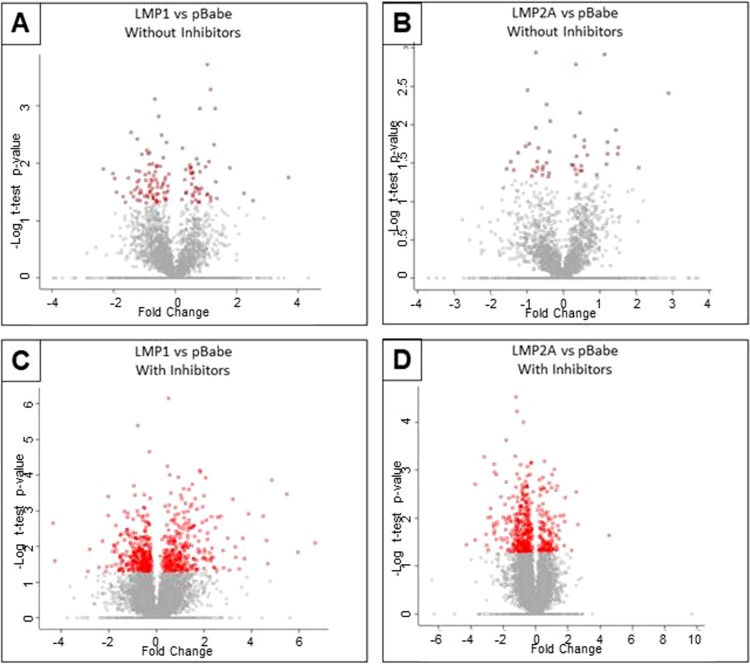
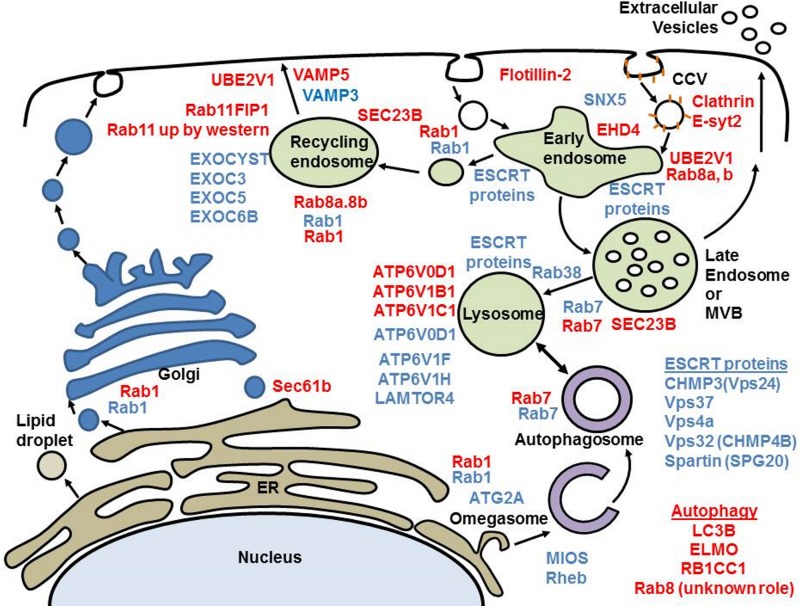
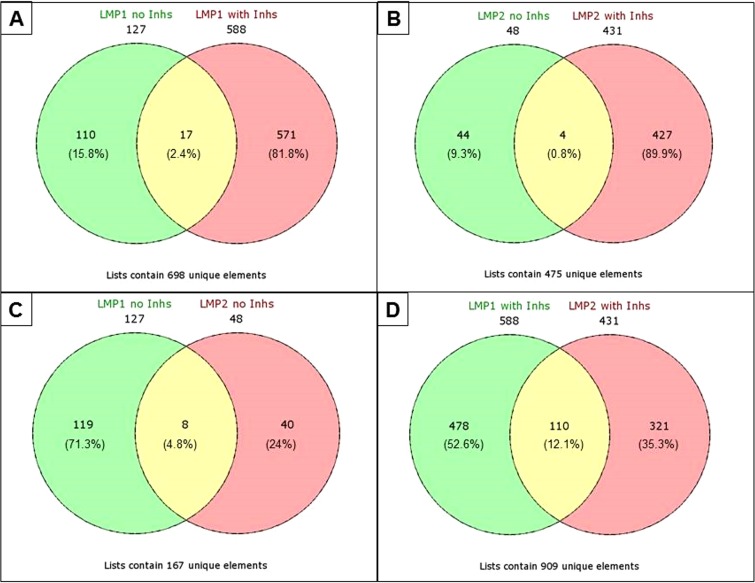
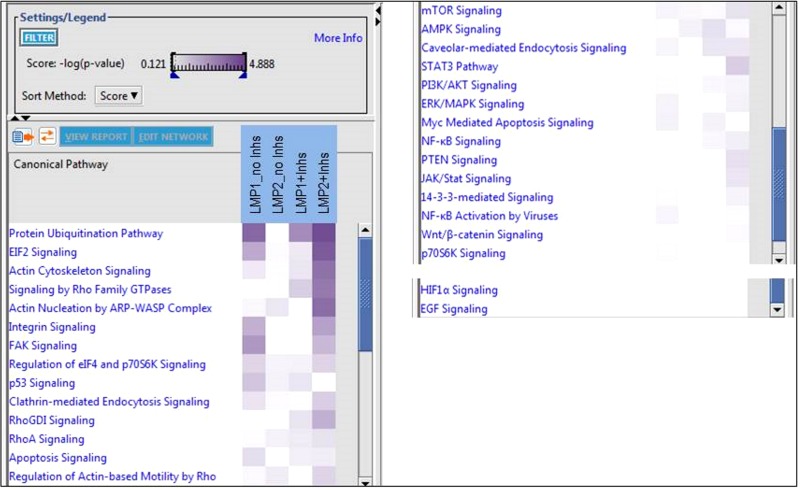
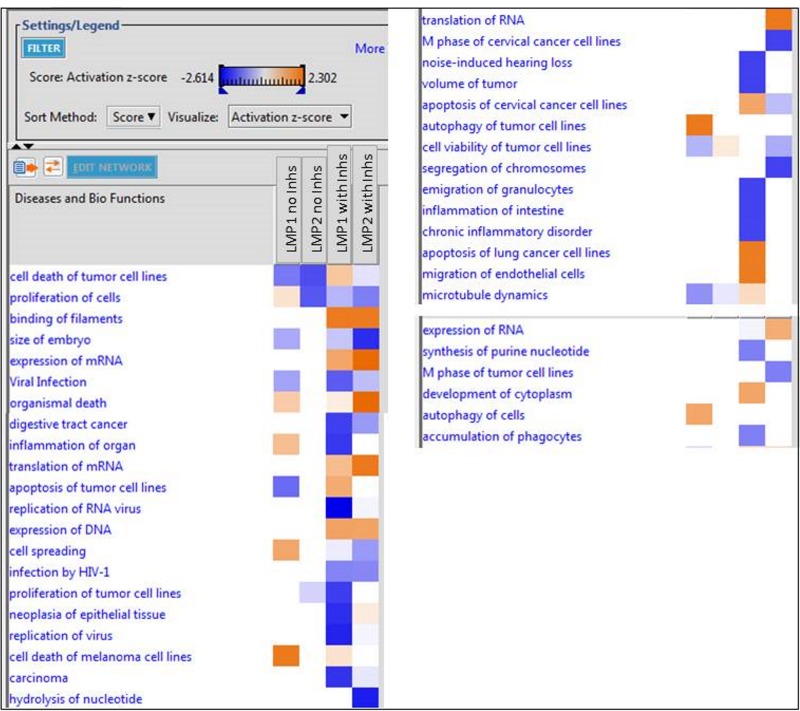
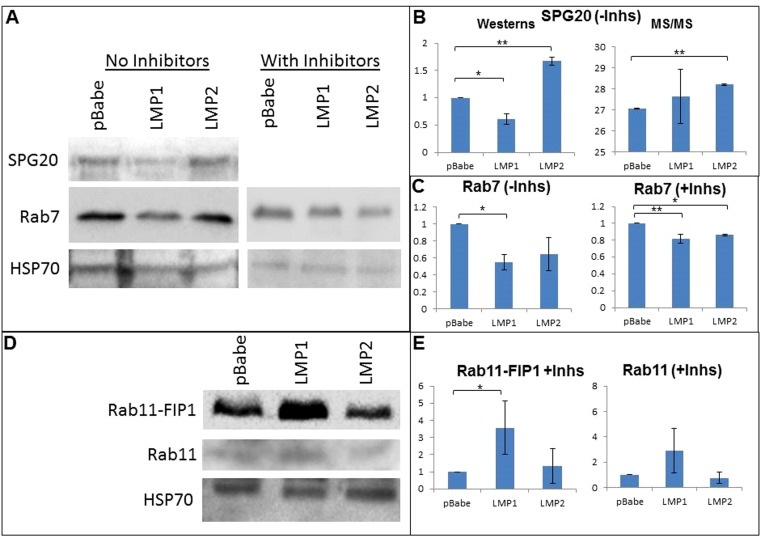
The Epstein-Barr virus (EBV) oncoproteins latent membrane protein 1 (LMP1) and LMP2A constitutively activate multiple signaling pathways, and both have been shown to interact with cellular ubiquitin ligases and affect cellular ubiquitination. To detect the LMP1- and LMP2A-mediated effects on the global cellular proteome, epithelial cell lines expressing LMP1 or LMP2A were analyzed using label-free quantitative proteomics. To identify proteins whose ubiquitination is affected by the viral proteins, the cells were cultured in the presence and absence of deubiquitinase (DUB) and proteasome inhibitors. More than 7,700 proteins were identified with high confidence and considerably more proteins showed significant differences in expression in the presence of inhibitors. Few of the differentially expressed proteins with or without inhibitors were common between LMP1 and LMP2A, confirming that the viral proteins induce unique changes in cell expression and function. However, ingenuity pathway analysis (IPA) of the data indicated that LMP1 and LMP2A modulate many of the same cellular regulatory pathways, including cell death and survival, cell movement, and actin filament dynamics. In addition, various proteasome subunits, ubiquitin-specific peptidases and conjugating enzymes, vesicle trafficking proteins, and NF-κB and mitogen-activated protein kinase signaling proteins were affected by LMP1 or LMP2A. These findings suggest that LMP1 and LMP2A may commonly target critical cell pathways through effects on distinct genes, with many cellular proteins modified by ubiquitination and/or degradation. The Epstein-Barr virus proteins latent membrane protein 1 and 2 have potent effects on cell growth and signaling. Both proteins bind to specific ubiquitin ligases and likely modulate the cellular proteome through ubiquitin-mediated effects on stability and intracellular location. In this study, a comprehensive proteomic analysis of the effects of LMP1 and LMP2A revealed that both proteins affected proteasome subunits, ubiquitin-specific conjugases and peptidases, and vesical trafficking proteins. The data suggest that the effects of these proteins on the abundance and ubiquitination of cellular proteins are in part responsible for their effects on cell growth regulation.
EB 病毒(EBV)癌蛋白潜伏膜蛋白 1(LMP1)和 LMP2A 持续激活多种信号通路,并且已经证明它们与细胞泛素连接酶相互作用并影响细胞泛素化。为了检测 LMP1 和 LMP2A 对全局细胞蛋白质组的介导作用,使用无标记定量蛋白质组学分析表达 LMP1 或 LMP2A 的上皮细胞系。为了鉴定其泛素化受病毒蛋白影响的蛋白质,将细胞在去泛素化酶(DUB)和蛋白酶体抑制剂的存在和不存在下培养。用高置信度鉴定了超过 7700 种蛋白质,并且在抑制剂存在下表达差异显著的蛋白质数量明显更多。有或没有抑制剂的差异表达蛋白中,LMP1 和 LMP2A 之间很少有共同的蛋白,这证实了病毒蛋白在细胞表达和功能中诱导独特的变化。然而,数据的 ingenuity 途径分析(IPA)表明,LMP1 和 LMP2A 调节许多相同的细胞调节途径,包括细胞死亡和存活、细胞运动和肌动蛋白丝动力学。此外,各种蛋白酶体亚基、泛素特异性肽酶和连接酶、囊泡转运蛋白以及 NF-κB 和丝裂原激活蛋白激酶信号蛋白受到 LMP1 或 LMP2A 的影响。这些发现表明,LMP1 和 LMP2A 可能通过对不同基因的影响共同针对关键细胞途径,许多细胞蛋白通过泛素化和/或降解进行修饰。EB 病毒蛋白潜伏膜蛋白 1 和 2 对细胞生长和信号具有强大的影响。这两种蛋白质都与特定的泛素连接酶结合,并且可能通过泛素对稳定性和细胞内位置的影响来调节细胞蛋白质组。在这项研究中,对 LMP1 和 LMP2A 影响的综合蛋白质组学分析表明,这两种蛋白质都影响蛋白酶体亚基、泛素特异性连接酶和肽酶以及囊泡转运蛋白。数据表明,这些蛋白质对细胞蛋白丰度和泛素化的影响部分是其对细胞生长调节影响的原因。