Ministry of Agriculture Key Laboratory of Tropical Fruit Biology, South Subtropical Crops Research Institute, Chinese Academy of Tropical Agricultural Sciences, Zhanjiang 524091, China.
Molecules. 2018 Jun 19;23(6):1480. doi: 10.3390/molecules23061480.
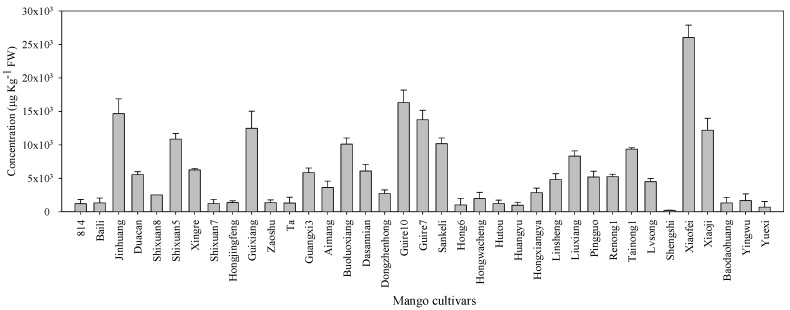
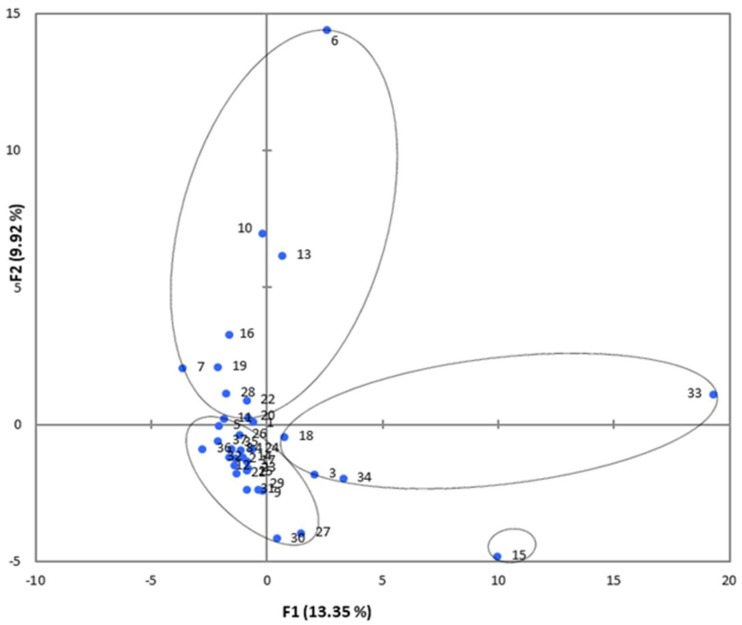
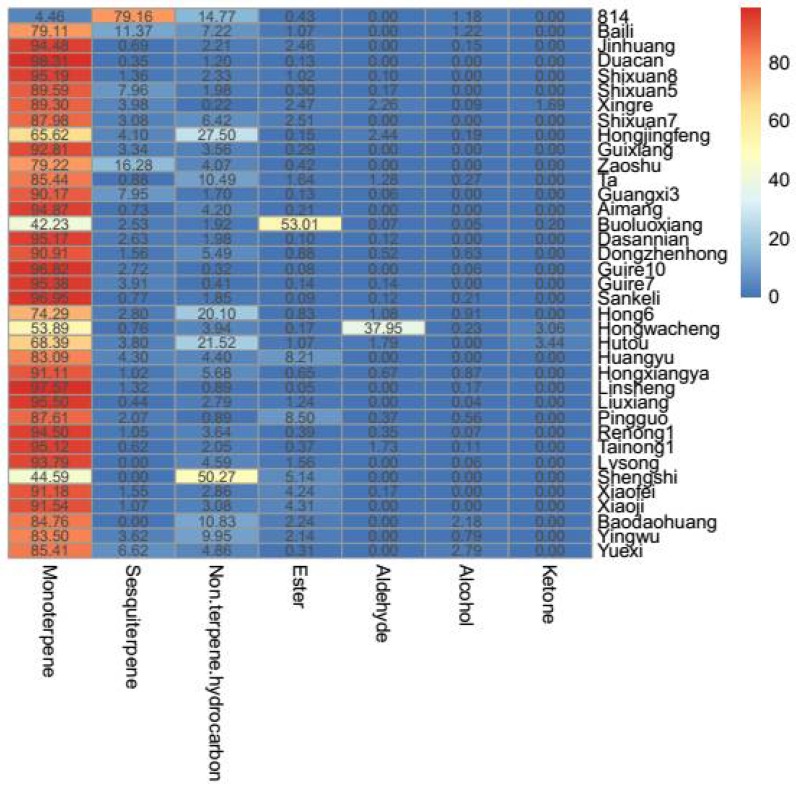
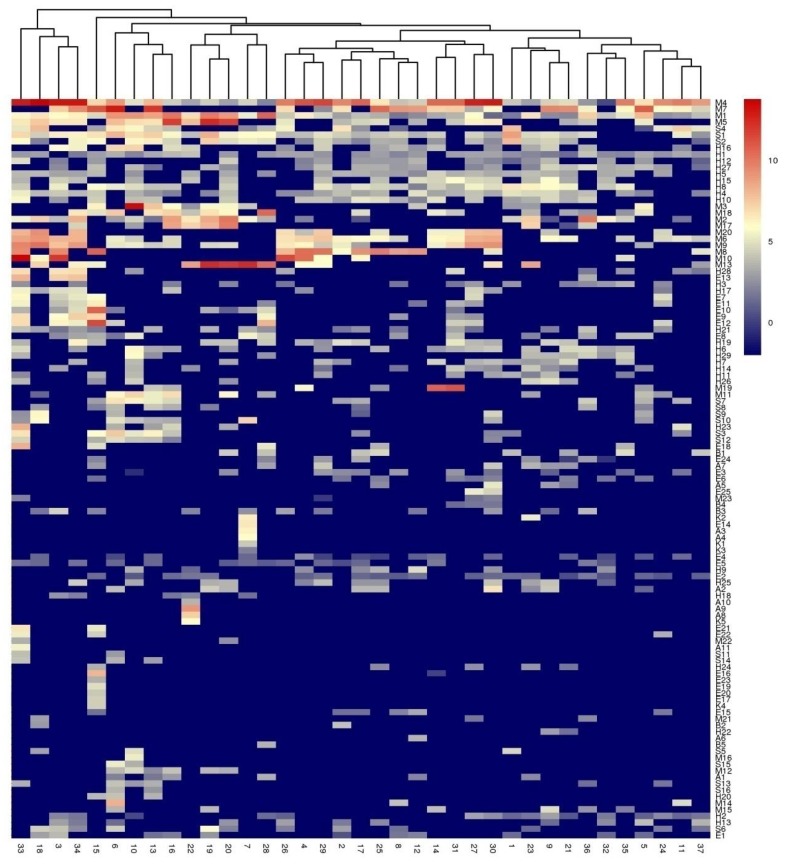
Despite abundant published research on the volatile characterization of mango germplasm, the aroma differentiation of Chinese cultivars remains unclear. Using headspace solid phase microextraction (HS-SPME) coupled with gas chromatography⁻mass spectrometry (GC-MS), the composition and relative content of volatiles in 37 cultivars representing the diversity of Chinese mango germplasm were investigated. Results indicated that there are distinct differences in the components and content of volatile compounds among and within cultivars. In total, 114 volatile compounds, including 23 monoterpenes, 16 sesquiterpenes, 29 non-terpene hydrocarbons, 25 esters, 11 aldehydes, five alcohols and five ketones, were identified. The total volatile content among cultivars ranged from 211 to 26,022 μg/kg fresh weight (FW), with 123-fold variation. Terpene compounds were the basic background volatiles, and 34 cultivars exhibited abundant monoterpenes. On the basis of hierarchical cluster analysis (HCA) and principal component analysis (PCA), terpinolene and α-pinene were important components constituting the aroma of Chinese mango cultivars. Most obviously, a number of mango cultivars with high content of various aroma components were observed, and they can serve as potential germplasms for both breeding and direct use.
尽管已经有大量关于芒果种质挥发性特征的已发表研究,但中国栽培品种的香气差异仍不清楚。本研究采用顶空固相微萃取(HS-SPME)结合气相色谱-质谱联用(GC-MS)技术,对代表中国芒果种质多样性的 37 个品种的挥发性成分及其相对含量进行了分析。结果表明,不同品种和同一品种内部的挥发性化合物成分和含量存在明显差异。共鉴定出 114 种挥发性化合物,包括 23 种单萜、16 种倍半萜、29 种非萜类烃、25 种酯类、11 种醛类、5 种醇类和 5 种酮类。各品种的总挥发性含量在 211 至 26022 μg/kg 鲜重(FW)之间,变化幅度为 123 倍。萜类化合物是基本的背景挥发性物质,其中 34 个品种含有丰富的单萜。基于层次聚类分析(HCA)和主成分分析(PCA),萜品烯和α-蒎烯是构成中国芒果品种香气的重要成分。最明显的是,发现了许多具有高含量各种香气成分的芒果品种,它们可作为选育和直接利用的潜在种质资源。