Tobiansky Daniel J, Wallin-Miller Kathryn G, Floresco Stan B, Wood Ruth I, Soma Kiran K
Department of Psychology, University of British Columbia, Vancouver, BC, Canada.
Djavad Mowafaghian Centre for Brain Health, University of British Columbia, Vancouver, BC, Canada.
Front Endocrinol (Lausanne). 2018 Jun 5;9:279. doi: 10.3389/fendo.2018.00279. eCollection 2018.
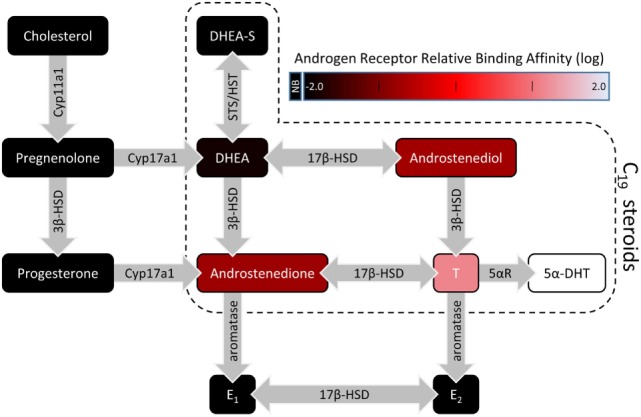
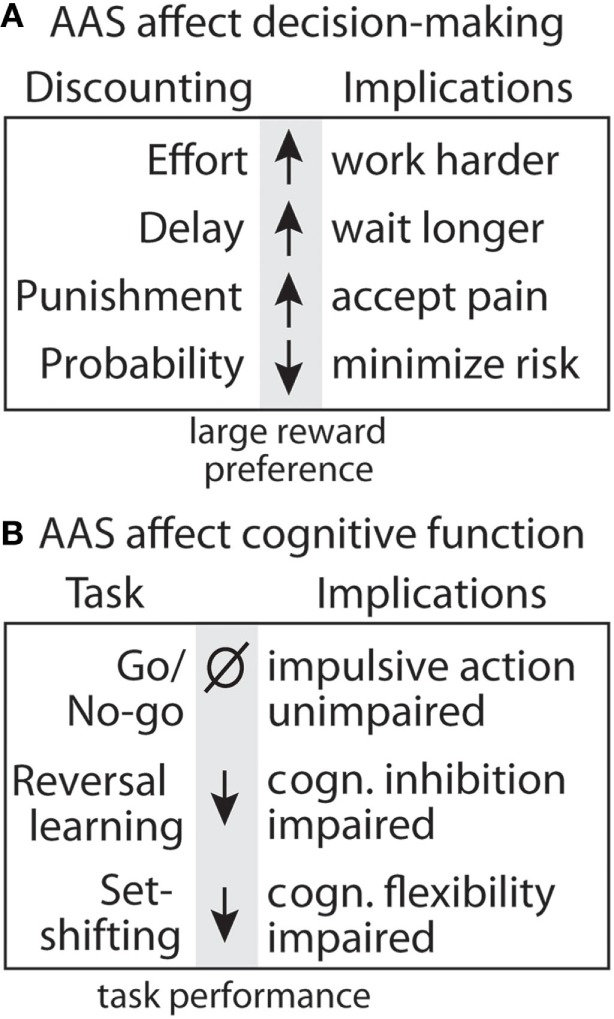
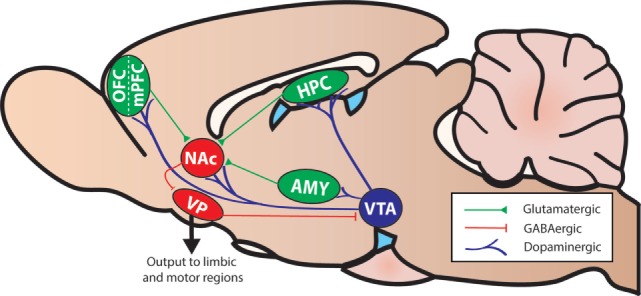
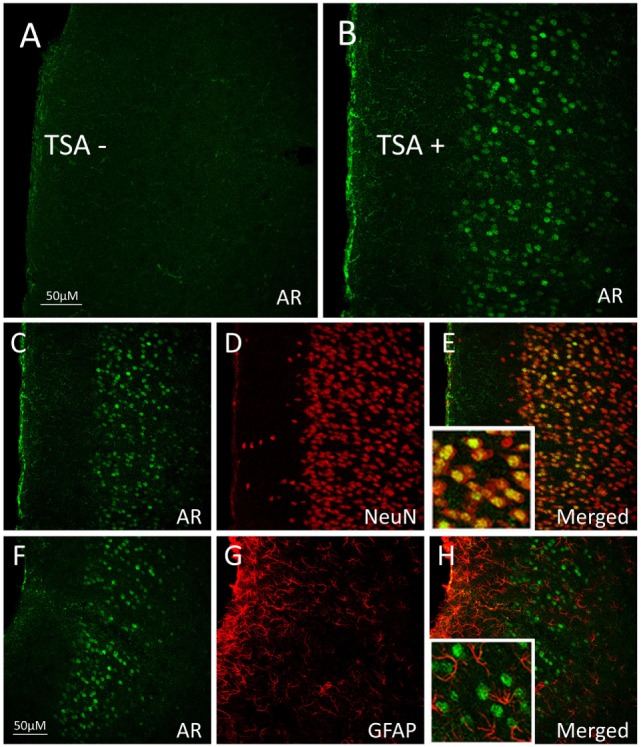
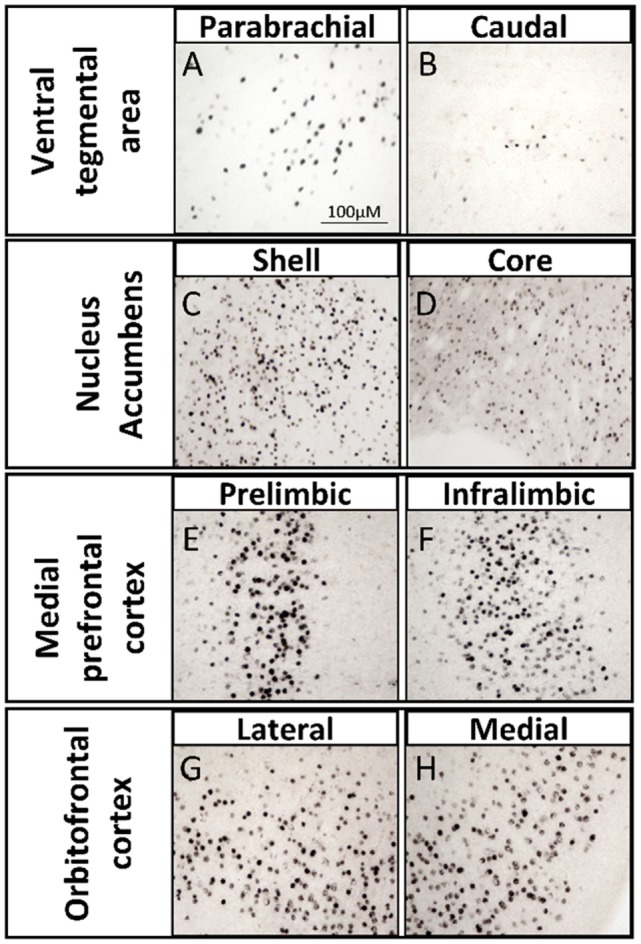
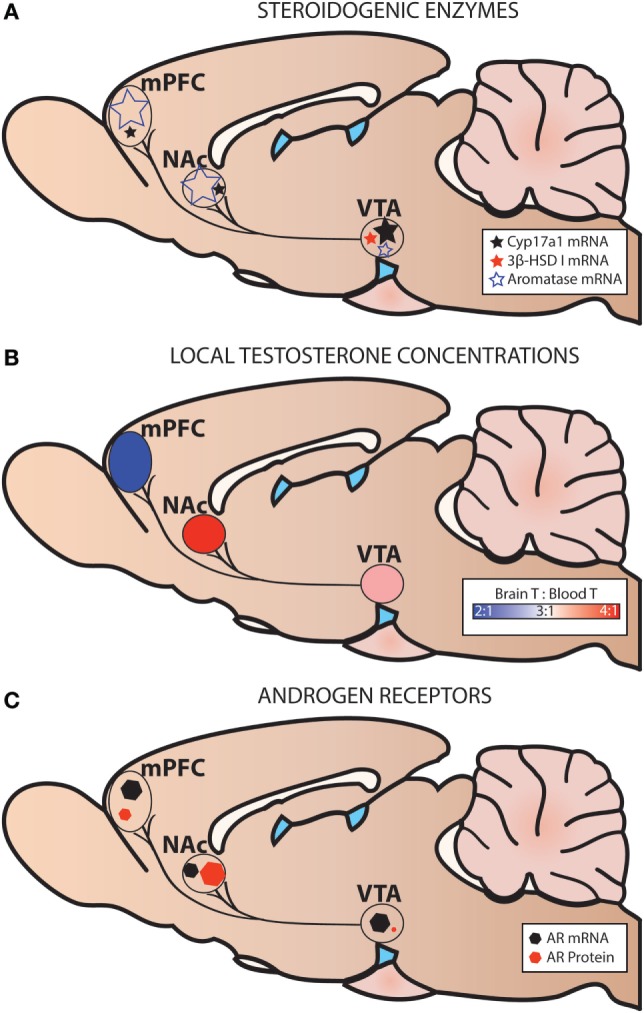
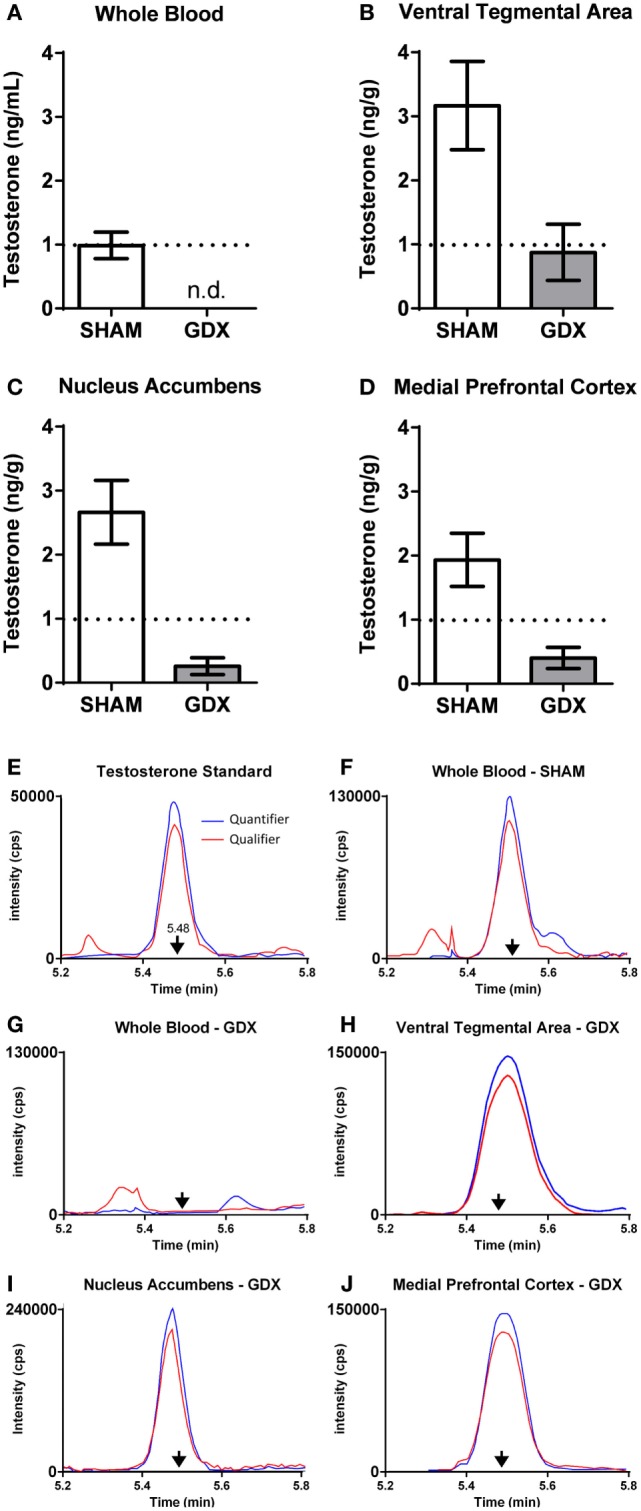
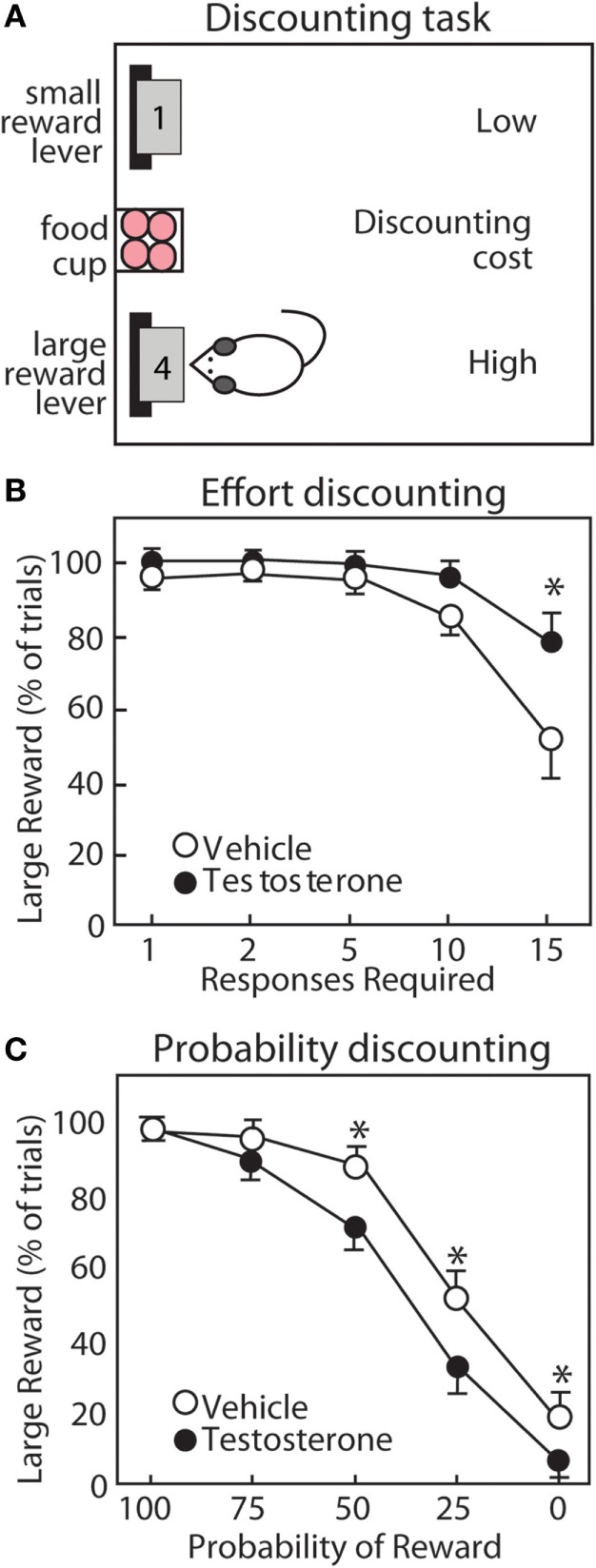
Multiple lines of evidence indicate that androgens, such as testosterone, modulate the mesocorticolimbic system and executive function. This review integrates neuroanatomical, molecular biological, neurochemical, and behavioral studies to highlight how endogenous and exogenous androgens alter behaviors, such as behavioral flexibility, decision making, and risk taking. First, we briefly review the neuroanatomy of the mesocorticolimbic system, which mediates executive function, with a focus on the ventral tegmental area (VTA), nucleus accumbens (NAc), medial prefrontal cortex (mPFC), and orbitofrontal cortex (OFC). Second, we present evidence that androgen receptors (AR) and other steroid receptors are expressed in the mesocorticolimbic system. Using sensitive immunohistochemistry and quantitative polymerase chain reaction (qPCR) techniques, ARs are detected in the VTA, NAc, mPFC, and OFC. Third, we describe recent evidence for local androgens ("neuroandrogens") in the mesocorticolimbic system. Steroidogenic enzymes are expressed in mesocorticolimbic regions. Furthermore, following long-term gonadectomy, testosterone is nondetectable in the blood but detectable in the mesocorticolimbic system, using liquid chromatography tandem mass spectrometry. However, the physiological relevance of neuroandrogens remains unknown. Fourth, we review how anabolic-androgenic steroids (AAS) influence the mesocorticolimbic system. Fifth, we describe how androgens modulate the neurochemistry and structure of the mesocorticolimbic system, particularly with regard to dopaminergic signaling. Finally, we discuss evidence that androgens influence executive functions, including the effects of androgen deprivation therapy and AAS. Taken together, the evidence indicates that androgens are critical modulators of executive function. Similar to dopamine signaling, there might be optimal levels of androgen signaling within the mesocorticolimbic system for executive functioning. Future studies should examine the regulation and functions of neurosteroids in the mesocorticolimbic system, as well as the potential deleterious and enduring effects of AAS use.
多条证据表明,雄激素(如睾酮)可调节中脑边缘系统和执行功能。本综述整合了神经解剖学、分子生物学、神经化学和行为学研究,以突出内源性和外源性雄激素如何改变行为,如行为灵活性、决策和冒险行为。首先,我们简要回顾介导执行功能的中脑边缘系统的神经解剖学,重点关注腹侧被盖区(VTA)、伏隔核(NAc)、内侧前额叶皮质(mPFC)和眶额皮质(OFC)。其次,我们提供证据表明雄激素受体(AR)和其他类固醇受体在中脑边缘系统中表达。使用敏感的免疫组织化学和定量聚合酶链反应(qPCR)技术,在VTA、NAc、mPFC和OFC中检测到了AR。第三,我们描述中脑边缘系统中局部雄激素(“神经雄激素”)的最新证据。类固醇生成酶在中脑边缘区域表达。此外,长期去势后,血液中检测不到睾酮,但使用液相色谱串联质谱法在中脑边缘系统中可检测到。然而,神经雄激素的生理相关性仍然未知。第四,我们综述合成代谢雄激素类固醇(AAS)如何影响中脑边缘系统。第五,我们描述雄激素如何调节中脑边缘系统的神经化学和结构,特别是在多巴胺能信号方面。最后,我们讨论雄激素影响执行功能的证据,包括雄激素剥夺疗法和AAS的影响。综上所述,证据表明雄激素是执行功能的关键调节因子。与多巴胺信号类似,中脑边缘系统内可能存在执行功能的最佳雄激素信号水平。未来的研究应检查神经甾体在中脑边缘系统中的调节和功能,以及使用AAS的潜在有害和持久影响。