Zhang Meiwei, Wang Yangfan, Li Yangping, Li Wanru, Li Ruojiao, Xie Xinran, Wang Shi, Hu Xiaoli, Zhang Lingling, Bao Zhenmin
MOE Key Laboratory of Marine Genetics and Breeding, Ocean University of China, Qingdao, China.
Laboratory for Marine Biology and Biotechnology, Qingdao National Laboratory for Marine Science and Technology, Qingdao, China.
Front Genet. 2018 Jun 5;9:197. doi: 10.3389/fgene.2018.00197. eCollection 2018.
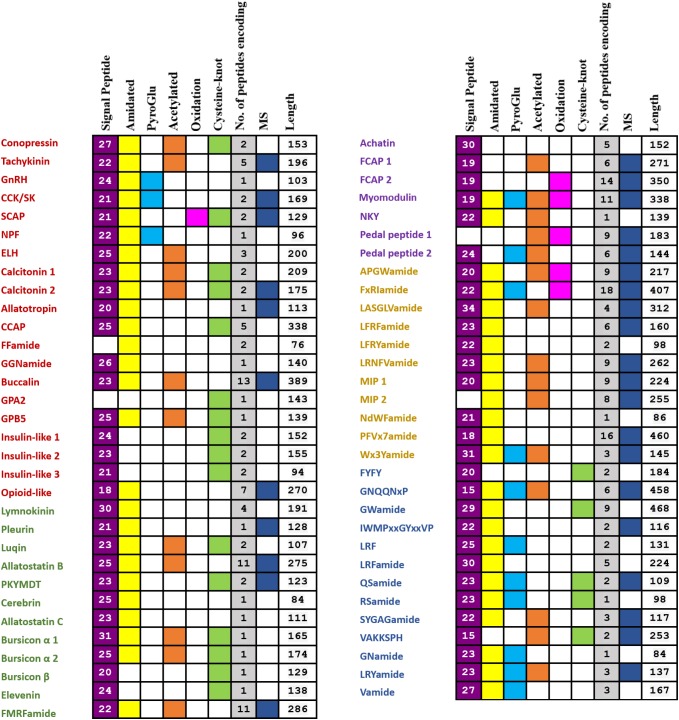
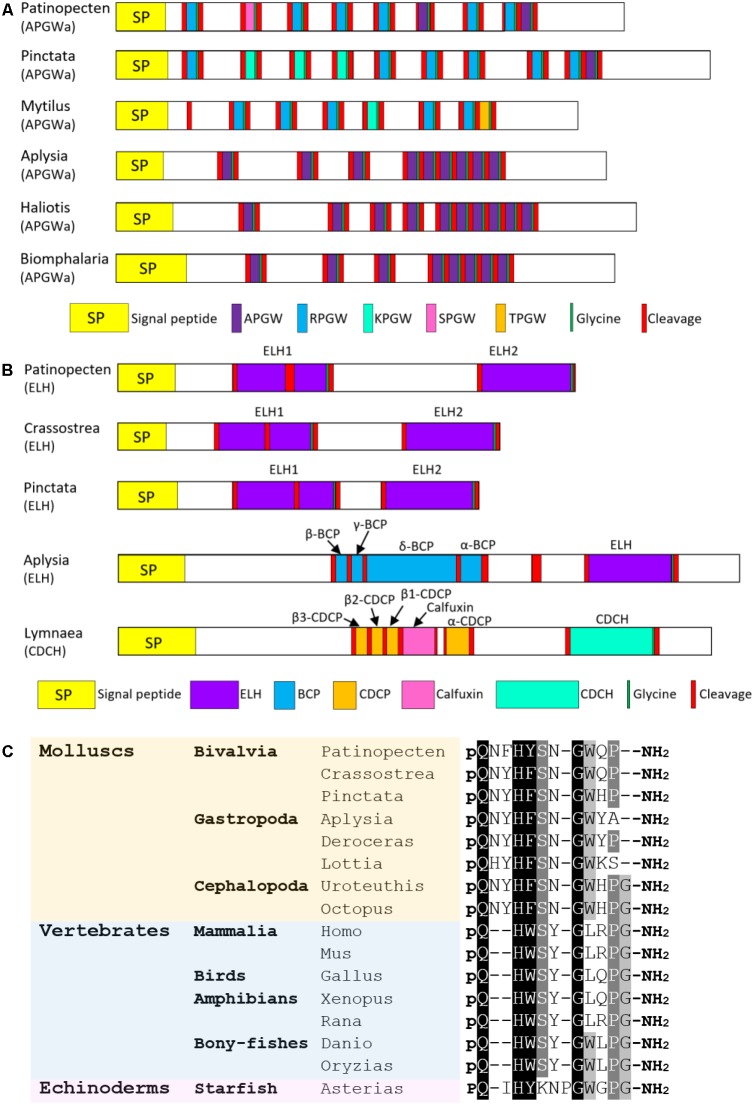
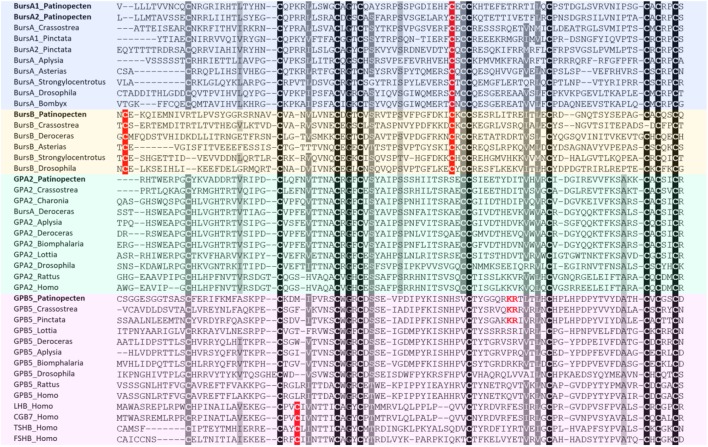
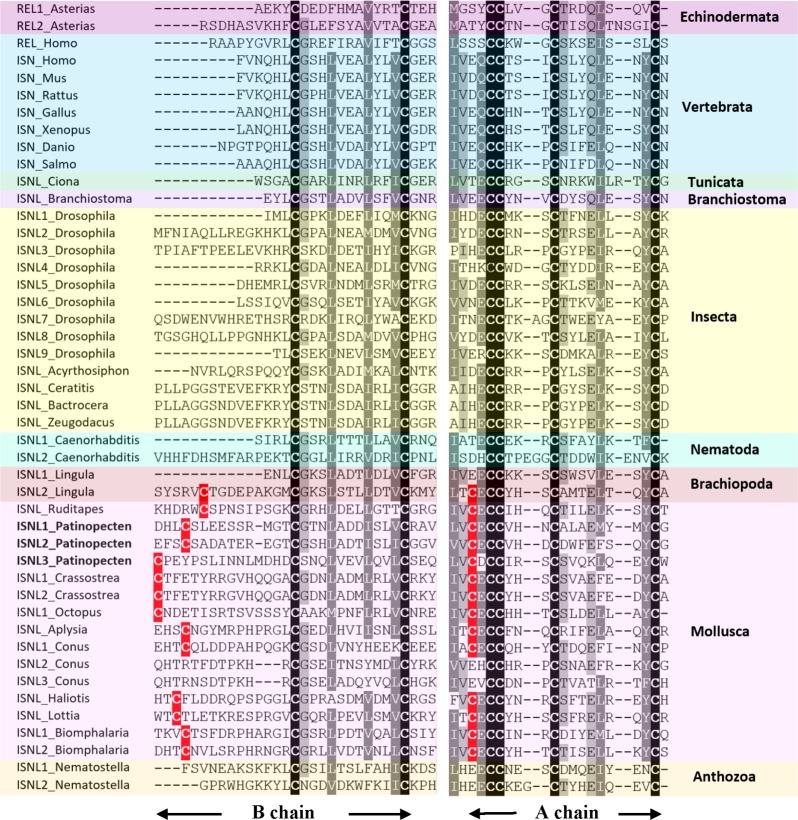
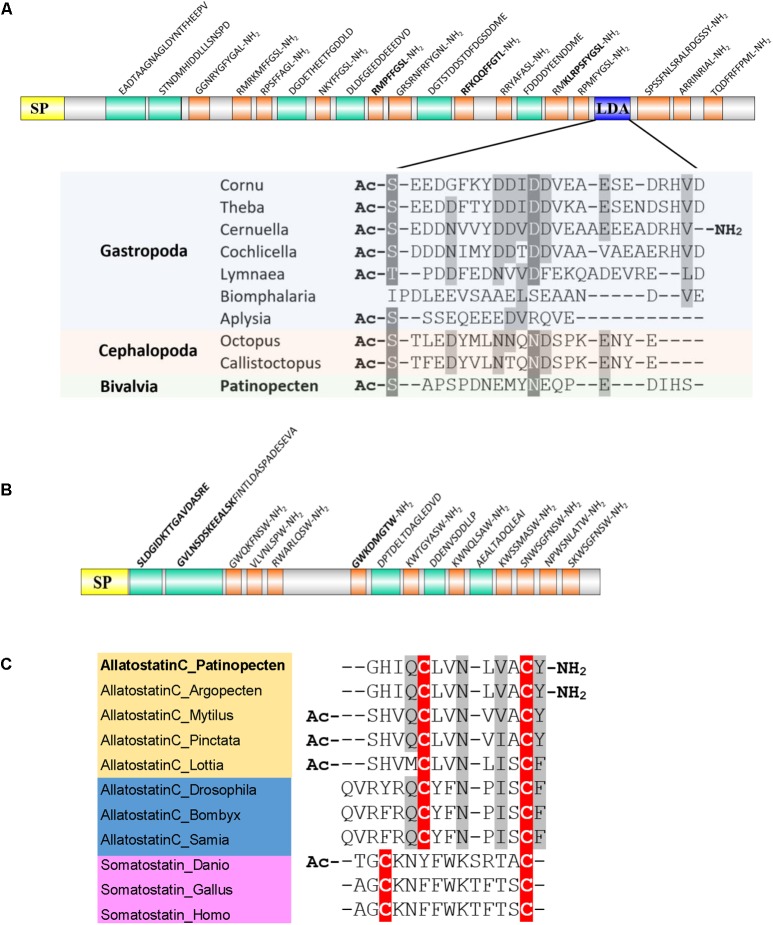
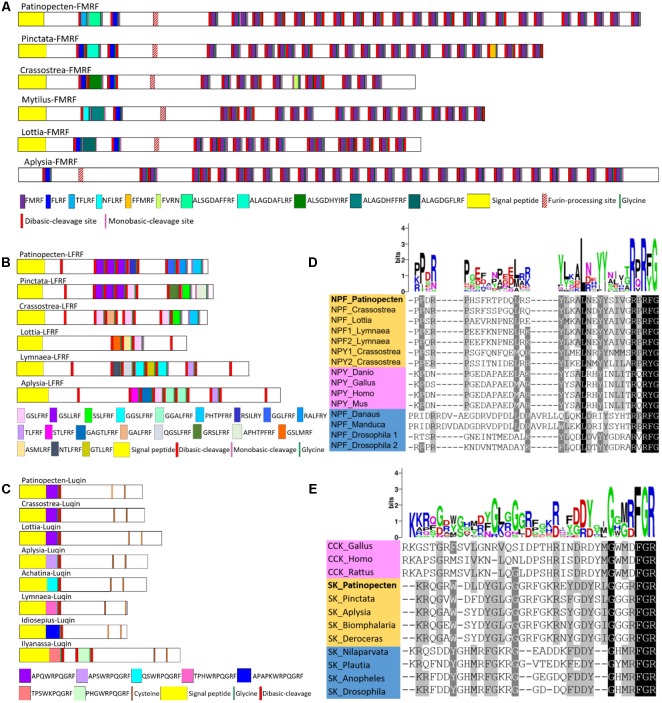
Neuropeptides play essential roles in regulation of reproduction and growth in marine molluscs. But their function in marine bivalves - a group of animals of commercial importance - is largely unexplored due to the lack of systematic identification of these molecules. In this study, we sequenced and analyzed the transcriptome of nerve ganglia of Yesso scallop , from which 63 neuropeptide genes were identified based on BLAST and prediction approaches, and 31 were confirmed by proteomic analysis using the liquid chromatography-tandem mass spectrometry (LC-MS/MS). Fifty genes encode known neuropeptide precursors, of which 20 commonly exist in bilaterians and 30 are protostome specific. Three neuropeptides that have not yet been reported in bivalves were identified, including calcitonin/DH31, lymnokinin and pleurin. Characterization of glycoprotein hormones, insulin-like peptides, allatostatins, RFamides, and some reproduction, cardioactivity or feeding related neuropeptides reveals scallop neuropeptides have conserved molluscan neuropeptide domains, but some (e.g., GPB5, APGWamide and ELH) are characterized with bivalve-specific features. Thirteen potentially novel neuropeptides were identified, including 10 that may also exist in other protostomes, and 3 (GNamide, LRYamide, and Vamide) that may be scallop specific. In addition, we found neuropeptides potentially related to scallop shell growth and eye functioning. This study represents the first comprehensive identification of neuropeptides in scallop, and would contribute to a complete understanding on the roles of various neuropeptides in endocrine regulation in bivalve molluscs.
神经肽在海洋软体动物的繁殖和生长调节中发挥着重要作用。但由于缺乏对这些分子的系统鉴定,它们在海洋双壳贝类(一类具有商业重要性的动物)中的功能在很大程度上尚未得到探索。在本研究中,我们对虾夷扇贝神经节的转录组进行了测序和分析,基于BLAST和预测方法从中鉴定出63个神经肽基因,其中31个通过液相色谱-串联质谱(LC-MS/MS)蛋白质组分析得到确认。50个基因编码已知的神经肽前体,其中20个在两侧对称动物中普遍存在,30个是原口动物特有的。鉴定出了三种尚未在双壳贝类中报道的神经肽,包括降钙素/DH31、淋巴激肽和pleurin。对糖蛋白激素、胰岛素样肽、咽侧体抑制素、RFamides以及一些与繁殖、心脏活动或摄食相关的神经肽的表征揭示,扇贝神经肽具有保守的软体动物神经肽结构域,但有些(如GPB5、APGWamide和ELH)具有双壳贝类特有的特征。鉴定出了13种潜在的新型神经肽,其中10种可能也存在于其他原口动物中,3种(GNamide、LRYamide和Vamide)可能是扇贝特有的。此外,我们发现了可能与扇贝贝壳生长和眼睛功能相关的神经肽。本研究首次对扇贝中的神经肽进行了全面鉴定,将有助于全面了解各种神经肽在双壳贝类内分泌调节中的作用。