Department of Farm Animal Health, Faculty of Veterinary Medicine, Utrecht University, Utrecht, The Netherlands.
Department of Equine Sciences, Faculty of Veterinary Medicine, Utrecht University, The Netherlands.
PLoS One. 2018 Jun 20;13(6):e0199310. doi: 10.1371/journal.pone.0199310. eCollection 2018.
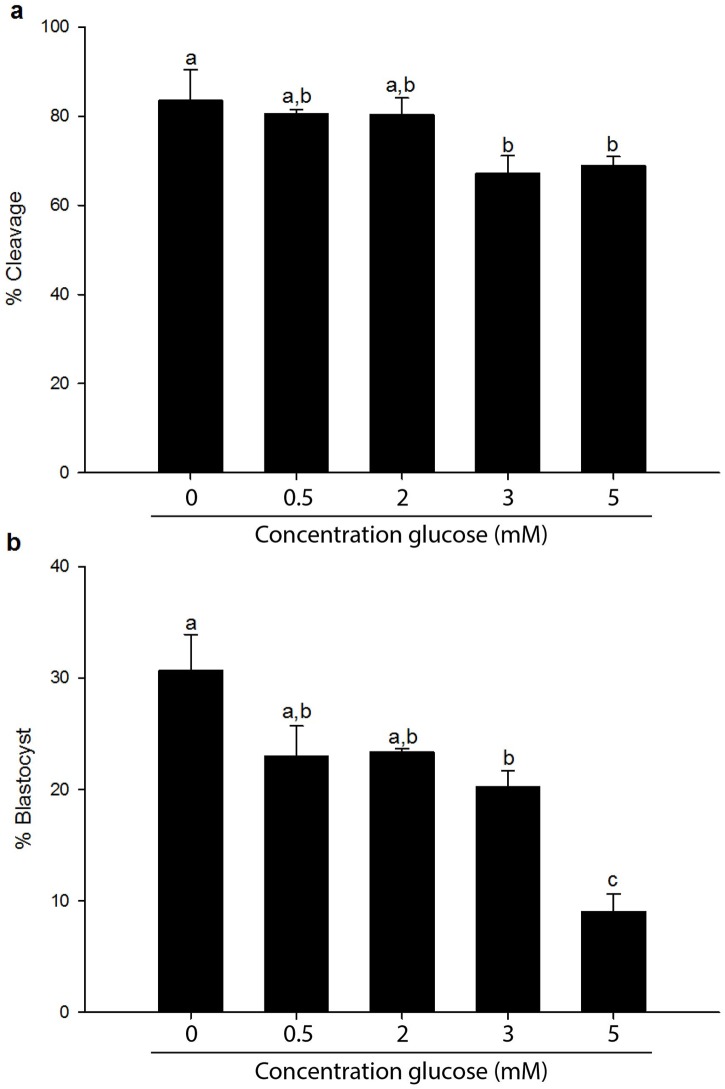
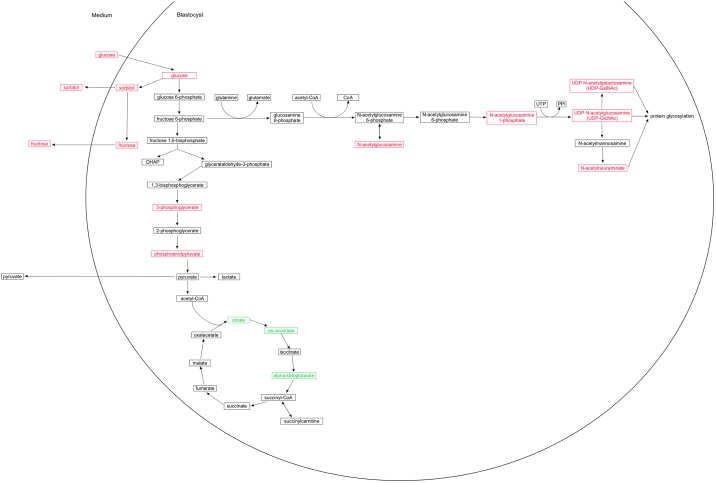
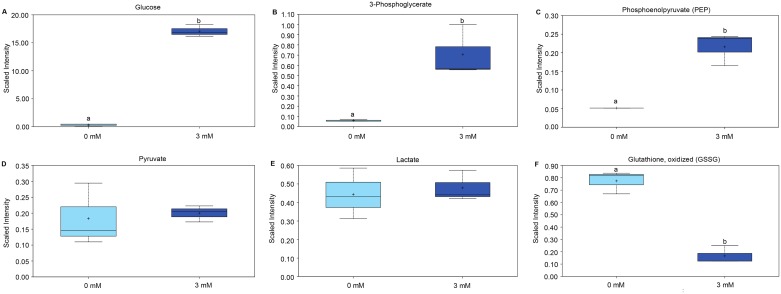
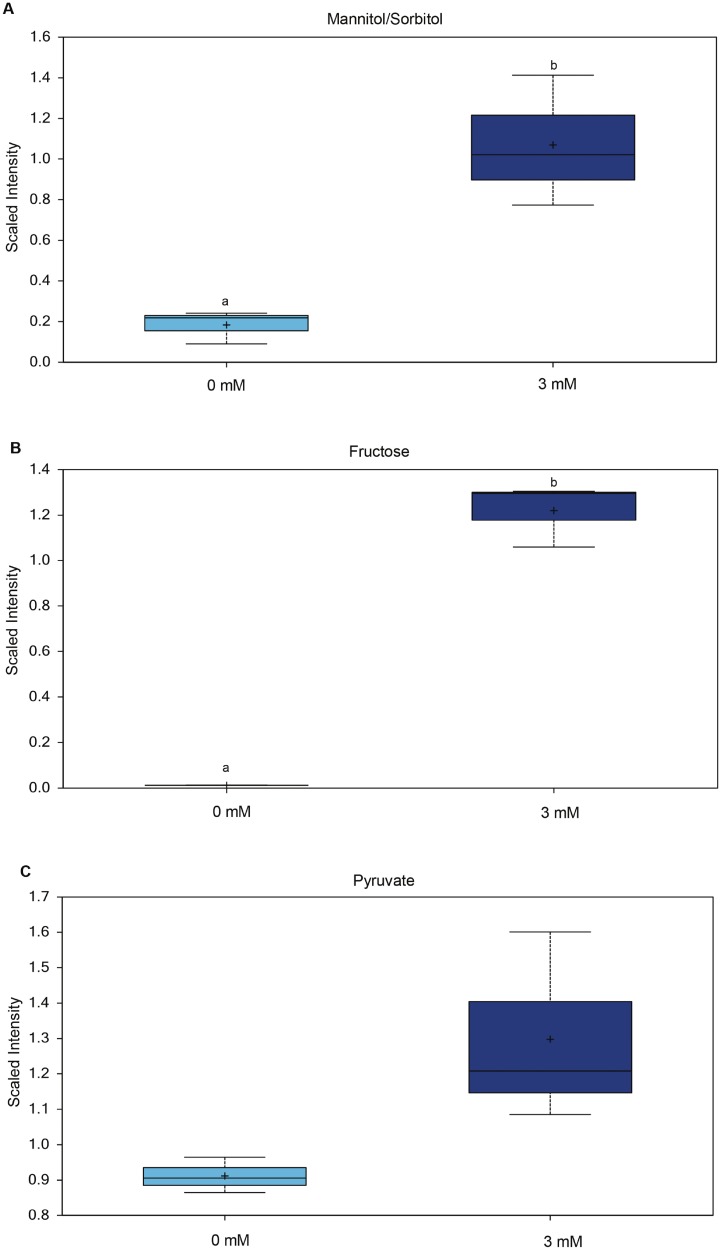
Chronically high blood glucose concentrations are a characteristic of diabetes mellitus. Maternal diabetes affects the metabolism of early embryos and can cause a delay in development. To mimic maternal diabetes, bovine in vitro fertilization and embryo culture were performed in fertilization medium and culture medium containing 0.5, 2, 3, and 5 mM, glucose whereas under control conditions, the medium was glucose free (0 mM). Compared to control conditions (0 mM, 31%), blastocyst development was decreased to 23% with 0.5 and 2 mM glucose. Presence of 3 or 5 mM glucose in the medium resulted in decreased blastocyst rates (20% and 10% respectively). The metabolomic profile of resulting day 8 blastocysts was analysed by UPLC-MS/MS, and compared to that of blastocysts cultured in control conditions. Elevated glucose concentrations stimulated an increase in glycolysis and activity of the hexosamine pathway, which is involved in protein glycosylation. However, components of the tricarboxylic acid cycle, such as citrate and alpha-ketoglutarate, were reduced in glucose stimulated blastocysts, suggesting that energy production from pyruvate was inefficient. On the other hand, activity of the polyol pathway, an alternative route to energy generation, was increased. In short, cattle embryos exposed to elevated glucose concentrations during early development showed changes in their metabolomic profile consistent with the expectations of exposure to diabetic conditions.
慢性高血糖是糖尿病的特征。母体糖尿病会影响早期胚胎的新陈代谢,并导致发育迟缓。为了模拟母体糖尿病,在含有 0.5、2、3 和 5mM 葡萄糖的受精培养基和培养培养基中进行牛体外受精和胚胎培养,而在对照条件下,培养基中不含葡萄糖(0mM)。与对照条件(0mM,31%)相比,含有 0.5 和 2mM 葡萄糖的培养基中囊胚的发育率下降到 23%。培养基中存在 3 或 5mM 葡萄糖会导致囊胚率降低(分别为 20%和 10%)。通过 UPLC-MS/MS 分析了第 8 天囊胚的代谢组学图谱,并与对照条件下培养的囊胚进行了比较。葡萄糖浓度升高刺激了糖酵解和己糖胺途径的活性增加,该途径参与蛋白质糖基化。然而,三羧酸循环的成分,如柠檬酸和α-酮戊二酸,在葡萄糖刺激的囊胚中减少,表明来自丙酮酸的能量产生效率低下。另一方面,多元醇途径的活性增加,这是一种替代的能量产生途径。简而言之,在早期发育过程中暴露于高葡萄糖浓度下的牛胚胎表现出其代谢组学图谱的变化,这与暴露于糖尿病条件下的预期一致。