Department of Pharmaceutics, Rutgers, The State University of New Jersey, Piscataway, NJ, USA.
Rutgers Cancer Institute of New Jersey, New Brunswick, NJ, USA.
Cancer Med. 2018 Aug;7(8):3630-3641. doi: 10.1002/cam4.1631. Epub 2018 Jun 21.
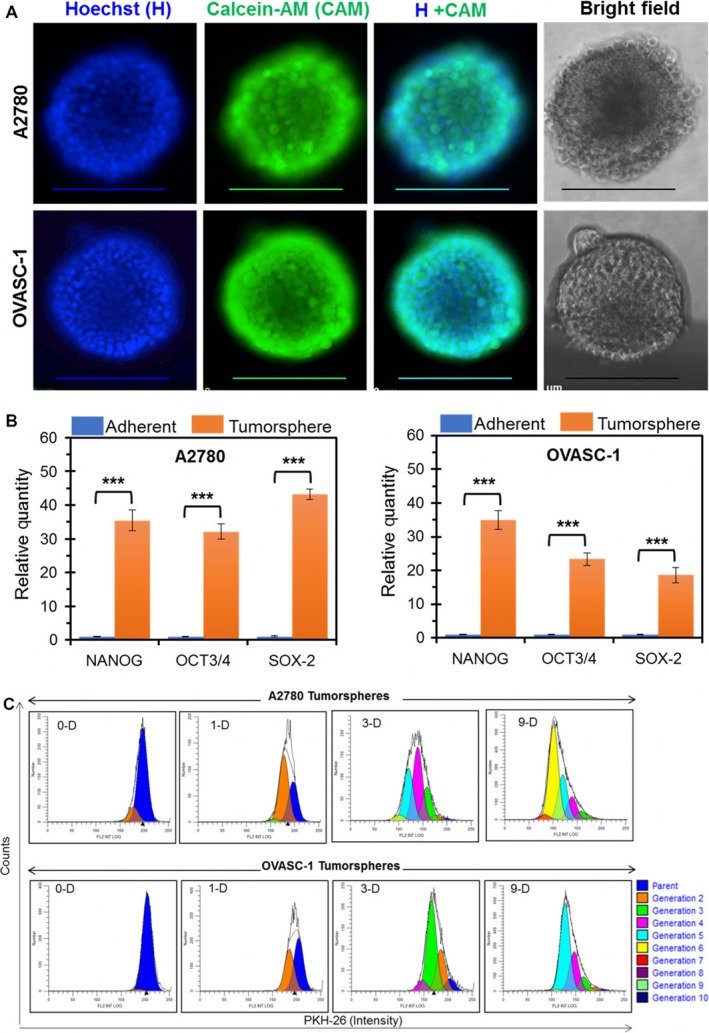
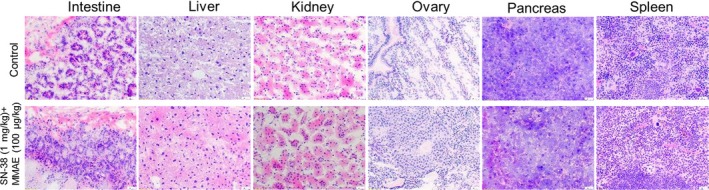
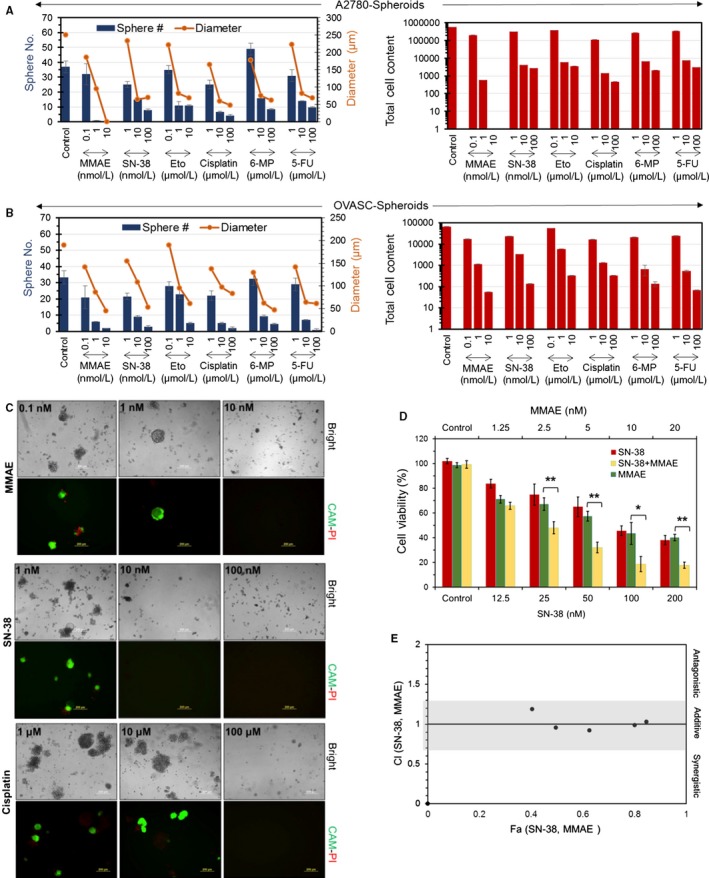
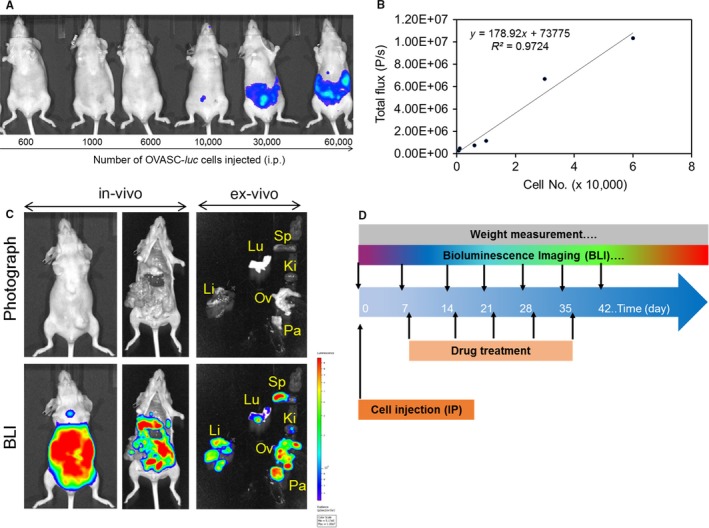
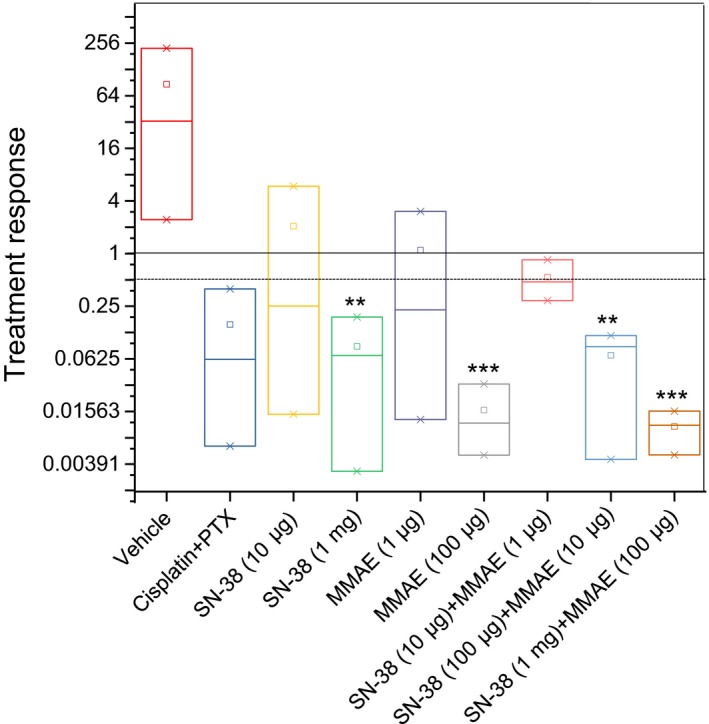
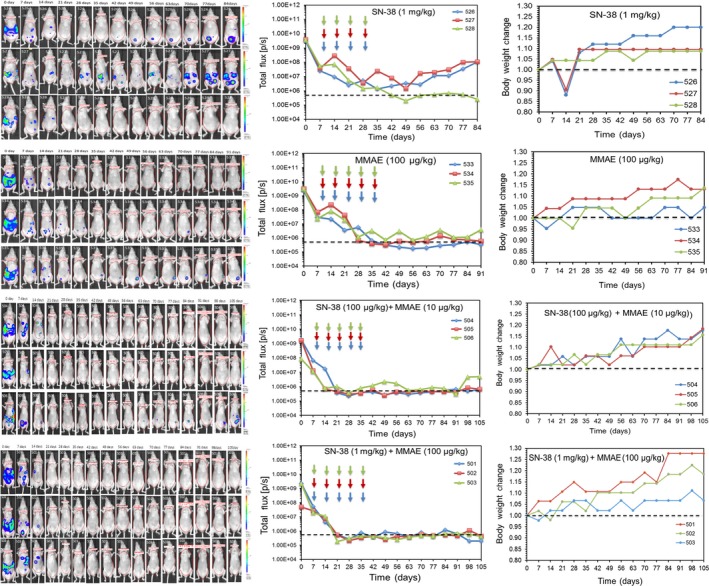
The majority of ovarian cancer patients are diagnosed in late stages of the disease, in which the tumor cells have leaked into the peritoneum and are present as tumorspheres. These tumorspheres are rich in cancer stem-like cells (CSCs), which are resistant to therapy and are a major source of relapse. The purpose of this research was to identify a safe therapeutic approach that could eradicate the peritoneal CSC-rich tumorspheres and inhibit relapse. Highly metastatic ascitic cells (OVASC-1) that are resistant to standard-of-care chemotherapy due to upregulation of MDR1 gene were obtained from a patient with ovarian carcinoma and recurrent disease. CSC-rich tumorspheres were generated, characterized, and treated with different chemotherapeutics. The most effective drug combination that could eradicate tumorspheres at nanomolar levels despite upregulation of MDR1 gene was identified. Luciferase-expressing OVASC-1 cells were implanted in the peritoneum of nude mice and treated with the identified drug combination. The progression of disease, response to therapy and recurrence were studied by quantitative imaging. Toxicity to abdominal tissues was studied by histopathology. Mice implanted with intraperitoneal (IP) OVASC-1 xenografts showed limited response to combination therapy with cisplatin/paclitaxel at the maximum tolerated dose. Despite overexpression of MDR1 on OVASC-1 cells, mice treated with our combination IP low-dose MMAE and SN-38 chemotherapy showed complete response without relapse. No signs of toxicity to abdominal tissues were observed. While MMAE and SN-38 are not administered as free drugs due to their high potency and potential for systemic toxicity, our low-dose localized therapy approach effectively restricted the cytotoxic effects to the tumor cells in the peritoneum. Consequently, maximum efficacy with minimal adverse effects was achieved. These remarkable results with IP low-dose combination chemotherapy encourage investigation into its potential clinical application as either first-line therapy or in cases of acquired resistance to cisplatin and paclitaxel.
大多数卵巢癌患者在疾病晚期被诊断出来,此时肿瘤细胞已经渗透到腹膜中,并形成肿瘤球体。这些肿瘤球体富含癌症干细胞样细胞(CSC),这些细胞对治疗具有抗性,是复发的主要来源。本研究的目的是确定一种安全的治疗方法,以根除富含腹膜 CSC 的肿瘤球体并抑制复发。从一位患有卵巢癌和复发性疾病的患者中获得了对标准治疗方案化疗具有耐药性的高度转移性腹水细胞(OVASC-1),这是由于 MDR1 基因的上调。生成、表征富含 CSC 的肿瘤球体,并使用不同的化疗药物进行处理。尽管 MDR1 基因上调,但能够以纳摩尔水平根除肿瘤球体的最有效药物组合被确定。将表达荧光素的 OVASC-1 细胞植入裸鼠的腹膜中,并使用鉴定出的药物组合进行治疗。通过定量成像研究疾病进展、对治疗的反应和复发情况。通过组织病理学研究对腹部组织的毒性。用顺铂/紫杉醇联合治疗荷腹腔 OVASC-1 异种移植瘤的小鼠反应有限,尽管 OVASC-1 细胞过度表达 MDR1,但用我们的组合腹腔低剂量 MMAE 和 SN-38 化疗治疗的小鼠完全缓解,无复发。未观察到对腹部组织的毒性迹象。尽管 MMAE 和 SN-38 由于其高效力和潜在的全身毒性而不能作为游离药物给药,但我们的低剂量局部治疗方法有效地将细胞毒性作用限制在腹膜中的肿瘤细胞中。因此,实现了最大疗效和最小副作用。这种腹腔低剂量联合化疗的显著结果鼓励研究其作为一线治疗或在对顺铂和紫杉醇产生获得性耐药的情况下的潜在临床应用。