Endocrinology and Nutrition Unit, Hospital Universitario San Cecilio. Instituto de Investigación Biosanitaria de Granada (Ibs.GRANADA). Av. de la Ilustración, s/n, Granada, Spain.
CIBERFES. Instituto de Salud Carlos III. Carretera de Majadahonda-Pozuelo, Km. 2.200, Majadahonda, Madrid, Spain.
PLoS One. 2018 Jun 21;13(6):e0199504. doi: 10.1371/journal.pone.0199504. eCollection 2018.
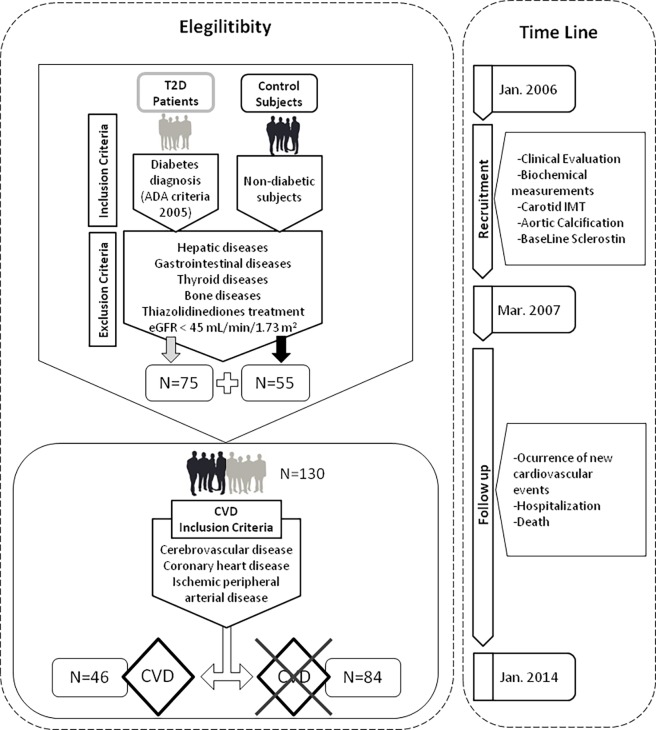
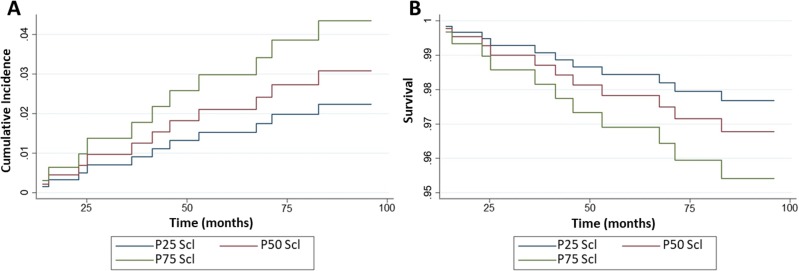
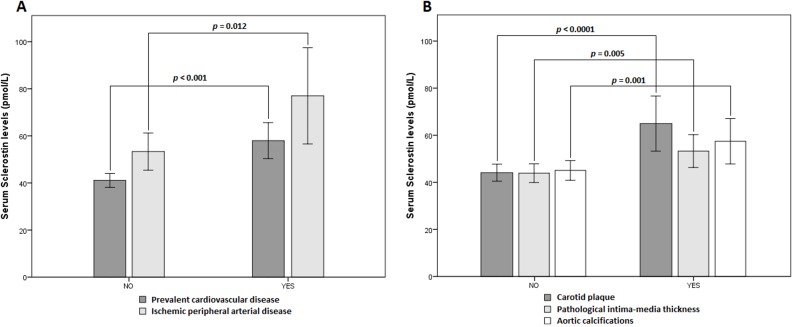
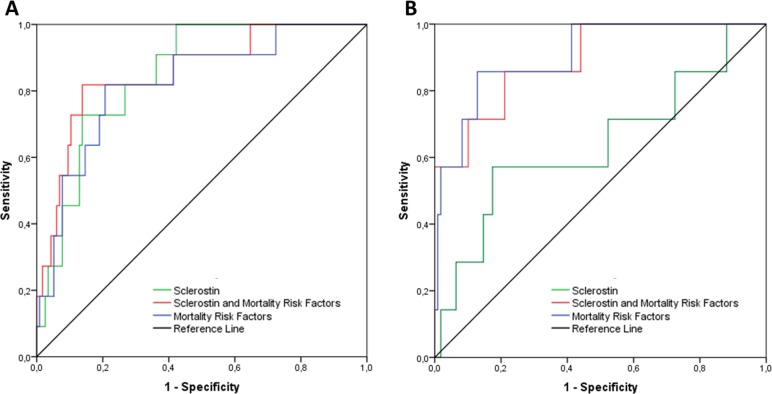
Cardiovascular diseases are a health problem throughout the world, especially in people with diabetes. The identification of cardiovascular disease biomarkers can improve risk stratification. Sclerostin is a modulator of the Wnt/β-catenin signalling pathway in different tissues, and it has recently been linked to vascular biology. The current study aimed to evaluate the relationship between circulating sclerostin levels and cardiovascular and non-cardiovascular mortality in individuals with and without type 2 diabetes. We followed up a cohort of 130 participants (mean age 56.8 years; 48.5% females; 75 with type 2 diabetes; 46 with prevalent cardiovascular disease) in which serum sclerostin levels were measured at the baseline. Time to death (both of cardiovascular and non-cardiovascular causes) was assessed to establish the relationship between sclerostin and mortality. We found that serum sclerostin concentrations were significantly higher in patients with prevalent cardiovascular disease (p<0.001), and independently associated with cardiovascular mortality (p = 0.008), showing sclerostin to be a stronger predictor of mortality than other classical risk factors (area under the curve = 0.849 vs 0.823). The survival analysis showed that an increase of 10 pmol/L in the serum sclerostin level resulted in a 31% increase in cardiovascular mortality. However, no significant association was observed between sclerostin levels and non-cardiovascular mortality (p = 0.346). From these results, we conclude that high sclerostin levels are related to mortality due to cardiovascular causes. The clinical implication of these findings is based on the possible use of serum sclerostin as a new biomarker of cardiovascular mortality risk in order to establish preventive strategies.
心血管疾病是一个全球性的健康问题,尤其在糖尿病患者中更为常见。识别心血管疾病的生物标志物可以改善风险分层。骨硬化蛋白是不同组织中 Wnt/β-连环蛋白信号通路的调节剂,最近与血管生物学有关。本研究旨在评估 2 型糖尿病患者和非 2 型糖尿病患者循环骨硬化蛋白水平与心血管和非心血管死亡率之间的关系。我们对 130 名参与者(平均年龄 56.8 岁;48.5%为女性;75 名患有 2 型糖尿病;46 名患有现患心血管疾病)进行了随访,在基线时测量了血清骨硬化蛋白水平。评估死亡时间(心血管和非心血管原因),以确定骨硬化蛋白与死亡率之间的关系。我们发现,患有现患心血管疾病的患者血清骨硬化蛋白浓度显著升高(p<0.001),且与心血管死亡率独立相关(p = 0.008),表明骨硬化蛋白比其他经典危险因素(曲线下面积 = 0.849 对 0.823)更能预测死亡率。生存分析显示,血清骨硬化蛋白水平升高 10 pmol/L,心血管死亡率增加 31%。然而,血清骨硬化蛋白水平与非心血管死亡率之间没有显著相关性(p = 0.346)。从这些结果中,我们得出结论,高骨硬化蛋白水平与心血管原因导致的死亡率有关。这些发现的临床意义基于血清骨硬化蛋白可能作为心血管死亡率风险的新生物标志物的潜在应用,以制定预防策略。