Huang Anliang, Ma Jinhu, Huang Liyan, Yang Fan, Cheng Ping
Department of Pathology, Key Laboratory of Birth Defects and Related Diseases of Women and Children of Ministry of Education, West China Second University Hospital, Sichuan University, Chengdu, Sichuan 610041, P.R. China.
Department of Abdominal Oncology, Cancer Center, West China Hospital, Sichuan University, Chengdu, Sichuan 610041, P.R. China.
Oncol Lett. 2018 Jun;15(6):8505-8515. doi: 10.3892/ol.2018.8430. Epub 2018 Apr 4.
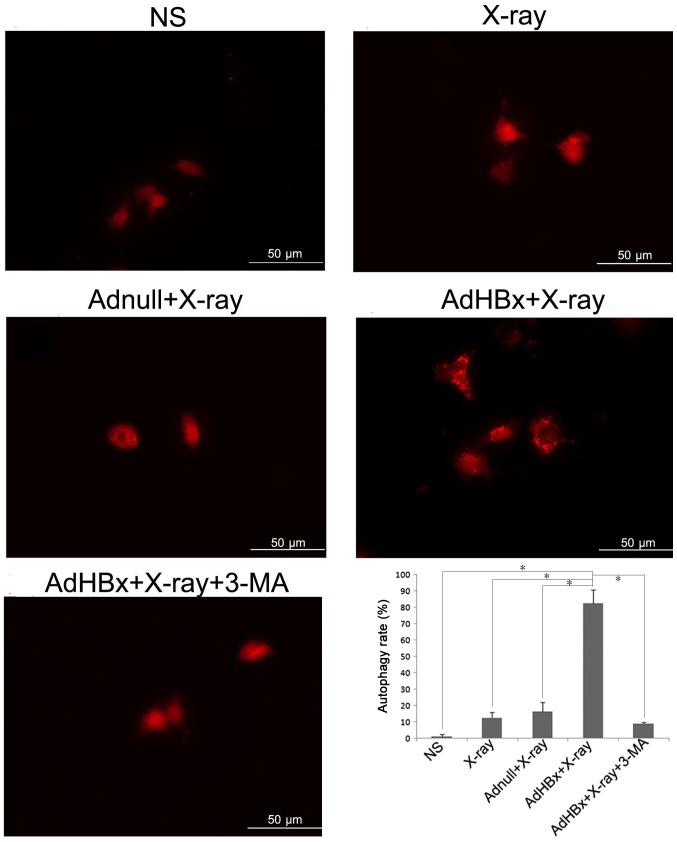
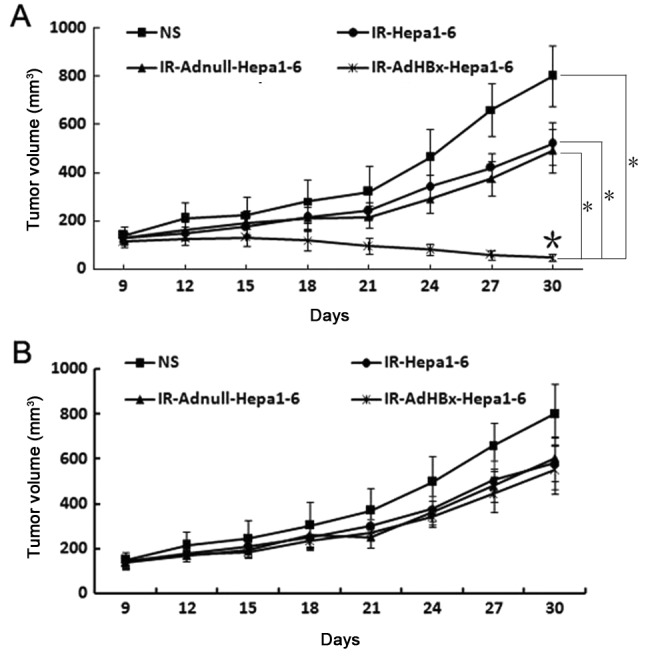
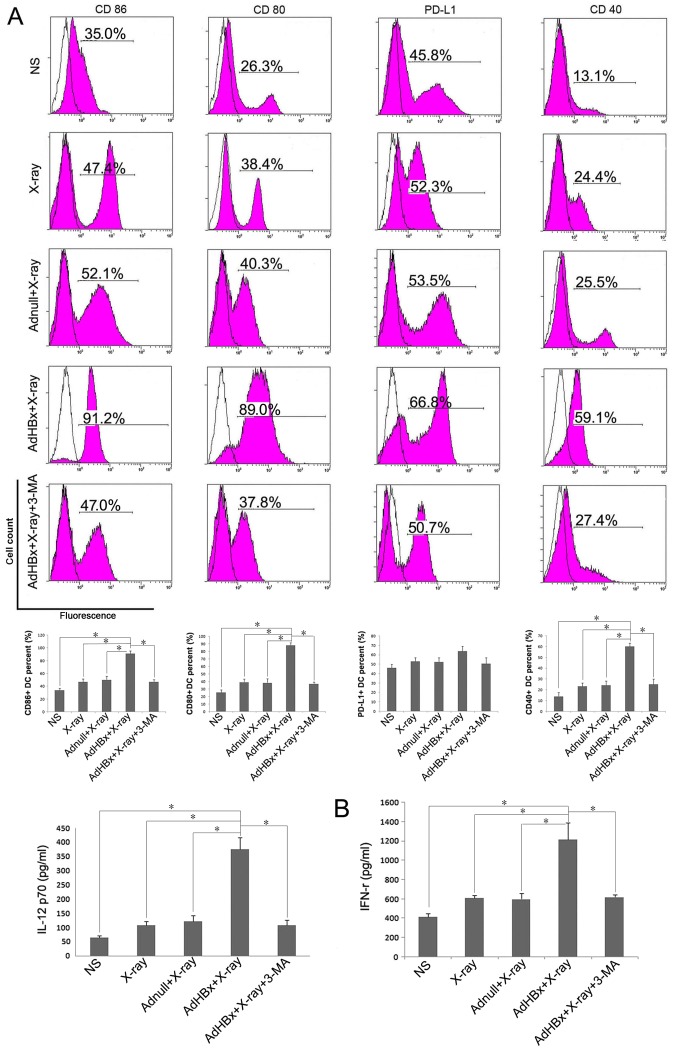
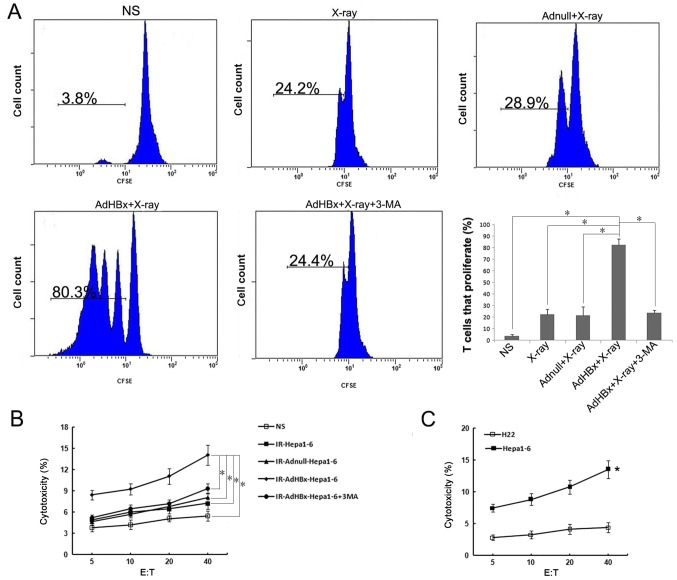
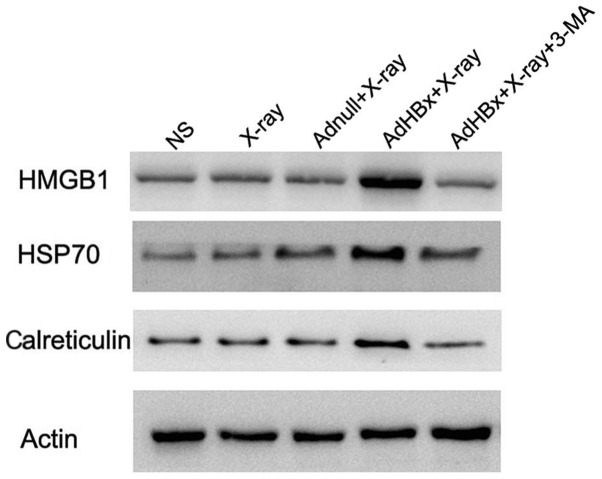
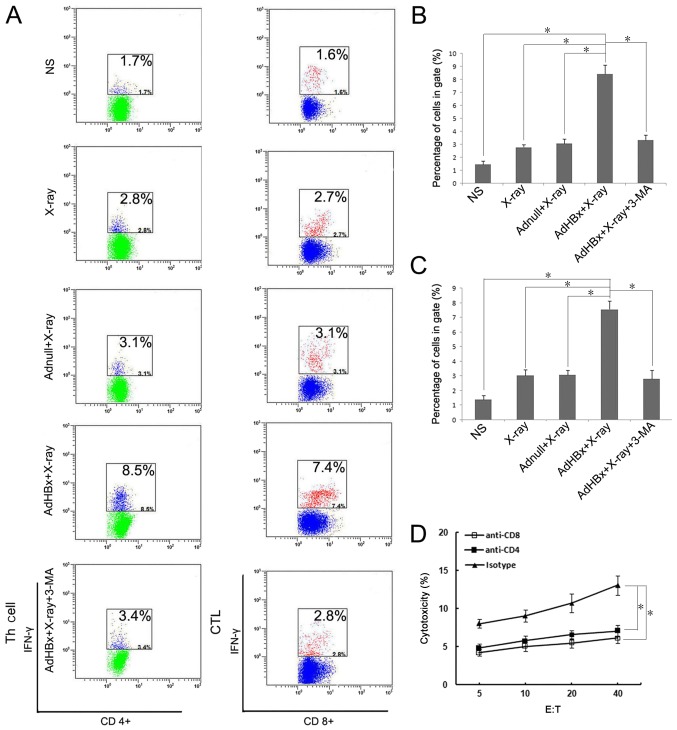
Tumor associated antigen (TAA) induces both humoral immunity and cellular immunity. The T cell-mediated immune response has an important role in the immune response induced by TAA. The hepatitis B virus X protein (HBx) sequence is mapped with Custer of differentiation (CD)8 T cell (CTL) epitopes, while a large number of studies have indicated that HBx may enhance the autophagy. In our previous study, a novel hepatocellular carcinoma vaccine was designed that was an irradiated HBx modified hepatocellular carcinoma cell vaccine in autophagic form, which significantly induced antitumor immune responses . However, the mechanism by which this vaccine contributes to enhancing antitumor immune responses have yet to be fully elucidated. In the present study, we examined how autophagy was induced by this vaccine's influence on the generation of the 'danger signal' by hepatoma tumor cells and the subsequent activation of the immunoresponse. The data showed that the vaccine induced phenotypic maturation of DCs, which leads to efficient cross-presentation and a specific response. Both CD8 and CD4 T lymphocytes were involved in the antitumor immune response, as reflected by IFN-γ secretion. In addition, damage-associated molecular pattern molecules (DAMPs) were significantly elevated in the vaccine, and the elevation of DAMPs was autophagy-dependent. Furthermore, the antitumor activity was achieved by adoptive transfer of lymphocytes but not serum. The present findings indicated that this vaccine enhanced antitumor immune responses, which was in accordance with our previous study.
肿瘤相关抗原(TAA)可诱导体液免疫和细胞免疫。T细胞介导的免疫反应在TAA诱导的免疫反应中起重要作用。乙型肝炎病毒X蛋白(HBx)序列与分化簇(CD)8 T细胞(CTL)表位进行了映射,而大量研究表明HBx可能增强自噬。在我们之前的研究中,设计了一种新型肝细胞癌疫苗,即自噬形式的经辐照的HBx修饰的肝细胞癌细胞疫苗,该疫苗显著诱导了抗肿瘤免疫反应。然而,这种疫苗促进增强抗肿瘤免疫反应的机制尚未完全阐明。在本研究中,我们研究了这种疫苗如何通过影响肝癌肿瘤细胞“危险信号”的产生以及随后免疫反应的激活来诱导自噬。数据显示,该疫苗诱导了树突状细胞(DCs)的表型成熟,从而导致有效的交叉呈递和特异性反应。如IFN-γ分泌所反映的,CD8和CD4 T淋巴细胞均参与了抗肿瘤免疫反应。此外,疫苗中损伤相关分子模式分子(DAMPs)显著升高,且DAMPs的升高依赖于自噬。此外,通过淋巴细胞的过继转移而非血清实现了抗肿瘤活性。本研究结果表明,这种疫苗增强了抗肿瘤免疫反应,这与我们之前的研究一致。