
右美托咪定与静脉注射对乙酰氨基酚预防心脏手术后谵妄(DEXACET试验):一项前瞻性随机对照试验方案
Dexmedetomidine and intravenous acetaminophen for the prevention of postoperative delirium following cardiac surgery (DEXACET trial): protocol for a prospective randomized controlled trial.
作者信息
Shankar Puja, Mueller Ariel, Packiasabapathy Senthil, Gasangwa Doris, Patxot Melissa, O'Gara Brian, Shaefi Shahzad, Marcantonio Edward R, Subramaniam Balachundhar
机构信息
Center for Anesthesia Research Excellence (CARE), Department of Anesthesia, Critical Care and Pain Medicine, Beth Israel Deaconess Medical Center, One Deaconess Road, CC-650, Boston, MA, 02215, USA.
Harvard Medical School, 25 Shattuck Street, Boston, MA, 02215, USA.
出版信息
Trials. 2018 Jun 22;19(1):326. doi: 10.1186/s13063-018-2718-0.
BACKGROUND
Postoperative delirium is common in elderly cardiac surgery patients. It is multifactorial and is influenced by the patient's baseline status and the nature of the medical and surgical interventions that the patient receives. Some of these factors are potentially modifiable, including postoperative sedation and analgesia protocols. This study has been designed to evaluate the effectiveness of postoperative intravenous acetaminophen in conjunction with either dexmedetomidine or propofol in decreasing the incidence of delirium.
METHODS
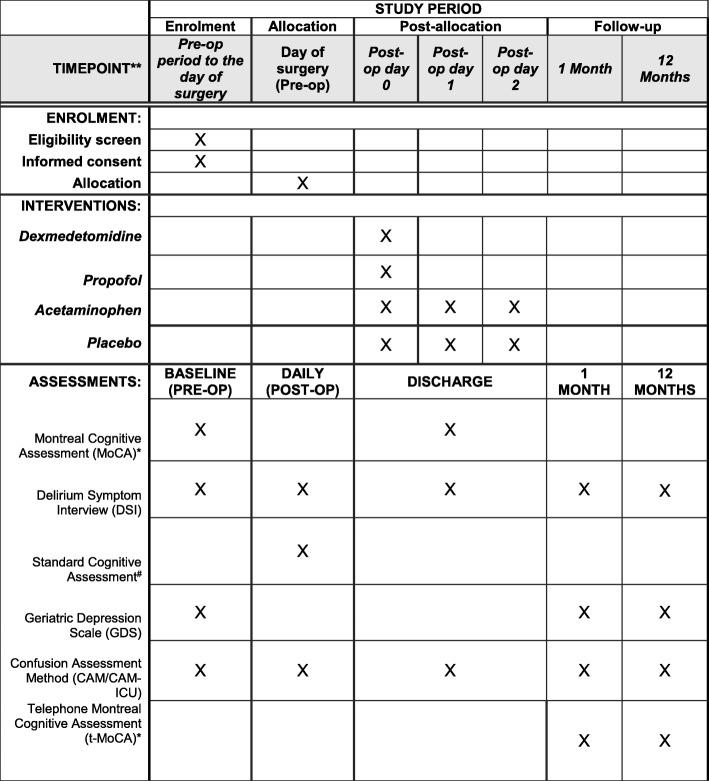
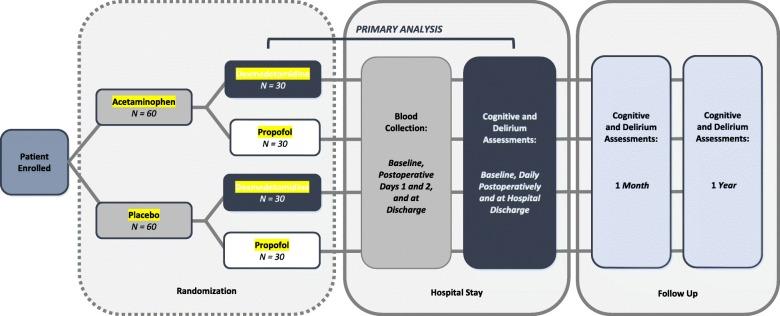
This is a prospective, randomized, placebo-controlled, double-blinded, factorial trial that includes patients who are at least 60 years old and who are undergoing cardiac surgeries involving cardiopulmonary bypass, including coronary artery bypass graft (CABG) and combined CABG/valve surgeries. Patients are randomly assigned to receive one of four postoperative analgesic-sedation regimens: (1) acetaminophen and dexmedetomidine, (2) acetaminophen and propofol, (3) dexmedetomidine and placebo, or (4) propofol and placebo. The primary outcome, incidence of delirium, will be assessed with the Confusion Assessment Method (CAM or CAM-ICU). The secondary outcome, postoperative cognitive decline, will be assessed with the Montreal Cognitive Assessment. Additional secondary outcomes, including duration of delirium, postoperative analgesic requirement, length of stay, and incidence of adverse events, will also be reported. Data will be analyzed in 120 randomly assigned patients who received at least one dose of the study medication(s) on a modified intention-to-treat basis.
DISCUSSION
This study has been approved by the institutional review board at Beth Israel Deaconess Medical Center, and the trial is currently recruiting. This study will systematically examine the implications of modification in postoperative sedative/analgesic protocols after cardiac surgery, specifically for short- and long-term cognitive outcomes. Any positive outcomes from this study could direct simple yet effective practice changes aimed to reduce morbidity.
TRIAL REGISTRATION
ClinicalTrials.gov Identifier: NCT02546765 , registered January 13, 2015.
背景
术后谵妄在老年心脏手术患者中很常见。它是多因素导致的,受患者的基线状态以及患者所接受的医疗和外科干预措施的性质影响。其中一些因素可能是可以改变的,包括术后镇静和镇痛方案。本研究旨在评估术后静脉注射对乙酰氨基酚联合右美托咪定或丙泊酚在降低谵妄发生率方面的有效性。
方法
这是一项前瞻性、随机、安慰剂对照、双盲、析因试验,纳入至少60岁且正在接受涉及体外循环的心脏手术的患者,包括冠状动脉旁路移植术(CABG)和CABG/瓣膜联合手术。患者被随机分配接受四种术后镇痛 - 镇静方案之一:(1)对乙酰氨基酚和右美托咪定,(2)对乙酰氨基酚和丙泊酚,(3)右美托咪定和安慰剂,或(4)丙泊酚和安慰剂。主要结局,即谵妄发生率,将采用意识模糊评估法(CAM或CAM - ICU)进行评估。次要结局,即术后认知功能下降,将采用蒙特利尔认知评估进行评估。还将报告其他次要结局,包括谵妄持续时间、术后镇痛需求、住院时间和不良事件发生率。将在120名随机分配的患者中进行数据分析,这些患者在修正意向性分析基础上接受了至少一剂研究药物。
讨论
本研究已获得贝斯以色列女执事医疗中心机构审查委员会的批准,目前正在招募试验对象。本研究将系统地探讨心脏手术后改变术后镇静/镇痛方案的影响,特别是对短期和长期认知结局的影响。本研究的任何阳性结果都可能指导旨在降低发病率的简单而有效的实践改变。
试验注册
ClinicalTrials.gov标识符:NCT02546765,于2015年1月13日注册。
 Zotero 插件