Erzinger Fabiano Luiz, de Araujo Walter Junior Boim, Nejm Carlos Seme, Caron Filipe Carlos, Timi Jorge Rufino Ribas
Instituto da Circulação, Serviço de Cirurgia Vascular, Curitiba, PR, Brasil.
Universidade Federal do Paraná - UFPR, Departamento de Cirurgia, Curitiba, PR, Brasil.
J Vasc Bras. 2016 Jul-Sep;15(3):217-223. doi: 10.1590/1677-5449.004616.
Endovenous laser treatment of saphenous veins offers patients a procedure with low rates of complications and an early return to occupational activities.
To compare rates of formation of bruising, of paresthesia along the path of the great saphenous vein (GSV), and of GSV obliteration 30 days after thermal ablation in the thigh, performed with or without tumescence and using two different types of fiber.
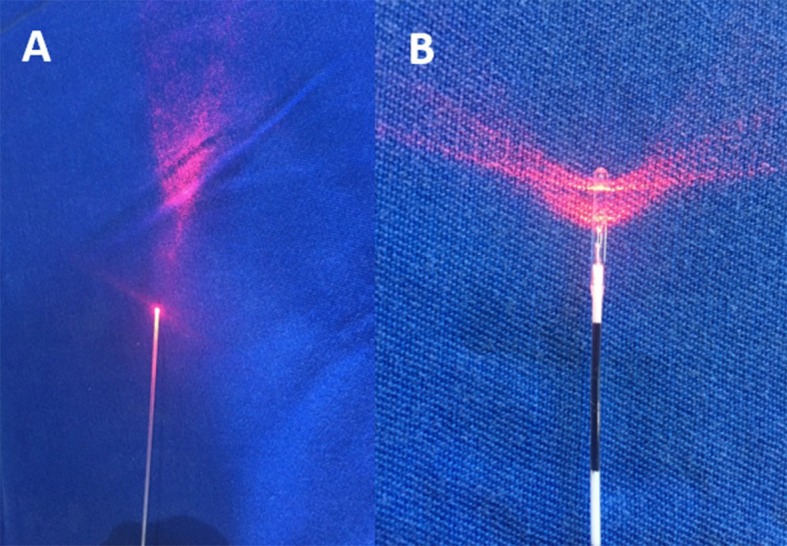
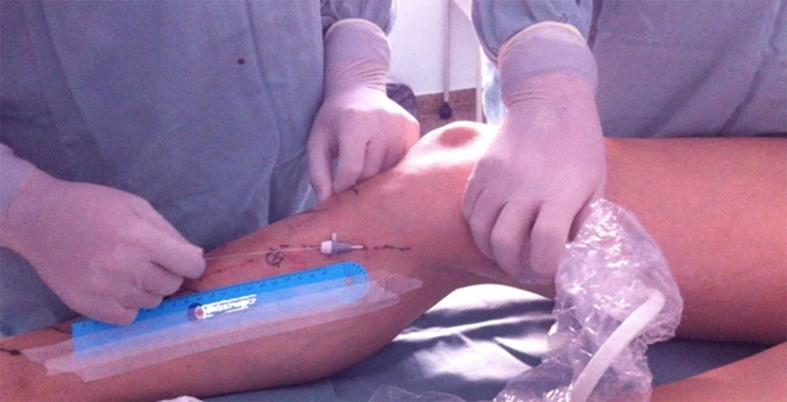
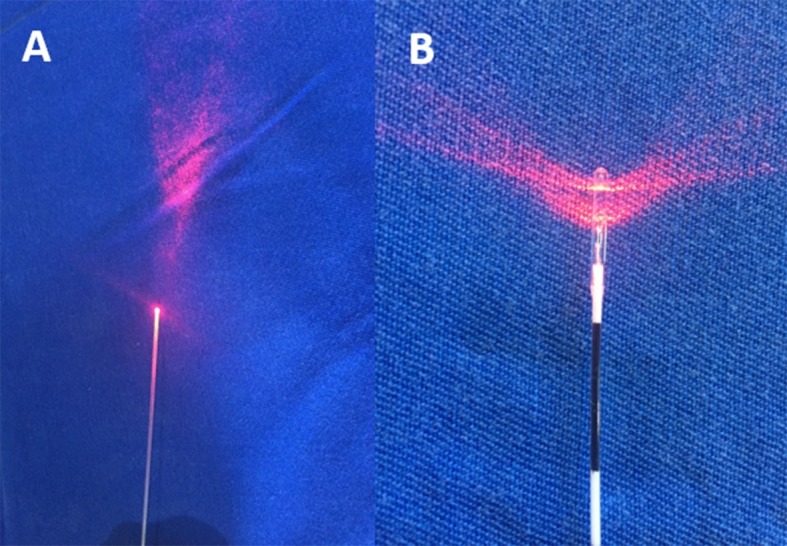
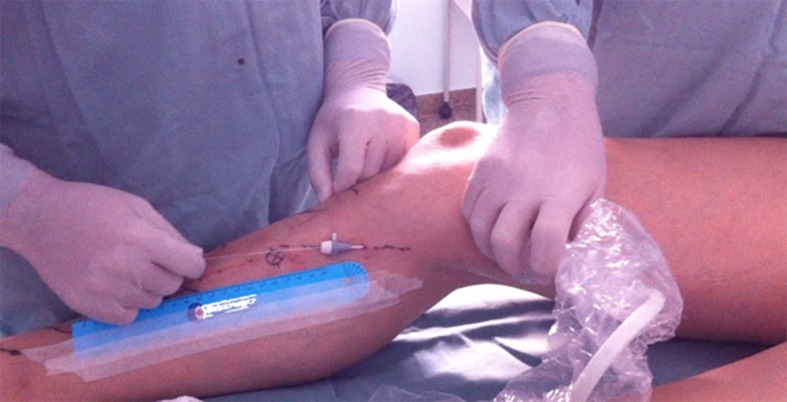
This was a prospective study, analyzing three groups of patients who underwent GSV thermal ablation in the thigh, using a wavelength of 1470 nm. Patients in group 1 were treated with a conventional fiber using tumescence; those in group 2 were treated with a conventional fiber without using tumescence; and patients in group 3 were treated with a double radial fiber without tumescence. After 30 days, the rates of obliteration shown by Doppler ultrasonography, of paresthesias, and of bruising were compared.
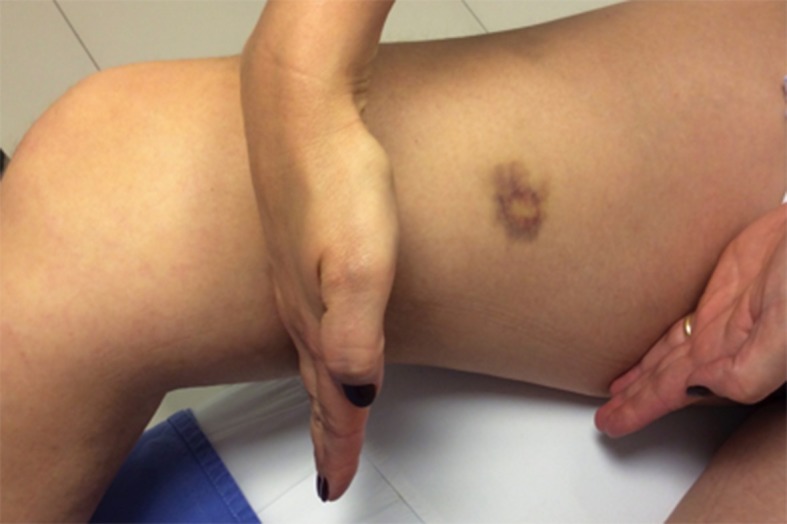
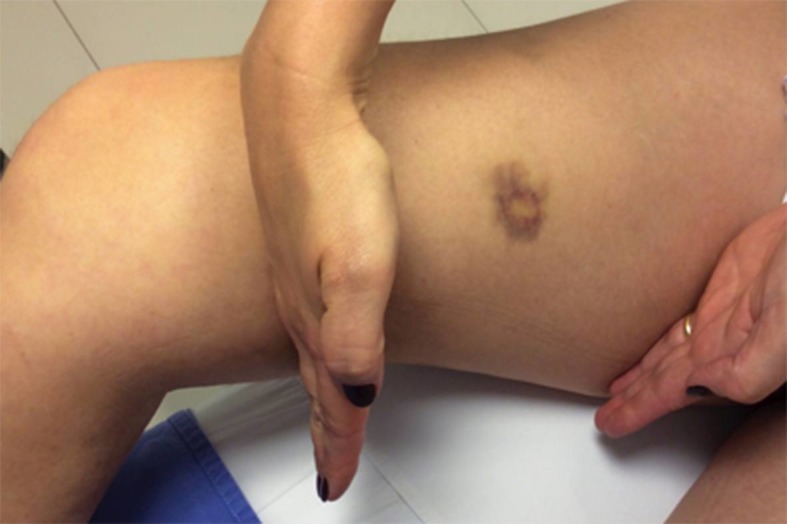
Comparison of the results of thermal ablation of 90 GSVs in the thigh revealed similar rates of obliteration, with no statistical differences. The rate of paresthesia along the path of the GSV in the thigh was higher in the groups without tumescence than in the group with tumescence, but the difference only attained statistical significance for the comparison with the group that was treated with the conventional fiber. There was bruising in all groups, with greater frequency in group 1 (73.33%).
Tumescence proved useful for preventing minor neurological injuries, but didn’t have any influence on the rates of bruising occurrence or of occlusion of the GSV in the thigh up to 30 days after thermal ablation.
大隐静脉腔内激光治疗为患者提供了一种并发症发生率低且能早期恢复职业活动的手术方法。
比较在大腿部进行热消融治疗30天后,使用或不使用肿胀麻醉以及两种不同类型光纤时,瘀斑形成率、大隐静脉(GSV)走行区感觉异常发生率和GSV闭塞率。
这是一项前瞻性研究,分析三组在大腿部接受GSV热消融治疗的患者,使用波长为1470nm的激光。第1组患者使用传统光纤并采用肿胀麻醉;第2组患者使用传统光纤但不采用肿胀麻醉;第3组患者使用双径向光纤且不采用肿胀麻醉。30天后,比较多普勒超声显示的闭塞率、感觉异常发生率和瘀斑发生率。
对90条大腿部GSV热消融结果的比较显示,闭塞率相似,无统计学差异。大腿部GSV走行区感觉异常发生率在未采用肿胀麻醉的组中高于采用肿胀麻醉的组,但仅与使用传统光纤治疗的组比较时差异具有统计学意义。所有组均有瘀斑形成,第1组发生率更高(73.33%)。
肿胀麻醉被证明有助于预防轻微神经损伤,但对热消融后30天内大腿部GSV的瘀斑发生率或闭塞率没有任何影响。