Di Santo Marcelo Kalil, Takemoto Diogo, Nascimento Robert Guimarães, Nascimento Ariele Milano, Siqueira Érika, Duarte Caio Túlio, Jovino Marco Antônio Caldas, Kalil Jorge Agle
Rede D'or Hospital e Maternidade São Luiz - HMSL Itaim, Serviço de Cirurgia Vascular e Endovascular, São Paulo, SP, Brasil.
Hospital da Beneficência Portuguesa de São Paulo, Cirurgia Geral, São Paulo, SP, Brasil.
J Vasc Bras. 2017 Apr-Jun;16(2):104-112. doi: 10.1590/1677-5449.011516.
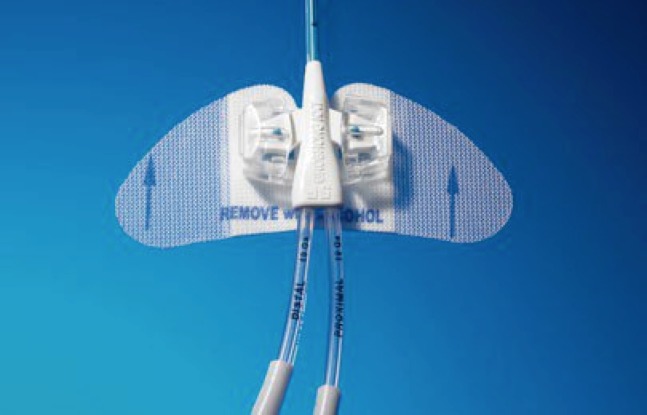
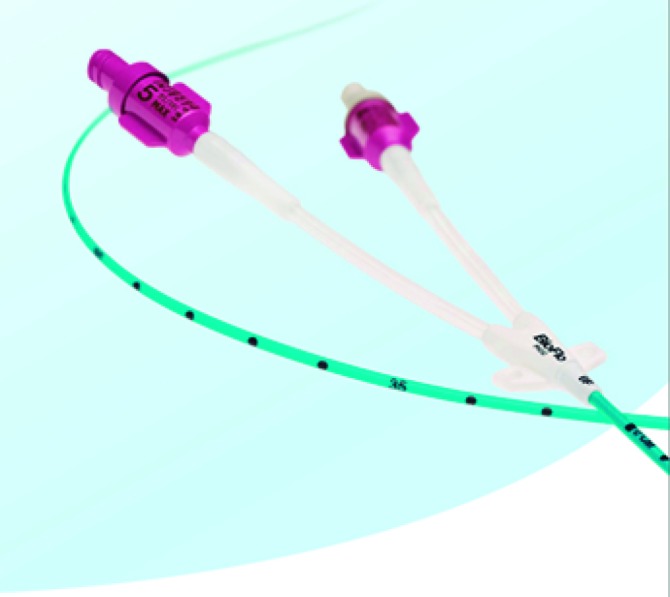
Peripherally inserted central catheters (PICC) are intravenous devices inserted through a superficial or deep vein of an upper or lower extremity and advanced to the distal third of the superior vena cava or proximal third of the inferior vena cava. They offer the advantages of greater safety for infusion of vesicant/irritant and hyperosmolar solutions and enable administration of antibiotics, prolonged parenteral nutrition (PPN), and chemotherapy agents. They also involve reduced risk of infection compared to other vascular catheters and are more cost-effective than centrally inserted venous catheters (CICVC).
To present the results of our team’s experience with US-guided and fluoroscopy-positioned PICC placement at the Hospital and Maternidade São Luiz (HMSL) Itaim, Rede D’or, Brazil.
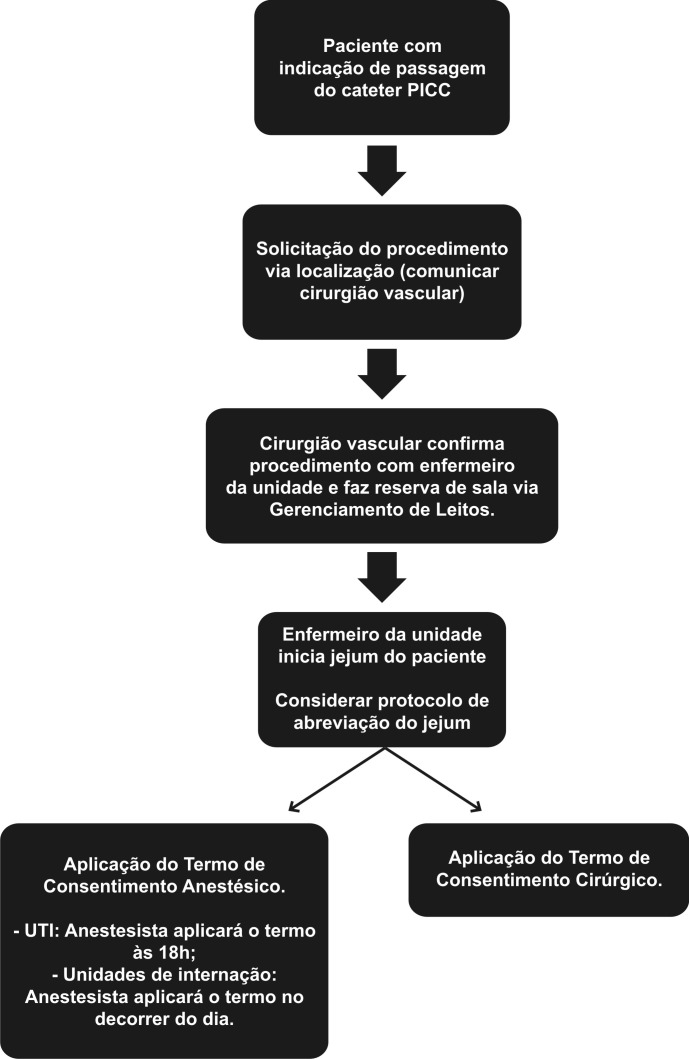
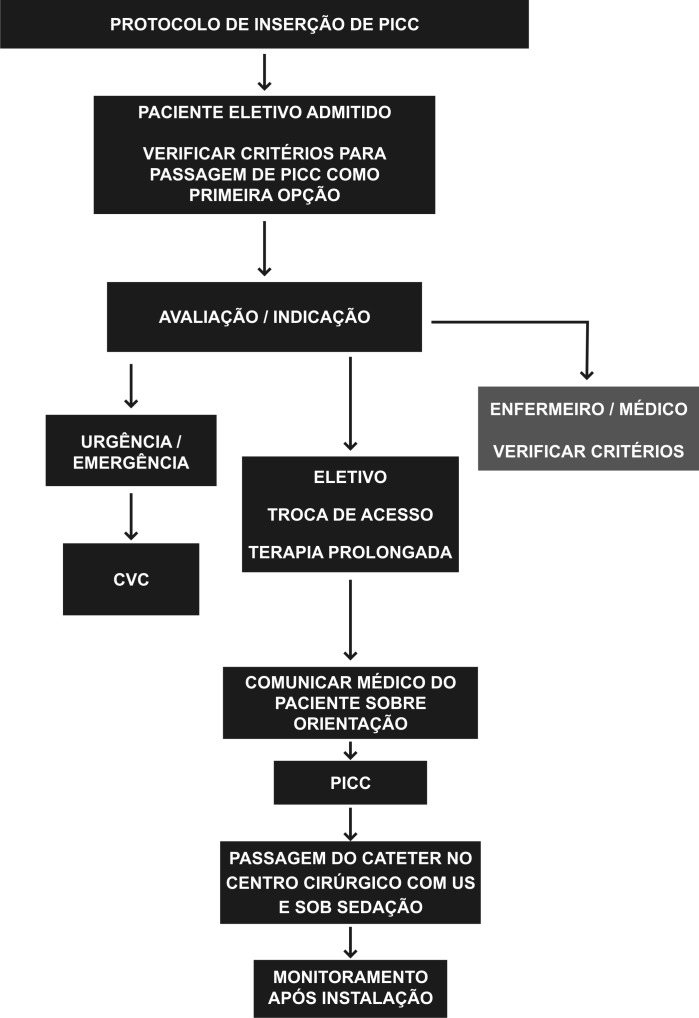
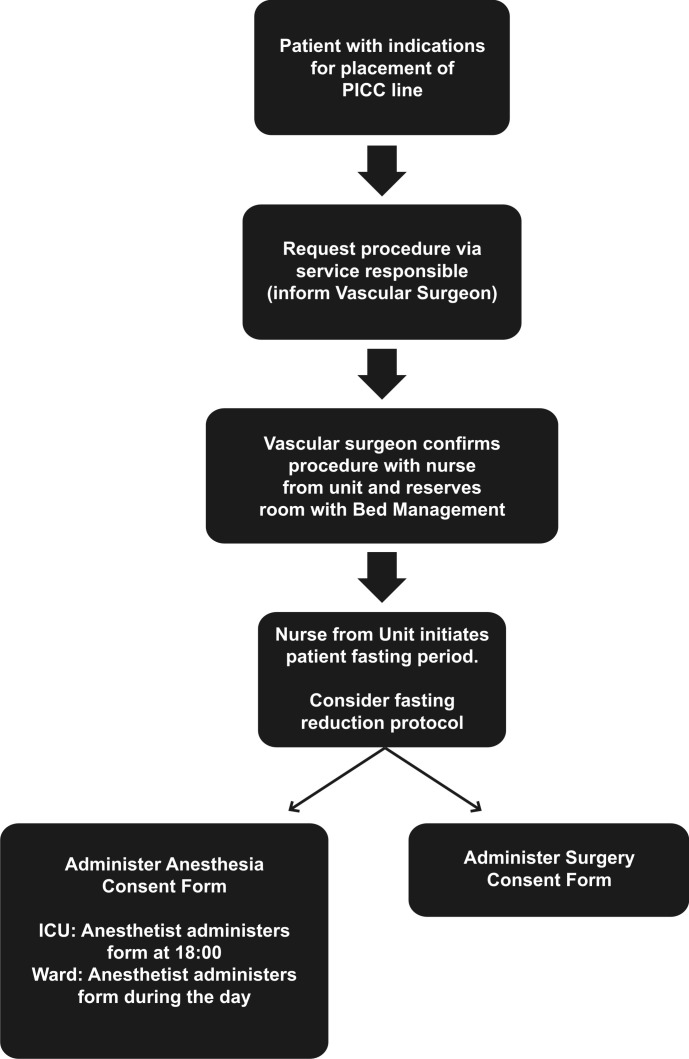
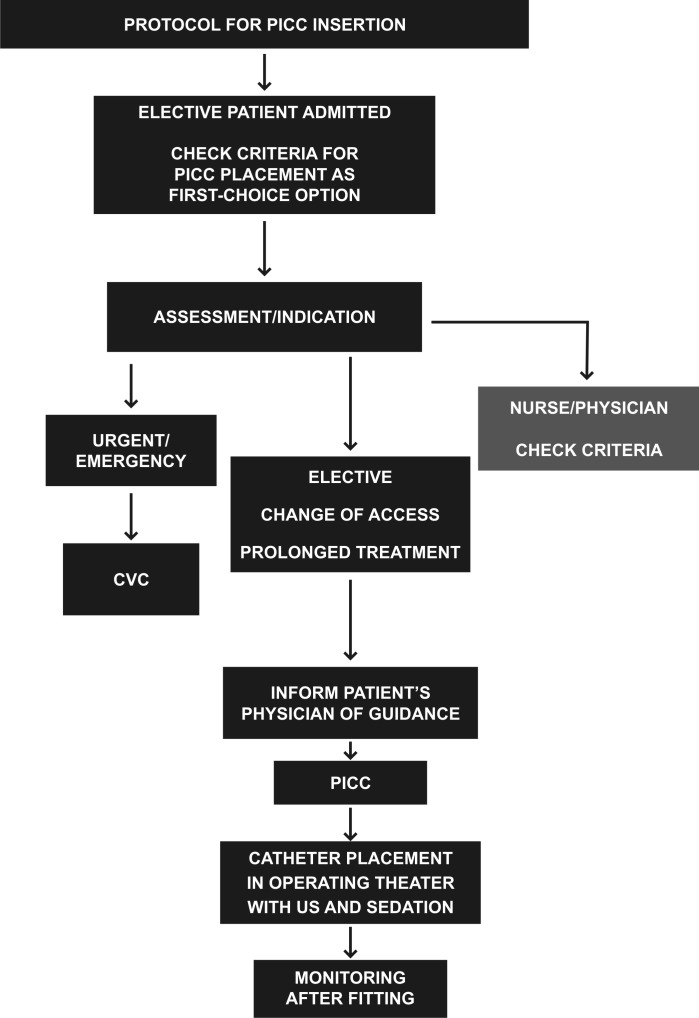
This was a prospective, non-randomized study, conducted from February 2015 to November 2016. The institution’s preestablished protocol was followed when vascular access was requested. Indications, prevalent diseases, type of catheter implanted, technical success, and complications related to the catheters were analyzed and inclusion and exclusion criteria are described.
A total of 256 vascular accesses were requested, and 236 PICCs (92.1%) and 20 CICVCs (7.9%) were implanted. The main indications were as follows: prolonged antibiotic therapy (52%), PPN (19.3%), and difficult venous access (16%). Technical successes was achieved in 246 catheter placements (96.1%). The right basilic vein was the most common vein punctured for access, in 192 patients (75%), followed by the right brachial vein, in 28 patients (10.9%).
Ultrasound-guided and fluoroscopy-positioned PICC placement had a low incidence of complications, reduced infection rates, and proved safe and effective in cases of difficult vascular access. PICCs can be considered the devices of choice for central vascular access.
经外周静脉穿刺中心静脉导管(PICC)是通过上肢或下肢的浅静脉或深静脉插入,并推进至上腔静脉远段三分之一或下腔静脉近段三分之一的静脉装置。它们具有在输注发泡剂/刺激性药物和高渗溶液时安全性更高的优点,能够用于输注抗生素、进行长期肠外营养(PPN)以及给予化疗药物。与其他血管导管相比,它们还具有感染风险降低的优势,并且比中心静脉导管(CICVC)更具成本效益。
介绍我们团队在巴西伊塔伊姆的圣路易斯医院和妇产医院(HMSL),通过超声引导和透视定位放置PICC的经验结果。
这是一项前瞻性、非随机研究,于2015年2月至2016年11月进行。当需要血管通路时,遵循该机构预先制定的方案。分析了适应证、常见疾病、植入导管的类型、技术成功率以及与导管相关的并发症,并描述了纳入和排除标准。
总共需要256次血管通路,植入了236根PICC(92.1%)和20根CICVC(7.9%)。主要适应证如下:长期抗生素治疗(52%)、PPN(19.3%)和静脉穿刺困难(16%)。246次导管置入获得技术成功(96.1%)。最常穿刺的静脉是右侧贵要静脉,192例患者(75%),其次是右侧肱静脉,28例患者(10.9%)。
超声引导和透视定位的PICC置管并发症发生率低,感染率降低,在血管穿刺困难的情况下被证明是安全有效的。PICC可被视为中心血管通路的首选装置。