Yildiz Gokhan
Department of Medical Biology, Faculty of Medicine, Karadeniz Technical University, Trabzon 61080, Turkey.
Oncol Lett. 2018 Jul;16(1):113-122. doi: 10.3892/ol.2018.8634. Epub 2018 May 4.
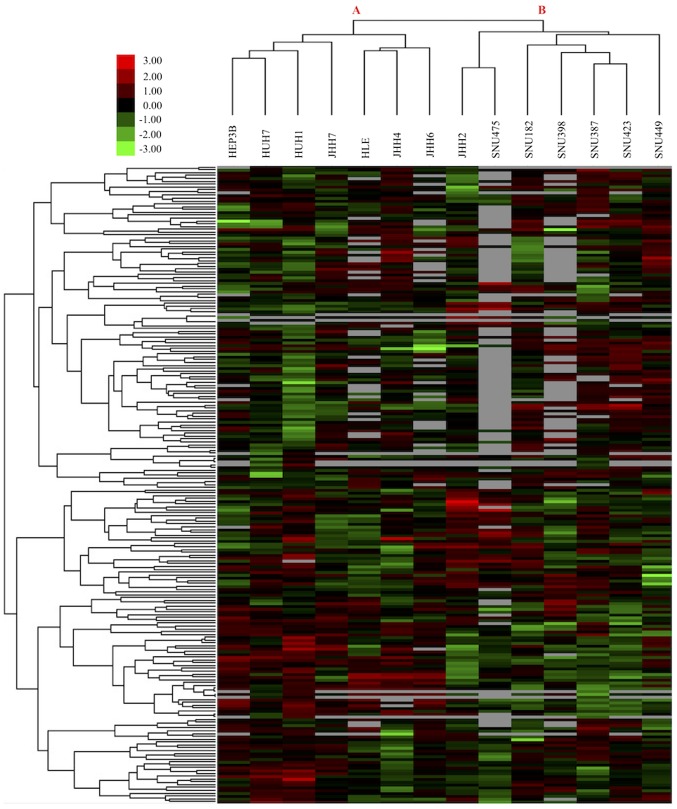
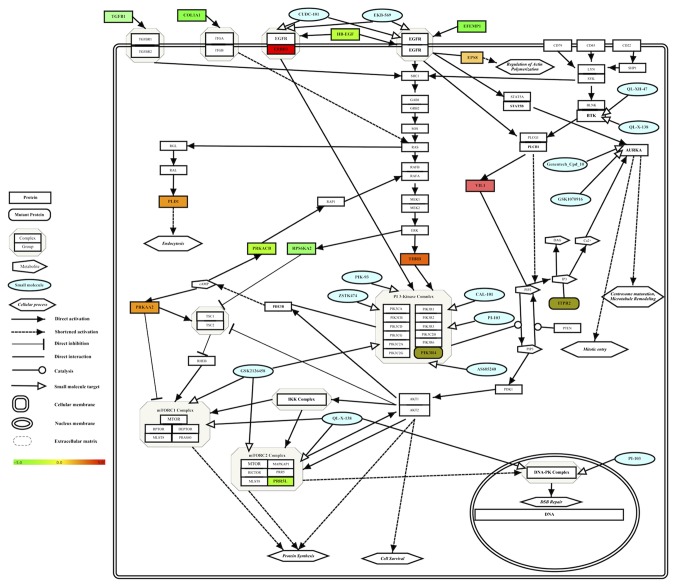
Hepatocellular carcinoma (HCC) is the most common type of liver cancer and the third-leading cause of malignancy-associated mortality worldwide. HCC cells are highly resistant to chemotherapeutic agents. Therefore, there are currently only two US Food and Drug Administration-approved drugs available for the treatment of HCC. The objective of the present study was to analyze the results of previously published high-throughput drug screening, and genomic and transcriptomic data from HCC cell lines, and to integrate the obtained results to define the underlying molecular mechanisms of drug sensitivity and resistance in HCC cells. The results of treatment with 225 different small molecules on 14 different HCC cell lines were retrieved from the Genomics of Drug Sensitivity in Cancer database and analyzed. Cluster analysis using the treatment results determined that HCC cell lines consist of two groups, according to their drug response profiles. Continued analyses of these two groups with Gene Set Enrichment Analysis method revealed 6 treatment-sensitive molecular targets (epidermal growth factor receptor, mechanistic target of rapamycin, deoxyribonucleic acid-dependent protein kinase, the Aurora kinases, Bruton's tyrosine kinase and phosphoinositide 3-kinase; all P<0.05) and partially effective drugs. Genetic and genome-wide gene expression data analyses of the determined targets and their known biological partners revealed 2 somatically mutated and 13 differentially expressed genes, which differed between drug-resistant and drug-sensitive HCC cells. Integration of the obtained data into a short molecular pathway revealed a drug treatment-sensitive signaling axis in HCC cells. In conclusion, the results of the present study provide novel drug sensitivity-associated molecular targets for the development of novel personalized and targeted molecular therapies against HCC.
肝细胞癌(HCC)是最常见的肝癌类型,也是全球恶性肿瘤相关死亡的第三大原因。HCC细胞对化疗药物具有高度抗性。因此,目前美国食品药品监督管理局仅批准了两种药物可用于治疗HCC。本研究的目的是分析先前发表的高通量药物筛选结果以及来自HCC细胞系的基因组和转录组数据,并整合所得结果以确定HCC细胞中药物敏感性和抗性的潜在分子机制。从癌症药物敏感性基因组数据库中检索并分析了用225种不同小分子对14种不同HCC细胞系进行处理的结果。使用处理结果进行聚类分析确定,HCC细胞系根据其药物反应谱可分为两组。用基因集富集分析方法对这两组进行持续分析,揭示了6个治疗敏感分子靶点(表皮生长因子受体、雷帕霉素作用靶点、DNA依赖性蛋白激酶、极光激酶、布鲁顿酪氨酸激酶和磷脂酰肌醇3激酶;所有P<0.05)和部分有效的药物。对确定的靶点及其已知生物学伙伴进行遗传和全基因组基因表达数据分析,发现了2个体细胞突变基因和13个差异表达基因,这些基因在耐药和敏感的HCC细胞之间存在差异。将所得数据整合到一个短分子途径中,揭示了HCC细胞中一个对药物治疗敏感的信号轴。总之,本研究结果为开发针对HCC的新型个性化和靶向分子疗法提供了与药物敏感性相关的新分子靶点。