Division of Anti-tumor Pharmacology, State Key Laboratory of Drug Research, Shanghai Institute of Materia Medica, Chinese Academy of Sciences, Shanghai 201203, China.
University of Chinese Academy of Sciences, Beijing 100049, China.
Theranostics. 2018 May 11;8(12):3256-3267. doi: 10.7150/thno.23964. eCollection 2018.
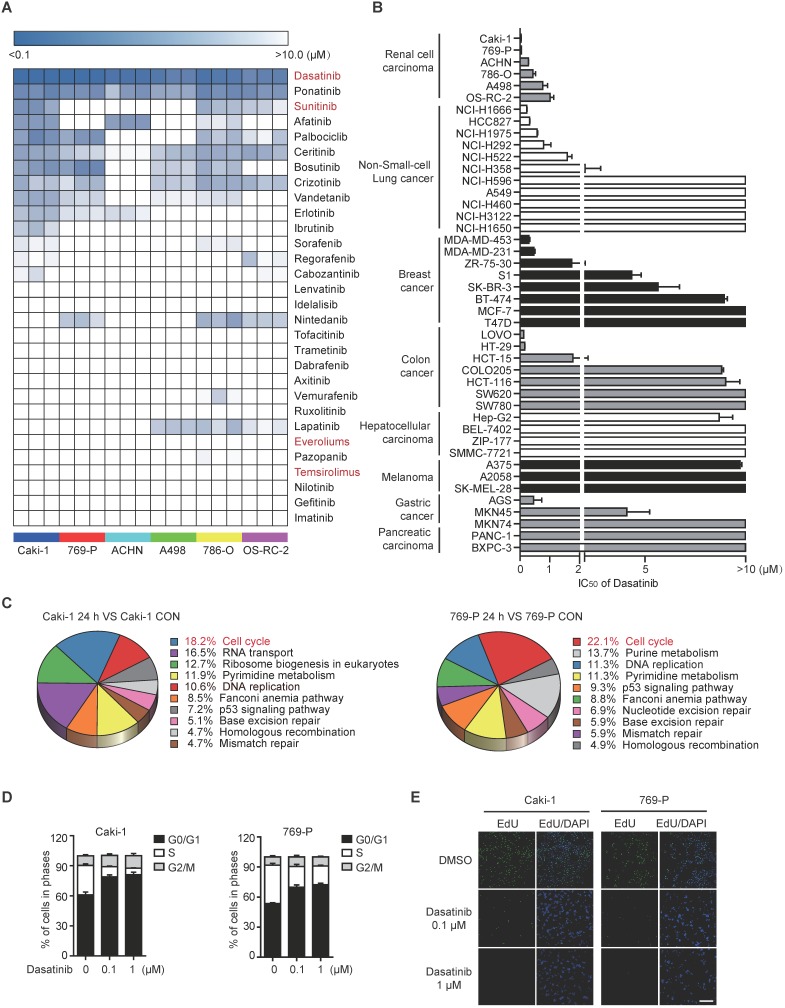
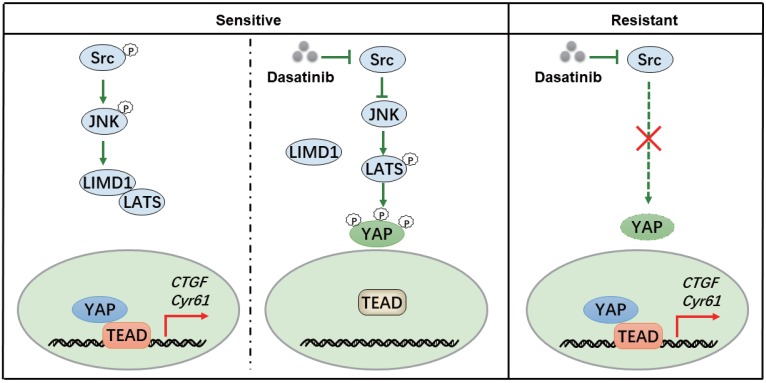
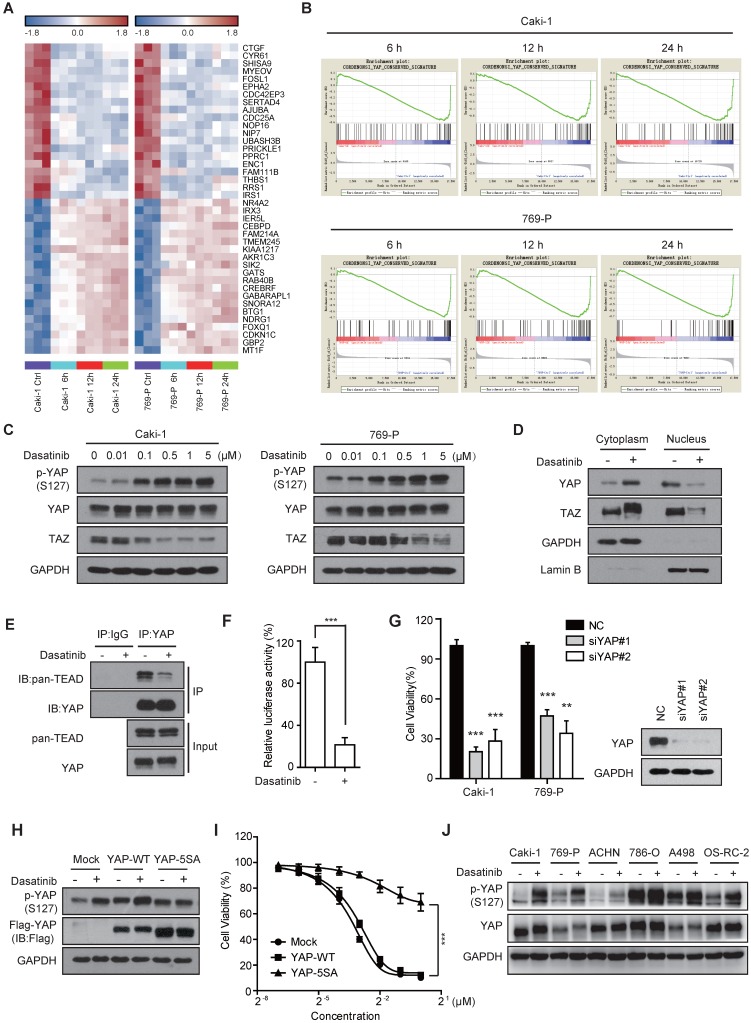
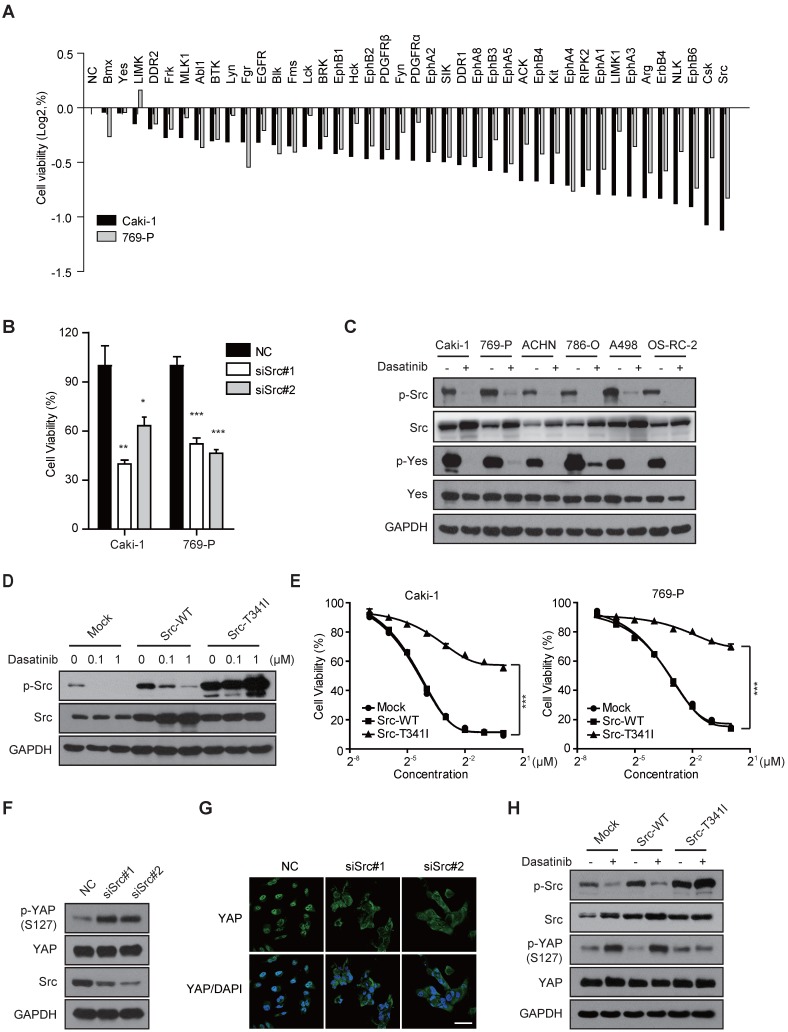
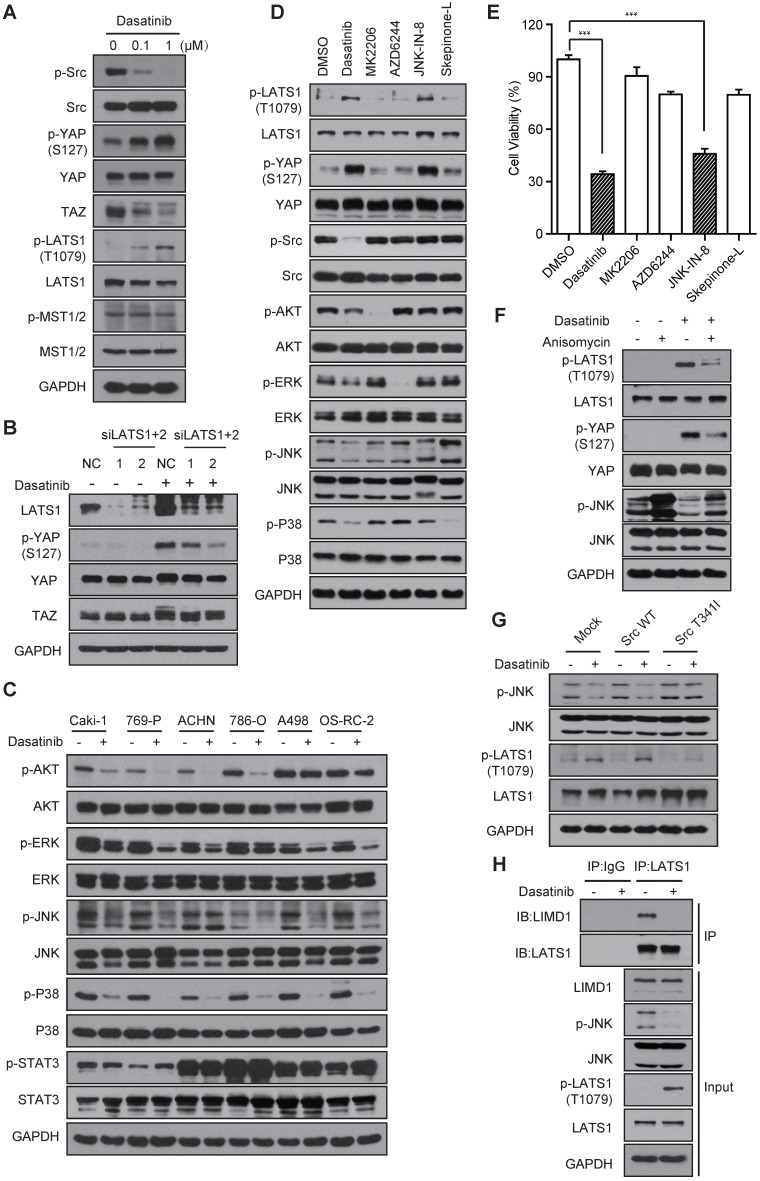
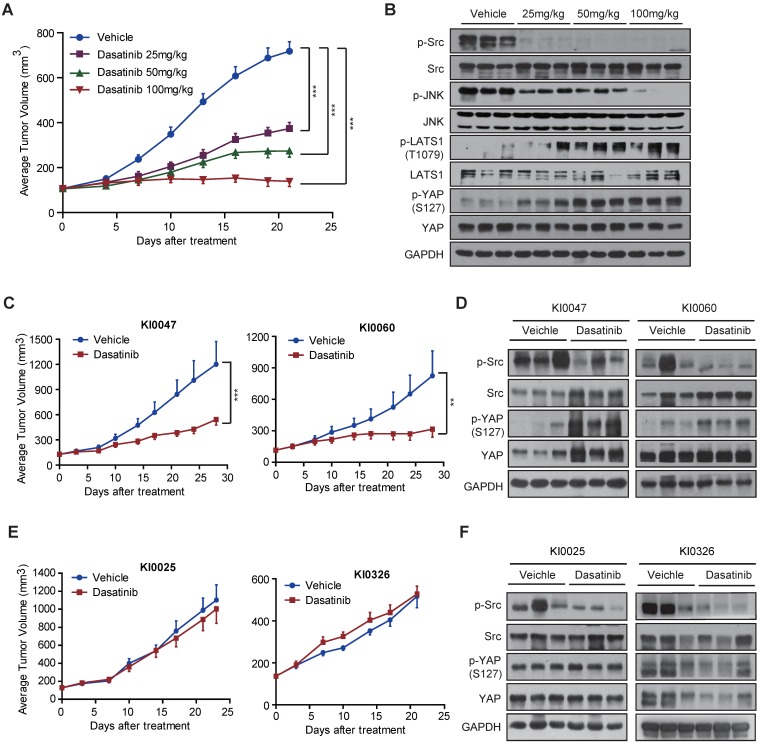
Over the past decade, therapies targeting the VEGF/VEGFR and mTOR pathways have served as the standard of care for the clinical management of renal cell carcinoma (RCC) patients. Albeit promising, these targeted drugs have attained only modest clinical benefits with limited prolonged progression-free survival. Therefore, alternative reasonable and applicable therapeutic approaches should be introduced to improve the clinical outcome of RCC patients. FDA approved kinase inhibitors were screened to evaluate their abilities to suppress the proliferation of RCC cells. Then, the downstream effector, therapeutic target and signaling pathway of the selected drug were identified by gene expression array, RNAi, kinase profile and rescue verification. Finally, the effectiveness of the drug was assessed in cell line-based xenograft models and patient-derived xenograft models. In this study, we discovered that dasatinib is a potent agent that can impair RCC cell viability and decrease tumor growth Mechanistically, we improved the understanding of the precise mechanistic role of YAP as a pivotal effector of dasatinib-induced anti-proliferation through Src-JNK-LIMD1-LATS signaling cascade in RCC cells. Meanwhile, our results indicated that the alteration of p-YAP is closely correlated to the growth inhibition caused by dasatinib in sensitive RCC models. Our findings provide evidence that dasatinib may serve as a powerful drug candidate to treat subgroups of RCC patients with hyper-activated Src-YAP signaling axis, and the alteration of p-YAP could serve as a functional response biomarker of dasatinib in RCC.
在过去的十年中,针对 VEGF/VEGFR 和 mTOR 通路的治疗方法已成为肾细胞癌 (RCC) 患者临床管理的标准治疗方法。尽管这些靶向药物有一定的疗效,但它们只能延长有限的无进展生存期,因此需要引入其他合理适用的治疗方法来改善 RCC 患者的临床疗效。
筛选了已获得 FDA 批准的激酶抑制剂,以评估它们抑制 RCC 细胞增殖的能力。然后,通过基因表达谱分析、RNAi、激酶谱和挽救验证,确定所选药物的下游效应子、治疗靶点和信号通路。最后,在基于细胞系的异种移植模型和患者来源的异种移植模型中评估药物的疗效。
在这项研究中,我们发现达沙替尼是一种有效的药物,可损害 RCC 细胞活力并抑制肿瘤生长。从机制上讲,我们通过 Src-JNK-LIMD1-LATS 信号级联在 RCC 细胞中提高了对 YAP 作为达沙替尼诱导的抗增殖的关键效应子的精确作用机制的理解。同时,我们的结果表明,p-YAP 的改变与达沙替尼在敏感 RCC 模型中引起的生长抑制密切相关。
我们的研究结果表明,达沙替尼可能是治疗具有过度激活的Src-YAP 信号轴的 RCC 患者亚群的有效候选药物,而 p-YAP 的改变可以作为达沙替尼在 RCC 中的功能反应生物标志物。