Department of Anesthesia, China-Japan Union Hospital of Jilin University, Changchun 130033, P. R. China.
Key Laboratory of Polymer Ecomaterials, Changchun Institute of Applied Chemistry, Chinese Academy of Sciences, Changchun 130022, P. R. China.
Theranostics. 2018 May 23;8(12):3331-3347. doi: 10.7150/thno.25276. eCollection 2018.
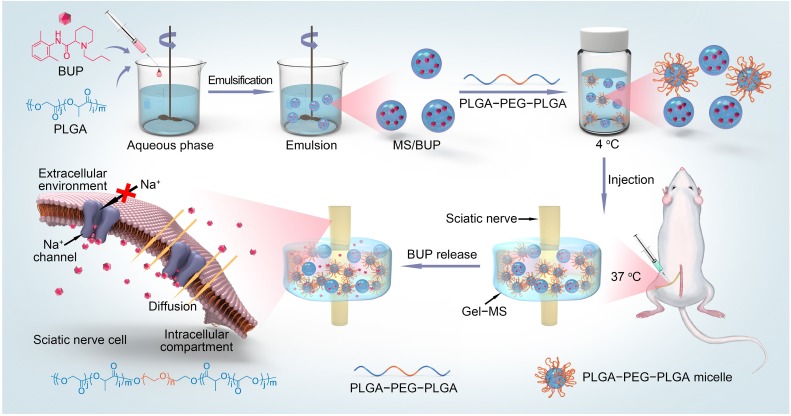
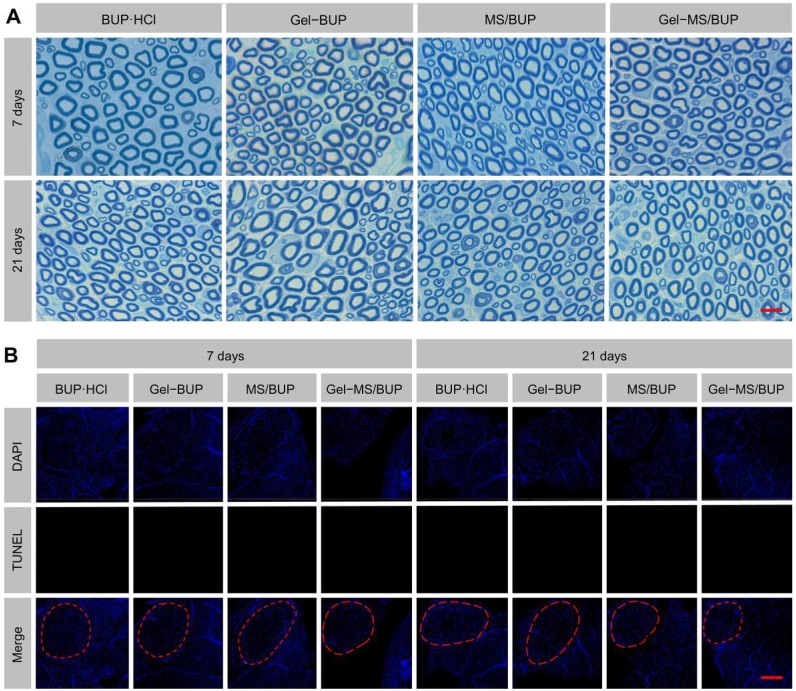
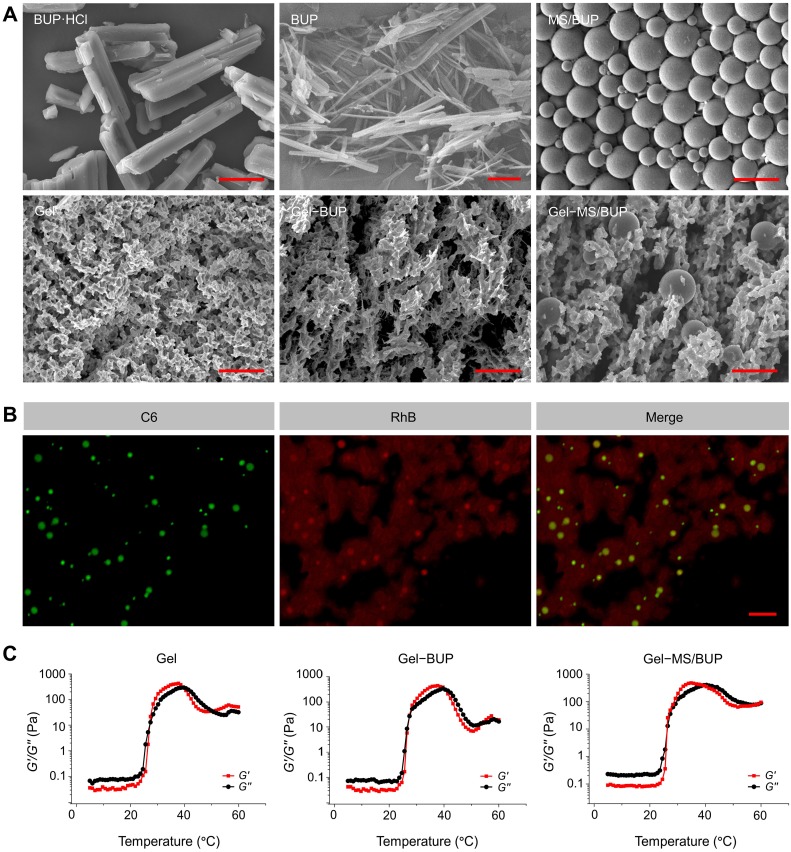
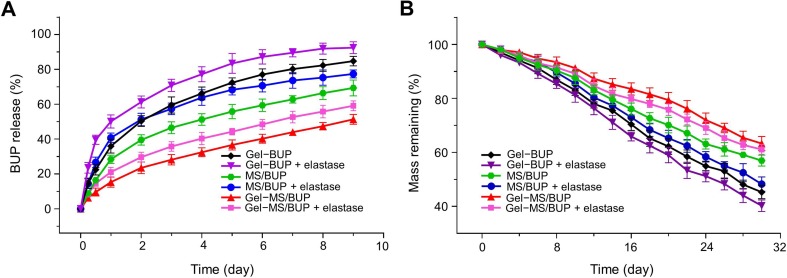
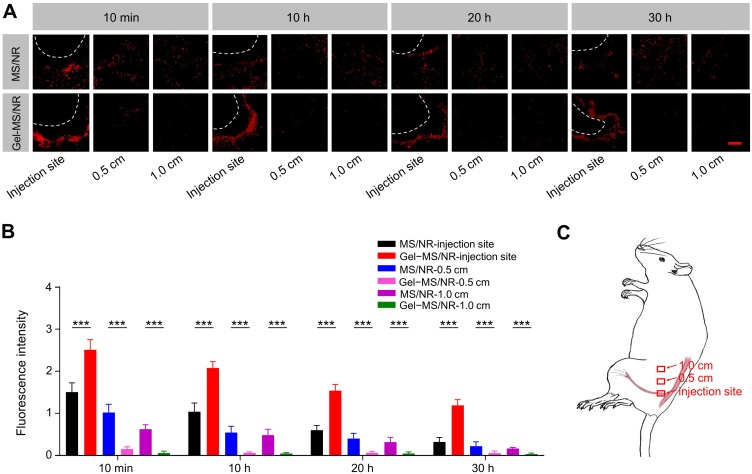
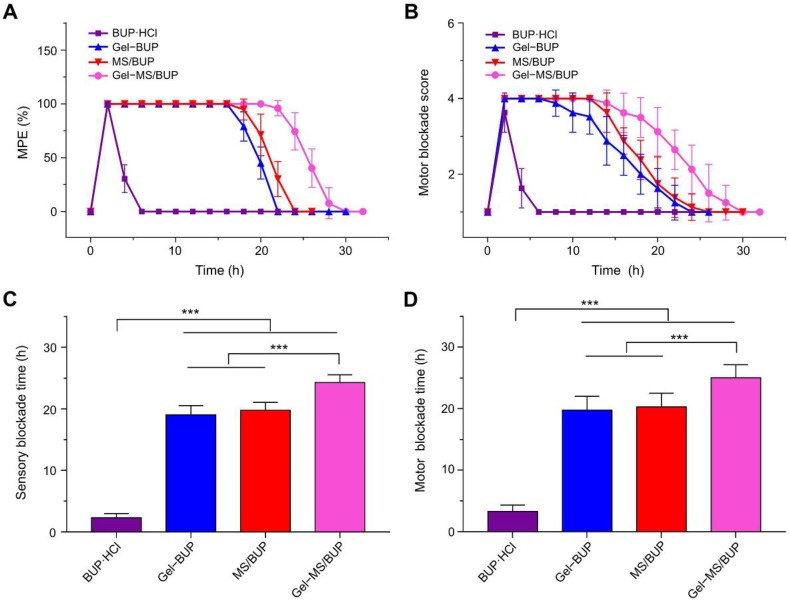
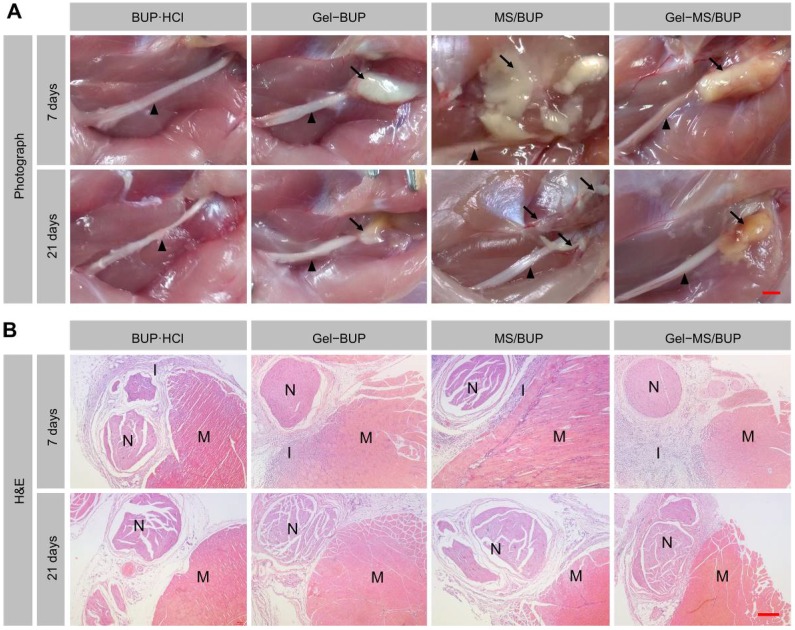
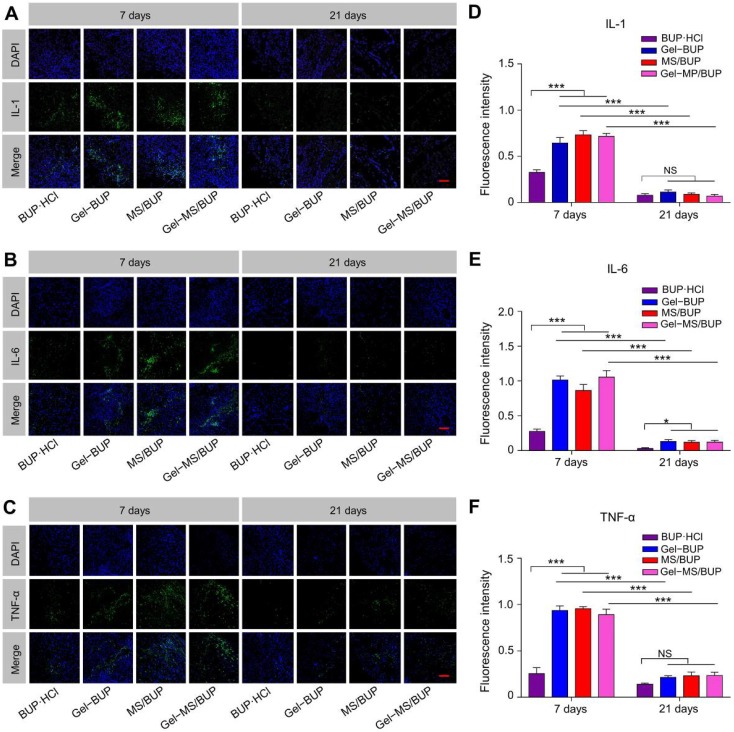
Peripheral nerve blockade (PNB) is a conventional strategy for the management of acute postoperative pain. However, the short duration of the associated analgesia and the potential systemic toxicity due to the low molecular weights of local anesthetics limit their application. An forming injectable Gel-microsphere (Gel-MS) system consisting of PLGA-PEG-PLGA Gel (Gel) and Gel-immobilized bupivacaine-loaded microsphere (MS/BUP) was prepared for precision-guided long-acting analgesia. A series of characterizations, such as scanning electron microscopy, rheology analysis, confocal laser scanning microscopy, drug release, and erosion and degradation, were carried out. After that, the analgesia effect of the Gel-MS system, the immobilization effect of Gel on the MS, and biocompatibility of the system were evaluated using a sciatic nerve block model. The BUP release from the Gel-MS system was regulated by both the inner MS and the outer Gel matrix, demonstrating sustained BUP release for several days without an initial burst release. More importantly, incorporation of the Gel immobilized the MS and hindered the diffusion of MS from the injection site because of its property, which contributed to a high local drug concentration and prevented systemic side effects. , a single injection of Gel-MS/BUP allowed rats to maintain sensory and motor blockade significantly longer than treatment with MS/BUP ( < 0.01) or BUP-loaded Gel (Gel-BUP, < 0.01). Histopathological results demonstrated the excellent biodegradability and biocompatibility of the Gel-MS system without neurotoxicity. This precision-guided long-acting analgesia, which provides an and sustained release of BUP, is a promising strategy for long-acting analgesia, and could represent a potential alternative for clinical pain management.
外周神经阻滞 (PNB) 是急性术后疼痛管理的常规策略。然而,由于局部麻醉剂的低分子量,其相关镇痛作用持续时间短且潜在的全身毒性限制了其应用。 我们制备了一种由 PLGA-PEG-PLGA 凝胶 (Gel) 和凝胶固定布比卡因负载微球 (MS/BUP) 组成的可注射凝胶微球 (Gel-MS) 系统,用于精准引导长效镇痛。我们进行了一系列特性研究,如扫描电子显微镜、流变学分析、共聚焦激光扫描显微镜、药物释放、侵蚀和降解等。然后,我们通过坐骨神经阻滞模型评估了 Gel-MS 系统的镇痛效果、Gel 对 MS 的固定效果以及系统的生物相容性。 BUP 从 Gel-MS 系统中的释放受到内部 MS 和外部 Gel 基质的双重调节,表现出几天的持续 BUP 释放,没有初始突释释放。更重要的是,Gel 的掺入固定了 MS,并由于其性质阻碍了 MS 从注射部位的扩散,从而有助于提高局部药物浓度并防止全身副作用。单次注射 Gel-MS/BUP 可使大鼠的感觉和运动阻滞时间明显长于 MS/BUP( < 0.01)或载有 BUP 的 Gel(Gel-BUP, < 0.01)。组织病理学结果表明,Gel-MS 系统具有良好的生物降解性和生物相容性,无神经毒性。这种精准引导的长效镇痛能够提供 BUP 的持续释放,是一种很有前途的长效镇痛策略,有望成为临床疼痛管理的一种替代方法。