Department of Radiology, Massachusetts General Hospital, Boston, MA.
Theranostics. 2018 May 23;8(12):3380-3391. doi: 10.7150/thno.24017. eCollection 2018.
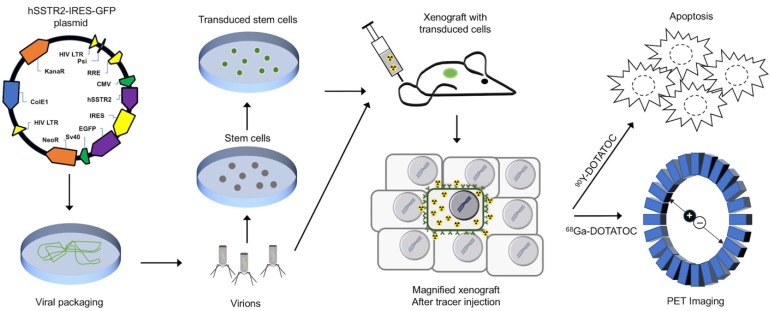
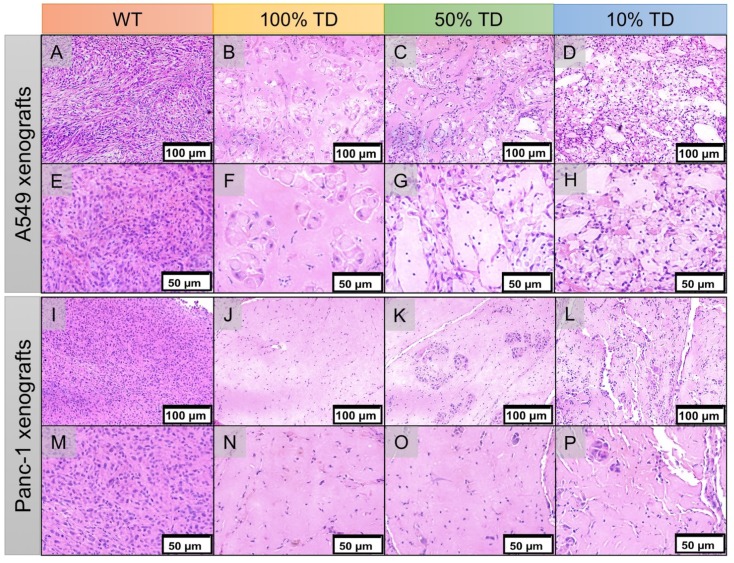
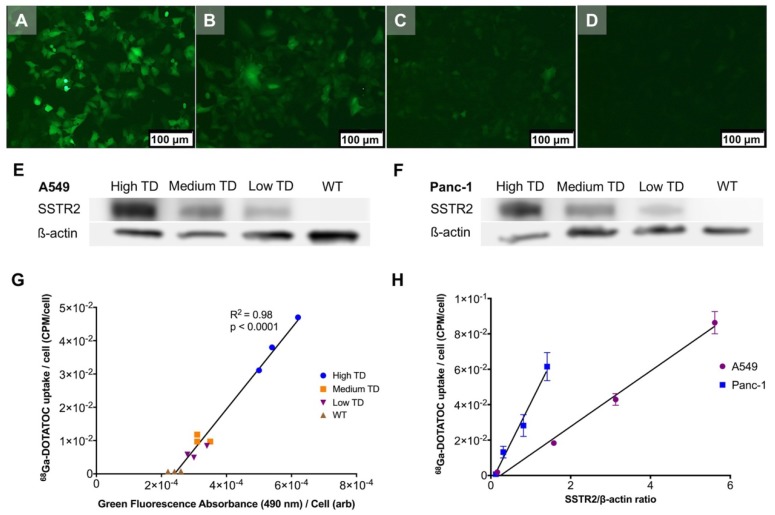
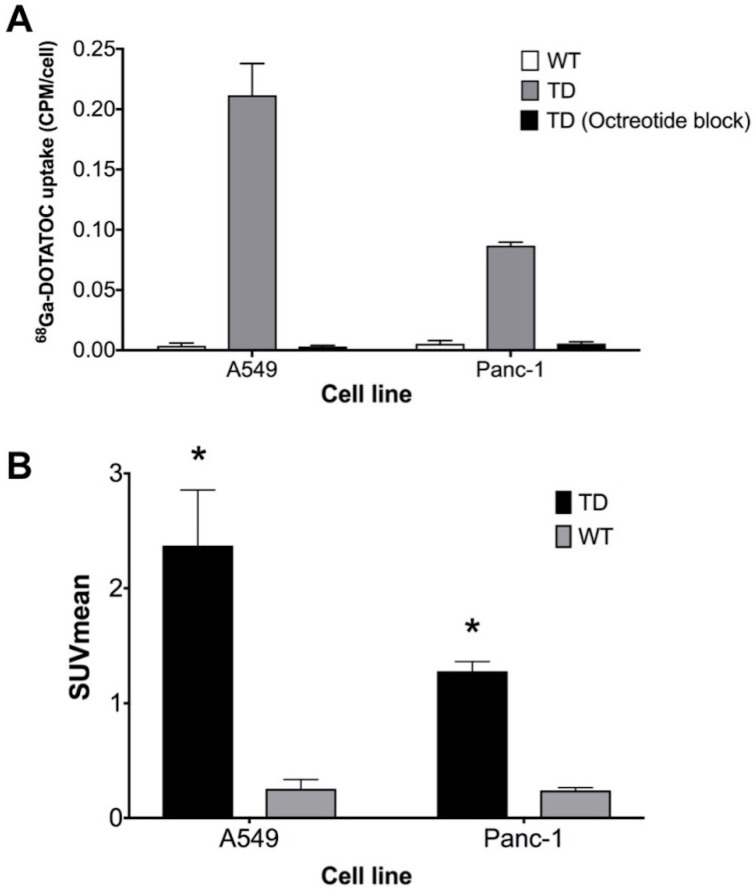
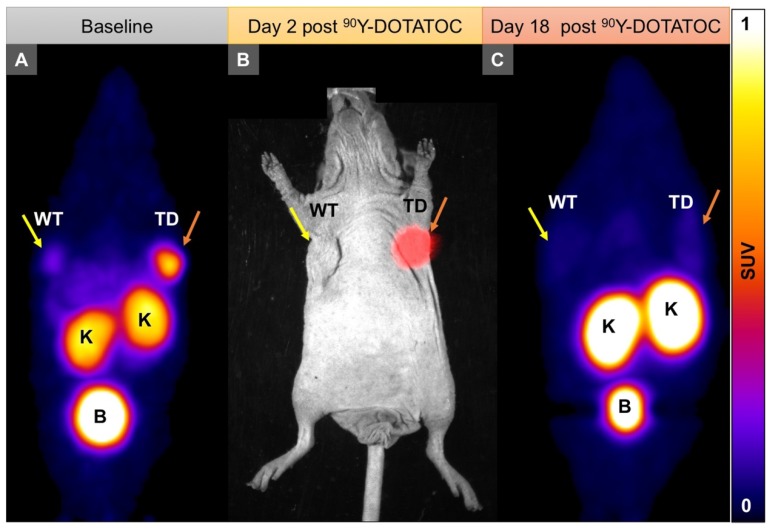
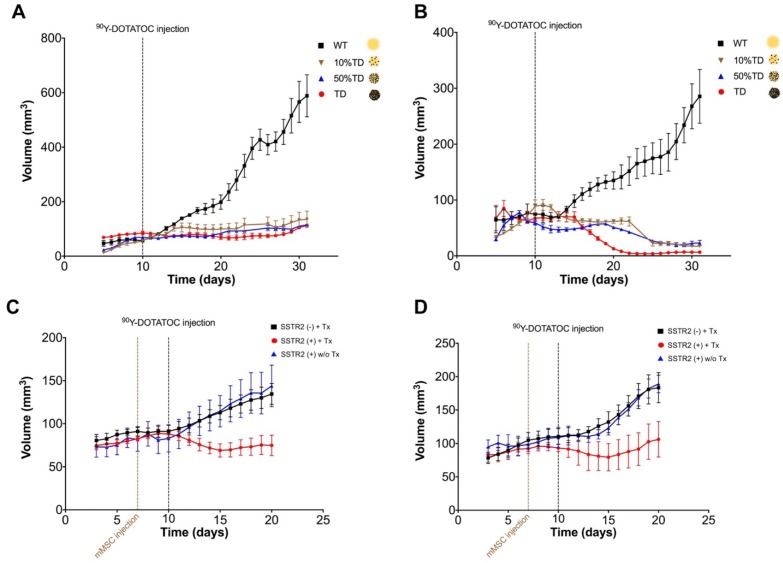
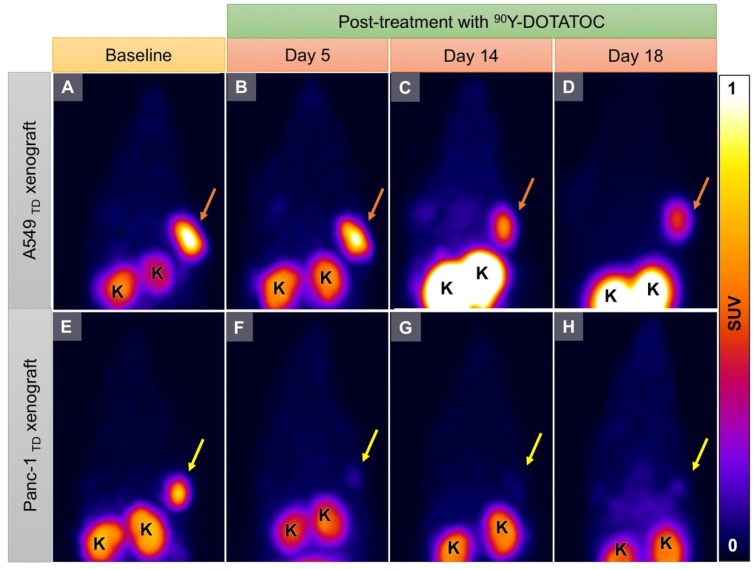
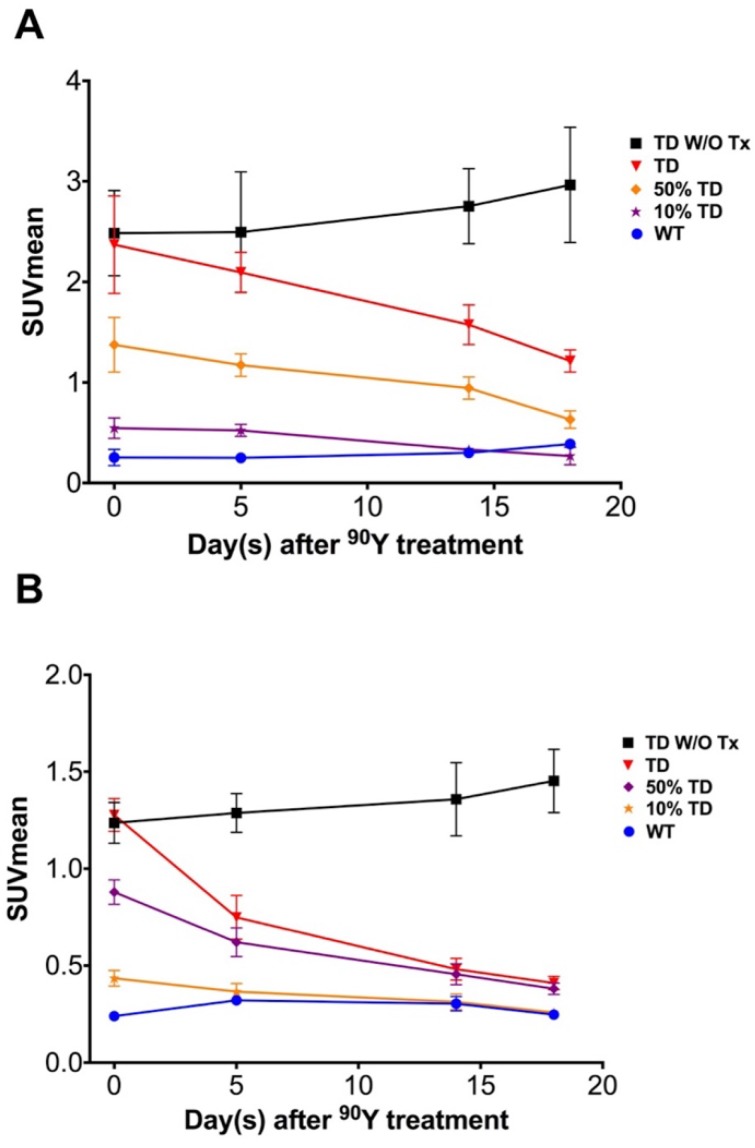
Reporter gene systems can serve as therapy targets. However, the therapeutic use of reporters has been limited by the challenges of transgene delivery to a majority of cancer cells. This study specifically assesses the efficacy of targeting human somatostatin receptor subtype 2 (hSSTR2) with peptide receptor radionuclide therapy (PRRT) when a small subpopulation of cells bears the transgene. The hSSTR2 transgene was delivered to A549 and Panc-1tumors using the lentiviral vector, LV-hSSTR2-IRES-GFP or murine mesenchymal stem cells (mMSC)s using a retroviral vector. SSTR2 expression was assessed using Western blot and correlated to GFP fluorescence and Ga-DOTATOC uptake. Wild type (WT), transduced (TD), and mixed population A549 or Panc-1 xenografts were implanted in nude mice. Separate groups with A549 and Panc-1 tumors received intratumoral injection of SSTR2-expressing mMSCs. Tumor-bearing mice were treated with Y-DOTATOC or saline and evaluated with Ga-DOTATOC PET before and after treatment. Cell studies showed a strong correlation between Ga-DOTATOC uptake and SSTR2 expression in A549 (p < 0.004) and Panc-1 cells (p < 0.01). Ga-DOTATOC PET SUVmean was 8- and 5-fold higher in TD compared to WT A549 and Panc-1 tumors, respectively (p < 0.001). After Y-DOTATOC treatment, 100% TD and mixed population TD xenografts showed growth cessation while the WT xenografts did not. A549 and Panc-1 tumors with SSTR2-expressing mMSCs treated with Y-DOTATOC showed significantly lower tumor volumes compared to controls (p < 0.05). Ga-DOTATOC PET SUVmean of treated TD tumors monotonically declined and was significantly lower than that of non-treated xenografts. We showed that SSTR2 delivery to a small population of cells in tumor in conjunction with PRRT is effective in tumor growth cessation. The availability of various transgene delivery methods for hSSTR2 and radiotherpaeutic somatostatin analogs highlights the direct translational potential of this paradigm in the treatment of various cancers.
报告基因系统可以作为治疗靶点。然而,由于将转基因递送到大多数癌细胞的挑战,报告基因的治疗应用受到限制。本研究专门评估了在一小部分细胞携带转基因时,使用肽受体放射性核素治疗 (PRRT) 靶向人生长抑素受体亚型 2 (hSSTR2) 的疗效。使用慢病毒载体 LV-hSSTR2-IRES-GFP 或逆转录病毒载体将 hSSTR2 转基因递送到 A549 和 Panc-1 肿瘤中。使用 Western blot 评估 SSTR2 表达,并与 GFP 荧光和 Ga-DOTATOC 摄取相关联。将野生型 (WT)、转导型 (TD) 和混合人群 A549 或 Panc-1 异种移植植入裸鼠中。用表达 SSTR2 的 mMSC 分别对 A549 和 Panc-1 肿瘤进行肿瘤内注射的 A549 和 Panc-1 肿瘤的单独组。荷瘤小鼠用 Y-DOTATOC 或生理盐水治疗,并在治疗前后用 Ga-DOTATOC PET 进行评估。细胞研究表明,A549(p < 0.004) 和 Panc-1 细胞(p < 0.01) 中 Ga-DOTATOC 摄取与 SSTR2 表达之间存在很强的相关性。与 WT A549 和 Panc-1 肿瘤相比,TD 肿瘤的 Ga-DOTATOC PET SUVmean 分别高 8 倍和 5 倍(p < 0.001)。用 Y-DOTATOC 治疗后,100%TD 和混合人群 TD 异种移植瘤停止生长,而 WT 异种移植瘤未停止生长。用 Y-DOTATOC 治疗的表达 SSTR2 的 mMSC 的 A549 和 Panc-1 肿瘤与对照组相比,肿瘤体积明显减小(p < 0.05)。用 Ga-DOTATOC PET 治疗的 TD 肿瘤的 SUVmean 单调下降,明显低于未经治疗的异种移植瘤。我们表明,在肿瘤中向一小部分细胞递送 SSTR2 与 PRRT 相结合可有效停止肿瘤生长。hSSTR2 和放射性治疗性生长抑素类似物的各种转基因传递方法的可用性突出了这种范式在治疗各种癌症中的直接转化潜力。