Cellular Oncology Group, Biodonostia Research Institute, 20014 Donostia-San Sebastián, Spain.
IKERBASQUE, Basque Foundation for Science, 48013 Bilbao, Spain.
Int J Mol Sci. 2018 Jun 22;19(7):1838. doi: 10.3390/ijms19071838.
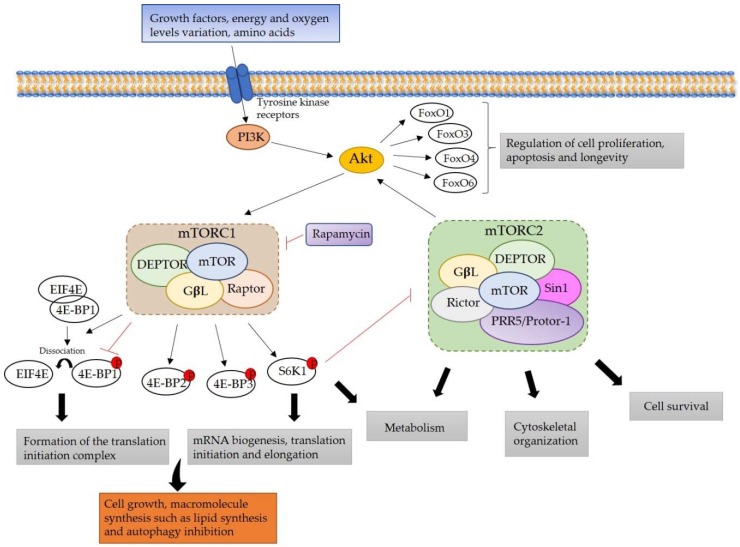
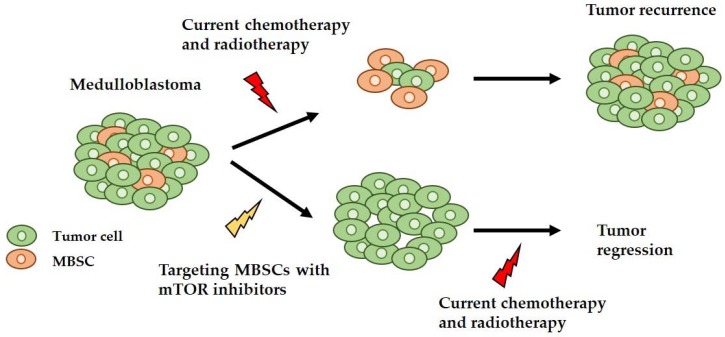
Mechanistic target of rapamycin (mTOR) is a master signaling pathway that regulates organismal growth and homeostasis, because of its implication in protein and lipid synthesis, and in the control of the cell cycle and the cellular metabolism. Moreover, it is necessary in cerebellar development and stem cell pluripotency maintenance. Its deregulation has been implicated in the medulloblastoma and in medulloblastoma stem cells (MBSCs). Medulloblastoma is the most common malignant solid tumor in childhood. The current therapies have improved the overall survival but they carry serious side effects, such as permanent neurological sequelae and disability. Recent studies have given rise to a new molecular classification of the subgroups of medulloblastoma, specifying 12 different subtypes containing novel potential therapeutic targets. In this review we propose the targeting of mTOR, in combination with current therapies, as a promising novel therapeutic approach.
雷帕霉素靶蛋白(mTOR)是一种调节机体生长和内稳态的主要信号通路,因为它参与蛋白质和脂质的合成,以及细胞周期和细胞代谢的控制。此外,它对小脑发育和干细胞多能性维持是必需的。其失调与髓母细胞瘤和髓母细胞瘤干细胞(MBSC)有关。髓母细胞瘤是儿童中最常见的恶性实体肿瘤。目前的治疗方法已经提高了总体生存率,但它们会带来严重的副作用,如永久性神经后遗症和残疾。最近的研究提出了髓母细胞瘤亚组的新分子分类,确定了包含新潜在治疗靶点的 12 种不同亚型。在这篇综述中,我们提出将 mTOR 与当前的治疗方法相结合作为一种有前途的新治疗方法。