Centro de Citricultura Sylvio Moreira, Instituto Agronômico (IAC), Rod. Anhanguera, km 158, CP 04, CEP 13490-970, Cordeirópolis, SP, Brazil; University of Southampton, Biological Sciences, Building 85, Highfield, Southampton SO17 1BJ, United Kingdom.
Centro de Citricultura Sylvio Moreira, Instituto Agronômico (IAC), Rod. Anhanguera, km 158, CP 04, CEP 13490-970, Cordeirópolis, SP, Brazil.
J Plant Physiol. 2018 Sep;228:158-165. doi: 10.1016/j.jplph.2018.06.005. Epub 2018 Jun 14.
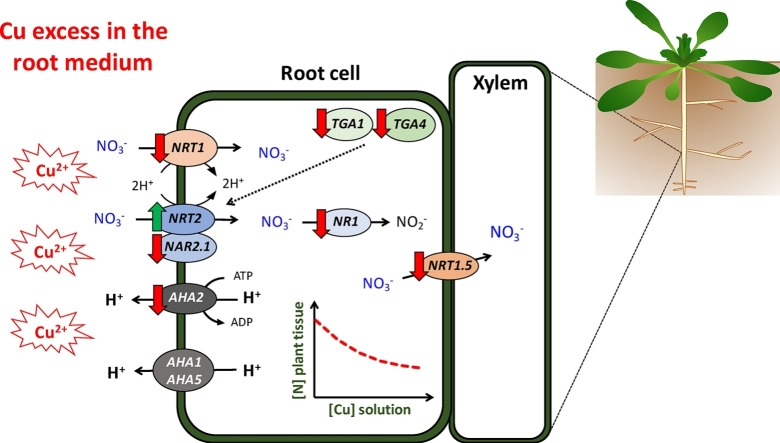
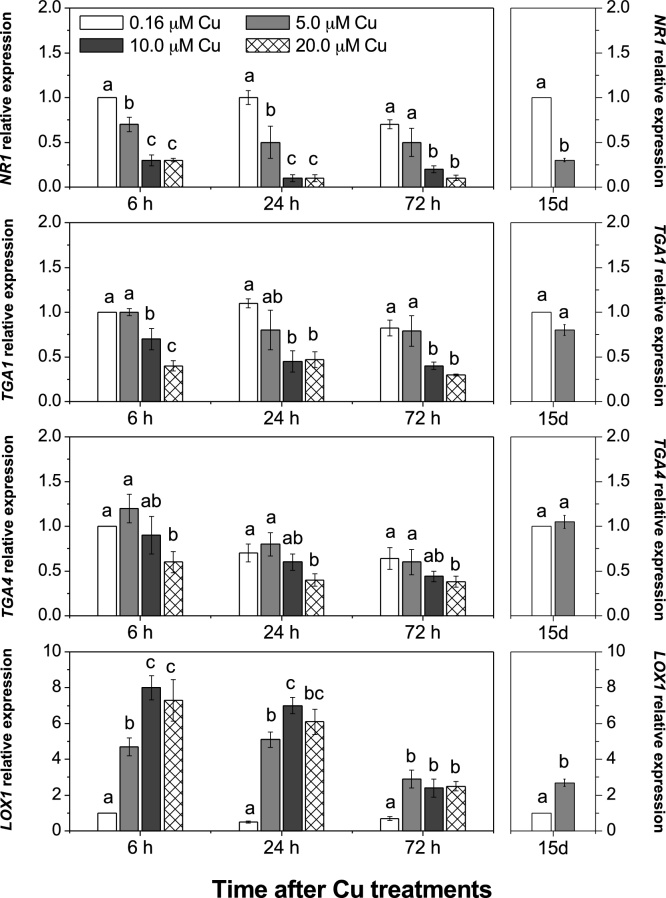
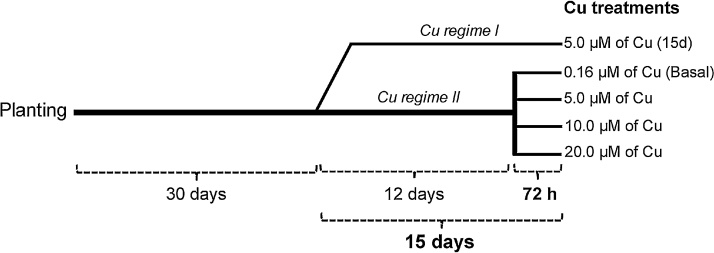
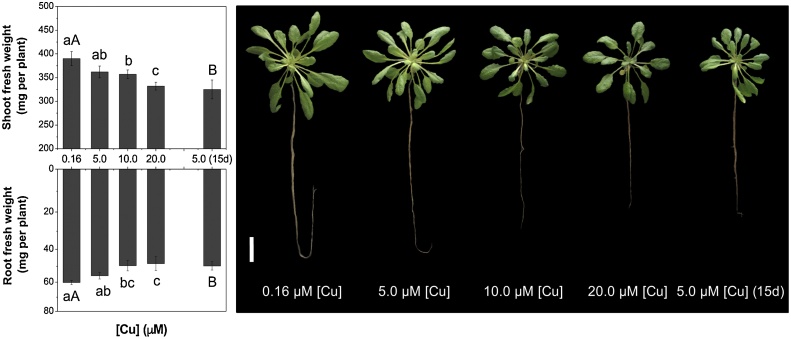
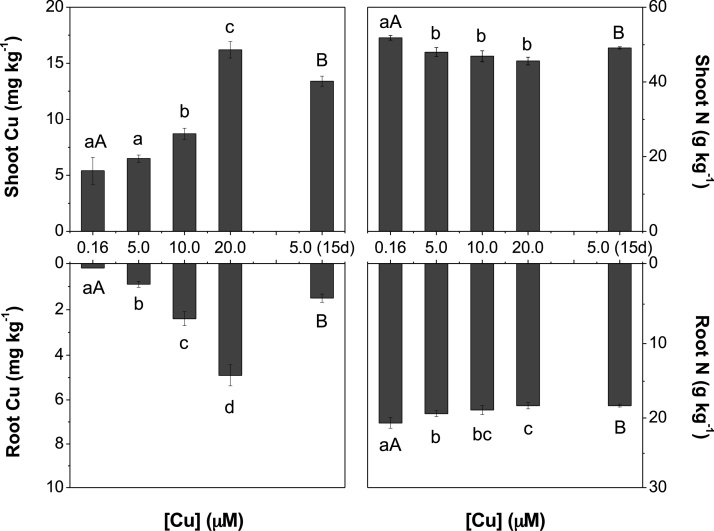
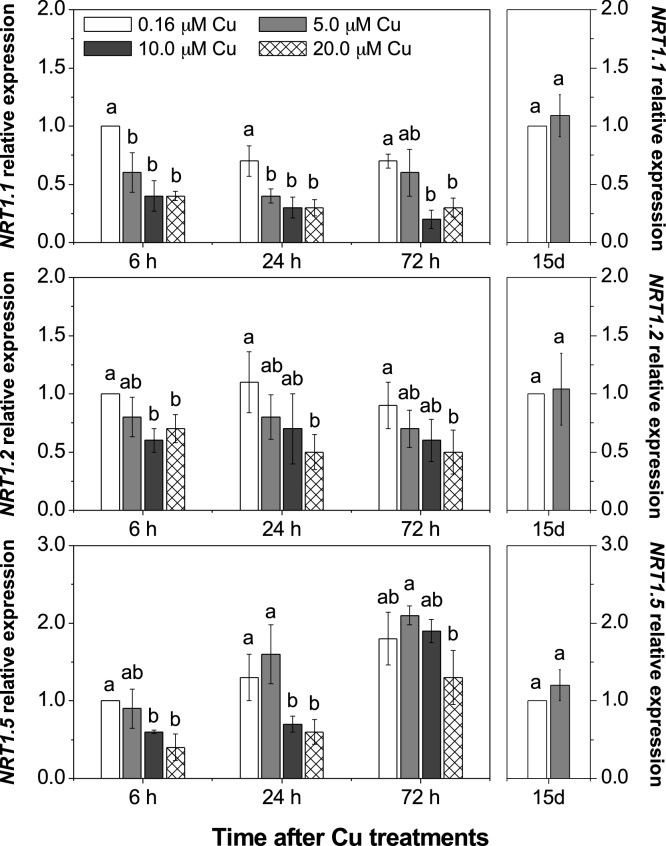
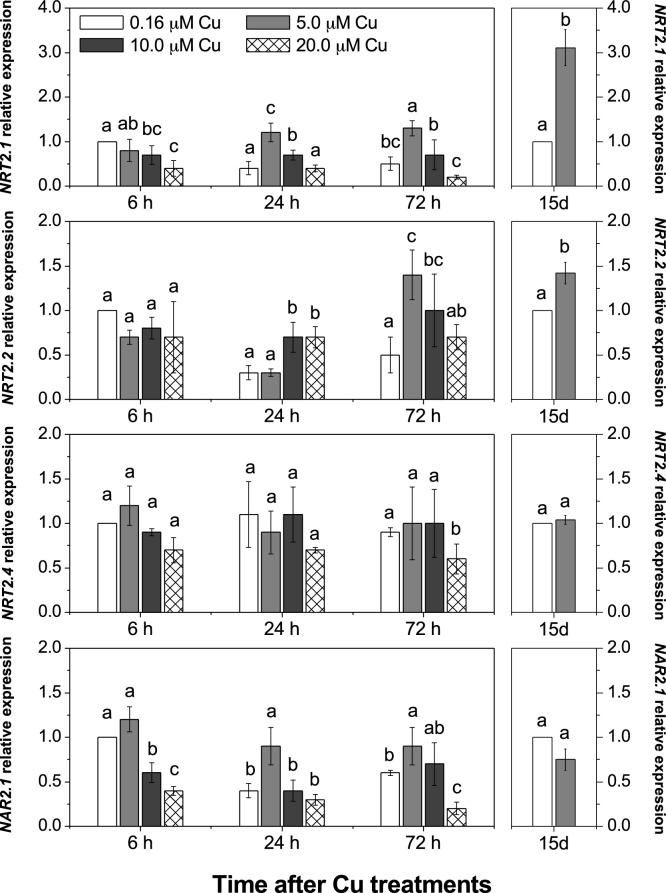
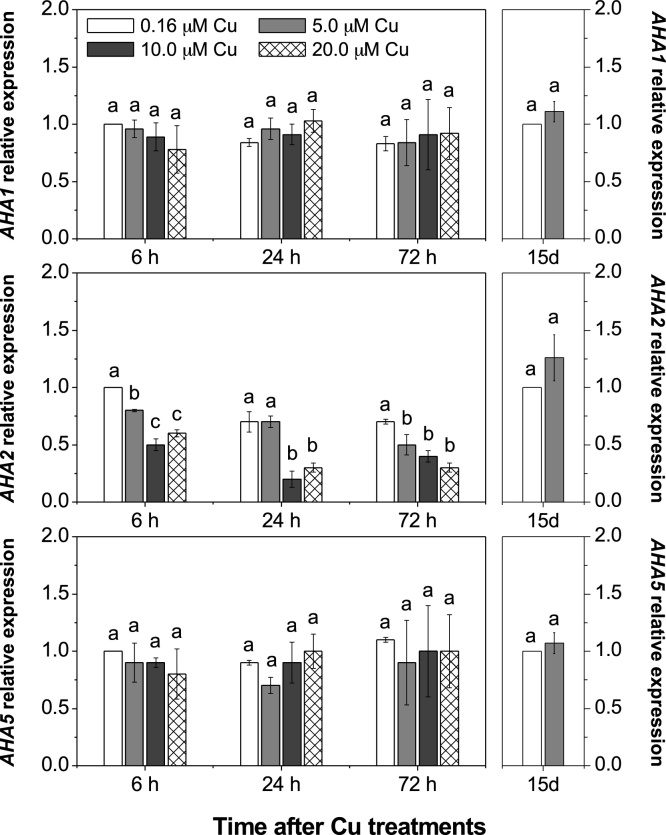
Nitrate uptake by plants is mediated by specific transport proteins in roots (NRTs), which are also dependent on the activity of proton pumps that energize the reaction. Nitrogen (N) metabolism in plants is sensitive to copper (Cu) toxicity conditions. To understand how Cu affects the uptake and assimilation processes, this study assesses the inhibitory effects of elevated Cu levels on the expression of genes related to N absorption, transport and assimilation in roots of Arabidopsis. Plants were grown hydroponically for 45 days, being exposed to a range of Cu concentrations in the last 72 h or alternatively exposed to 5.0 μM Cu for the last 15 days. High Cu levels decreased the uptake and accumulation of N in plants. It down-regulated the expression of genes encoding nitrate reductase (NR1), low-affinity nitrate transporters (NRT1 family) and bZIP transcription factors (TGA1 and TGA4) that regulate the expression of nitrate transporters. Cu toxicity also specifically down-regulated the plasma membrane proton pump, AHA2, whilst having little effect on AHA1 and AHA5. In contrast, there was an up-regulation of high-affinity nitrate transporters from the NRT2 family when exposed to medium level of Cu excess, but this was insufficient for restoring N absorption by roots to control levels. These results demonstrate that plants display specific responses to Cu toxicity, modulating the expression of particular genes related to nitrate uptake, such as low-affinity nitrate transporters and proton pumps.
植物对硝酸盐的吸收是由根部的特定转运蛋白(NRTs)介导的,这些转运蛋白也依赖于质子泵的活性,质子泵为反应提供能量。植物的氮(N)代谢对铜(Cu)毒性条件敏感。为了了解 Cu 如何影响吸收和同化过程,本研究评估了升高的 Cu 水平对拟南芥根部与 N 吸收、转运和同化相关基因表达的抑制作用。植物在水培中生长了 45 天,在最后 72 小时暴露于一系列 Cu 浓度下,或者在最后 15 天暴露于 5.0 μM Cu 下。高 Cu 水平降低了植物对 N 的吸收和积累。它下调了编码硝酸还原酶(NR1)、低亲和力硝酸盐转运体(NRT1 家族)和 bZIP 转录因子(TGA1 和 TGA4)的基因的表达,这些基因调节硝酸盐转运体的表达。Cu 毒性还特异性地下调了质膜质子泵 AHA2,而对 AHA1 和 AHA5 的影响很小。相比之下,当暴露于中等水平的 Cu 过剩时,高亲和力硝酸盐转运体(NRT2 家族)的表达会上调,但这不足以使根部对 N 的吸收恢复到对照水平。这些结果表明,植物对 Cu 毒性表现出特定的反应,调节与硝酸盐吸收相关的特定基因的表达,如低亲和力硝酸盐转运体和质子泵。