Sgarbi Gianluca, Gorini Giulia, Liuzzi Francesca, Solaini Giancarlo, Baracca Alessandra
Department of Biomedical and Neuromotor Sciences, Laboratory of Biochemistry and Mitochondrial Pathophysiology, University of Bologna, Bologna 40126, Italy.
Department of Biomedical, Experimental, and Clinical Sciences "Mario Serio", University of Florence, Florence 50121, Italy.
Cells. 2018 Jun 21;7(7):64. doi: 10.3390/cells7070064.
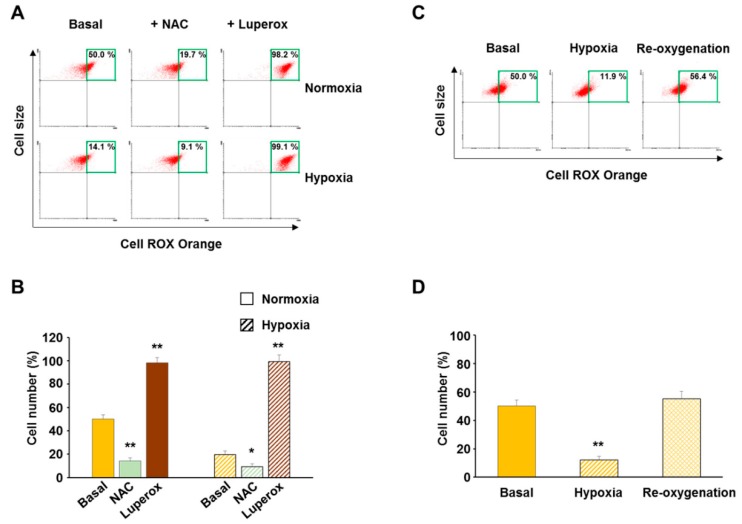
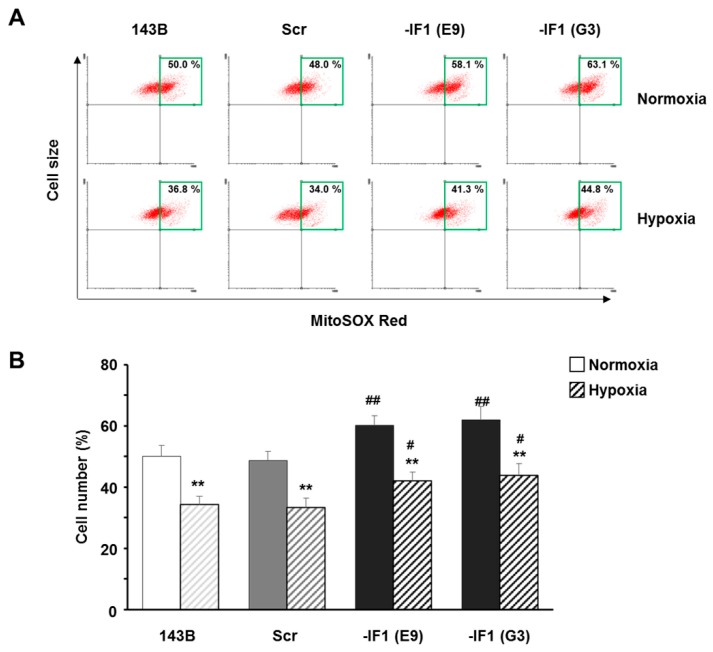
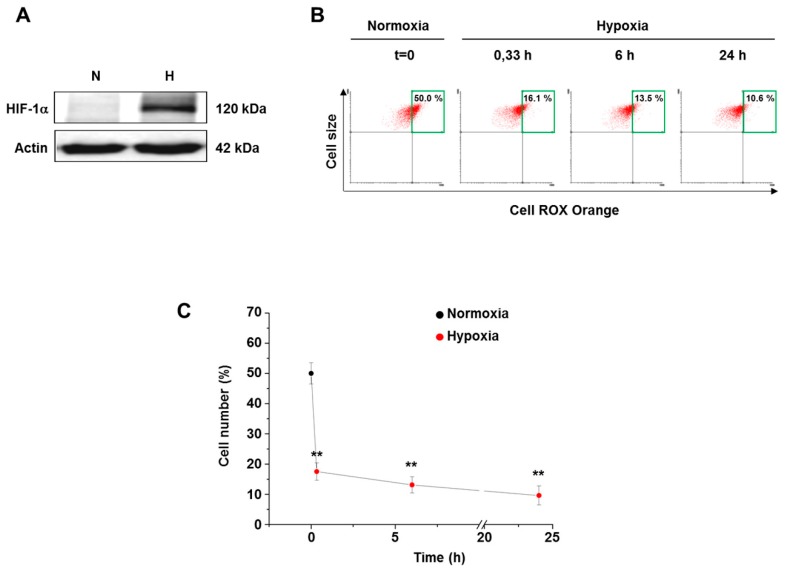
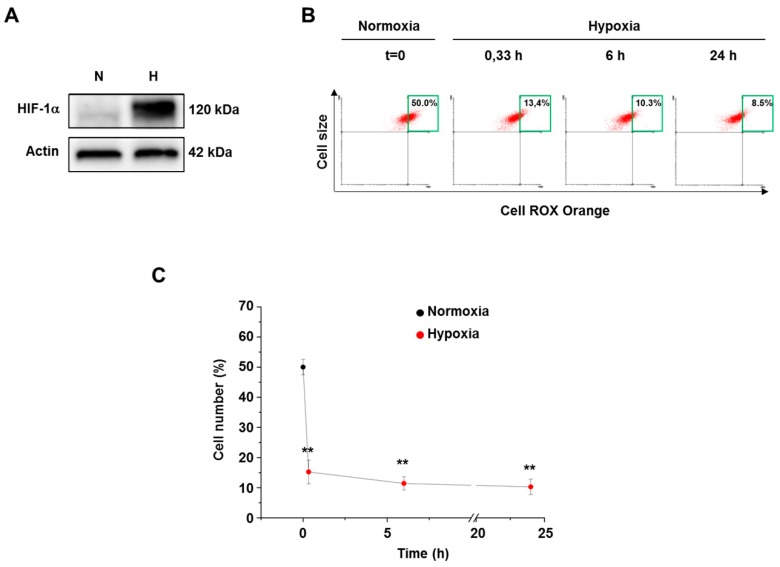
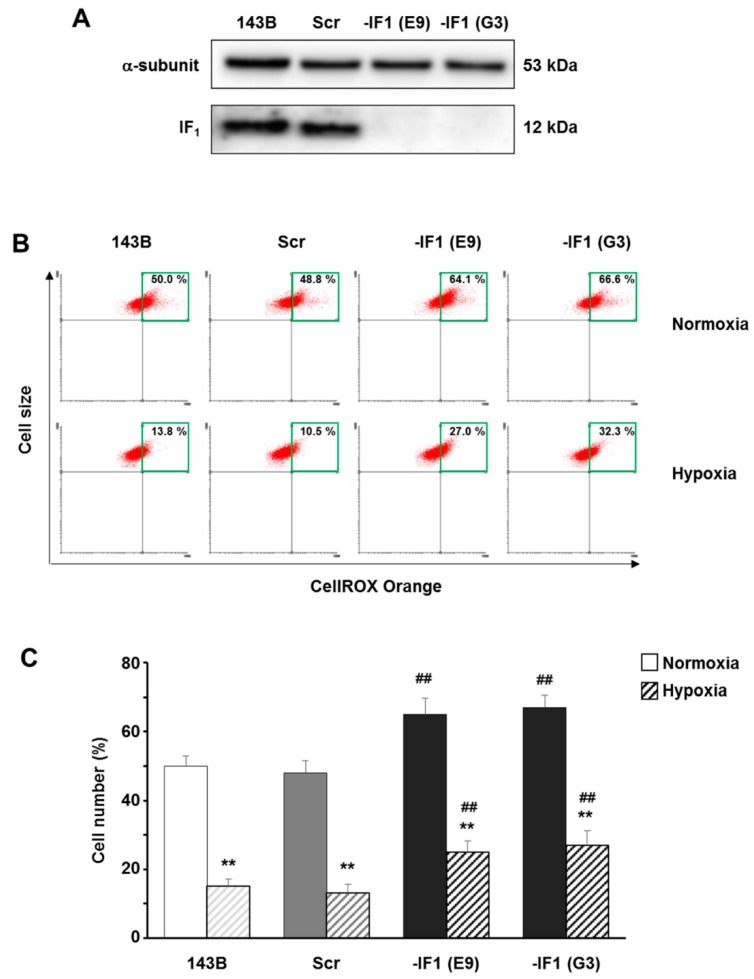
The role of reactive oxygen species (ROS) in the metabolic reprogramming of cells adapted to hypoxia and the interplay between ROS and hypoxia in malignancy is under debate. Here, we examined how ROS levels are modulated by hypoxia in human cancer compared to untransformed cells. Short time exposure (20 min) of either fibroblasts or 143B osteosarcoma cells to low oxygen tension down to 0.5% induced a significant decrease of the cellular ROS level, as detected by the CellROX fluorescent probe (−70%). Prolonging the cells’ exposure to hypoxia for 24 h, ROS decreased further, reaching nearly 20% of the normoxic value. In this regard, due to the debated role of the endogenous inhibitor protein (IF₁) of the ATP synthase complex in cancer cell bioenergetics, we investigated whether IF₁ is involved in the control of ROS generation under severe hypoxic conditions. A significant ROS content decrease was observed in hypoxia in both IF₁-expressing and IF₁- silenced cells compared to normoxia. However, IF₁-silenced cells showed higher ROS levels compared to IF1-containing cells. In addition, the MitoSOX Red-measured superoxide level of all the hypoxic cells was significantly lower compared to normoxia; however, the decrease was milder than the marked drop of ROS content. Accordingly, the difference between IF₁-expressing and IF₁-silenced cells was smaller but significant in both normoxia and hypoxia. In conclusion, the interplay between ROS and hypoxia and its modulation by IF₁ have to be taken into account to develop therapeutic strategies against cancer.
活性氧(ROS)在适应缺氧的细胞代谢重编程中的作用以及ROS与缺氧在恶性肿瘤中的相互作用仍存在争议。在此,我们研究了与未转化细胞相比,缺氧如何调节人类癌细胞中的ROS水平。将成纤维细胞或143B骨肉瘤细胞短时间(20分钟)暴露于低至0.5%的低氧张力下,通过CellROX荧光探针检测发现细胞ROS水平显著降低(-70%)。将细胞暴露于缺氧环境24小时后,ROS进一步降低,降至常氧值的近20%。在这方面,由于ATP合酶复合物的内源性抑制蛋白(IF₁)在癌细胞生物能量学中的作用存在争议,我们研究了IF₁是否参与严重缺氧条件下ROS生成的控制。与常氧相比,在缺氧条件下,表达IF₁和沉默IF₁的细胞中ROS含量均显著降低。然而,与含IF₁的细胞相比,沉默IF₁的细胞显示出更高的ROS水平。此外,与常氧相比,所有缺氧细胞中用MitoSOX Red测量的超氧化物水平均显著降低;然而,这种降低比ROS含量的显著下降更为轻微。因此,在常氧和缺氧条件下,表达IF₁和沉默IF₁的细胞之间的差异较小但具有显著性。总之,在制定抗癌治疗策略时,必须考虑ROS与缺氧之间的相互作用及其受IF₁的调节。