Lu Hsin-I, Chen Kuan-Liang, Yen Ching-Yu, Chen Chung-Yi, Chien Tsu-Ming, Shu Chih-Wen, Chen Yu-Hsuan, Jeng Jiiang-Huei, Chen Bing-Hung, Chang Hsueh-Wei
Graduate Institute of Medicine, College of Medicine, Kaohsiung Medical University, Kaohsiung 80708, Taiwan.
Department of Dentistry, Chi-Mei Medical Center, Tainan 71004, Taiwan.
Pharmaceuticals (Basel). 2024 Feb 9;17(2):230. doi: 10.3390/ph17020230.
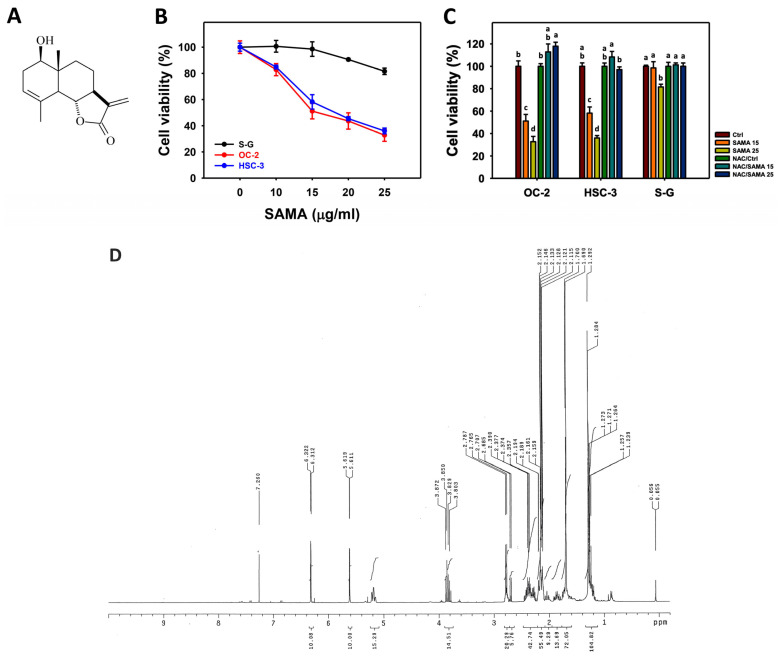
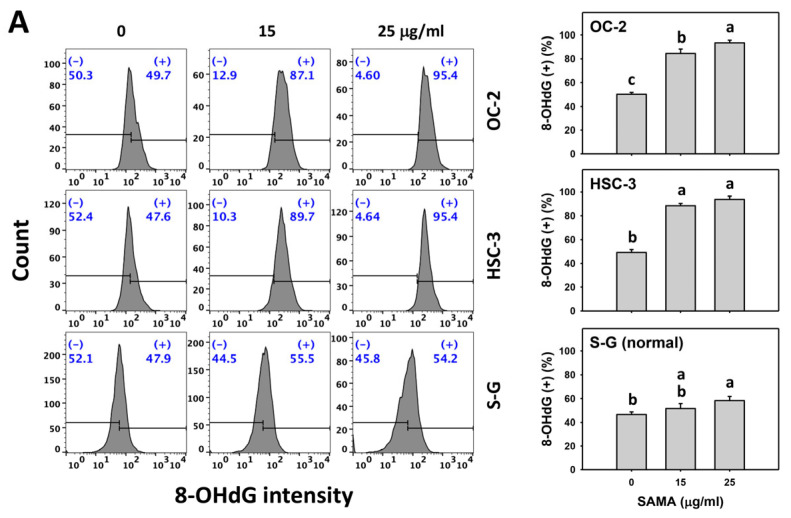
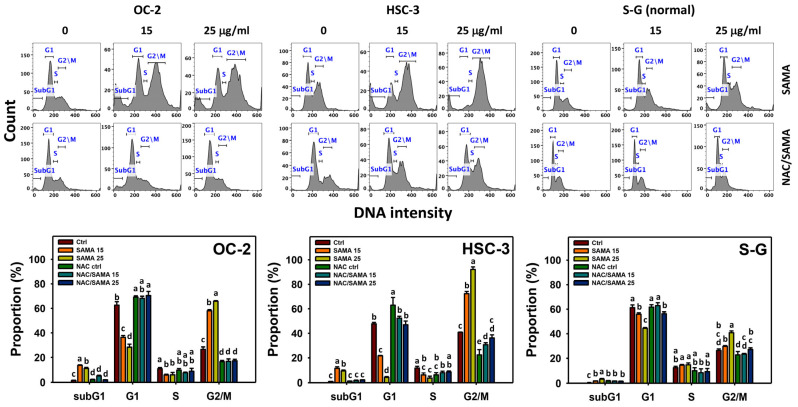
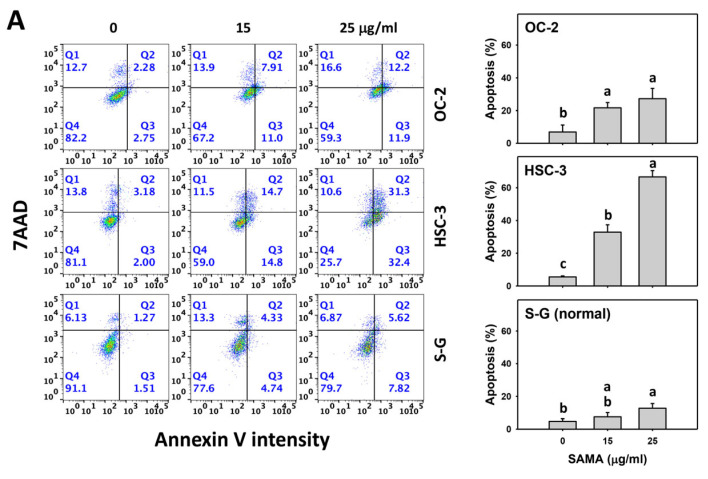
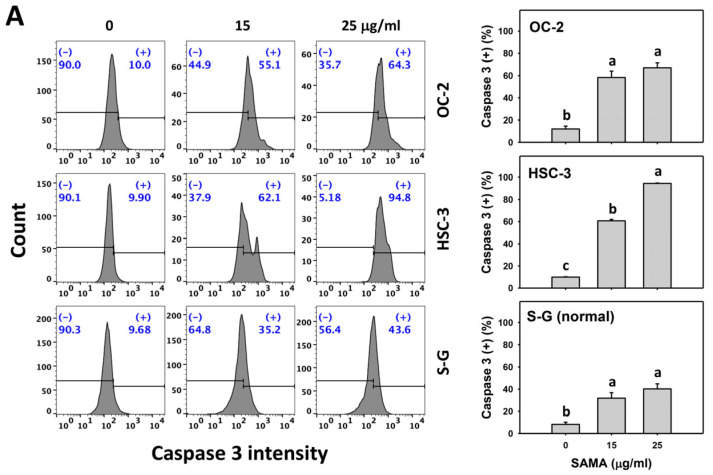
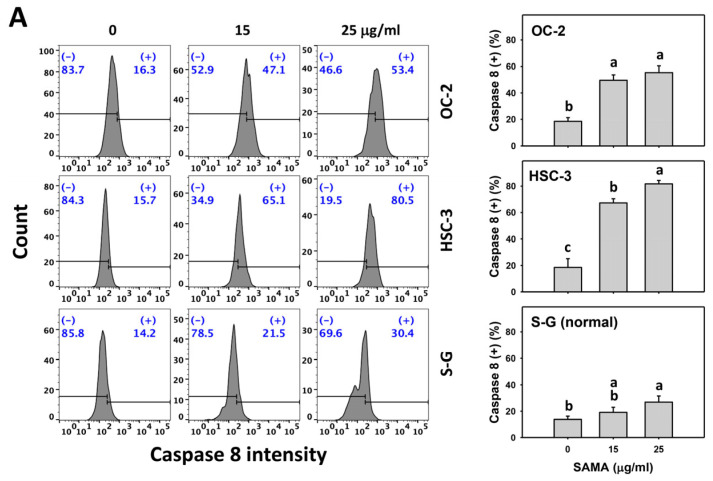
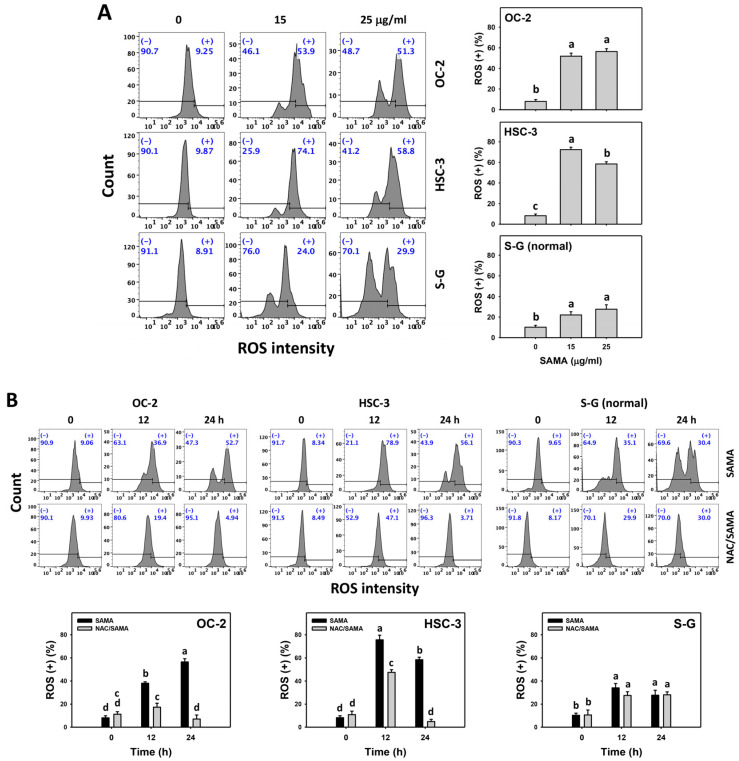
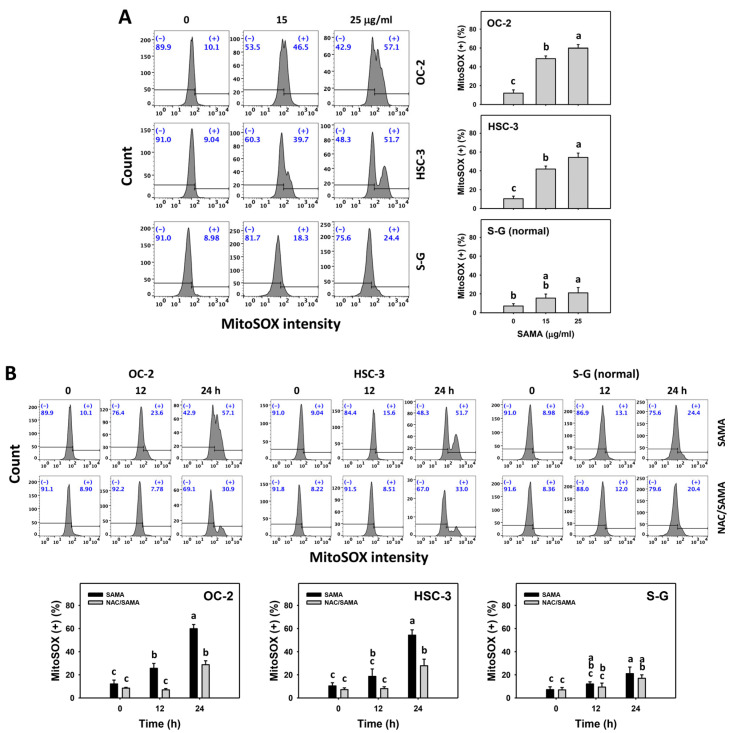
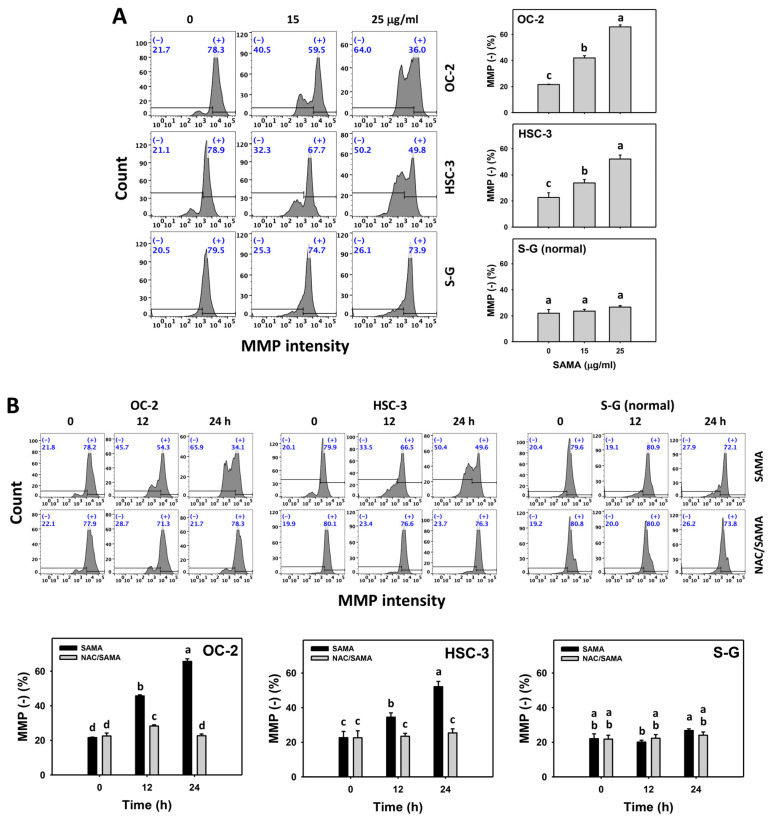
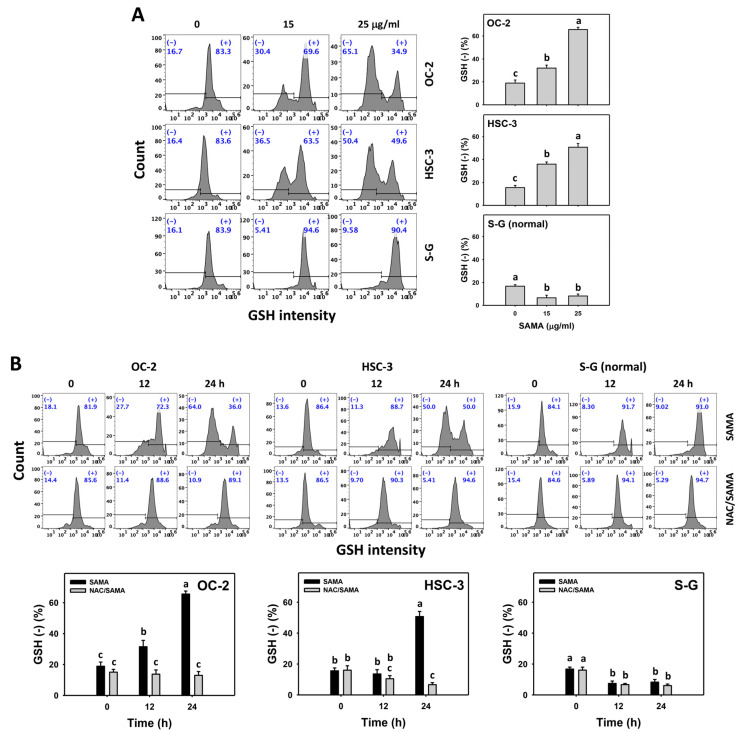
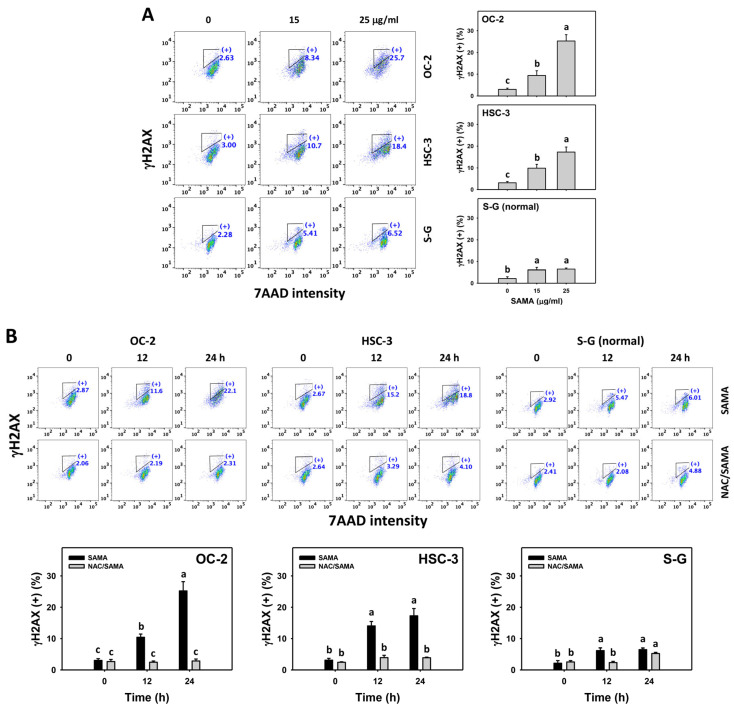
The anti-oral cancer effects of santamarine (SAMA), a var. compressa-derived natural product, remain unclear. This study investigates the anticancer effects and acting mechanism of SAMA against oral cancer (OC-2 and HSC-3) in parallel with normal (Smulow-Glickman; S-G) cells. SAMA selectively inhibits oral cancer cell viability more than normal cells, reverted by the oxidative stress remover -acetylcysteine (NAC). The evidence of oxidative stress generation, such as the induction of reactive oxygen species (ROS) and mitochondrial superoxide and the depletion of mitochondrial membrane potential and glutathione, further supports this ROS-dependent selective antiproliferation. SAMA arrests oral cancer cells at the G2/M phase. SAMA triggers apoptosis (annexin V) in oral cancer cells and activates caspases 3, 8, and 9. SAMA enhances two types of DNA damage in oral cancer cells, such as γH2AX and 8-hydroxy-2-deoxyguanosine. Moreover, all of these anticancer mechanisms of SAMA are more highly expressed in oral cancer cells than in normal cells in concentration and time course experiments. These above changes are attenuated by NAC, suggesting that SAMA exerts mechanisms of selective antiproliferation that depend on oxidative stress while maintaining minimal cytotoxicity to normal cells.
来源于皱叶海带的天然产物圣马力因(SAMA)的抗口腔癌作用尚不清楚。本研究探讨了SAMA对口腔癌(OC-2和HSC-3)细胞以及正常(Smulow-Glickman;S-G)细胞的抗癌作用及其作用机制。SAMA对口腔癌细胞活力的抑制作用具有选择性,比对正常细胞的抑制作用更强,而氧化应激清除剂N-乙酰半胱氨酸(NAC)可逆转这种作用。氧化应激产生的证据,如活性氧(ROS)和线粒体超氧化物的诱导以及线粒体膜电位和谷胱甘肽的消耗,进一步支持了这种依赖ROS的选择性抗增殖作用。SAMA使口腔癌细胞停滞于G2/M期。SAMA可诱导口腔癌细胞凋亡(膜联蛋白V)并激活半胱天冬酶3、8和9。SAMA可增强口腔癌细胞中的两种DNA损伤,如γH2AX和8-羟基-2'-脱氧鸟苷。此外,在浓度和时间进程实验中,SAMA的所有这些抗癌机制在口腔癌细胞中的表达均高于正常细胞。上述变化可被NAC减弱,这表明SAMA发挥了依赖氧化应激的选择性抗增殖机制,同时对正常细胞保持最小的细胞毒性。