Department of Cardiology, Academic Medical Center, University of Amsterdam, the Netherlands.
Department of Pediatric Cardiology, Leiden University Medical Center, Leiden, the Netherlands.
J Am Heart Assoc. 2018 Jun 22;7(13):e008163. doi: 10.1161/JAHA.117.008163.
Infective endocarditis (IE) after transcatheter pulmonary valve implantation (TPVI) in dysfunctioning right ventricular outflow tract conduits has evoked growing concerns. We aimed to investigate the incidence and the natural history of IE after TPVI with the Melody valve through a systematic review of published data.
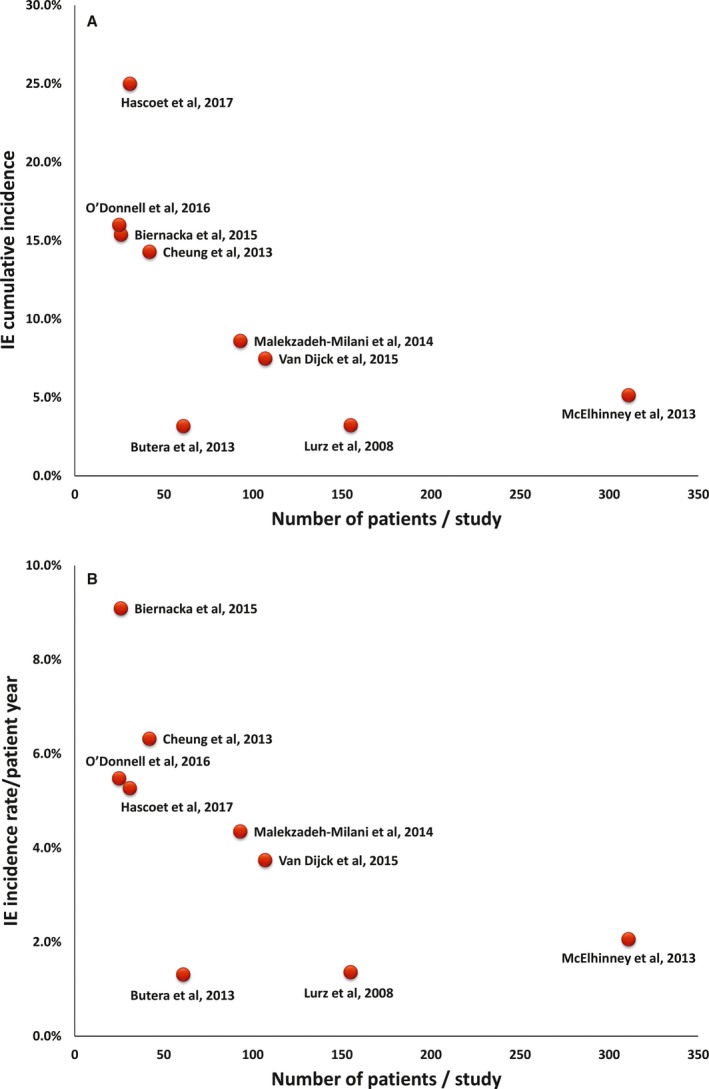
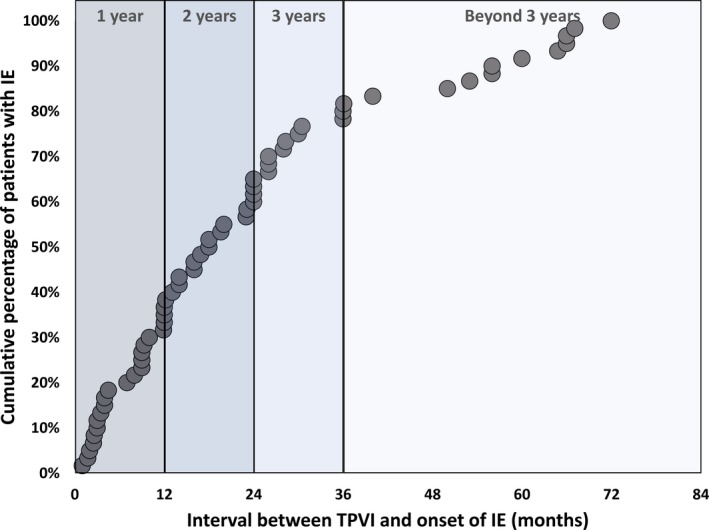
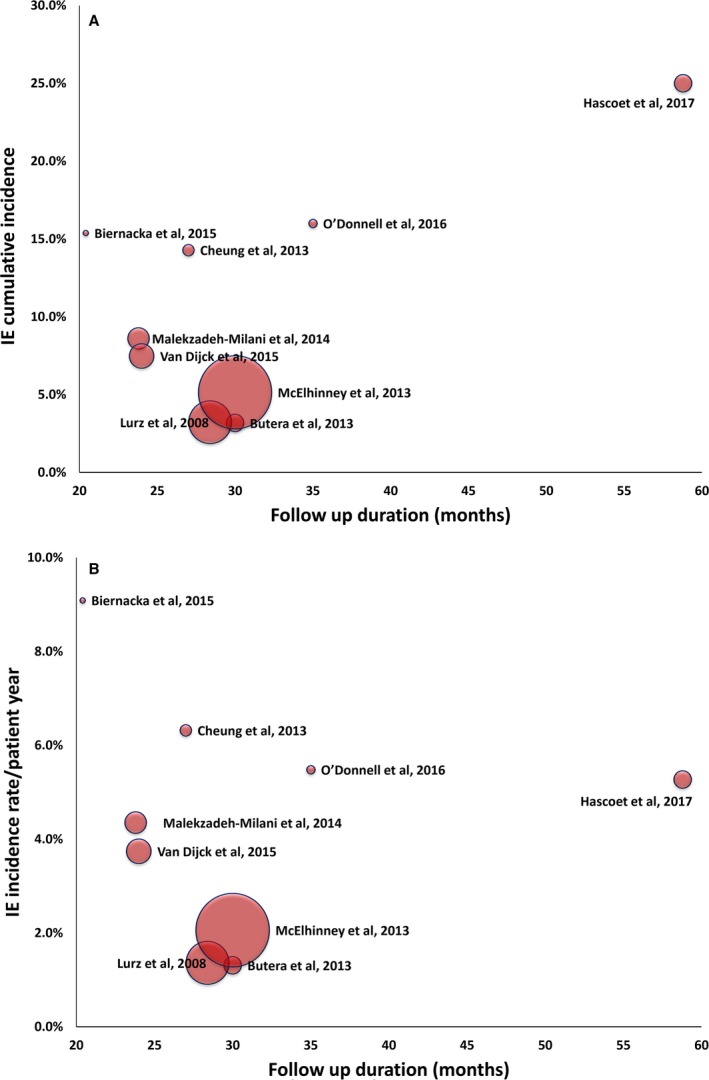
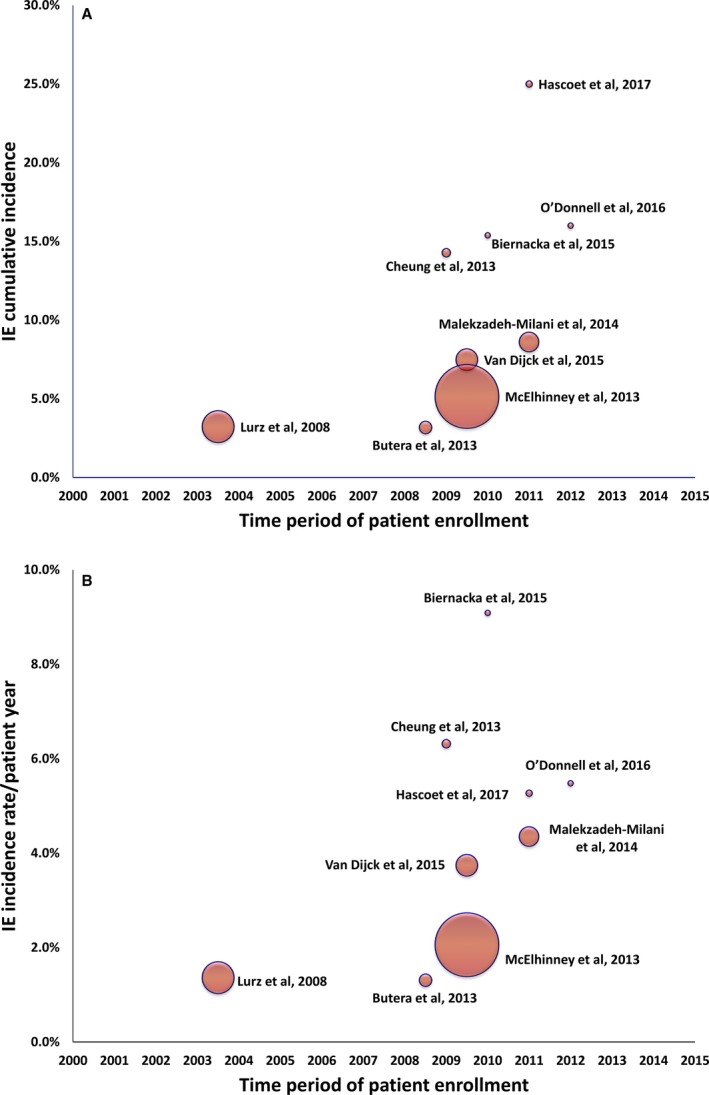
PubMed, EMBASE, and Web of Science databases were systematically searched for articles published until March 2017, reporting on IE after TPVI with the Melody valve. Nine studies (including 851 patients and 2060 patient-years of follow-up) were included in the analysis of the incidence of IE. The cumulative incidence of IE ranged from 3.2% to 25.0%, whereas the annualized incidence rate ranged from 1.3% to 9.1% per patient-year. The median (interquartile range) time from TPVI to the onset of IE was 18.0 (9.0-30.4) months (range, 1.0-72.0 months). The most common findings were positive blood culture (93%), fever (89%), and new, significant, and/or progressive right ventricular outflow tract obstruction (79%); vegetations were detectable on echocardiography in only 34% of cases. Of 69 patients with IE after TPVI, 6 (8.7%) died and 35 (52%) underwent surgical and/or transcatheter reintervention. Death or reintervention was more common in patients with new/significant right ventricular outflow tract obstruction (69% versus 33%; =0.042) and in patients with non-streptococcal IE (73% versus 30%; =0.001).
The incidence of IE after implantation of a Melody valve is significant, at least over the first 3 years after TPVI, and varies considerably between the studies. Although surgical/percutaneous reintervention is a common consequence, some patients can be managed medically, especially those with streptococcal infection and no right ventricular outflow tract obstruction.
经导管肺动脉瓣植入(TPVI)后,功能障碍右心室流出道(RVOT)管道中的感染性心内膜炎(IE)引起了越来越多的关注。我们旨在通过对已发表数据的系统回顾,研究 Melody 瓣膜经导管肺动脉瓣植入(TPVI)后 IE 的发生率和自然史。
系统地检索了 PubMed、EMBASE 和 Web of Science 数据库,以获取截至 2017 年 3 月报告 Melody 瓣膜经导管肺动脉瓣植入(TPVI)后 IE 发生率的文章。对 9 项研究(共纳入 851 例患者和 2060 例患者年随访)进行了 IE 发生率的分析。IE 的累积发生率范围为 3.2%至 25.0%,而每年每例患者的发生率范围为 1.3%至 9.1%。从 TPVI 到 IE 发病的中位(四分位间距)时间为 18.0(9.0-30.4)个月(范围为 1.0-72.0 个月)。最常见的表现为血培养阳性(93%)、发热(89%)和新的、显著的和/或进行性 RVOT 梗阻(79%);只有 34%的病例在超声心动图上可检测到赘生物。在 69 例 TPVI 后 IE 患者中,6 例(8.7%)死亡,35 例(52%)接受了手术和/或经导管再介入治疗。新发/显著 RVOT 梗阻患者(69%比 33%;=0.042)和非链球菌 IE 患者(73%比 30%;=0.001)的死亡率或再介入率更高。
Melody 瓣膜植入后 IE 的发生率很高,至少在 TPVI 后 3 年内如此,且不同研究间差异很大。尽管手术/经皮再介入是常见的后果,但一些患者可以接受药物治疗,尤其是那些链球菌感染且无 RVOT 梗阻的患者。