Department of Medicine, Northwestern University, Chicago, IL, 60611, USA.
Department of Gastroenterology, Xiang'an Hospital of Xiamen University, Fujian, 361101, Xiamen, China.
Nat Commun. 2018 Jun 22;9(1):2454. doi: 10.1038/s41467-018-04465-5.
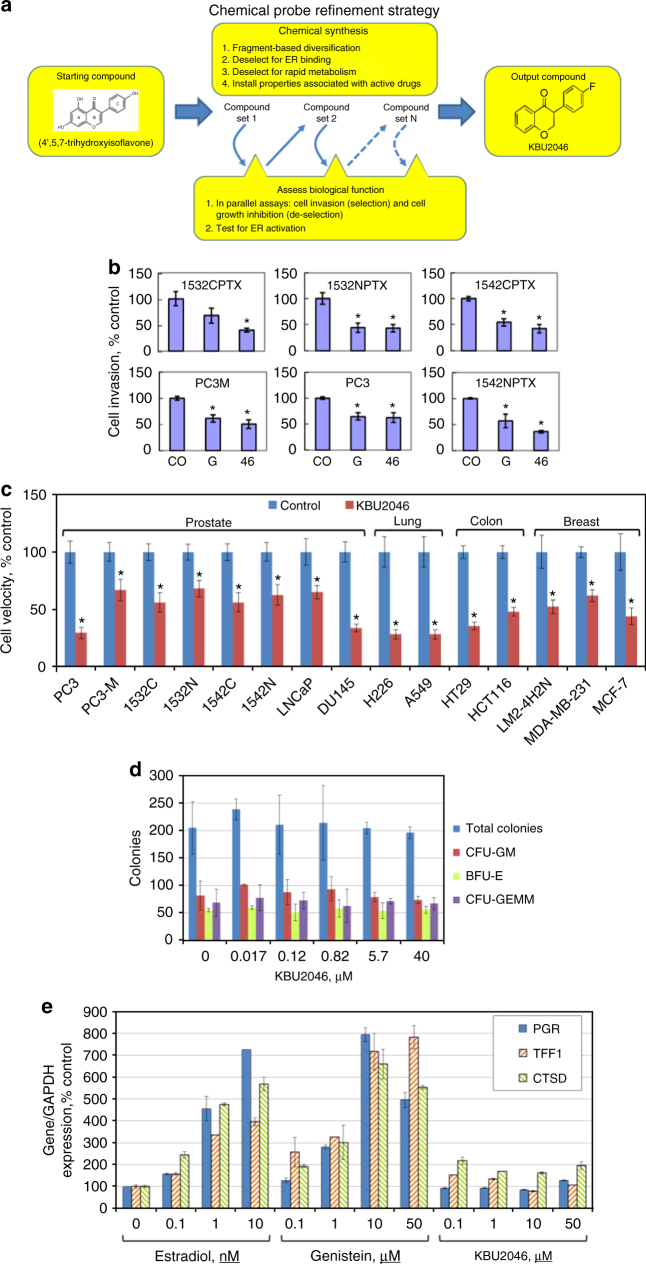
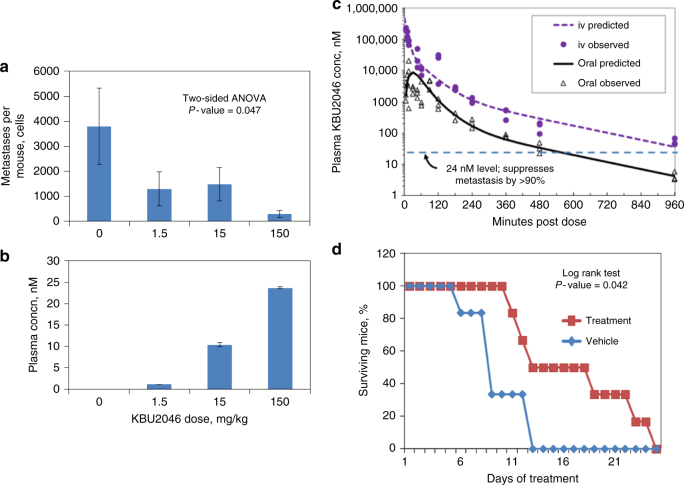
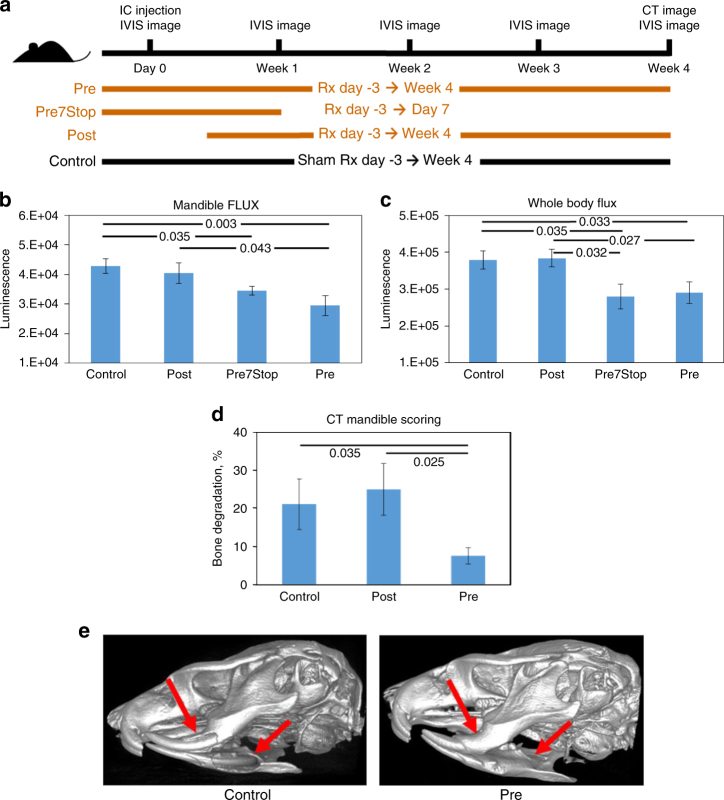
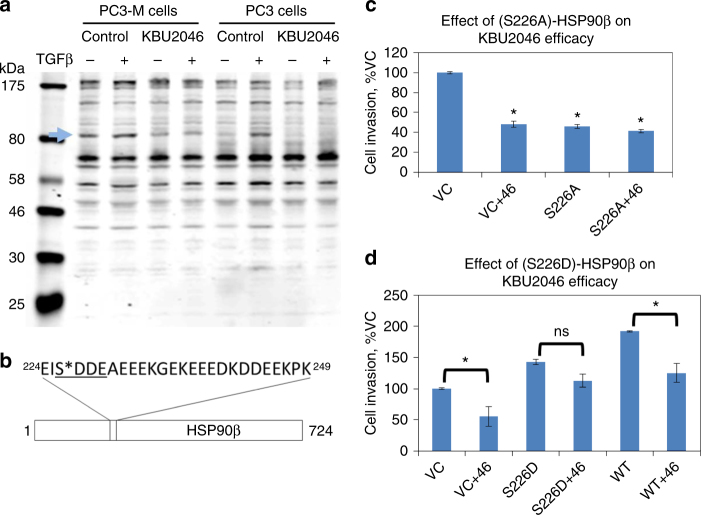
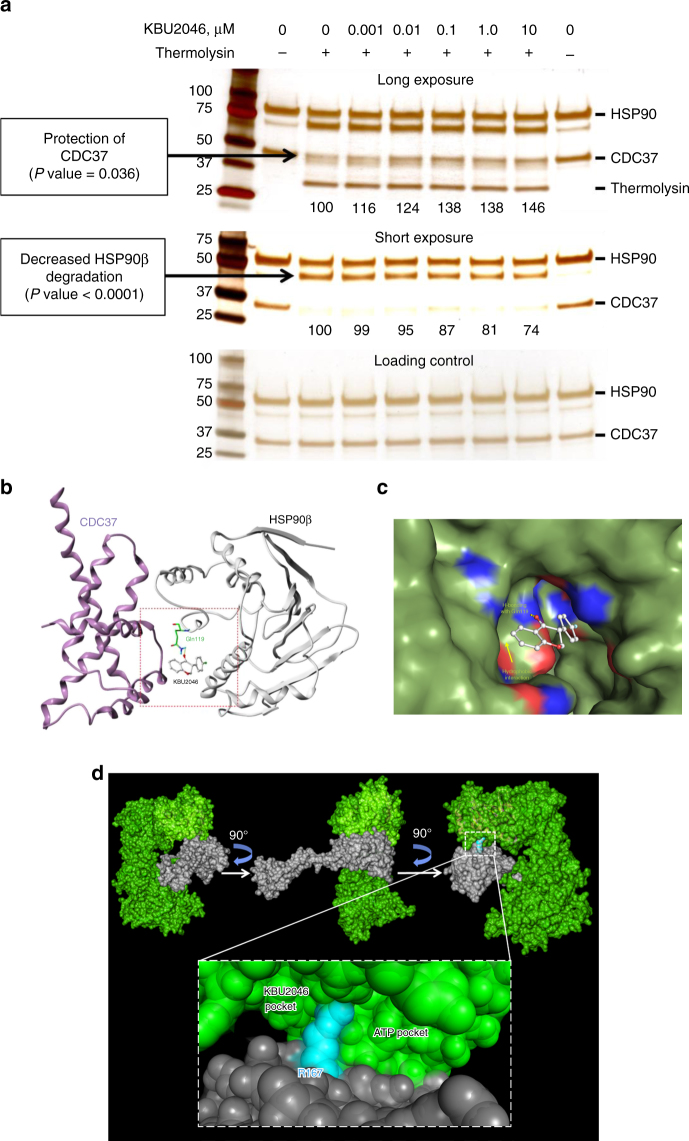
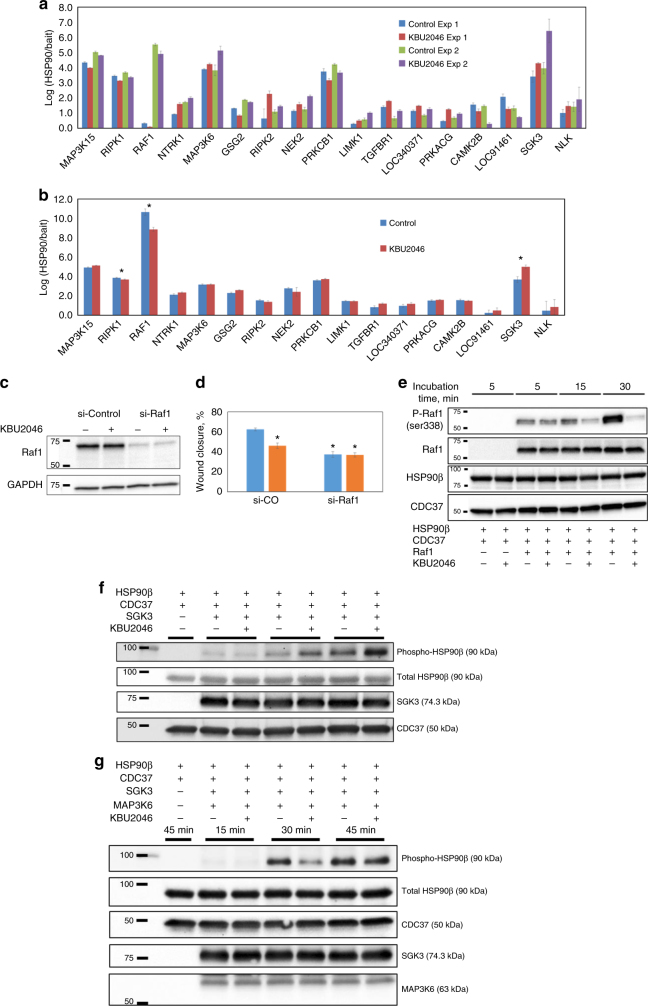
Increased cancer cell motility constitutes a root cause of end organ destruction and mortality, but its complex regulation represents a barrier to precision targeting. We use the unique characteristics of small molecules to probe and selectively modulate cell motility. By coupling efficient chemical synthesis routes to multiple upfront in parallel phenotypic screens, we identify that KBU2046 inhibits cell motility and cell invasion in vitro. Across three different murine models of human prostate and breast cancer, KBU2046 inhibits metastasis, decreases bone destruction, and prolongs survival at nanomolar blood concentrations after oral administration. Comprehensive molecular, cellular and systemic-level assays all support a high level of selectivity. KBU2046 binds chaperone heterocomplexes, selectively alters binding of client proteins that regulate motility, and lacks all the hallmarks of classical chaperone inhibitors, including toxicity. We identify a unique cell motility regulatory mechanism and synthesize a targeted therapeutic, providing a platform to pursue studies in humans.
癌细胞迁移能力增强是导致终末器官破坏和死亡的根本原因,但这种复杂的调节机制成为了精准靶向治疗的障碍。我们利用小分子的独特特性来探测和选择性地调节细胞迁移能力。通过将高效的化学合成途径与多个平行表型筛选相结合,我们发现 KBU2046 能够抑制体外细胞迁移和侵袭。在三种不同的人源前列腺癌和乳腺癌的小鼠模型中,KBU2046 能够抑制转移、减少骨质破坏,并在口服给药后以纳摩尔血液浓度延长生存时间。全面的分子、细胞和系统水平的检测都支持高度的选择性。KBU2046 与伴侣蛋白异源复合物结合,选择性地改变调节迁移的客户蛋白的结合,并且缺乏经典伴侣蛋白抑制剂的所有特征,包括毒性。我们确定了一个独特的细胞迁移调节机制,并合成了一种靶向治疗药物,为在人类中进行研究提供了一个平台。