VIB-Center for Cancer Biology, and KU Leuven, Department of Oncology, 3000 Leuven, Belgium.
VIB-Center for Cancer Biology, and KU Leuven, Department of Oncology, 3000 Leuven, Belgium; Department of Neurological Surgery, Brain Tumor Research Center, Helen Diller Family Comprehensive Cancer Center, University of California, San Francisco, CA, 94158, USA.
Semin Cancer Biol. 2018 Oct;52(Pt 2):107-116. doi: 10.1016/j.semcancer.2018.06.002. Epub 2018 Jun 20.
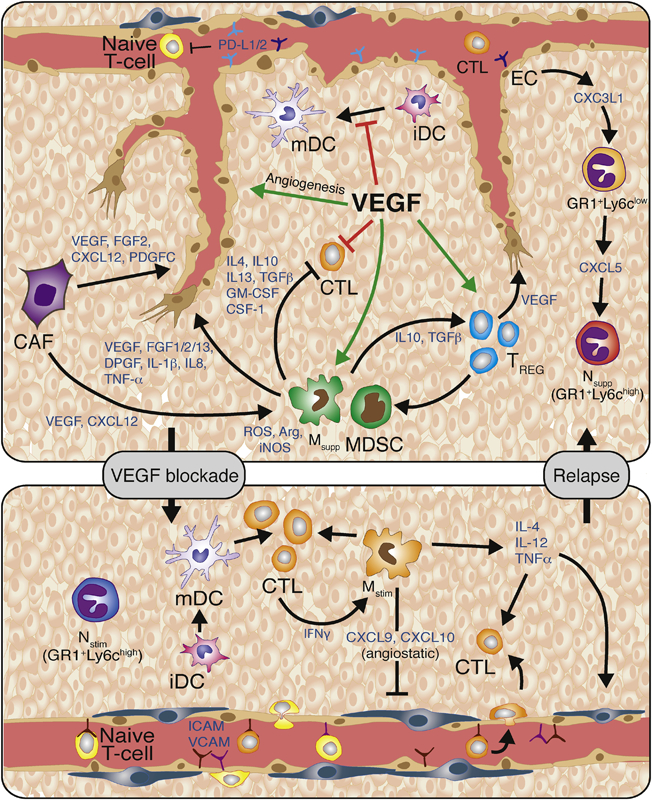
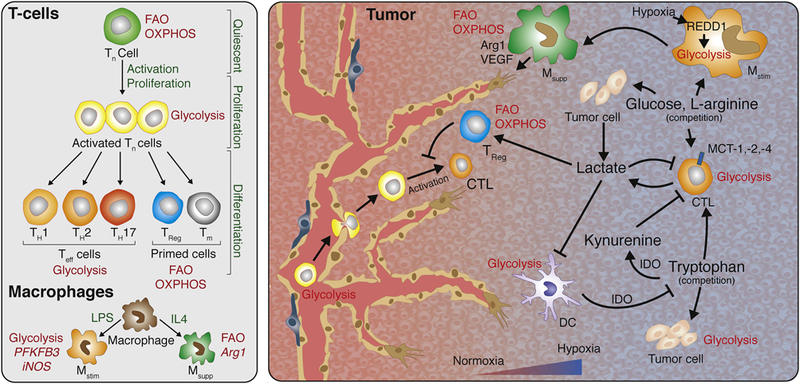
Tumor angiogenesis and escape of immunosurveillance are two cancer hallmarks that are tightly linked and reciprocally regulated by paracrine signaling cues of cell constituents from both compartments. Formation and remodeling of new blood vessels in tumors is abnormal and facilitates immune evasion. In turn, immune cells in the tumor, specifically in context with an acidic and hypoxic environment, can promote neovascularization. Immunotherapy has emerged as a major therapeutic modality in cancer but is often hampered by the low influx of activated cytotoxic T-cells. On the other hand, anti-angiogenic therapy has been shown to transiently normalize the tumor vasculature and enhance infiltration of T lymphocytes, providing a rationale for a combination of these two therapeutic approaches to sustain and improve therapeutic efficacy in cancer. In this review, we discuss how the tumor vasculature facilitates an immunosuppressive phenotype and vice versa how innate and adaptive immune cells regulate angiogenesis during tumor progression. We further highlight recent results of antiangiogenic immunotherapies in experimental models and the clinic to evaluate the concept that targeting both the tumor vessels and immune cells increases the effectiveness in cancer patients.
肿瘤血管生成和免疫逃逸是两个癌症标志,它们通过来自两个隔室的细胞成分的旁分泌信号紧密联系和相互调节。肿瘤中新血管的形成和重塑是异常的,并有助于免疫逃逸。反过来,肿瘤中的免疫细胞,特别是在酸性和缺氧环境下,可促进血管新生。免疫疗法已成为癌症的主要治疗方式,但经常受到激活的细胞毒性 T 细胞流入量低的阻碍。另一方面,抗血管生成治疗已被证明可短暂使肿瘤血管正常化并增强 T 淋巴细胞的浸润,为这两种治疗方法相结合提供了依据,以维持和提高癌症的治疗效果。在这篇综述中,我们讨论了肿瘤血管如何促进免疫抑制表型,反之,先天和适应性免疫细胞如何在肿瘤进展过程中调节血管生成。我们进一步强调了抗血管生成免疫治疗在实验模型和临床中的最新结果,以评估靶向肿瘤血管和免疫细胞可提高癌症患者疗效的概念。