Division of Endocrinology, Metabolism and Lipids, Department of Medicine, Emory University School of Medicine, Atlanta, GA
Diabetes Research Institute, Mills-Peninsula Medical Center, San Mateo, CA.
Diabetes Care. 2018 Aug;41(8):1579-1589. doi: 10.2337/dci18-0002. Epub 2018 Jun 23.
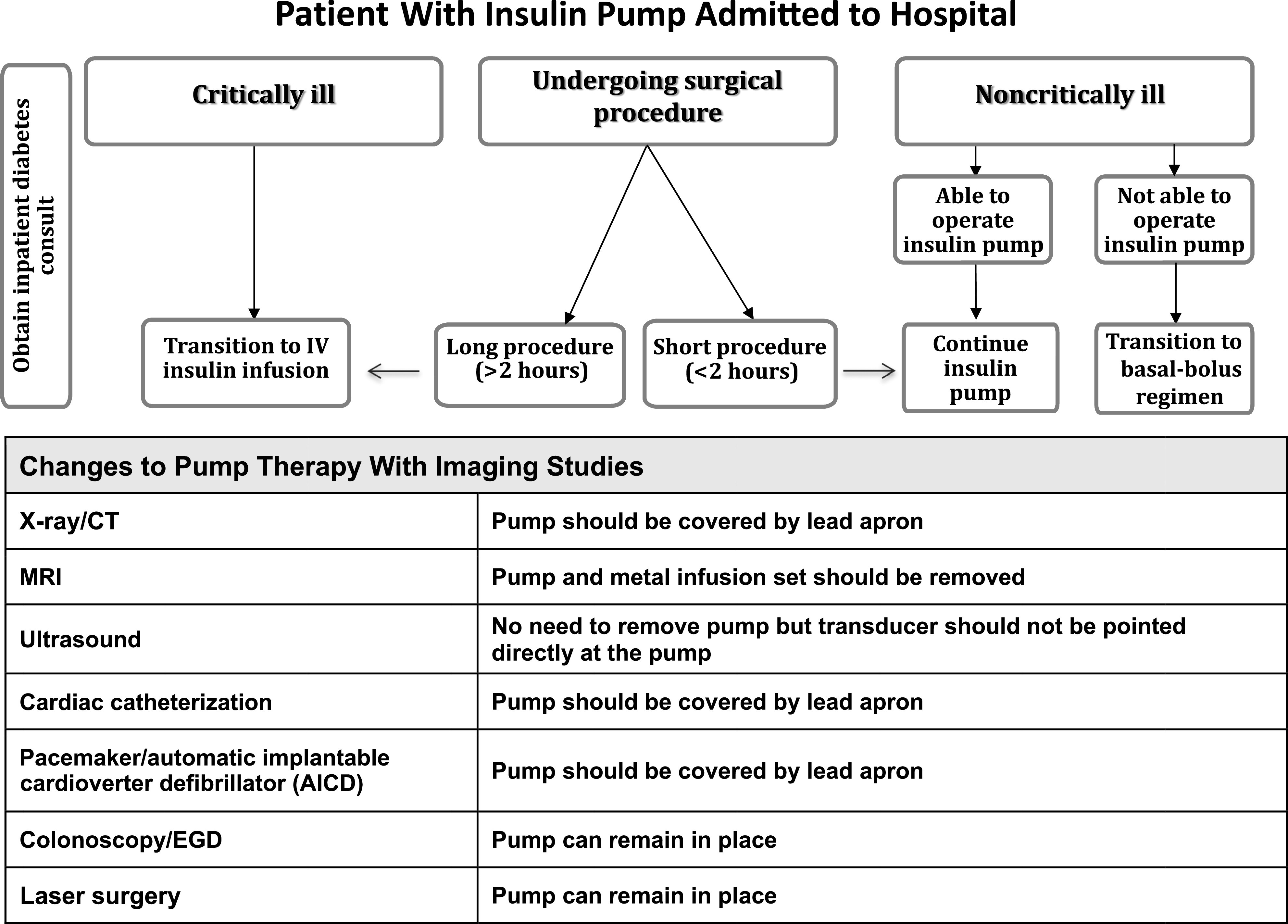
The use of continuous subcutaneous insulin infusion (CSII) and continuous glucose monitoring (CGM) systems has gained wide acceptance in diabetes care. These devices have been demonstrated to be clinically valuable, improving glycemic control and reducing risks of hypoglycemia in ambulatory patients with type 1 diabetes and type 2 diabetes. Approximately 30-40% of patients with type 1 diabetes and an increasing number of insulin-requiring patients with type 2 diabetes are using pump and sensor technology. As the popularity of these devices increases, it becomes very likely that hospital health care providers will face the need to manage the inpatient care of patients under insulin pump therapy and CGM. The American Diabetes Association advocates allowing patients who are physically and mentally able to continue to use their pumps when hospitalized. Health care institutions must have clear policies and procedures to allow the patient to continue to receive CSII treatment to maximize safety and to comply with existing regulations related to self-management of medication. Randomized controlled trials are needed to determine whether CSII therapy and CGM systems in the hospital are associated with improved clinical outcomes compared with intermittent monitoring and conventional insulin treatment or with a favorable cost-benefit ratio.
在糖尿病治疗中,连续皮下胰岛素输注(CSII)和连续血糖监测(CGM)系统得到了广泛认可。这些设备已被证明具有临床价值,可改善 1 型和 2 型糖尿病患者的血糖控制水平,并降低低血糖风险。大约 30-40%的 1 型糖尿病患者和越来越多需要胰岛素治疗的 2 型糖尿病患者正在使用胰岛素泵和传感器技术。随着这些设备的普及,医院医护人员很可能需要管理接受胰岛素泵治疗和 CGM 的住院患者的住院护理。美国糖尿病协会主张让身体和精神状况允许的患者在住院期间继续使用他们的胰岛素泵。医疗机构必须有明确的政策和程序,允许患者继续接受 CSII 治疗,以最大限度地保证安全性,并遵守与药物自我管理相关的现有法规。需要进行随机对照试验来确定与间歇性监测和常规胰岛素治疗相比,医院内的 CSII 治疗和 CGM 系统是否与改善的临床结果相关,或者是否具有有利的成本效益比。