Kang Yuan-Cheng, Zhang Li, Su Ying, Li Yue, Ren Wen-Lei, Wei Wen-Shi
Department of Neurology, Huadong Hospital, Fudan University, Shanghai, China.
Front Cell Neurosci. 2018 Jun 8;12:154. doi: 10.3389/fncel.2018.00154. eCollection 2018.
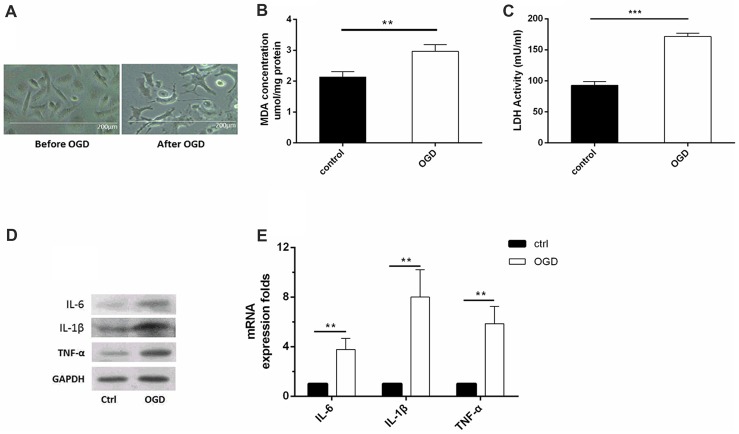
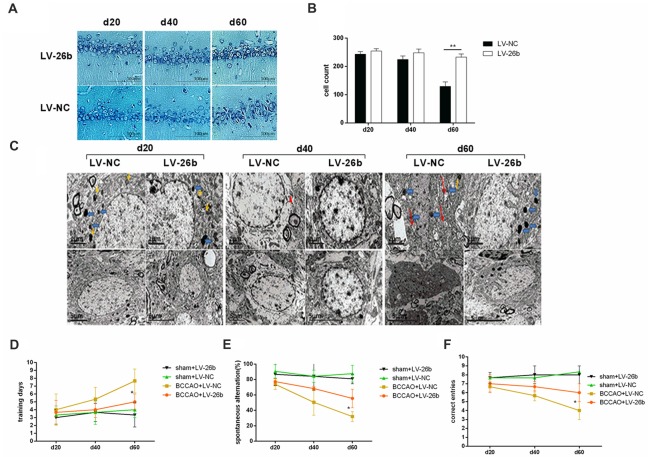
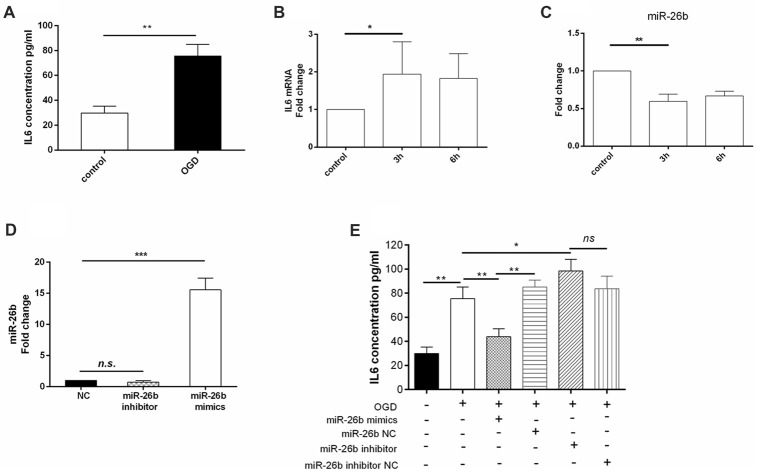
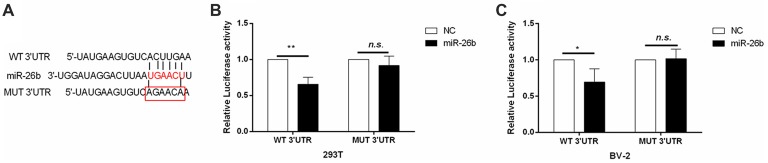
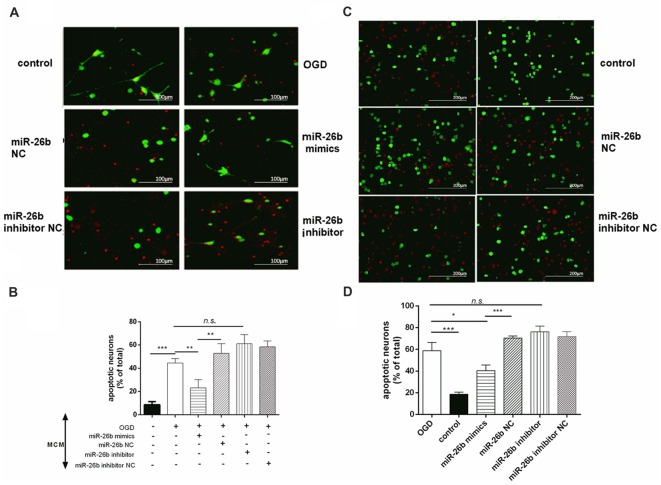
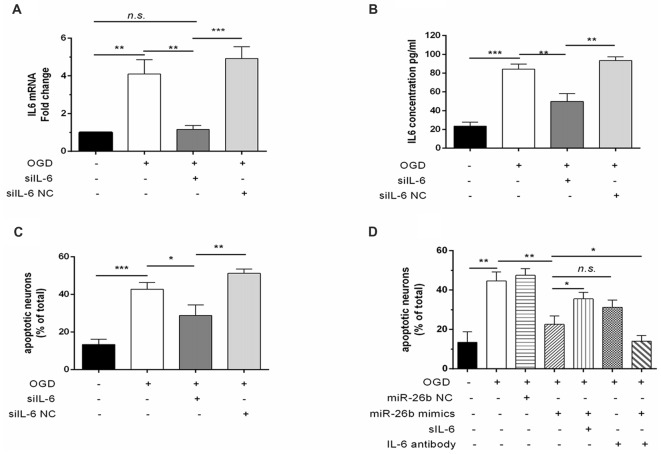
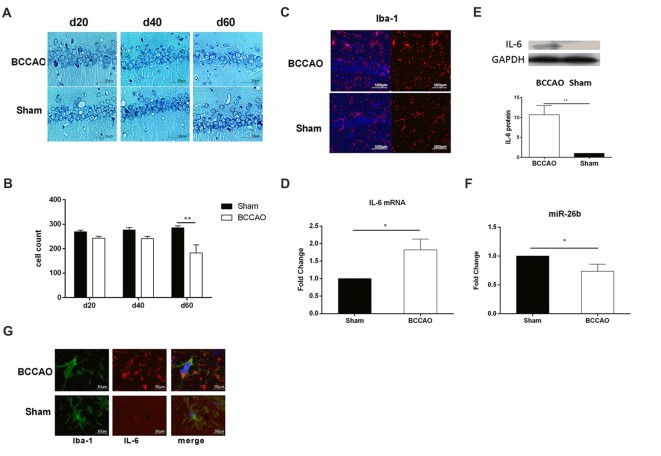
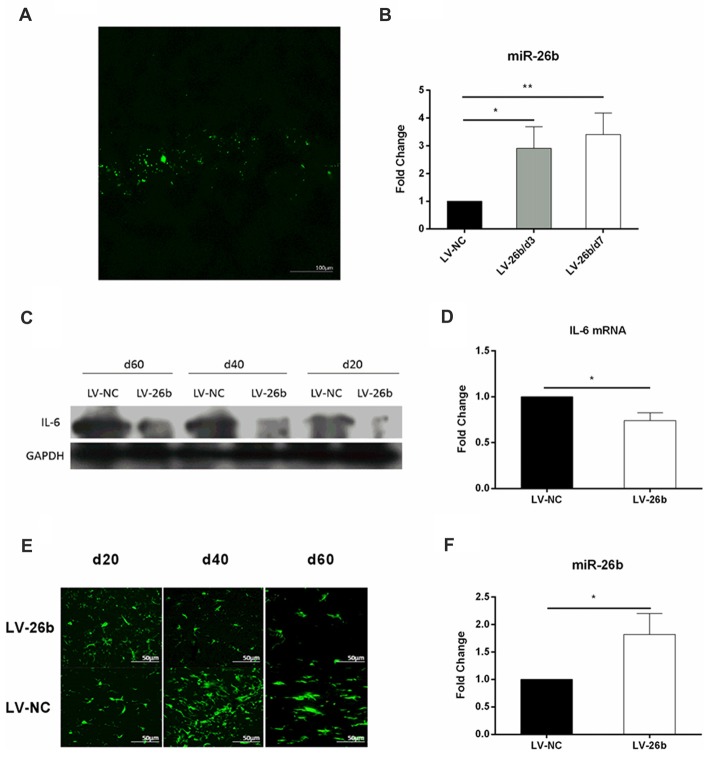
Microglia play an important role in the central nervous system as immune cells and are often activated by post-ischemic injury. MicroRNAs are small endogenous RNAs affecting many complex cellular biological functions that are involved in neurodegenerative and cerebrovascular diseases. Previous studies have shown that microRNA-26b (miR-26b) is downregulated in BV-2 cells exposed to oxygen-glucose deprivation (OGD). This study aimed to investigate how miR-26b regulates microglial activation and its neurotoxicity as well as the effect of miR-26b on vascular cognitive impairment (VCI). Here, we used PCR to detect the mRNA expression of miR-26b and cytokines, western blot for the protein expression of cytokines, and the live/dead assay for neuronal apoptosis. In addition, we employed a luciferase assay to identify the possible target genes of miR-26b. Furthermore, we studied the effects of cerebral ischemia by bilateral common carotid artery occlusion (BCCAO) in rats. We used staining to identify neurons and microglia, and we tested cognitive function by the T-maze test. Our results showed that OGD activated microglia and increased the expression of interleukin (IL)-6 and other cytokines. Similarly, BCCAO activated microglia and increased the expression of IL-6 in the hippocampal CA1 area. We further found that miR-26b decreased the number of activated microglia and targeted IL-6. Moreover, miR-26b expression attenuated microglial activation, inflammation, neurotoxicity and VCI. Our results suggested that miR-26b is involved in microglial activation and neurotoxicity in hypoxia/ischemia via IL-6. Therefore, increasing miR-26b expression may improve cognitive function.
小胶质细胞作为免疫细胞在中枢神经系统中发挥着重要作用,并且常被缺血性损伤激活。微小RNA是一类影响许多复杂细胞生物学功能的内源性小RNA,参与神经退行性疾病和脑血管疾病。先前的研究表明,在暴露于氧糖剥夺(OGD)的BV-2细胞中,微小RNA-26b(miR-26b)表达下调。本研究旨在探讨miR-26b如何调节小胶质细胞的激活及其神经毒性,以及miR-26b对血管性认知障碍(VCI)的影响。在此,我们使用聚合酶链反应(PCR)检测miR-26b和细胞因子的信使核糖核酸(mRNA)表达,使用蛋白质免疫印迹法检测细胞因子的蛋白质表达,并使用活/死检测法检测神经元凋亡。此外,我们采用荧光素酶检测法来鉴定miR-26b可能的靶基因。此外,我们通过双侧颈总动脉闭塞(BCCAO)研究了大鼠脑缺血的影响。我们使用染色来鉴定神经元和小胶质细胞,并通过T迷宫试验测试认知功能。我们的结果表明,OGD激活了小胶质细胞并增加了白细胞介素(IL)-6和其他细胞因子的表达。同样,BCCAO激活了小胶质细胞并增加了海马CA1区IL-6的表达。我们进一步发现,miR-26b减少了激活的小胶质细胞数量并靶向IL-6。此外,miR-26b的表达减弱了小胶质细胞的激活、炎症、神经毒性和VCI。我们的结果表明,miR-26b通过IL-6参与缺氧/缺血时的小胶质细胞激活和神经毒性。因此,增加miR-26b的表达可能会改善认知功能。