Molecular Neuropharmacology and Genetics Laboratory, Department of Neuroscience, Faculty of Health and Medical Sciences, University of Copenhagen, Copenhagen, DK-2200, Denmark.
Department of Drug Design and Pharmacology, Faculty of Health and Medical Sciences, University of Copenhagen, Copenhagen, DK-2100, Denmark.
eNeuro. 2018 Jun 18;5(3). doi: 10.1523/ENEURO.0345-17.2018. eCollection 2018 May-Jun.
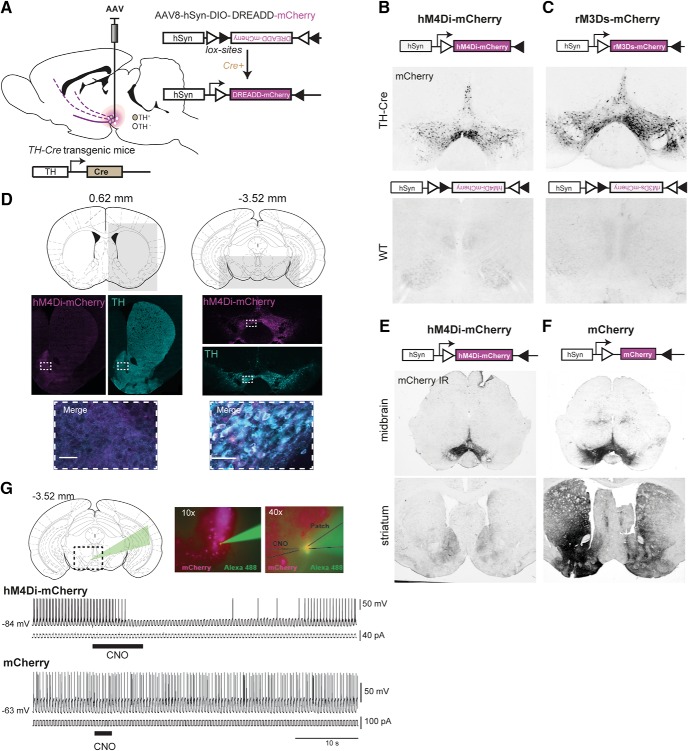
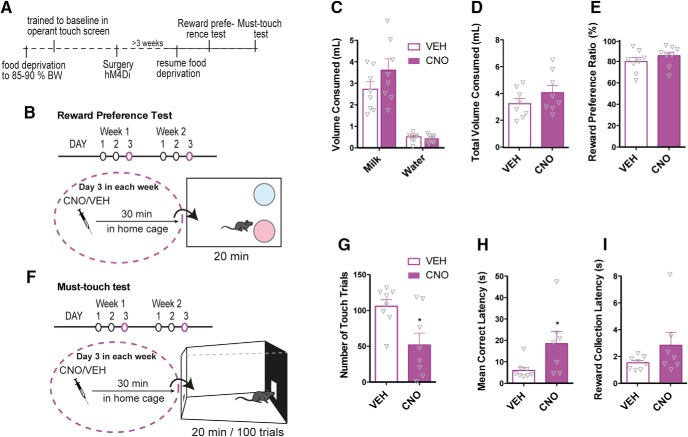
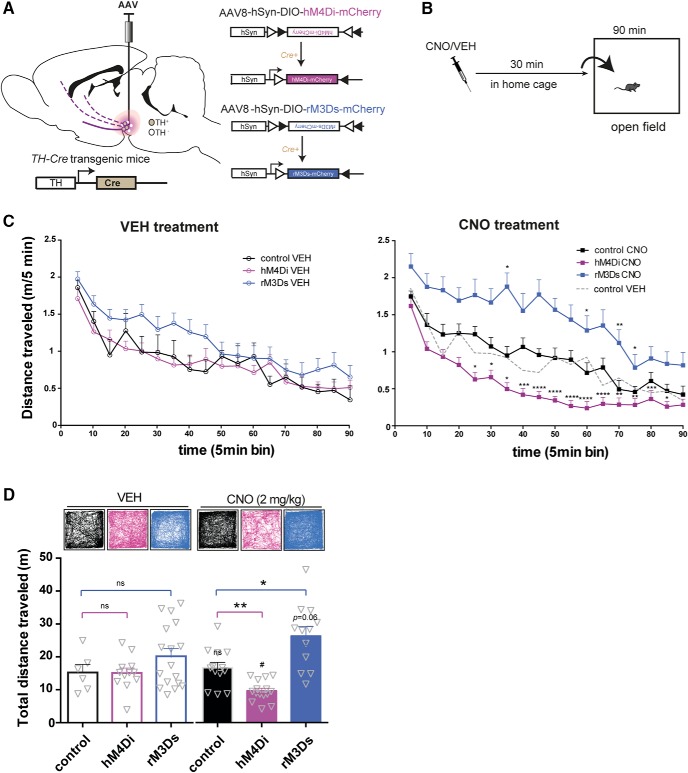
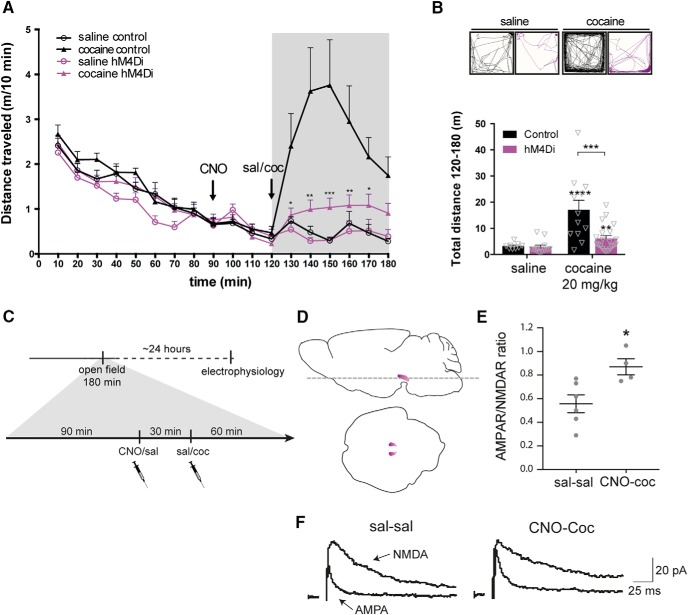
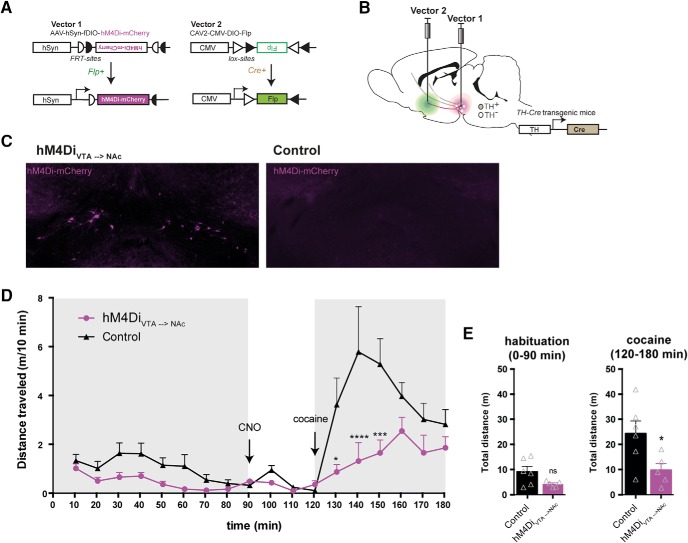
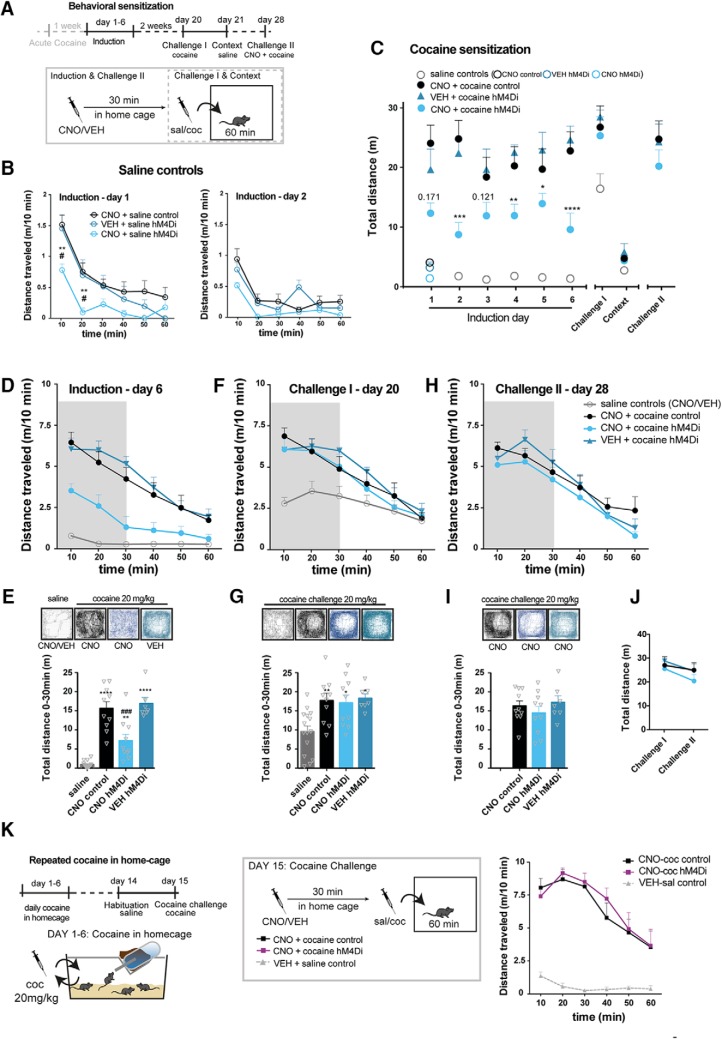
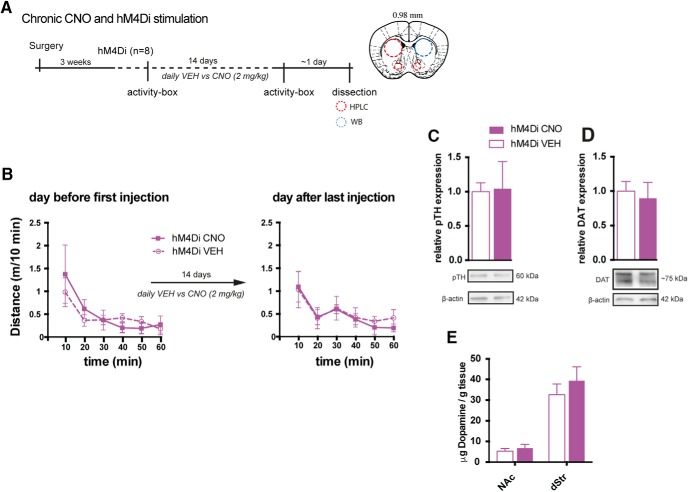
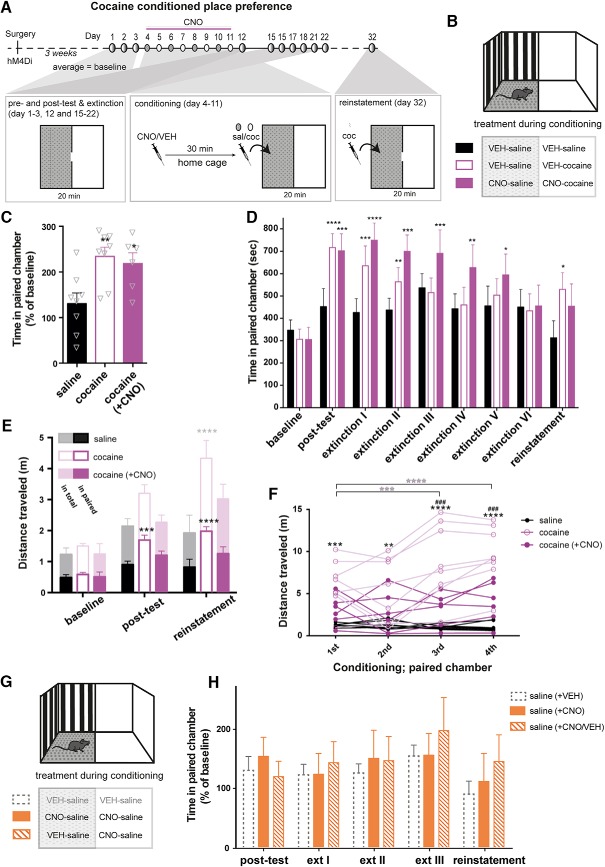
Dopamine plays a key role in the cellular and behavioral responses to drugs of abuse, but the implication of metabotropic regulatory input to dopaminergic neurons on acute drug effects and subsequent drug-related behavior remains unclear. Here, we used chemogenetics [Designer Receptors Exclusively Activated by Designer Drugs (DREADDs)] to modulate dopamine signaling and activity before cocaine administration in mice. We show that chemogenetic inhibition of dopaminergic ventral tegmental area (VTA) neurons differentially affects locomotor and reward-related behavioral responses to cocaine. Stimulation of Gi-coupled DREADD (hM4Di) expressed in dopaminergic VTA neurons persistently reduced the locomotor response to repeated cocaine injections. An attenuated locomotor response was seen even when a dual-viral vector approach was used to restrict hM4Di expression to dopaminergic VTA neurons projecting to the nucleus accumbens. Surprisingly, despite the attenuated locomotor response, hM4Di-mediated inhibition of dopaminergic VTA neurons did not prevent cocaine sensitization, and the inhibitory effect of hM4Di-mediated inhibition was eliminated after withdrawal. In the conditioned place-preference paradigm, hM4Di-mediated inhibition did not affect cocaine-induced place preference; however, the extinction period was extended. Also, hM4Di-mediated inhibition had no effect on preference for a sugar-based reward over water but impaired motivation to work for the same reward in a touchscreen-based motivational assay. In addition, to support that VTA dopaminergic neurons operate as regulators of reward motivation toward both sugar and cocaine, our data suggest that repeated cocaine exposure leads to adaptations in the VTA that surmount the ability of Gi-signaling to suppress and regulate VTA dopaminergic neuronal activity.
多巴胺在细胞和行为对滥用药物的反应中起着关键作用,但代谢型调节输入对多巴胺能神经元对急性药物效应和随后的药物相关行为的影响仍不清楚。在这里,我们使用化学遗传学(专门被设计药物激活的受体 Designer Receptors Exclusively Activated by Designer Drugs,DREADDs)在给予可卡因之前调节小鼠中多巴胺信号和活性。我们表明,化学遗传抑制腹侧被盖区(VTA)多巴胺能神经元会对可卡因的运动和奖赏相关行为反应产生差异影响。表达在多巴胺能 VTA 神经元中的 Gi 偶联型 DREADD(hM4Di)的刺激持续降低了对重复可卡因注射的运动反应。即使使用双重病毒载体方法将 hM4Di 表达限制在投射到伏隔核的多巴胺能 VTA 神经元中,也会出现运动反应减弱的情况。令人惊讶的是,尽管运动反应减弱,但 hM4Di 介导的 VTA 多巴胺能神经元抑制并未阻止可卡因敏化,并且在停药后抑制作用被消除。在条件性位置偏好范式中,hM4Di 介导的抑制作用不会影响可卡因诱导的位置偏好;然而,消退期延长。此外,hM4Di 介导的抑制作用对糖基奖励相对于水的偏好没有影响,但在基于触摸屏的动机测定中损害了获得相同奖励的动机。此外,为了支持 VTA 多巴胺能神经元作为对糖和可卡因的奖赏动机的调节剂,我们的数据表明,重复可卡因暴露导致 VTA 中的适应性改变,克服了 Gi 信号抑制和调节 VTA 多巴胺能神经元活性的能力。