National Centre for Biological Sciences, TIFR, Bangalore 560065, India.
eNeuro. 2018 Jun 18;5(3). doi: 10.1523/ENEURO.0455-17.2018. eCollection 2018 May-Jun.
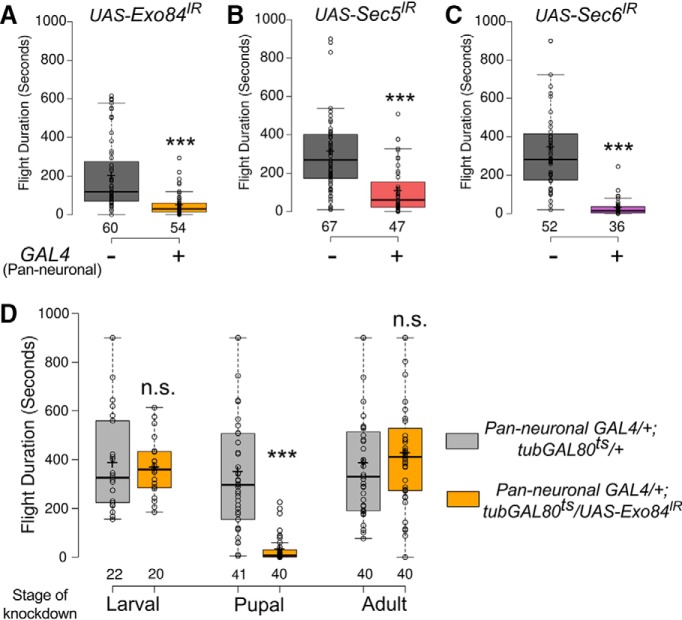
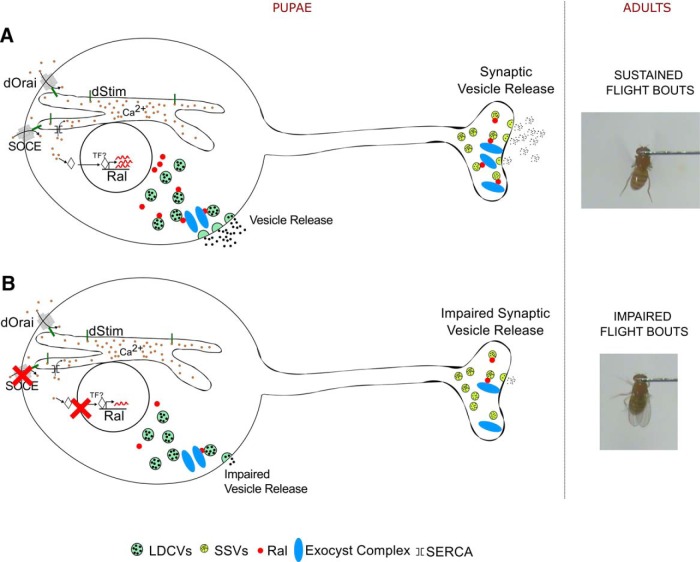
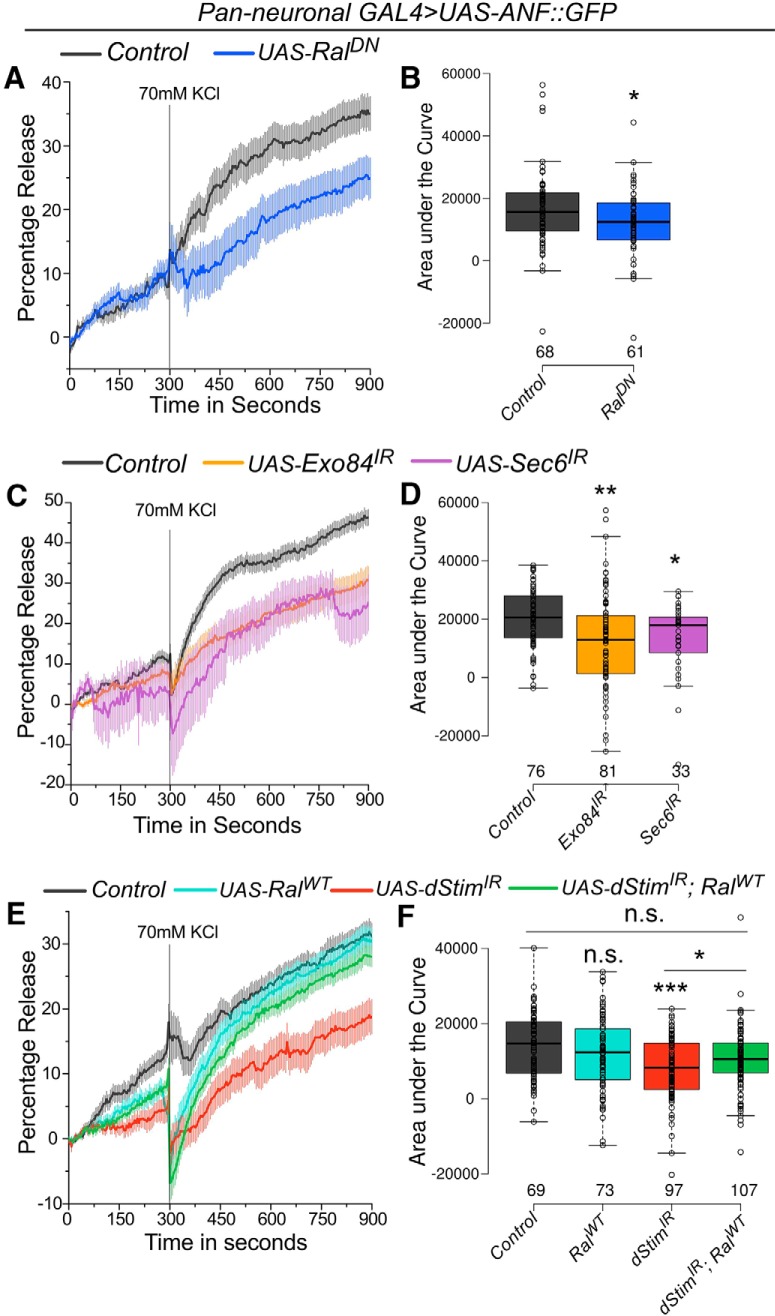
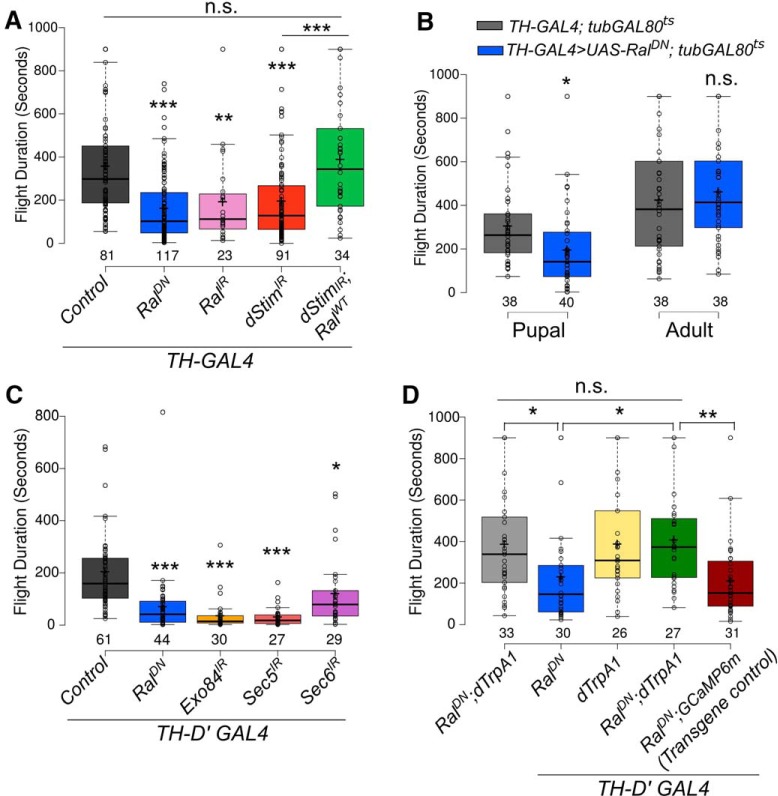
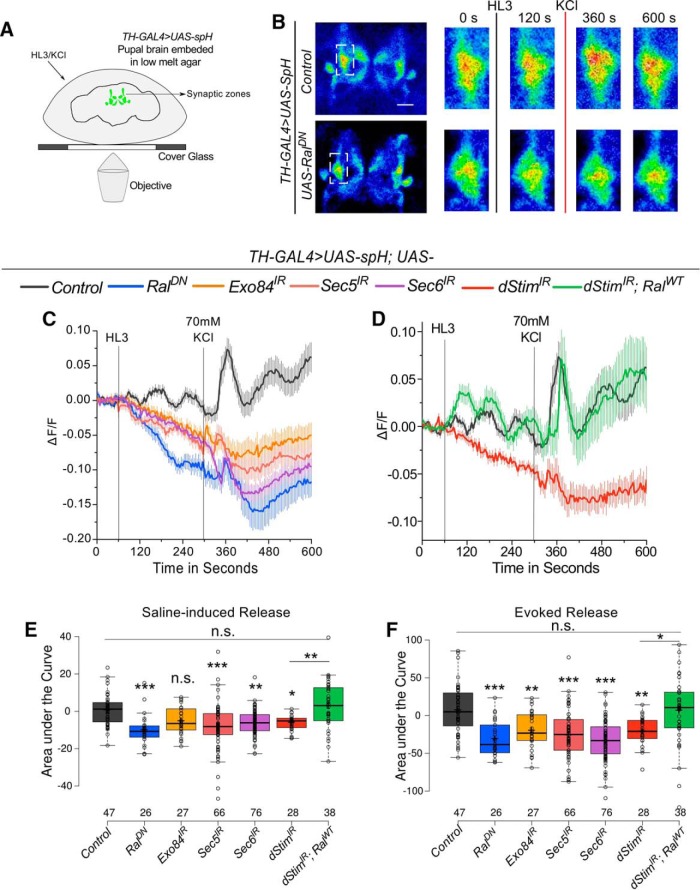
Manifestation of appropriate behavior in adult animals requires developmental mechanisms that help in the formation of correctly wired neural circuits. Flight circuit development in requires store-operated calcium entry (SOCE) through the STIM/Orai pathway. SOCE-associated flight deficits in adult derive extensively from regulation of gene expression in pupal neurons, and one such SOCE-regulated gene encodes the small GTPase . The cellular mechanism by which Ral helps in maturation of the flight circuit was not understood. Here, we show that knockdown of components of a Ral effector, the exocyst complex, in pupal neurons also leads to reduced flight bout durations, and this phenotype derives primarily from dopaminergic neurons. Importantly, synaptic release from pupal dopaminergic neurons is abrogated upon knockdown of dSTIM, Ral, or exocyst components. overexpression restores the diminished synaptic release of knockdown neurons as well as flight deficits associated with knockdown in dopaminergic neurons. These results identify Ral-mediated vesicular release as an effector mechanism of neuronal SOCE in pupal dopaminergic neurons with functional consequences on flight behavior.
成年动物表现出适当的行为需要发育机制,帮助形成正确连接的神经回路。需要通过 STIM/Orai 途径的储存操作钙内流 (SOCE) 来发育飞行回路。成年果蝇中的 SOCE 相关的飞行缺陷主要源于蛹神经元中基因表达的调节,其中一个 SOCE 调节的基因编码小 GTPase 。Ral 有助于飞行回路成熟的细胞机制尚不清楚。在这里,我们表明,在蛹神经元中敲低 Ral 效应器的组成部分——外泌体复合物,也会导致飞行回合持续时间缩短,而这种表型主要来自多巴胺能神经元。重要的是,在敲低 dSTIM、Ral 或外泌体成分后,蛹多巴胺能神经元的突触释放被消除。过表达恢复了 敲低神经元减少的突触释放,以及与多巴胺能神经元中 敲低相关的飞行缺陷。这些结果表明,Ral 介导的囊泡释放是蛹多巴胺能神经元中神经元 SOCE 的效应机制,对飞行行为具有功能后果。