Liu Qing, Liu Chaoyang, Jiang Li, Li Maolin, Long Ting, He Wei, Qin Guangcheng, Chen Lixue, Zhou Jiying
Department of Neurology, The First Affiliated Hospital, Chongqing Medical University, Chongqing, China.
Laboratory Research Center, The First Affiliated Hospital, Chongqing Medical University, Chongqing, China.
J Pain Res. 2018 Jun 15;11:1129-1140. doi: 10.2147/JPR.S159146. eCollection 2018.
Evidence suggests that the activation of α7 nicotinic acetylcholine receptor (α7nAChR) can greatly decrease the neuroinflammation response. Neuroinflammation plays a pivotal role in the pathogenesis of chronic migraine (CM). Clinical observations also show that nicotine gum induces analgesic effects in migraine patients. However, whether α7nAChR is involved in CM is unclear.
To investigate the role of α7nAChR in CM and provide a new therapeutic target for CM.
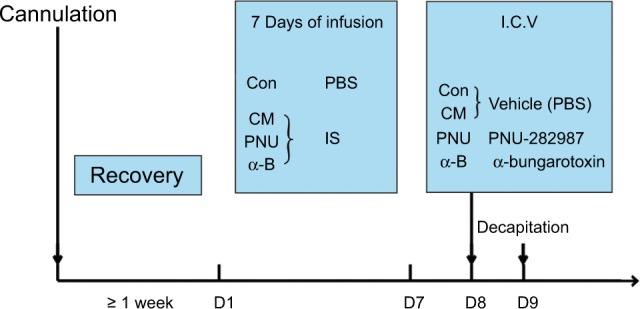
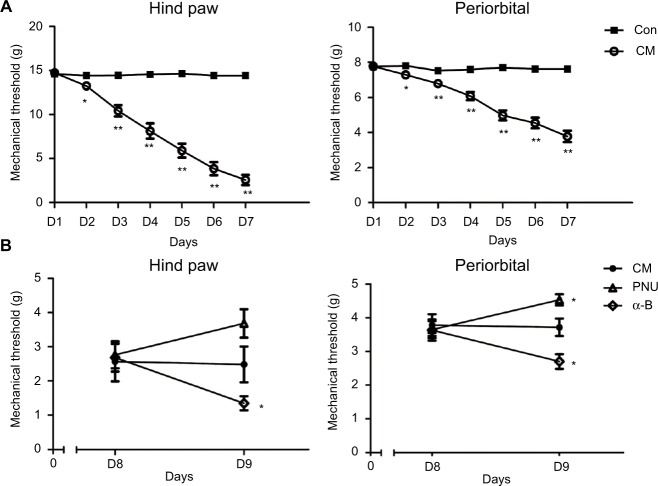
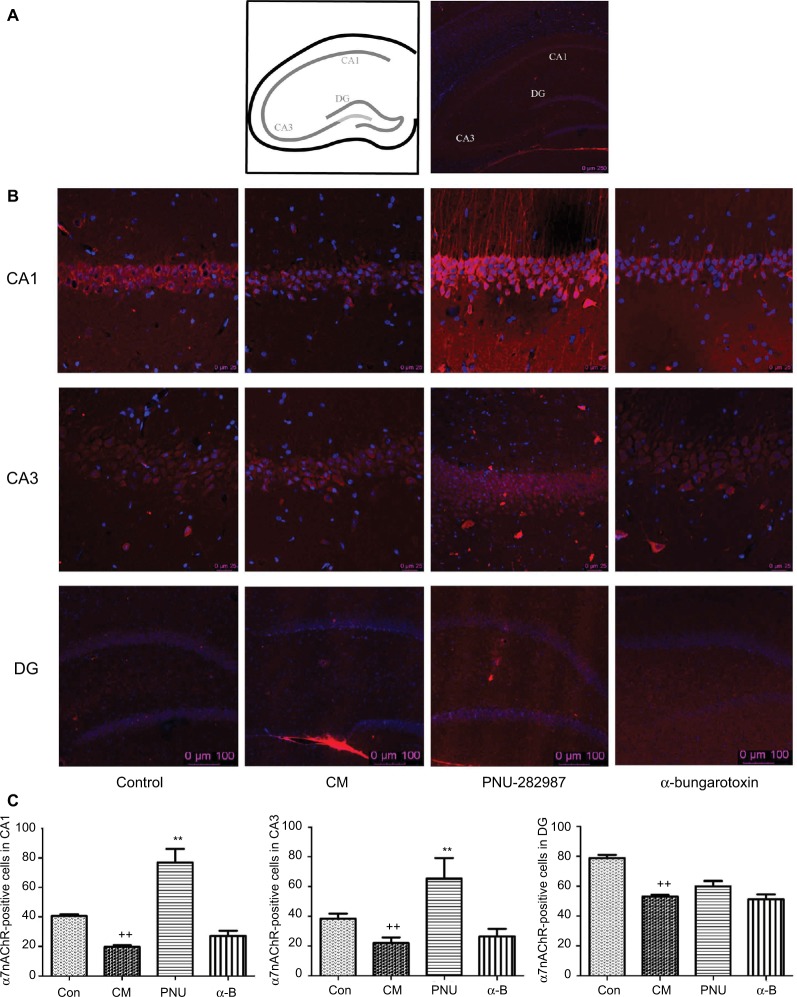
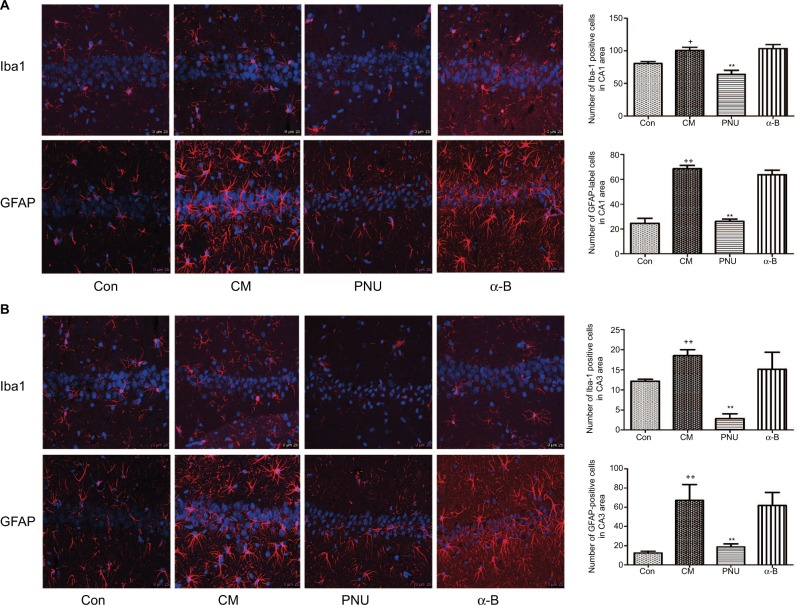
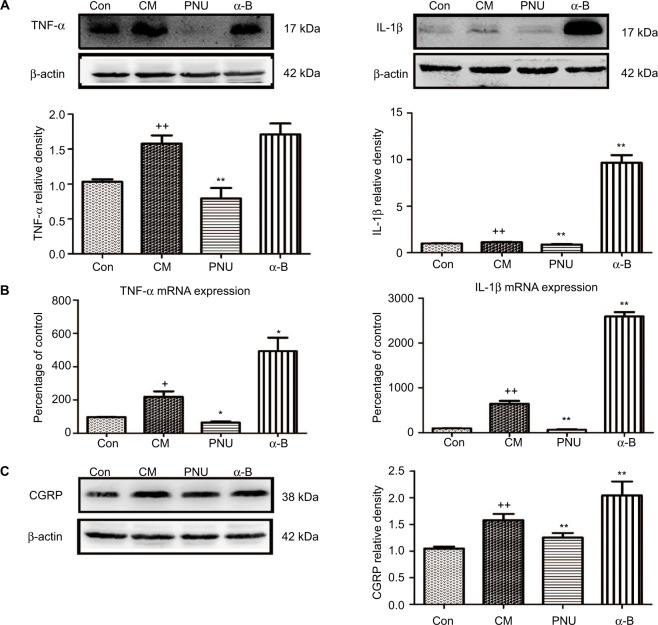
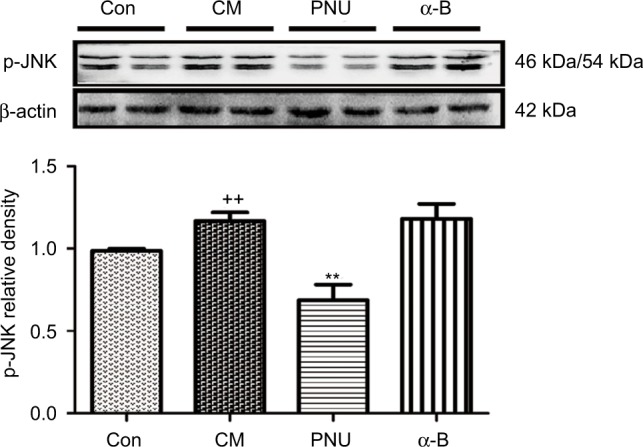
Thirty-six male Sprague-Dawley rats were distributed randomly into control, CM, PNU-282987, and α-bungarotoxin groups (n=9 rats in each group). The CM model was established by the recurrent daily administration of inflammatory soup on the dura over the course of 1 week. The hind paw threshold and facial allodynia were assessed by the von Frey test. The expression levels of α7nAChR, tumor necrosis factor-alpha, and interleukin-1 beta were analyzed by Western blot and real-time fluorescence quantitative polymerase chain reaction. The location of α7nAChR in the hippocampus was quantified by immunofluorescence, as well as the microglial and astrocyte alterations. Changes in the calcitonin gene-related peptide and the phosphorylated JNK protein among different groups were measured by Western blot.
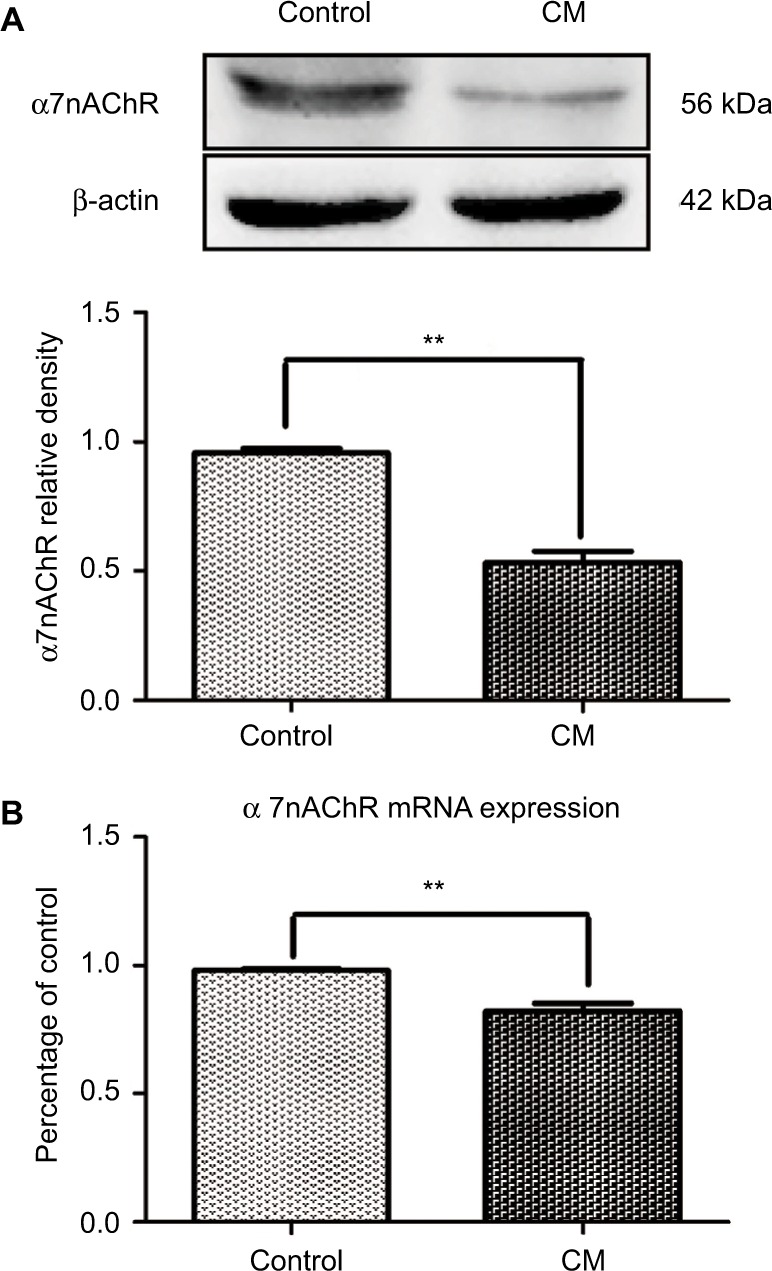
We found that the expression of α7nAChR was reduced after repeated inflammatory soup administration. The increased expression of tumor necrosis factor-alpha, interleukin-1 beta, and calcitonin gene-related peptide in CM group were significantly decreased by PNU-282987 and aggravated by α-bungarotoxin. Moreover, PNU-282987 decreased the numbers of astrocytes and microglia compared with the numbers in the CM group in both hippocampal CA1 and CA3 regions. In contrast, α-bungarotoxin activated the astrocytes and microglia, but the differences with respect to the CM group were not significant. Activated c-Jun N-terminal kinase signaling was observed in CM rats and was also blocked by PNU-282987.
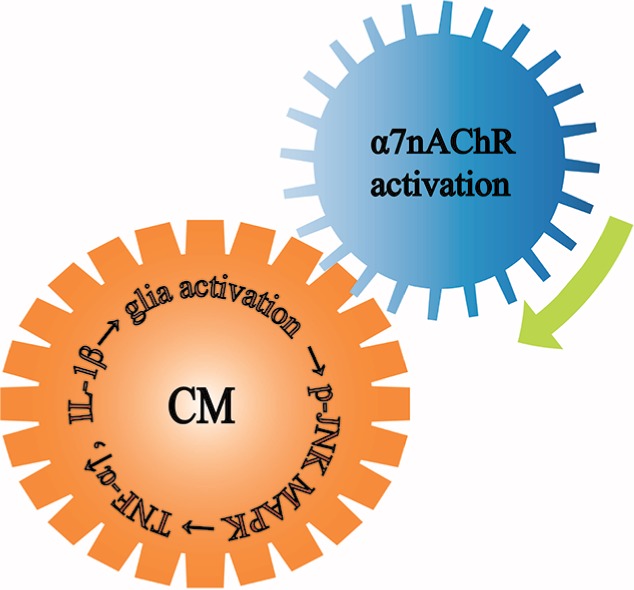
The activation of α7nAChR increased the mechanical threshold and alleviated pain in the CM rat model. α7nAChR activation also decreased the upregulation of astrocytes and microglia through the p-c-Jun N-terminal kinase-mitogen-activated protein kinase signaling pathway.
有证据表明,α7烟碱型乙酰胆碱受体(α7nAChR)的激活可显著降低神经炎症反应。神经炎症在慢性偏头痛(CM)的发病机制中起关键作用。临床观察还表明,尼古丁口香糖对偏头痛患者有镇痛作用。然而,α7nAChR是否参与CM尚不清楚。
研究α7nAChR在CM中的作用,并为CM提供新的治疗靶点。
将36只雄性Sprague-Dawley大鼠随机分为对照组、CM组、PNU-282987组和α-银环蛇毒素组(每组9只大鼠)。通过在硬脑膜上每日反复给予炎性汤1周来建立CM模型。通过von Frey试验评估后爪阈值和面部异常性疼痛。采用蛋白质印迹法和实时荧光定量聚合酶链反应分析α7nAChR、肿瘤坏死因子-α和白细胞介素-1β的表达水平。通过免疫荧光对海马中α7nAChR的定位以及小胶质细胞和星形胶质细胞的改变进行定量分析。通过蛋白质印迹法检测不同组之间降钙素基因相关肽和磷酸化JNK蛋白的变化。
我们发现,反复给予炎性汤后α7nAChR的表达降低。PNU-282987显著降低了CM组中肿瘤坏死因子-α、白细胞介素-1β和降钙素基因相关肽的表达增加,而α-银环蛇毒素则使其加重。此外,与CM组相比,PNU-282987降低了海马CA1区和CA3区星形胶质细胞和小胶质细胞的数量。相比之下,α-银环蛇毒素激活了星形胶质细胞和小胶质细胞,但与CM组相比差异不显著。在CM大鼠中观察到c-Jun氨基末端激酶信号通路被激活,并且也被PNU-282987阻断。
α7nAChR的激活增加了CM大鼠模型的机械阈值并减轻了疼痛。α7nAChR的激活还通过p-c-Jun氨基末端激酶-丝裂原活化蛋白激酶信号通路降低了星形胶质细胞和小胶质细胞的上调。