Garatuza-Payan Jaime, Argentel-Martinez Leandris, Yepez Enrico A, Arredondo Tulio
Instituto Tecnológico de Sonora, Cd. Obregon, Sonora, Mexico.
Instituto Potosino de investigación Científica y Tecnológica, San Luis Potosi, San Luis Potosi, Mexico.
PeerJ. 2018 Jun 21;6:e5064. doi: 10.7717/peerj.5064. eCollection 2018.
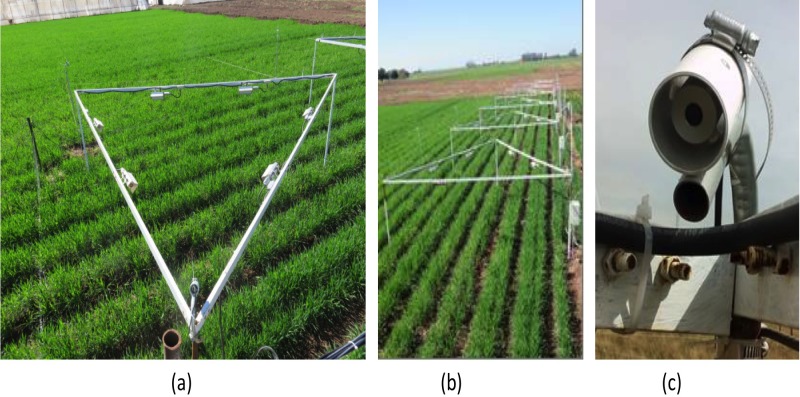
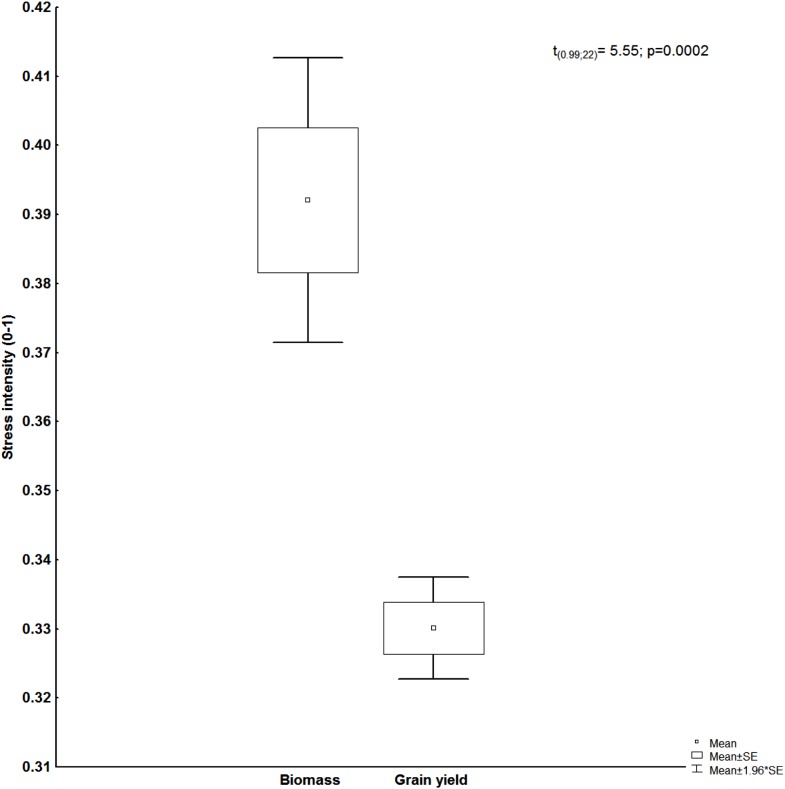
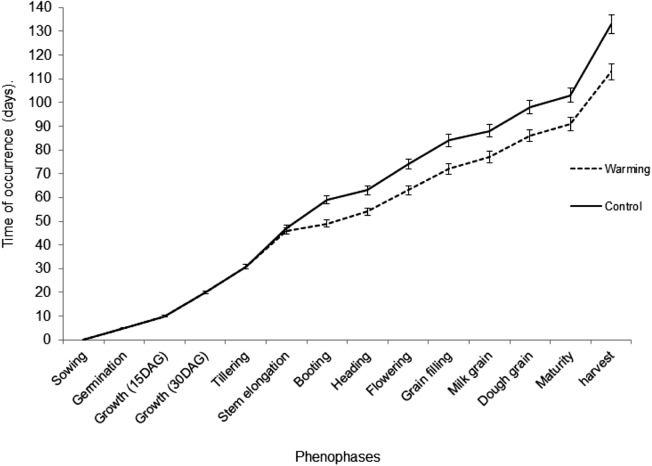
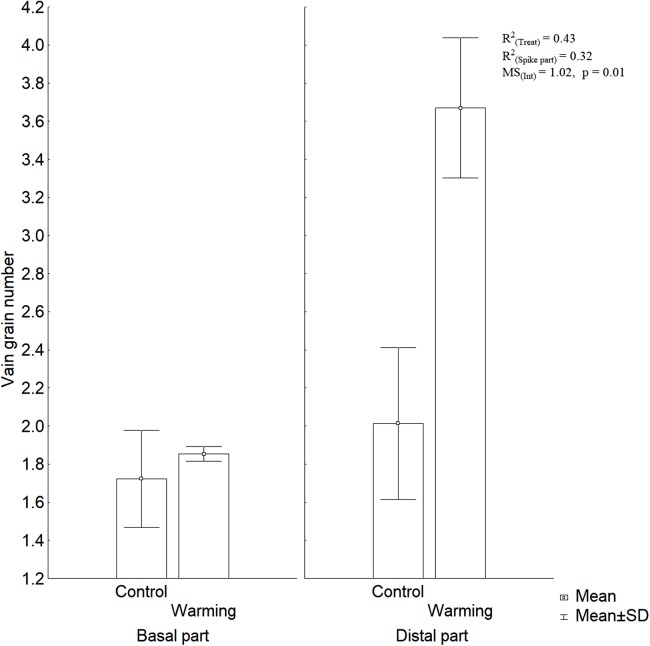
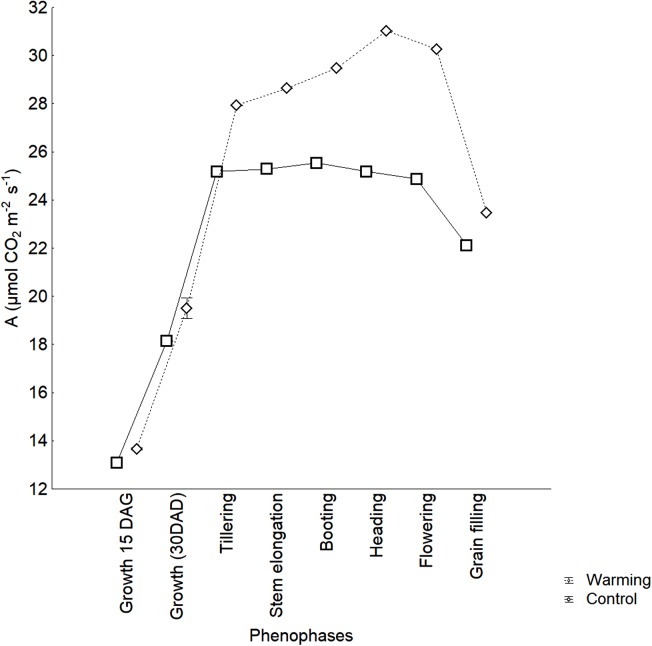
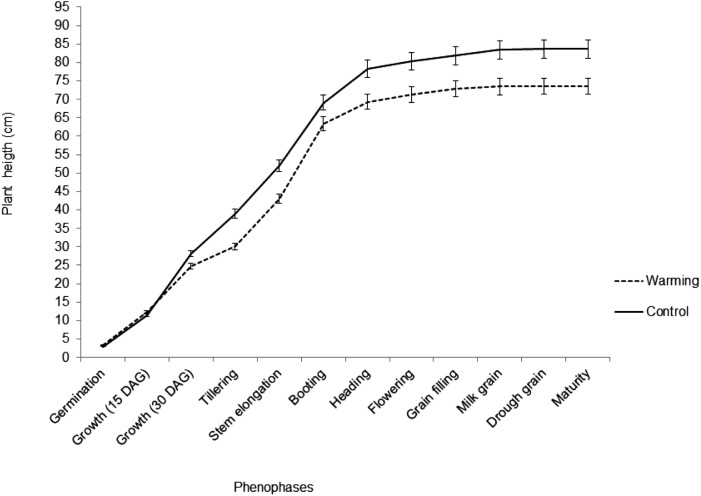
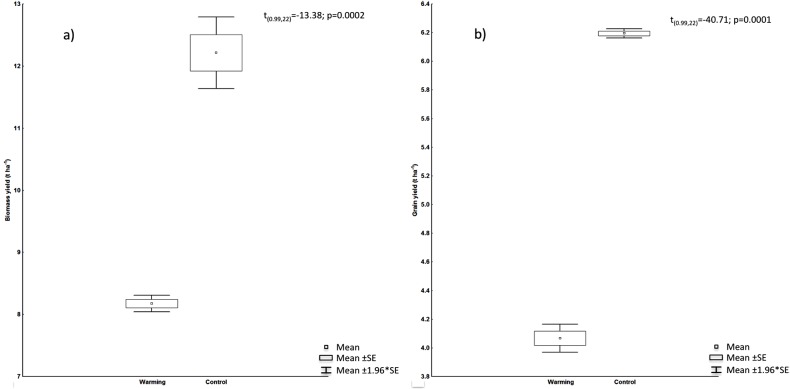
This work evaluates the experimental warming effects on phenology and grain yield components of wheat in the Yaqui Valley, Sonora, México, using CIRNO C2008 variety from L., as a model during the cropping cycle of 2016-2017 (December to April). Infrared radiators were deployed to induce experimental warming by 2 °C above ambient crop canopy temperature, in a temperature free-air controlled enhancement system. Temperature was controlled by infrared temperature sensors placed in eight plots which covered a circle of = 1.5 m starting five days after germination until harvest. The warming treatment caused a reduction of phenophases occurrence starting at the stem extension phenophase. Such phenological responses generated a significant biological cycle reduction of 14 days. Despite this delay, CIRNO C2008 completed its biological cycle adequately. However, plant height under the warming treatment was reduced significantly and differences were particularly observed at the final phenophases of the vegetative cycle. Plant height correlated negatively with spikes length, spikes mass, and number of filled grains. Warming also reduced grain yield in 33%. The warming treatment caused a stress intensity (SI = 1-yield warming/yield control) of 39.4% and 33.2% in biomass and grain yield, respectively. The differences in stress intensities between biomass and grain yield were based on plant height reduction. Grain mass was not affected, demonstrating the crop capability for remobilization and adequate distribution of elaborated substances for the spikes under warming conditions.
本研究利用来自墨西哥索诺拉州 Yaqui 谷的 CIRNO C2008 品种小麦,评估了 2016 - 2017 年种植周期(12 月至 4 月)实验性增温对物候和产量构成因素的影响。在一个开放式空气温度控制增温系统中,部署红外辐射器以使作物冠层温度比环境温度高 2℃来诱导实验性增温。温度由放置在八个地块中的红外温度传感器控制,这些地块从发芽后五天开始直至收获覆盖了一个直径为 1.5 米的圆圈。增温处理导致从拔节期开始物候期出现时间减少。这种物候响应使生物周期显著缩短了 14 天。尽管有这种延迟,CIRNO C2008 仍充分完成了其生物周期。然而,增温处理下的株高显著降低,在营养生长周期的最后物候期差异尤为明显。株高与穗长、穗重和饱满粒数呈负相关。增温还使谷物产量降低了 33%。增温处理分别使生物量和谷物产量的胁迫强度(SI = 1 - 增温产量/对照产量)达到 39.4%和 33.2%。生物量和谷物产量胁迫强度的差异基于株高降低。粒重未受影响,这表明作物在增温条件下具有重新分配和充分分配光合产物至穗部的能力。