Department of Emergency Medicine, Mediplex Sejong Hospital, Incheon, Korea
VUNO, Seoul, Korea.
J Am Heart Assoc. 2018 Jun 26;7(13):e008678. doi: 10.1161/JAHA.118.008678.
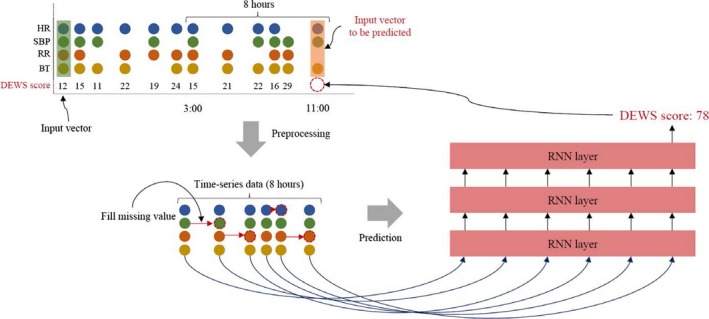
In-hospital cardiac arrest is a major burden to public health, which affects patient safety. Although traditional track-and-trigger systems are used to predict cardiac arrest early, they have limitations, with low sensitivity and high false-alarm rates. We propose a deep learning-based early warning system that shows higher performance than the existing track-and-trigger systems.
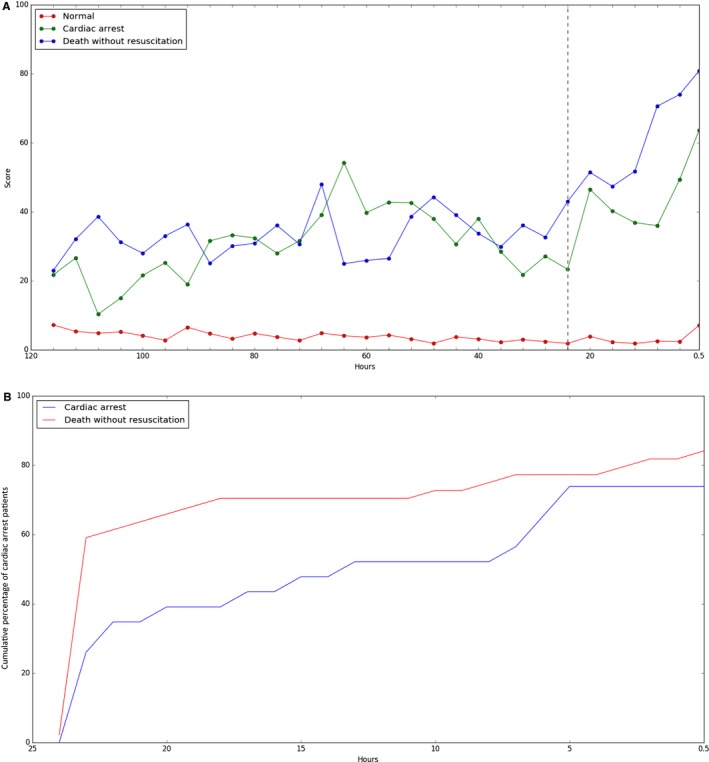
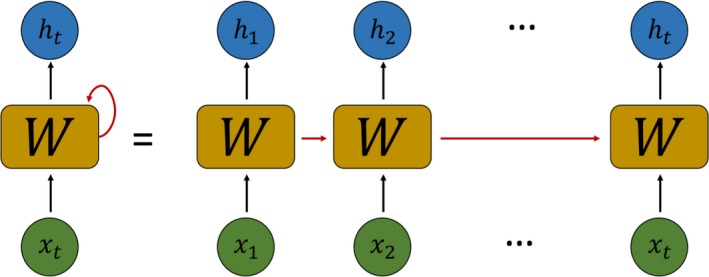
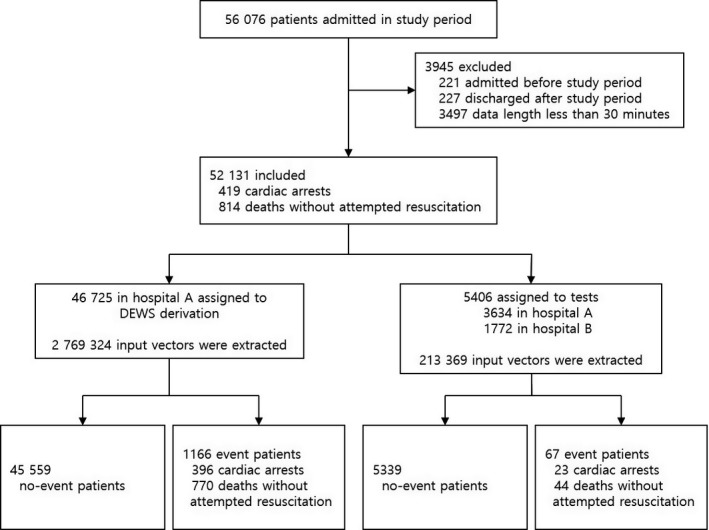
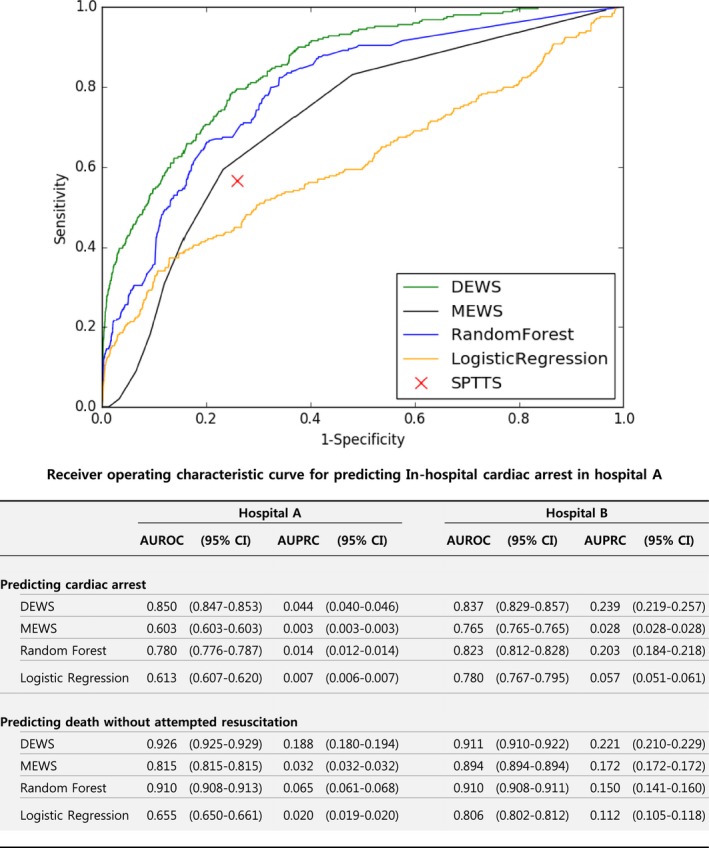
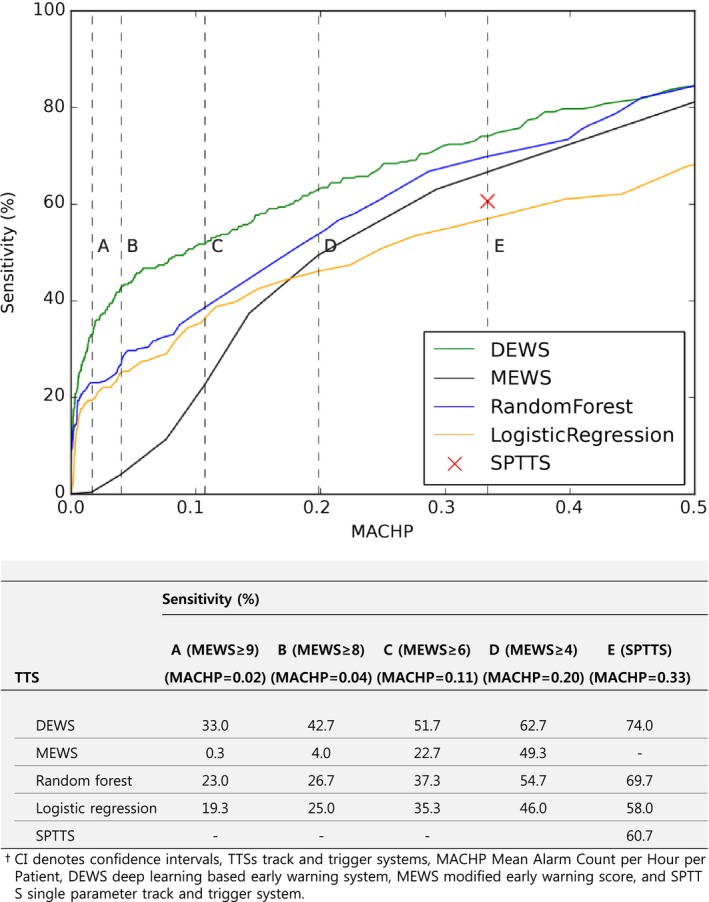
This retrospective cohort study reviewed patients who were admitted to 2 hospitals from June 2010 to July 2017. A total of 52 131 patients were included. Specifically, a recurrent neural network was trained using data from June 2010 to January 2017. The result was tested using the data from February to July 2017. The primary outcome was cardiac arrest, and the secondary outcome was death without attempted resuscitation. As comparative measures, we used the area under the receiver operating characteristic curve (AUROC), the area under the precision-recall curve (AUPRC), and the net reclassification index. Furthermore, we evaluated sensitivity while varying the number of alarms. The deep learning-based early warning system (AUROC: 0.850; AUPRC: 0.044) significantly outperformed a modified early warning score (AUROC: 0.603; AUPRC: 0.003), a random forest algorithm (AUROC: 0.780; AUPRC: 0.014), and logistic regression (AUROC: 0.613; AUPRC: 0.007). Furthermore, the deep learning-based early warning system reduced the number of alarms by 82.2%, 13.5%, and 42.1% compared with the modified early warning system, random forest, and logistic regression, respectively, at the same sensitivity.
An algorithm based on deep learning had high sensitivity and a low false-alarm rate for detection of patients with cardiac arrest in the multicenter study.
院内心搏骤停是对公众健康的重大负担,影响患者安全。尽管传统的跟踪触发系统被用于早期预测心搏骤停,但它们存在敏感性低、假警报率高的局限性。我们提出了一种基于深度学习的预警系统,其性能优于现有的跟踪触发系统。
这项回顾性队列研究回顾了 2010 年 6 月至 2017 年 7 月期间入住 2 家医院的患者。共纳入 52131 例患者。具体来说,使用 2010 年 6 月至 2017 年 1 月的数据训练递归神经网络。使用 2017 年 2 月至 7 月的数据对结果进行测试。主要结局是心搏骤停,次要结局是无复苏尝试的死亡。作为比较措施,我们使用了接收器操作特征曲线下面积(AUROC)、精度-召回曲线下面积(AUPRC)和净重新分类指数。此外,我们还评估了在改变警报数量时的敏感性。基于深度学习的预警系统(AUROC:0.850;AUPRC:0.044)显著优于改良早期预警评分(AUROC:0.603;AUPRC:0.003)、随机森林算法(AUROC:0.780;AUPRC:0.014)和逻辑回归(AUROC:0.613;AUPRC:0.007)。此外,与改良早期预警系统、随机森林和逻辑回归相比,基于深度学习的预警系统在相同敏感性下分别减少了 82.2%、13.5%和 42.1%的警报数量。
在多中心研究中,基于深度学习的算法对心搏骤停患者的检测具有高敏感性和低假警报率。