He Shiying, Hou Pengfu, Petropoulos Evangelos, Feng Yanfang, Yu Yingliang, Xue Lihong, Yang Linzhang
Institute of Agricultural Resources and Environment, Jiangsu Academy of Agricultural Sciences, Nanjing, China.
School of Engineering, Newcastle University, Newcastle upon Tyne, United Kingdom.
Front Chem. 2018 Jun 12;6:219. doi: 10.3389/fchem.2018.00219. eCollection 2018.
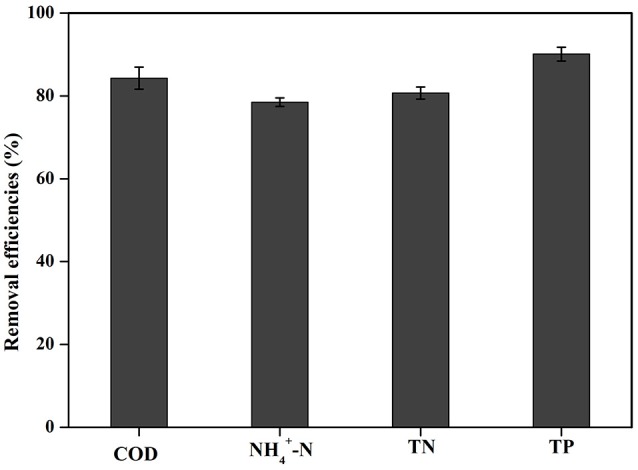
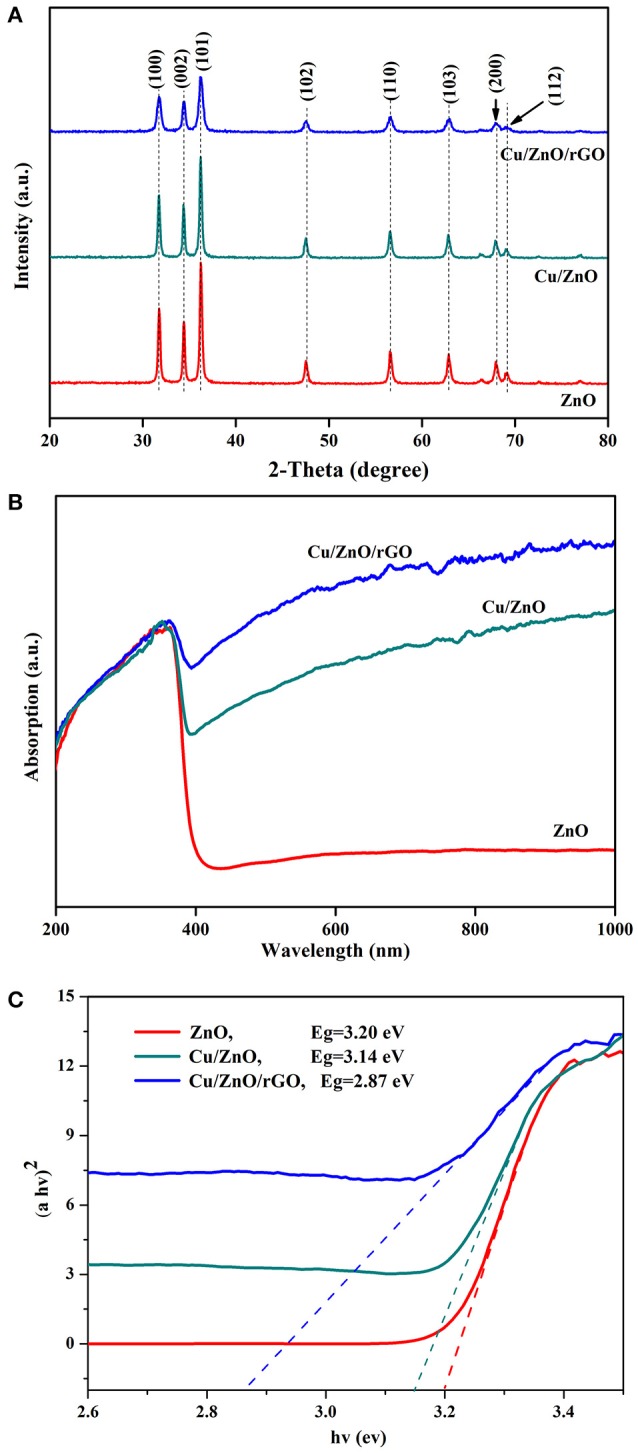
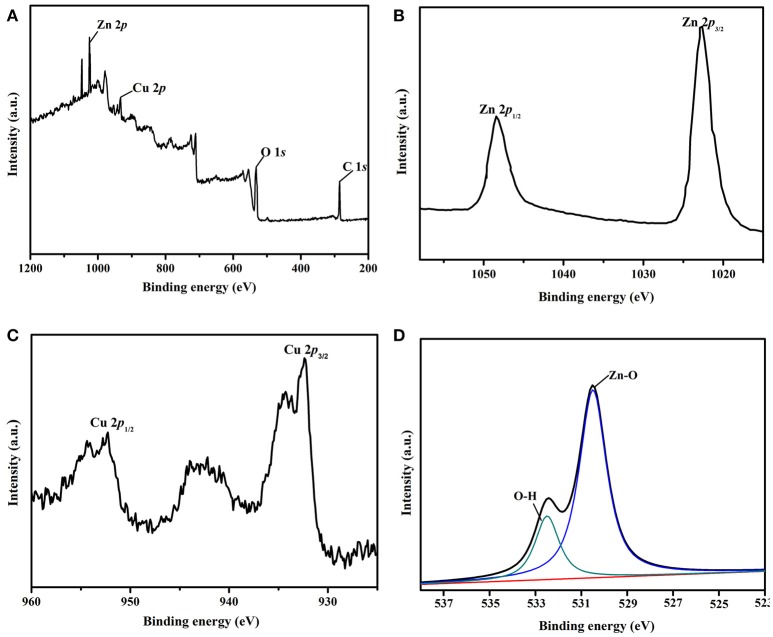
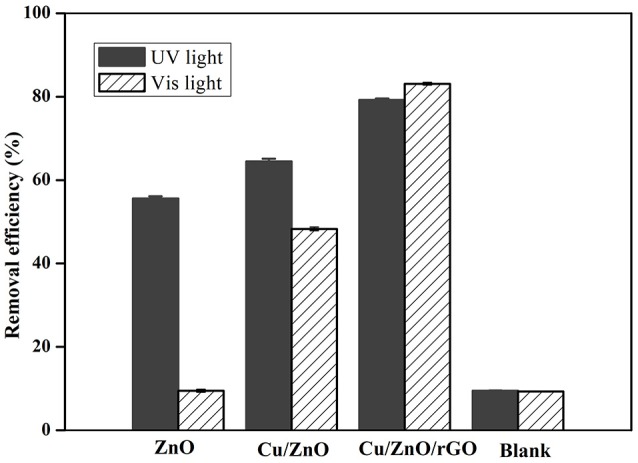
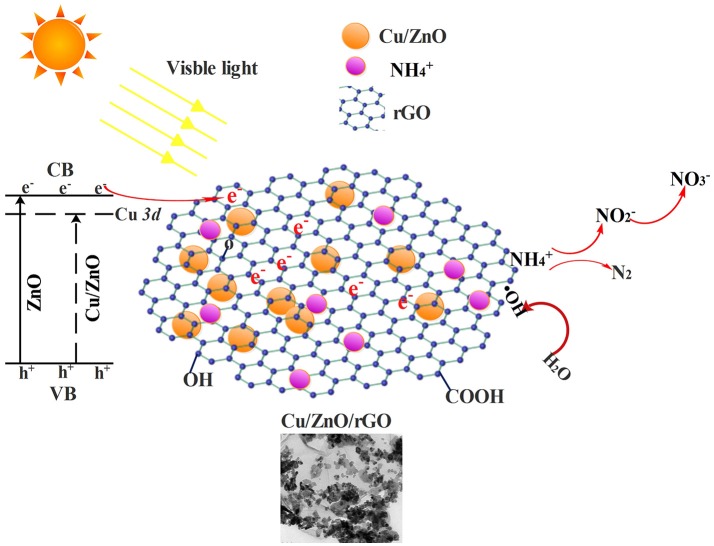
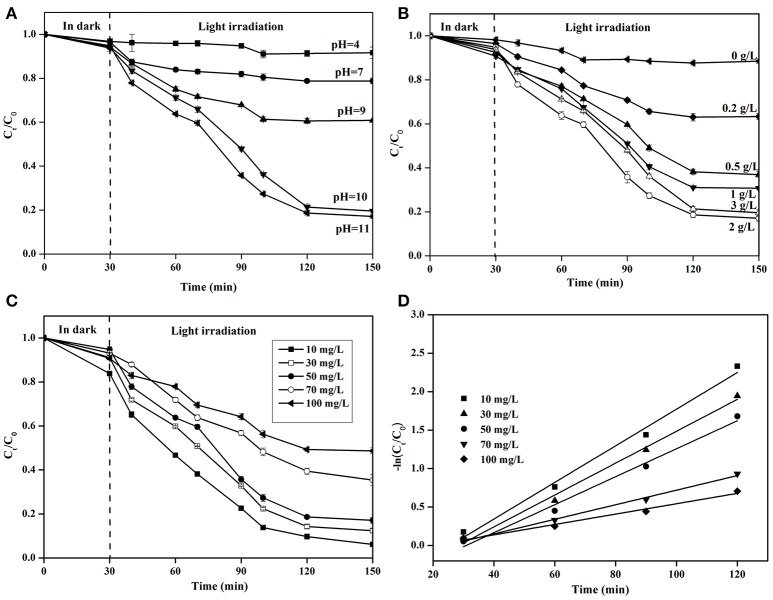
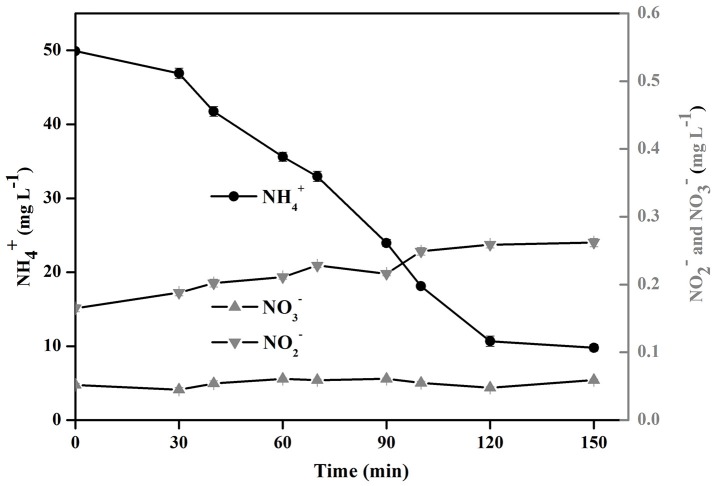
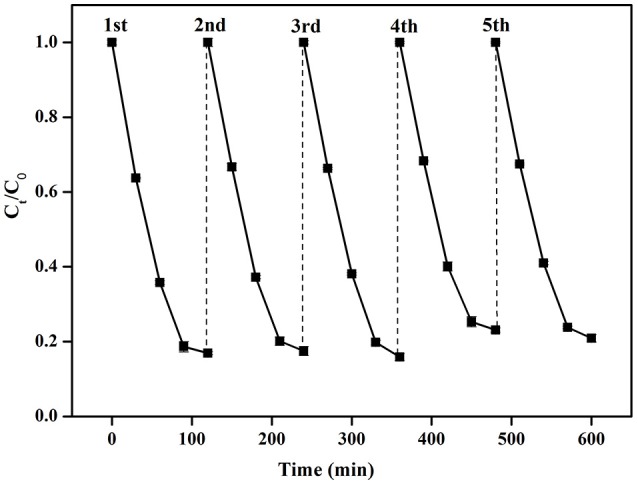
Photocatalytic removal of ammonium-nitrogen ( -N) from water using solar energy is an approach of high interest and applicability due to the convenience in application. ZnO has a great potential in photocatalytic decomposition of -N and conversion of this nutrient to under visible light irradiations. However the applicability of pristine ZnO though is limited due to its reduced capacity to utilize light from natural light. Herein, we report a two-step ZnO-modified strategy (Cu-doped ZnO nanoparticles, immobilized on reduced graphene oxide (rGO) sheets) for the promotion of photocatalytic degradation of -N under visible light. UV-Vis spectra showed that the Cu/ZnO/rGO can be highly efficient in the utilization of photons from the visible region. Hence, Cu/ZnO/rGO managed to demonstrate adequate photocatalytic activity and effective -N removal from water under visible light compared to single ZnO. Specifically, up to 83.1% of -N (initial concentration 50 mg·L, catalyst dosage 2 g·L, pH 10) was removed within 2 h retention time under Xe lamp irradiation. From the catalysis, the major by-product was N. The high ammonia degradation efficiency from the ZnO/Cu/rGO is attributed to the improvement of the reactive oxygen species (ROSs) production efficiency and the further activation of the interfacial catalytic sites. This study also demonstrated that such nanocomposite is a recyclable agent. Its -N removal capacity remained effective even after five batch cycles. In addition, Cu/ZnO/rGO was applied to treat real domestic wastewater, and it was found that chemical oxygen demand (COD), total nitrogen (TN) and total phosphorus (TP) removal efficiencies can reach 84.3, 80.7, and 90.3%, respectively. Thus, Cu/ZnO/rGO in the presence of solar light can be a promising photocatalyst in the field of wastewater treatment.
利用太阳能通过光催化去除水中的铵态氮(NH₄⁺-N)是一种因应用方便而备受关注且具有实用性的方法。ZnO在可见光照射下对NH₄⁺-N的光催化分解以及将这种养分转化为其他物质方面具有巨大潜力。然而,原始ZnO的适用性有限,因为其利用自然光的能力降低。在此,我们报道了一种两步法ZnO改性策略(将铜掺杂的ZnO纳米颗粒固定在还原氧化石墨烯(rGO)片上),用于促进可见光下NH₄⁺-N的光催化降解。紫外-可见光谱表明,Cu/ZnO/rGO在利用可见光区域的光子方面具有高效性。因此,与单一ZnO相比,Cu/ZnO/rGO在可见光下能够展现出足够的光催化活性并有效地从水中去除NH₄⁺-N。具体而言,在氙灯照射下,在2小时的保留时间内,初始浓度为50 mg·L⁻¹、催化剂用量为2 g·L⁻¹、pH为10的情况下,高达83.1%的NH₄⁺-N被去除。从催化过程来看,主要副产物是N₂。ZnO/Cu/rGO对氨的高降解效率归因于活性氧物种(ROSs)产生效率的提高以及界面催化位点的进一步活化。该研究还表明这种纳米复合材料是一种可循环利用的试剂。即使经过五个批次循环,其对NH₄⁺-N的去除能力仍然有效。此外,将Cu/ZnO/rGO应用于处理实际生活污水,发现化学需氧量(COD)、总氮(TN)和总磷(TP)的去除效率分别可达84.3%、80.7%和90.3%。因此,在太阳光存在的情况下,Cu/ZnO/rGO可能成为废水处理领域一种有前景的光催化剂。