Asimes AnnaDorothea, Kim Chun K, Cuarenta Amelia, Auger Anthony P, Pak Toni R
Department of Cell and Molecular Physiology, Loyola University Chicago, Maywood, Illinois.
Department of Psychology, University of Wisconsin‒Madison, Madison, Wisconsin.
J Endocr Soc. 2018 Jun 19;2(7):672-686. doi: 10.1210/js.2018-00051. eCollection 2018 Jul 1.
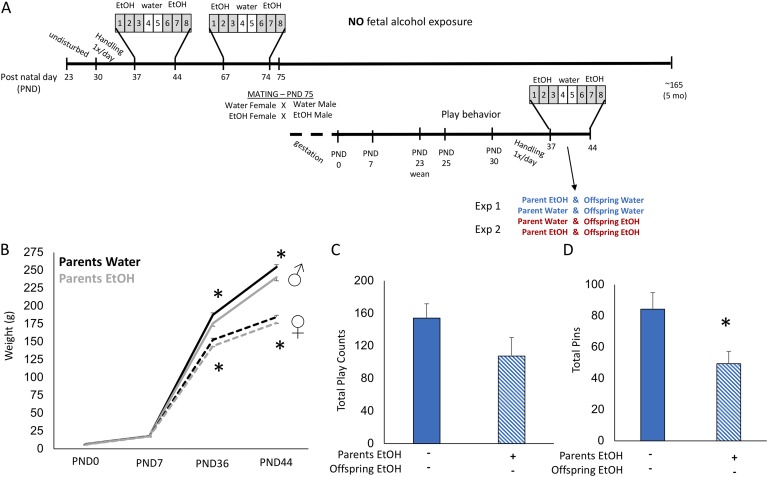
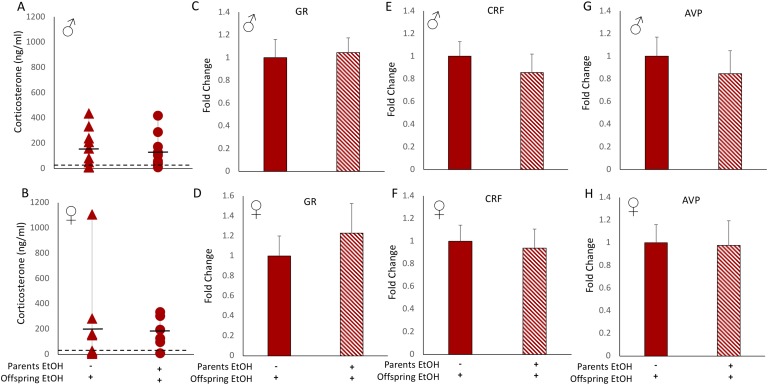
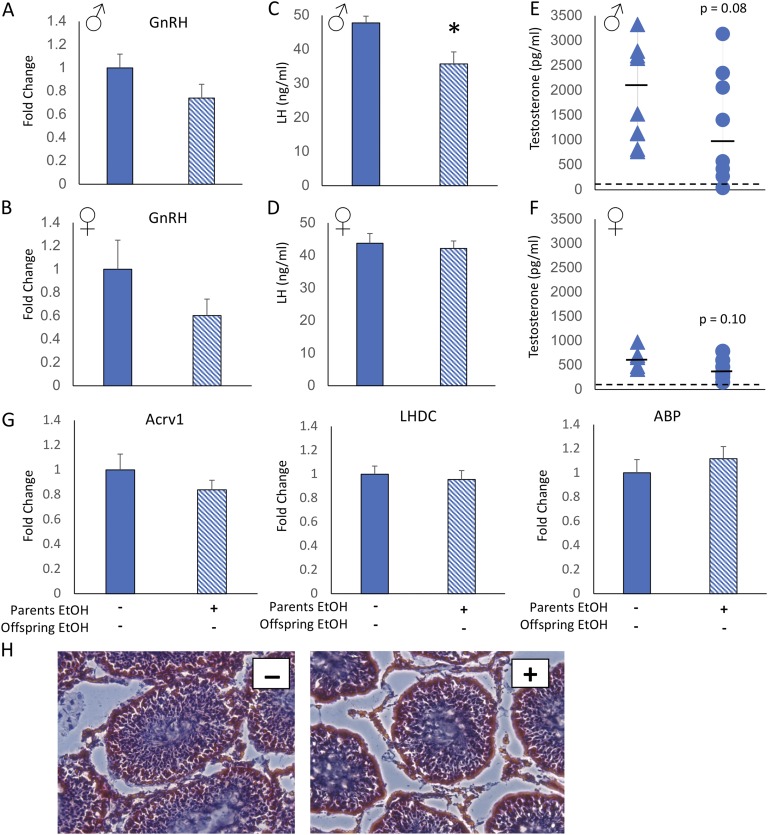
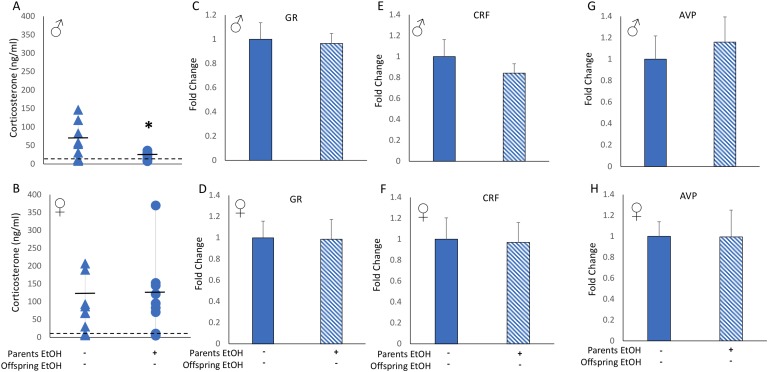
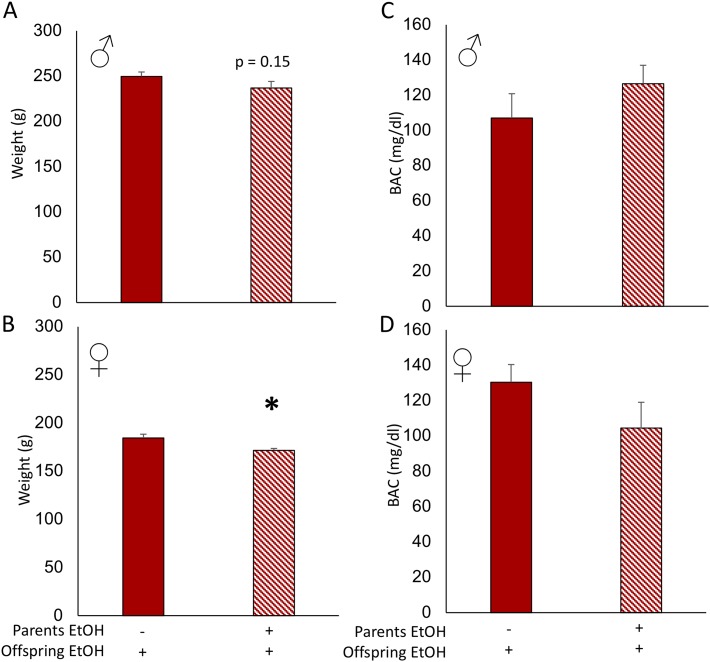
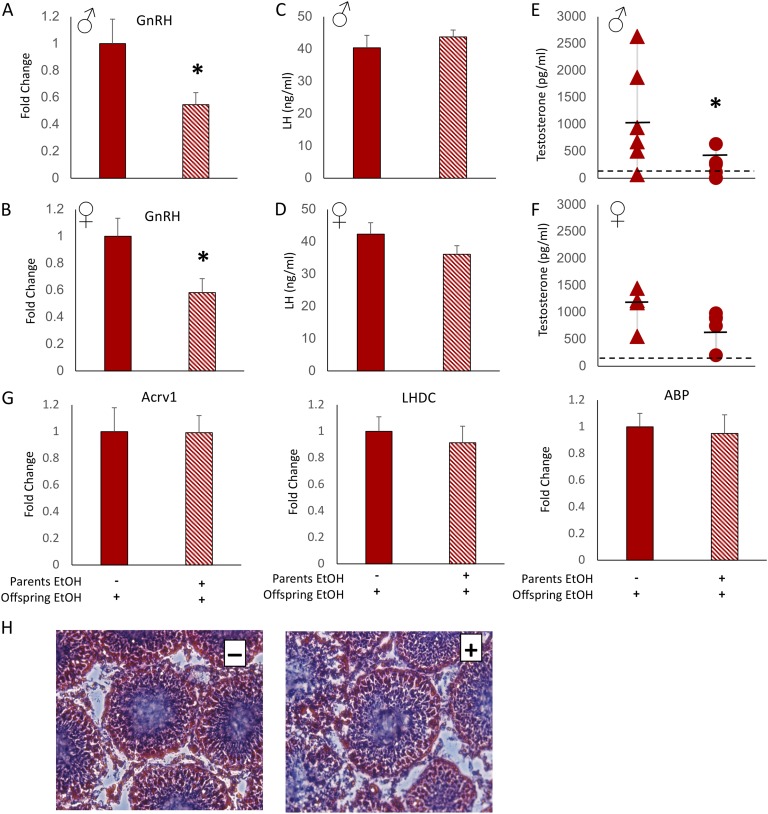
Preconception behaviors and experiences of mothers and fathers can affect future offspring. Recently, our laboratory showed that alcohol-naive offspring of parents who were exposed to repeated binge alcohol during adolescence showed altered DNA methylation patterns in the hypothalamus, a brain region involved in regulation of pubertal development, stress, and behavior. These observations have potentially far-reaching consequences for human health, as more than 4.6 million Americans under the age of 21 years report engaging in the rapid intoxication behavior of binge-pattern alcohol (EtOH) drinking. Therefore, we tested the hypothesis that offspring of binge EtOH‒exposed parents would have altered hypothalamic function manifested phenotypically as improper pubertal development, impaired socialization, and dysregulated stress response. In addition, we tested the hypothesis that parental EtOH exposure would confer adaptive protection from the negative effects of EtOH when offspring were themselves exposed to EtOH. Rats received EtOH via oral gavage once daily for 6 days at both early [postnatal day (PND) 37] and late puberty (PND 67). Animals were paired (EtOH-EtOH, vehicle-vehicle) for mating 24 hours after the last EtOH dose. After weaning, offspring were randomized to vehicle treatment to assess changes in normal development or to EtOH treatment to assess the effect of parental EtOH exposure on offspring response to this treatment. We found that offspring had smaller body weights and displayed fewer play behaviors when parents had been exposed to EtOH before conception. In addition, offspring showed a reduction in pubertal development markers that could indicate that parental preconception EtOH exposure confers maladaptive epigenetic traits in first-generation offspring.
父母在孕前的行为和经历会影响未来的后代。最近,我们实验室发现,青春期反复暴饮酒精的父母所生的未接触过酒精的后代,其下丘脑的DNA甲基化模式发生了改变,下丘脑是一个参与调节青春期发育、应激和行为的脑区。这些观察结果对人类健康可能具有深远影响,因为超过460万21岁以下的美国人报告有暴饮模式酒精(乙醇)的快速中毒行为。因此,我们检验了以下假设:暴饮乙醇的父母所生的后代会出现下丘脑功能改变,表型上表现为青春期发育异常、社交障碍和应激反应失调。此外,我们还检验了以下假设:当后代自身接触乙醇时,父母接触乙醇会使其获得对乙醇负面影响的适应性保护。大鼠在青春期早期[出生后第(PND)37天]和晚期(PND 67)每天经口灌胃给予乙醇,持续6天。在最后一次给予乙醇剂量24小时后,将动物配对(乙醇-乙醇、溶剂-溶剂)进行交配。断奶后,将后代随机分为接受溶剂处理以评估正常发育的变化,或接受乙醇处理以评估父母接触乙醇对后代对该处理反应的影响。我们发现,父母在孕前接触乙醇时,其后代体重较轻,玩耍行为较少。此外,后代青春期发育标志物减少,这可能表明父母孕前接触乙醇会在第一代后代中赋予不良的表观遗传特征。