Network Emergency Care Brabant, Elisabeth-Tweesteden Hospital, Hilvarenbeekseweg 60, 5022 GC, Tilburg, The Netherlands.
Traumasurgery, Bernhoven Hospital, Nistelrodeseweg 10, 5406 PT, Uden, The Netherlands.
Eur J Trauma Emerg Surg. 2019 Dec;45(6):1013-1020. doi: 10.1007/s00068-018-0970-3. Epub 2018 Jun 11.
3D printing contributes to a better understanding of the surgical approach, reduction and fixation of complex fractures. It is unclear how a 3D-printed model relates to a human bone. The accuracy of 3D-printed models is important to pre-bend plates and fit of surgical guides. We conduct a validation study in which we compare human cadavers with 3D-printed models to test the accuracy of 3D printing.
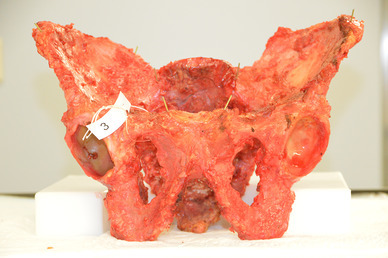
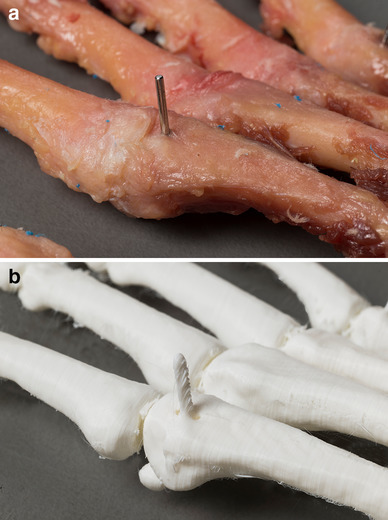
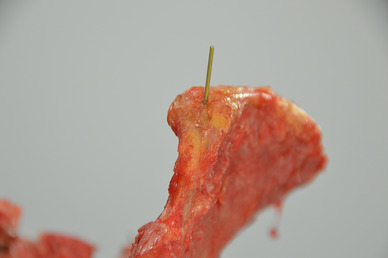
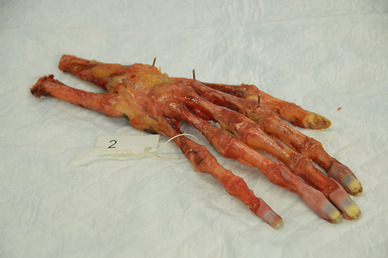
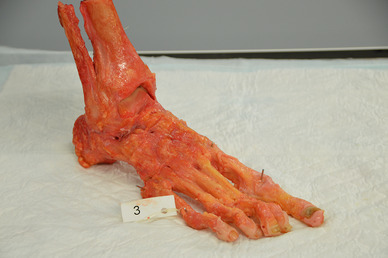
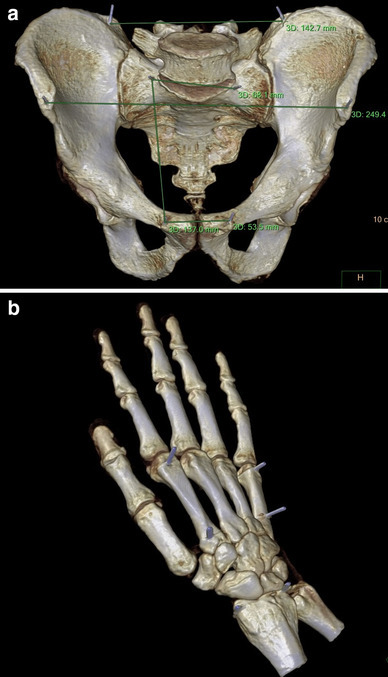
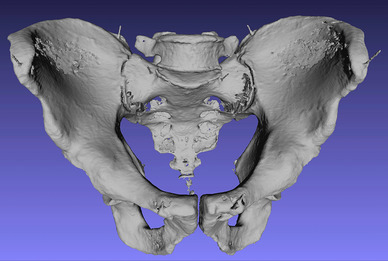
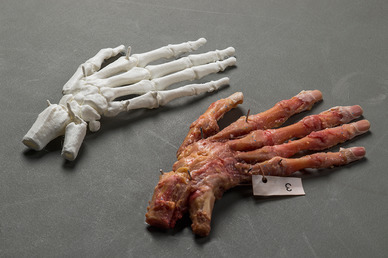
Nine specimens were scanned, volume rendered into 3D reconstructions and saved as STL data. All models were in a ratio of 1:1 printed on the Ultimaker 3 and Makerbot Replicator Z18. Two independent observers measured all distances between the K-wires on the human cadavers, 2DCT, 3D reconstruction, Meshlab and both printers. A paired Samples T test was used to compare the measurements between the different modalities.
The least decrease in average distance in millimetres was seen in "the 3D printed pelvis 1", - 0.3 and - 0.8% on respectively the Ultimaker and Makerbot when compared with cadaver Pelvis (1) The 3D model of "Hand 2" showed the most decrease, - 2.5 and - 3.2% on the Ultimaker and Makerbot when compared with cadaver hand (2) Most significant differences in measurements were found in the conversion from 3D file into a 3D print and between the cadaver and 3D-printed model from the Makerbot.
Our 3D printing process results in accurate models suitable for preoperative workup. The Ultimaker 3 is slightly more accurate than the Makerbot Replicator Z18. We advise that medical professionals should perform a study that tests the accuracy of their 3D printing process before using the 3D-printed models in medical practice.
3D 打印有助于更好地了解复杂骨折的手术入路、复位和固定。目前尚不清楚 3D 打印模型与人骨的关系。3D 打印模型的准确性对于预弯钢板和手术导板的适配很重要。我们进行了一项验证研究,将人体标本与 3D 打印模型进行比较,以测试 3D 打印的准确性。
对 9 个标本进行扫描,体积渲染成 3D 重建,并保存为 STL 数据。所有模型均按 1:1 的比例在 Ultimaker 3 和 Makerbot Replicator Z18 上打印。两位独立观察者测量了人体标本、2DCT、3D 重建、Meshlab 和两台打印机上的 K 型钉之间的所有距离。采用配对样本 t 检验比较不同模态之间的测量值。
在与骨盆 1 标本相比时,3D 打印骨盆 1 的平均距离最小,减少了 0.3%和 0.8%,分别在 Ultimaker 和 Makerbot 上;3D 打印手 2 模型的减少幅度最大,分别在 Ultimaker 和 Makerbot 上减少了 2.5%和 3.2%,与手 2 标本相比;在从 3D 文件转换为 3D 打印以及从 Makerbot 转换为尸体和 3D 打印模型的过程中,测量值的差异最大。
我们的 3D 打印过程产生的模型准确,适合术前准备。Ultimaker 3 比 Makerbot Replicator Z18 略为精确。我们建议医疗专业人员在将 3D 打印模型用于医疗实践之前,应进行一项测试其 3D 打印过程准确性的研究。