University of Konstanz , Universitätsstrasse 10 , 78457 Konstanz , Germany.
ACS Appl Mater Interfaces. 2018 Jul 18;10(28):23638-23646. doi: 10.1021/acsami.8b07032. Epub 2018 Jul 5.
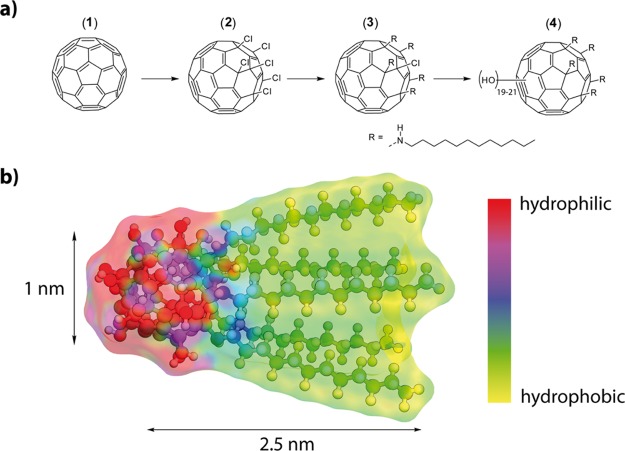
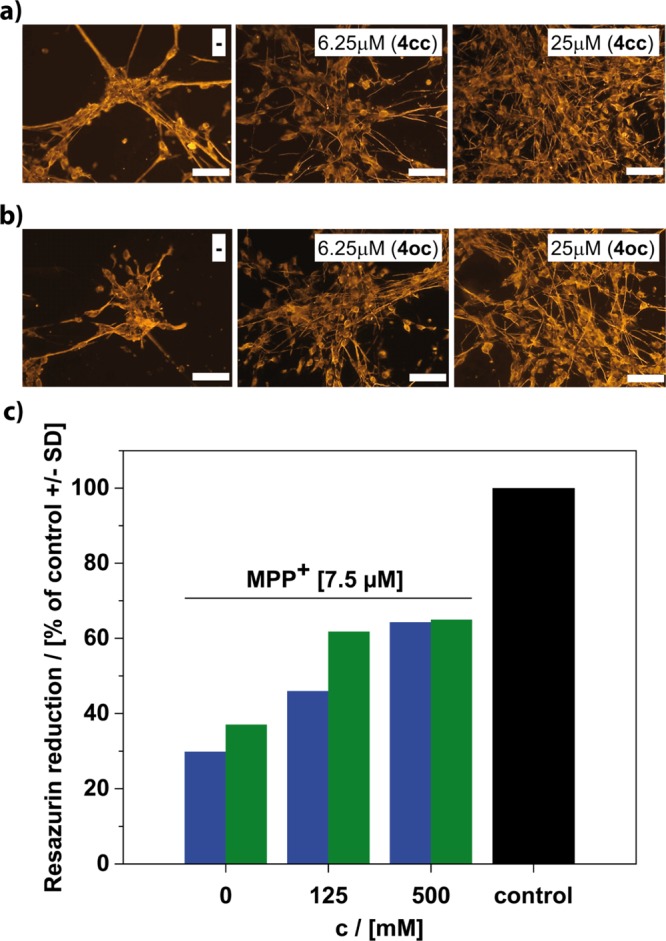
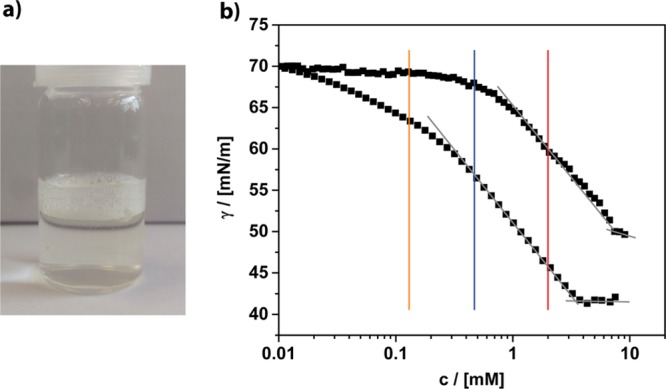
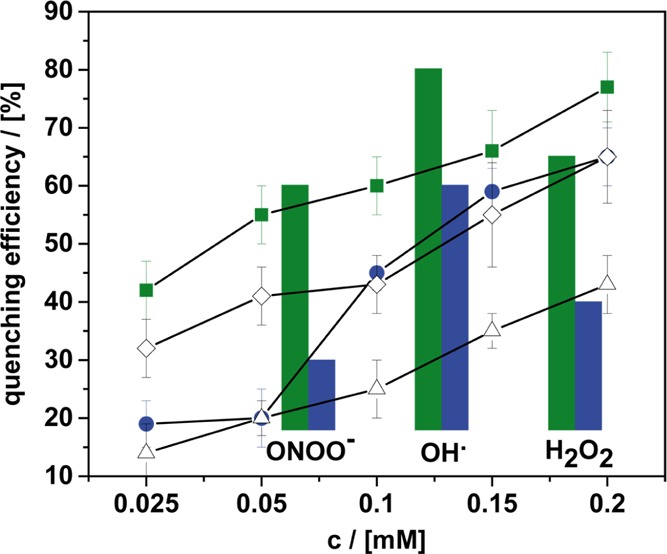
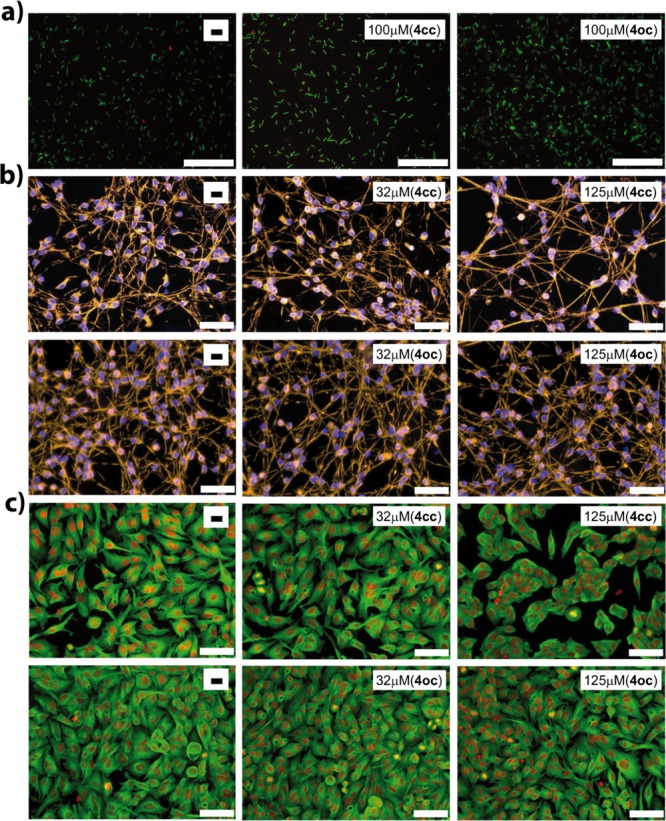
The importation of construction principles or even constituents from biology into materials science is a prevailing concept. Vice versa, the cellular level modification of living systems with nonnatural components is much more difficult to achieve. It has been done for analytical purposes, for example, imaging, to learn something about intracellular processes. Cases describing the improvement of a biological function by the integration of a nonnatural (nano)constituent are extremely rare. Because biological membranes contain some kind of a surfactant, for example, phospholipids, our idea is to modify cells with a newly synthesized surfactant. However, this surfactant is intended to possess an additional functionality, which is the reduction of oxidative stress. We report the synthesis of a surfactant with Janus-type head group architecture, a fullerene C modified by five alkyl chains on one side and an average of 20 oxygen species on the other hemisphere. It is demonstrated that the amphiphilic properties of the fullerenol surfactant are similar to that of lipids. Not only quenching of reactive oxygen species (superoxide, hydroxyl radicals, peroxynitrite, and hydrogen peroxide) was successful, but also the fullerenol surfactant exceeds benchmark antioxidant agents such as quercetin. The surfactant was then brought into contact with different cell types, and the viability even of delicate cells such as human liver cells (HepG2) and human dopaminergic neurons (LUHMES) has proven to be extraordinarily high. We could show further that the cells take up the fullerenol surfactant, and as a consequence, they are protected much better against oxidative stress.
将建筑原理甚至组成部分从生物学引入材料科学是一个流行的概念。反之,用非天然成分在细胞水平上修饰活系统则要困难得多。例如,为了进行分析目的(例如成像)以了解细胞内过程,已经进行了这样的修饰。描述通过整合非天然(纳米)成分来改善生物功能的情况极为罕见。由于生物膜含有某种表面活性剂,例如磷脂,我们的想法是用新合成的表面活性剂修饰细胞。但是,这种表面活性剂旨在具有附加功能,即减轻氧化应激。我们报告了一种具有Janus 型头基结构的表面活性剂的合成,该表面活性剂的一侧用五个烷基链修饰了富勒烯 C,另一侧则具有平均 20 个氧物种。已经证明,富勒醇表面活性剂的两亲性质与脂质相似。不仅成功地猝灭了活性氧物质(超氧自由基、羟基自由基、过氧亚硝酸盐和过氧化氢),而且富勒醇表面活性剂还超过了槲皮素等基准抗氧化剂。然后将该表面活性剂与不同的细胞类型接触,甚至对敏感细胞(如人肝细胞(HepG2)和人多巴胺能神经元(LUHMES))的活力也被证明非常高。我们进一步表明,细胞吸收了富勒醇表面活性剂,因此它们对氧化应激的保护作用大大提高。