Human Oncology & Pathogenesis Program, Memorial Sloan Kettering Cancer Center, New York, NY, USA.
Center for Hematologic Malignancies, Memorial Sloan Kettering Cancer Center, New York, NY, USA.
Nature. 2018 Jul;559(7712):125-129. doi: 10.1038/s41586-018-0251-7. Epub 2018 Jun 27.
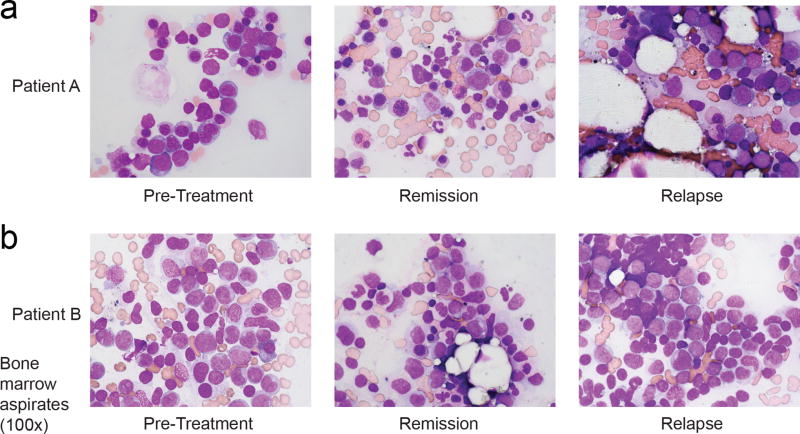
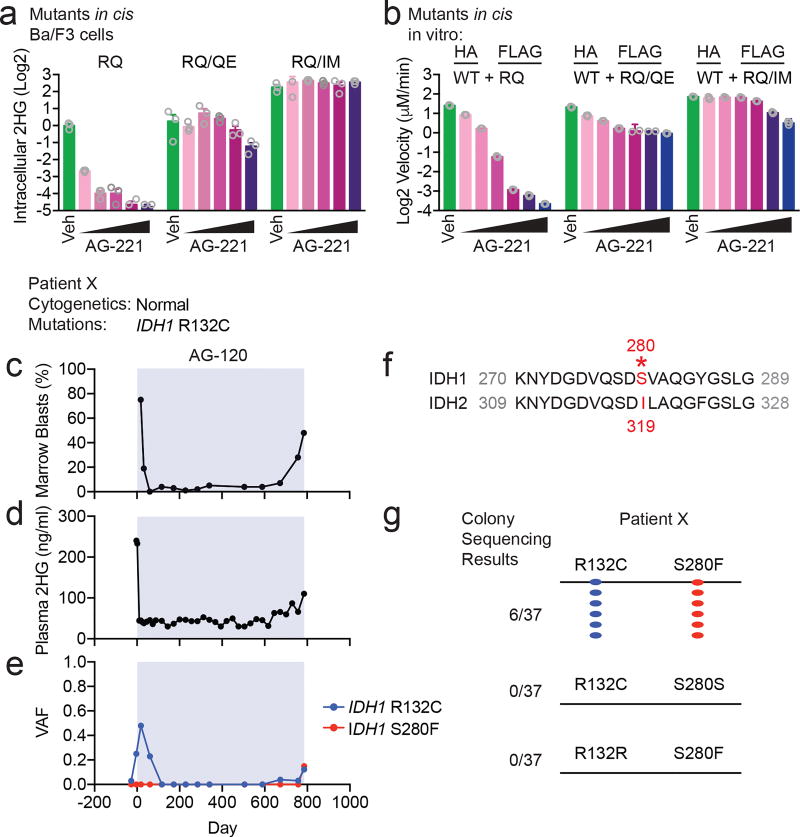
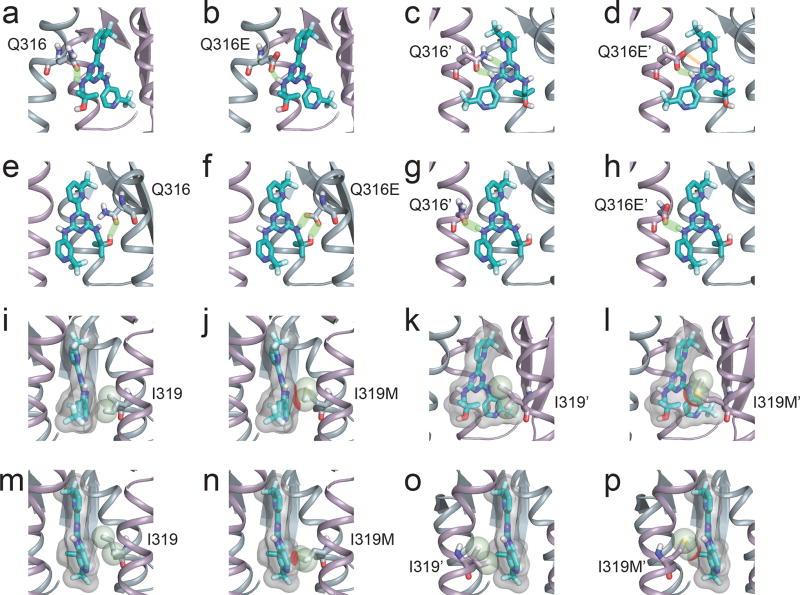
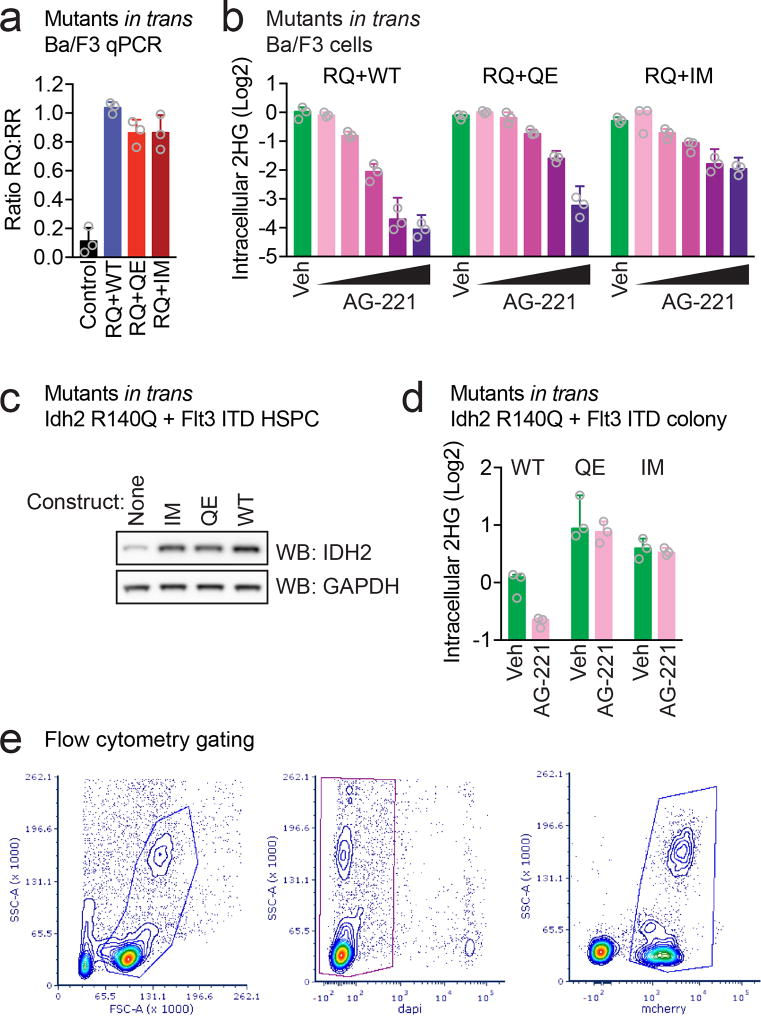
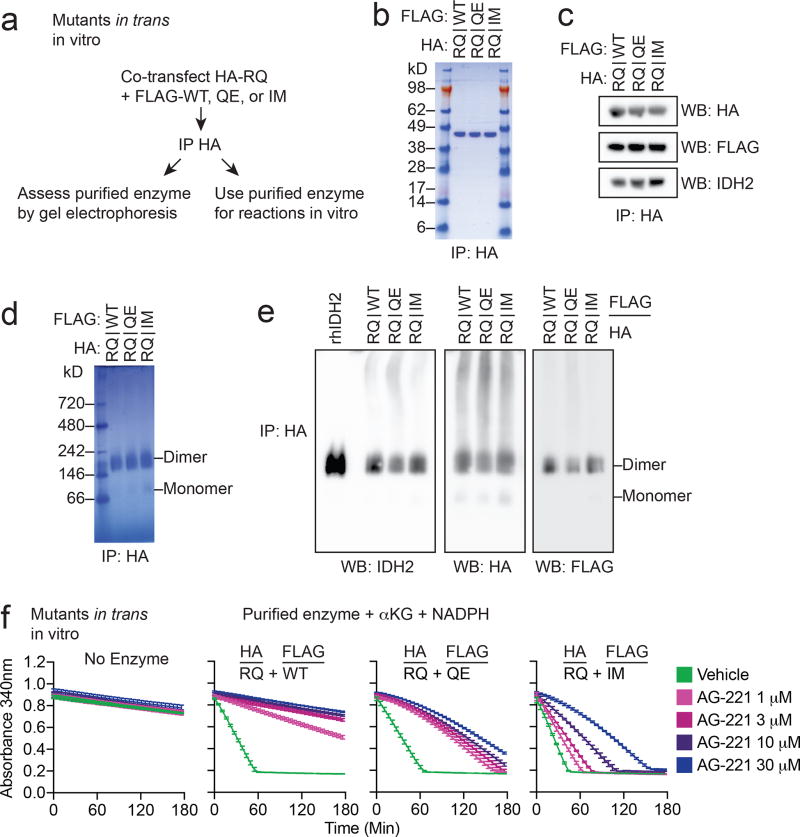
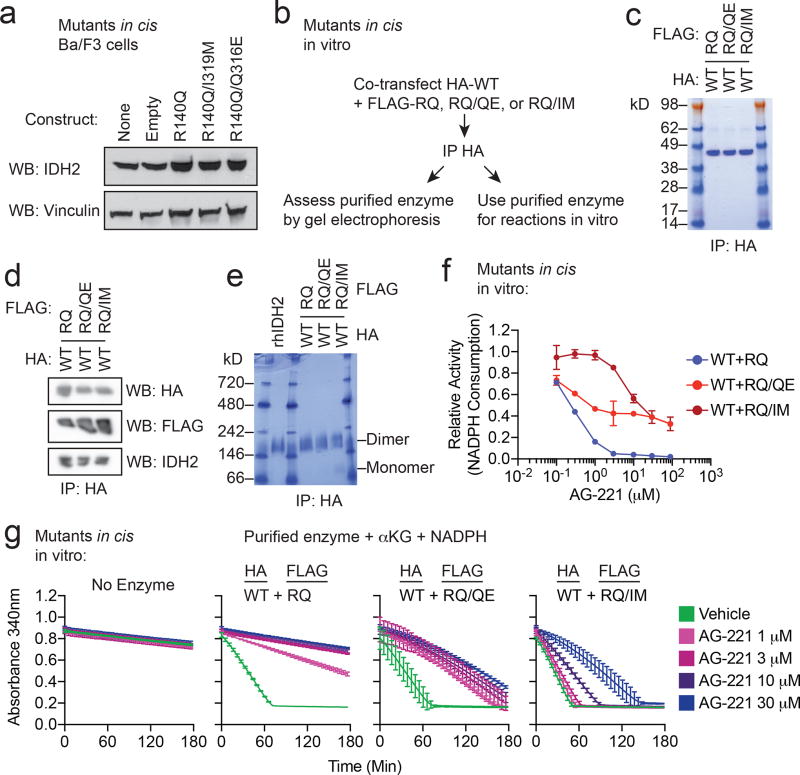
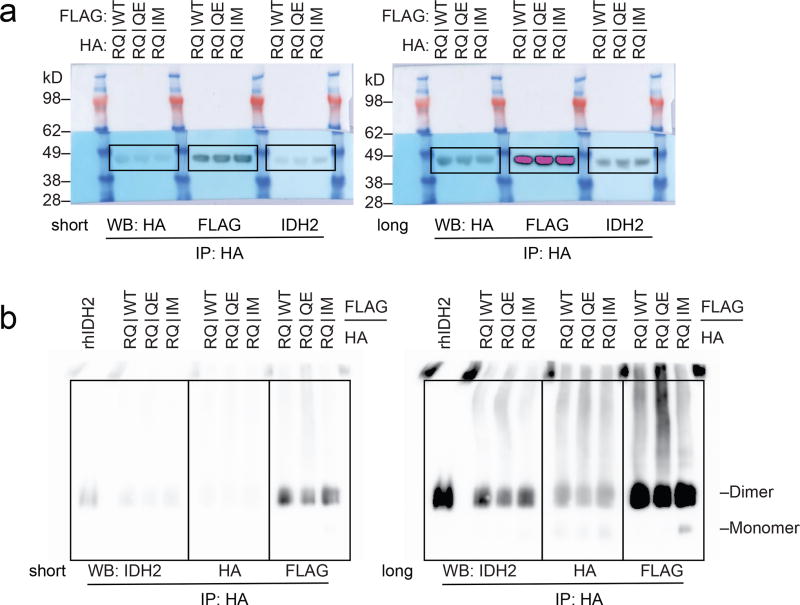
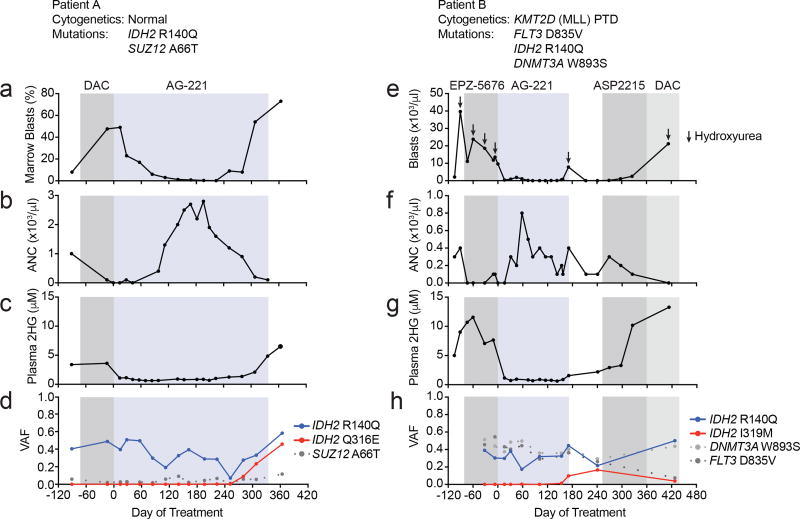
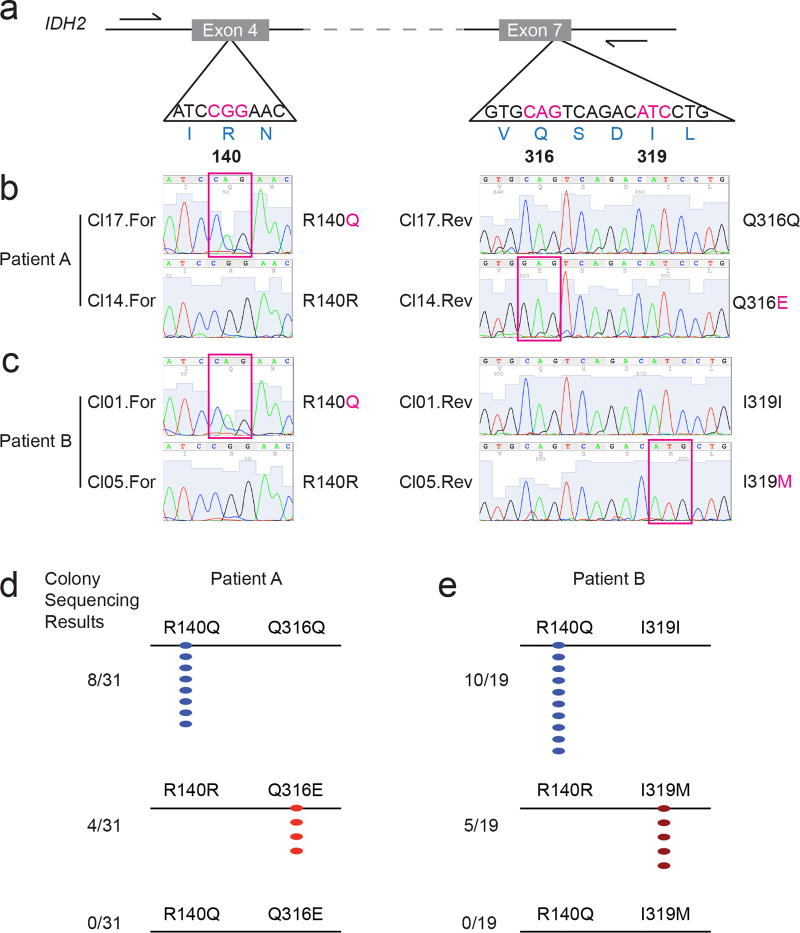
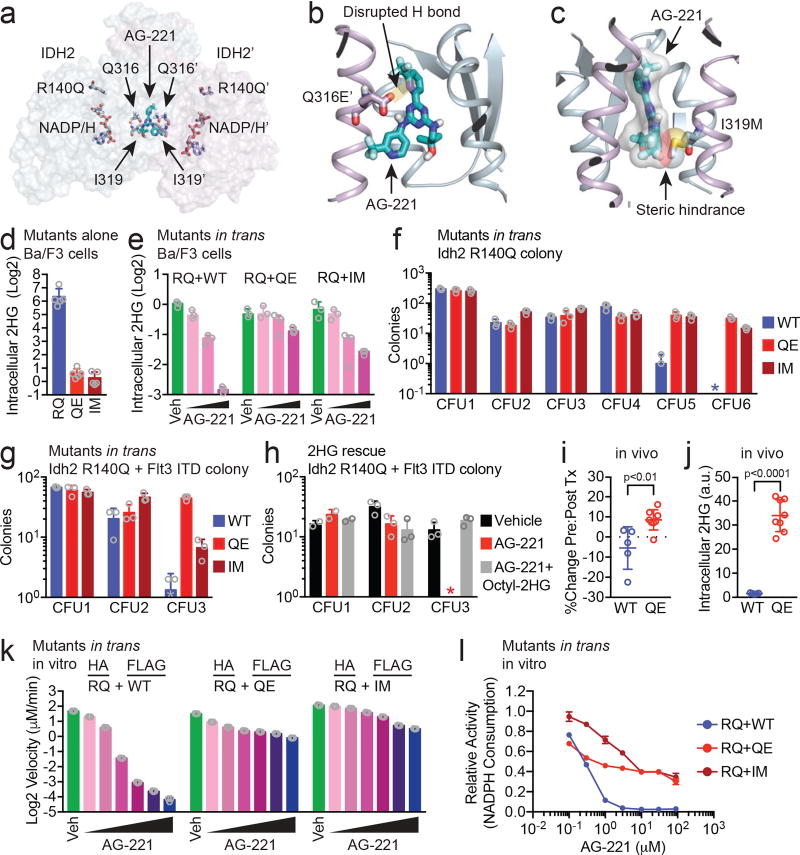
Somatic mutations in the isocitrate dehydrogenase 2 gene (IDH2) contribute to the pathogenesis of acute myeloid leukaemia (AML) through the production of the oncometabolite 2-hydroxyglutarate (2HG). Enasidenib (AG-221) is an allosteric inhibitor that binds to the IDH2 dimer interface and blocks the production of 2HG by IDH2 mutants. In a phase I/II clinical trial, enasidenib inhibited the production of 2HG and induced clinical responses in relapsed or refractory IDH2-mutant AML. Here we describe two patients with IDH2-mutant AML who had a clinical response to enasidenib followed by clinical resistance, disease progression, and a recurrent increase in circulating levels of 2HG. We show that therapeutic resistance is associated with the emergence of second-site IDH2 mutations in trans, such that the resistance mutations occurred in the IDH2 allele without the neomorphic R140Q mutation. The in trans mutations occurred at glutamine 316 (Q316E) and isoleucine 319 (I319M), which are at the interface where enasidenib binds to the IDH2 dimer. The expression of either of these mutant disease alleles alone did not induce the production of 2HG; however, the expression of the Q316E or I319M mutation together with the R140Q mutation in trans allowed 2HG production that was resistant to inhibition by enasidenib. Biochemical studies predicted that resistance to allosteric IDH inhibitors could also occur via IDH dimer-interface mutations in cis, which was confirmed in a patient with acquired resistance to the IDH1 inhibitor ivosidenib (AG-120). Our observations uncover a mechanism of acquired resistance to a targeted therapy and underscore the importance of 2HG production in the pathogenesis of IDH-mutant malignancies.
体细胞突变的异柠檬酸脱氢酶 2 基因(IDH2)导致发病通过生产的致癌代谢物 2-羟基戊二酸(2HG)。enasidenib(AG-221)是一个变构抑制剂,与 IDH2 二聚体界面结合并阻止 2HG 的生产由 IDH2 突变体。在一期/二期临床试验中,enasidenib 抑制 2HG 的产生,并诱导复发或难治性 IDH2 突变型 AML 的临床反应。在这里,我们描述了两个患有 IDH2 突变型 AML 的患者,他们对 enasidenib 有临床反应,随后出现临床耐药、疾病进展和循环中 2HG 水平再次升高。我们表明,治疗耐药与反式中第二部位 IDH2 突变的出现有关,使得耐药突变发生在没有新形成的 R140Q 突变的 IDH2 等位基因中。反式突变发生在谷氨酰胺 316(Q316E)和异亮氨酸 319(I319M),这是 enasidenib 结合 IDH2 二聚体的界面。单独表达这些突变疾病等位基因之一不会诱导 2HG 的产生;然而,Q316E 或 I319M 突变与反式中的 R140Q 突变一起表达允许产生对 enasidenib 抑制有抗性的 2HG。生化研究预测,通过顺式中的 IDH 二聚体界面突变也可能发生对变构 IDH 抑制剂的耐药性,这在对 IDH1 抑制剂ivosidenib(AG-120)获得性耐药的患者中得到证实。我们的观察结果揭示了一种获得性耐药的机制针对靶向治疗,并强调了 2HG 产生在 IDH 突变恶性肿瘤发病机制中的重要性。