Cancer Biology and Genetics Program, Memorial Sloan-Kettering Cancer Center, New York, New York 10065, USA;
Genes Dev. 2013 Sep 15;27(18):1974-85. doi: 10.1101/gad.226613.113.
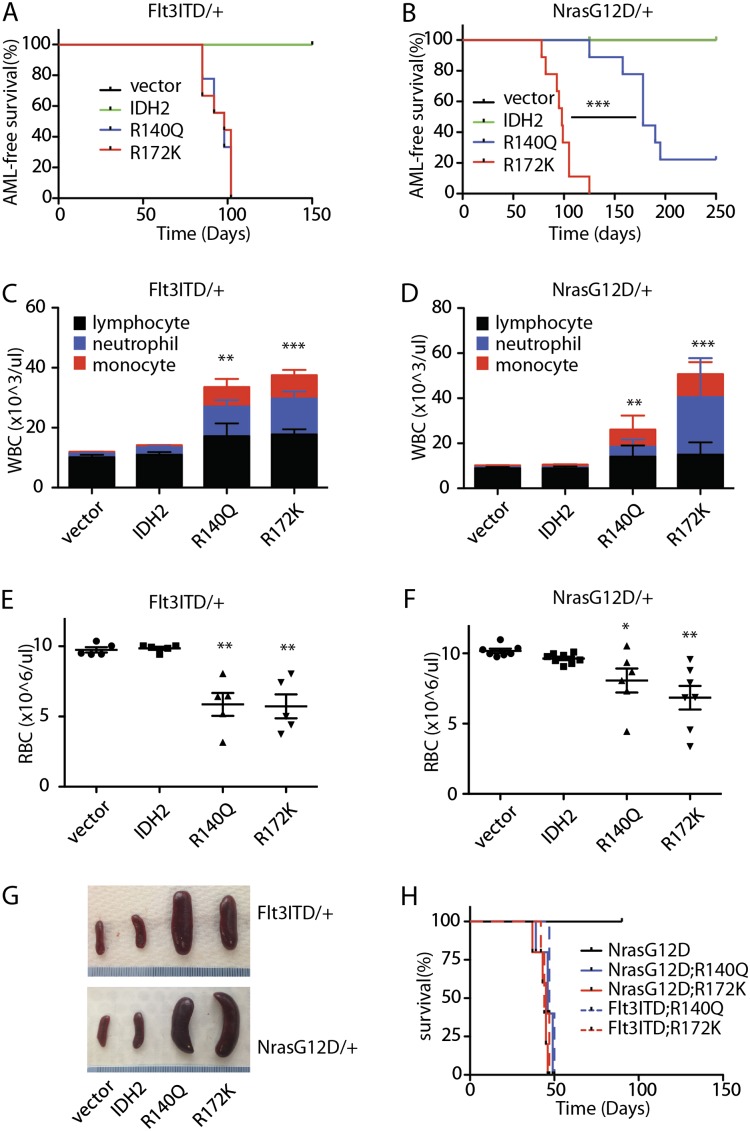
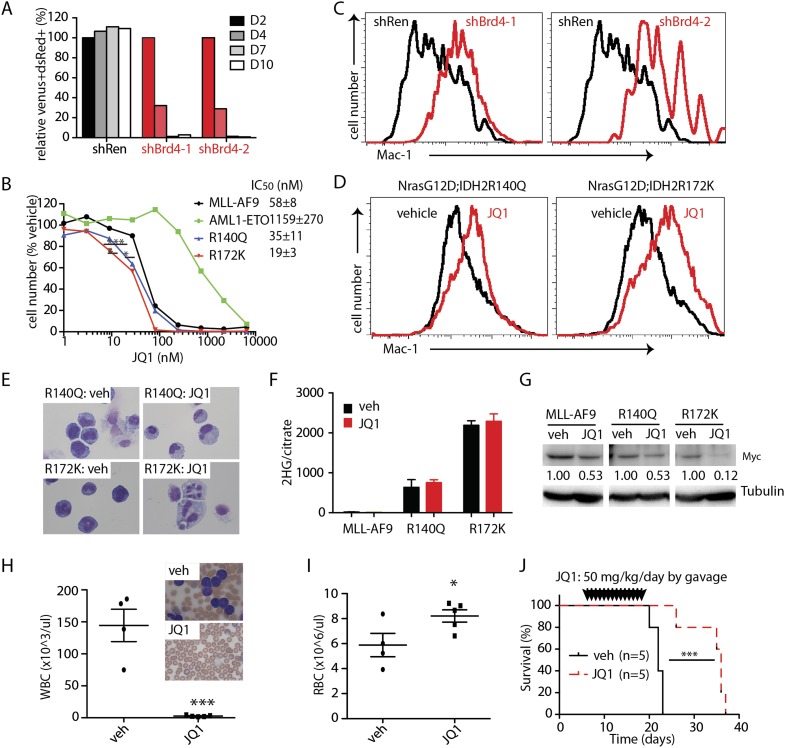
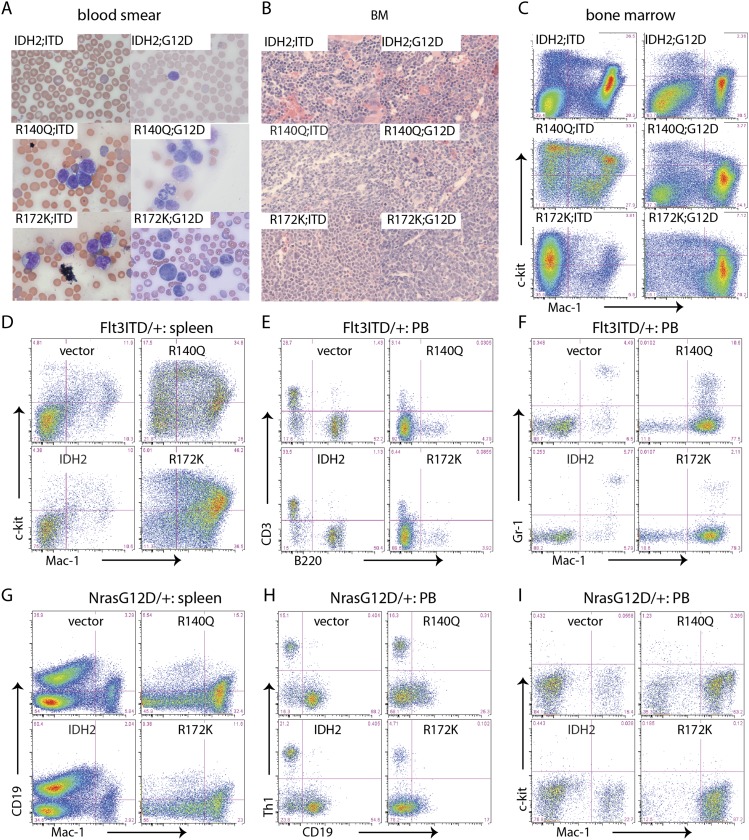
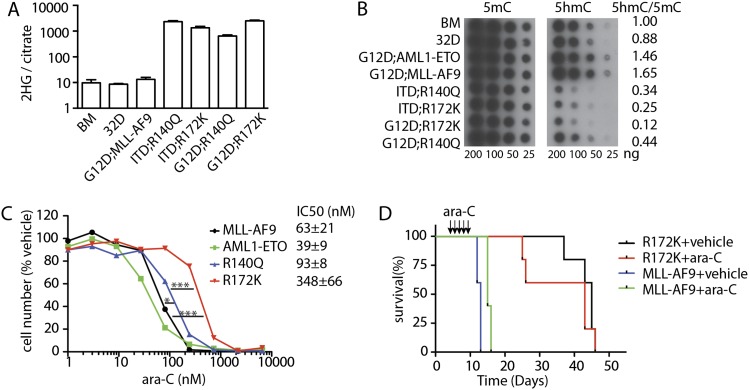
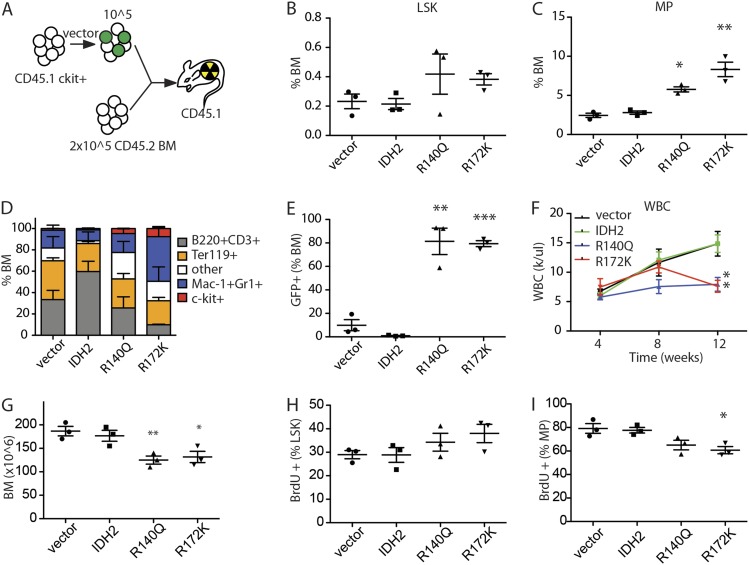
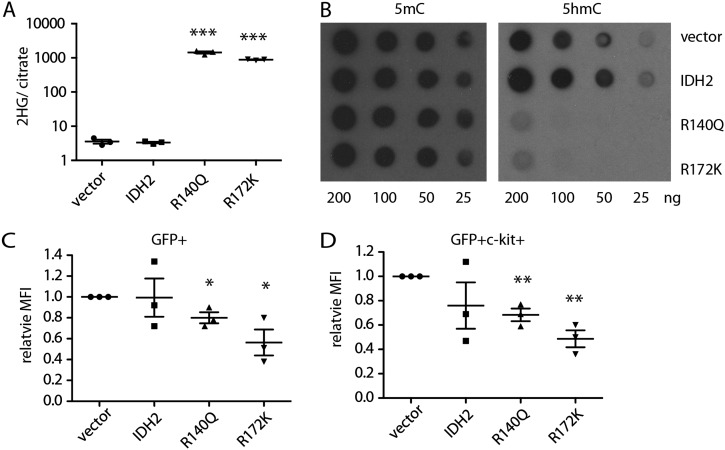
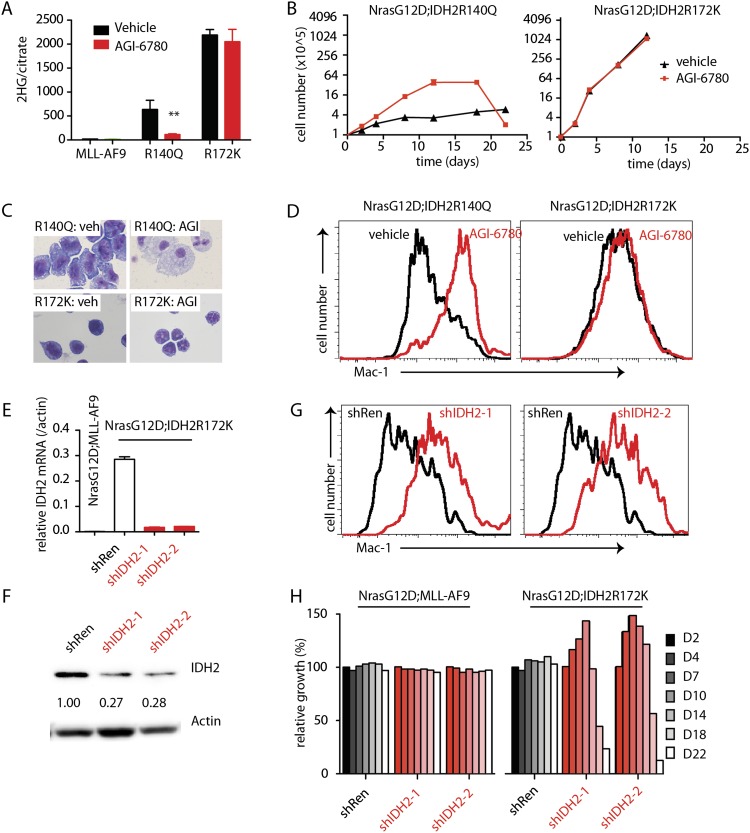
Somatic mutations in the isocitrate dehydrogenase (IDH) genes IDH1 and IDH2 occur frequently in acute myeloid leukemia (AML) and other cancers. These genes encode neomorphic proteins that produce the presumed oncometabolite 2-hydroxyglutarate (2-HG). Despite the prospect of treating AML and other cancers by targeting IDH mutant proteins, it remains unclear how these mutants affect tumor development and maintenance in vivo, and no cancer models exist to study the action of IDH2 mutants in vivo. We show that IDH2 mutants can cooperate with oncogenic Flt3 or Nras alleles to drive leukemia in mice by impairing the differentiation of cells of the myeloid lineage. Pharmacologic or genetic inhibition of IDH2 triggers the differentiation and death of AML cells, albeit only with prolonged IDH2 inhibition. In contrast, inhibition of the bromodomain-containing protein Brd4 triggers rapid differentiation and death of IDH2 mutant AML. Our results establish a critical role for mutant IDH2 in leukemogenesis and tumor maintenance and identify an IDH-independent strategy to target these cancers therapeutically.
体细胞突变的异柠檬酸脱氢酶(IDH)基因 IDH1 和 IDH2 经常发生在急性髓系白血病(AML)和其他癌症中。这些基因编码新形成的蛋白质,产生假定的致癌代谢物 2-羟基戊二酸(2-HG)。尽管通过针对 IDH 突变蛋白治疗 AML 和其他癌症的前景,但尚不清楚这些突变如何影响体内肿瘤的发展和维持,也没有癌症模型可用于研究 IDH2 突变体在体内的作用。我们表明,IDH2 突变体可以通过损害髓系细胞的分化与致癌性 Flt3 或 Nras 等位基因协同作用,在小鼠中驱动白血病。IDH2 的药理学或遗传抑制会触发 AML 细胞的分化和死亡,但仅在长时间抑制 IDH2 时才会发生。相比之下,抑制包含溴结构域的蛋白 Brd4 会迅速触发 IDH2 突变型 AML 细胞的分化和死亡。我们的结果确立了突变 IDH2 在白血病发生和肿瘤维持中的关键作用,并确定了一种针对这些癌症的治疗的 IDH 独立策略。