Köneş Osman, Oran Ebru
General Surgery Unit, Bakırköy Training and Research Hospital, Istanbul, Turkey.
JSLS. 2018 Apr-Jun;22(2). doi: 10.4293/JSLS.2018.00011.
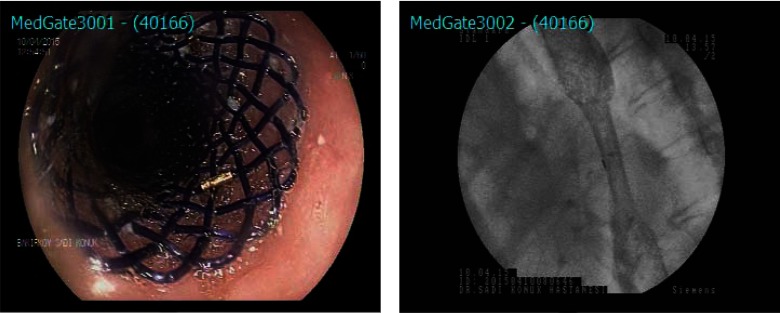
Endoscopic stenting is a minimally invasive treatment modality for patients with various gastrointestinal conditions. We evaluated the safety and efficacy of uncovered biodegradable stents for postoperative leaks and strictures in the upper gastrointestinal tract.
This was a retrospective study of patients treated endoscopically with biodegradable stents from January 2010 through November 2017.
Thirteen patients were enrolled, 7 of whom were men. Their mean age was 46 (range, 21-82) years. The indications for stent placement were postoperative leakage and stricture in 9 and 4 patients, respectively. The primary diagnoses were obesity in 7 patients, gastric cancer in 5, and peptic ulcer in 1. The average time to stent placement after surgery was 35 (range, 17-125) and 166 (range, 153-185) days for patients with postoperative leakage and stricture, respectively. Stent insertion was successful at the first attempt in all patients. Complete resolution of the leak and stricture was achieved after stent application in 11 patients, for a clinical success rate of 85%. The mean follow-up duration was 50 (range, 24-76) months. There were no major complications.
Compared to self-expanding metal and plastic stents, the main advantages of uncovered biodegradable stents are that they do not have to be removed and have a low migration rate. Our results suggest that these stents have promise for management of postoperative gastrointestinal complications. Further randomized trials with larger sample sizes are necessary to determine the role of biodegradable stents in the treatment algorithm.
内镜支架置入术是治疗各种胃肠道疾病患者的一种微创治疗方式。我们评估了无覆膜可降解支架对上消化道术后漏液和狭窄的安全性及有效性。
这是一项对2010年1月至2017年11月接受内镜下可降解支架治疗患者的回顾性研究。
共纳入13例患者,其中男性7例。他们的平均年龄为46岁(范围21 - 82岁)。支架置入的适应证分别为9例术后漏液和4例术后狭窄。主要诊断为7例肥胖症、5例胃癌和1例消化性溃疡。术后漏液和狭窄患者支架置入的平均时间分别为35天(范围17 - 125天)和166天(范围153 - 185天)。所有患者首次尝试支架置入均成功。11例患者在应用支架后漏液和狭窄完全缓解,临床成功率为85%。平均随访时间为50个月(范围24 - 76个月)。无严重并发症发生。
与自膨式金属和塑料支架相比,无覆膜可降解支架的主要优点是无需取出且移位率低。我们的结果表明,这些支架在处理术后胃肠道并发症方面具有前景。需要进一步开展更大样本量的随机试验,以确定可降解支架在治疗方案中的作用。