He Shuang, Chen Shuai, Xia Ming-Rong, Sun Zhi-Kun, Huang Yue, Zhang Jie-Wen
Department of Neurology, Zhengzhou University People's Hospital, Zhengzhou, Henan, 450003, China.
Neuropsychiatr Dis Treat. 2018 Jun 18;14:1627-1633. doi: 10.2147/NDT.S155521. eCollection 2018.
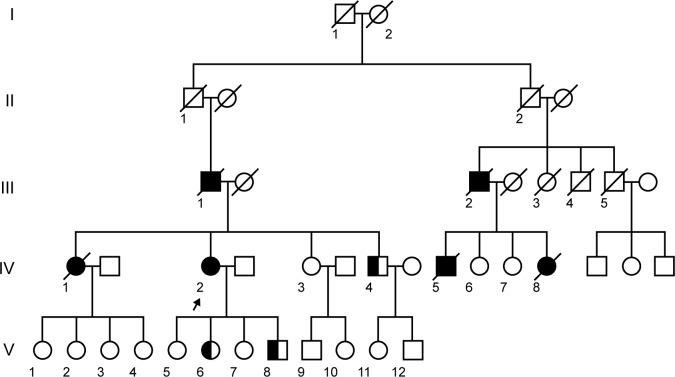
Frontotemporal dementia (FTD) is the second most common presenile dementia characterized by behavioral changes and language impairment. The diagnosis of FTD relies heavily on neuroimaging, and sometimes on genetic screening. However, the genetic components in Chinese FTD patients remain largely unknown. Only a few FTD cases with established mutations have been reported in China. This study reported the detailed clinical and neuroimaging features in a Chinese behavioral variant FTD family. The role of gene mutation in Chinese dementia patients was also reviewed.
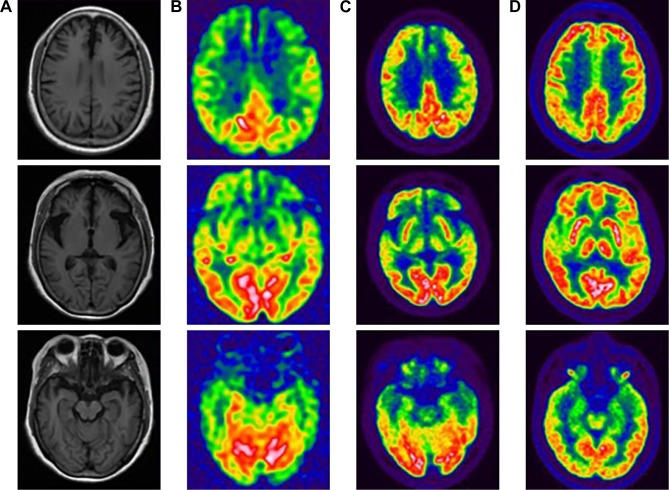
By detailed inquiry of all affected individuals in the family, this study summarized the main clinical features of the disease. Four candidate genes (, , , and ) were screened by direct sequencing. Structural magnetic resonance imaging (MRI), functional imaging of cerebral blood flow with arterial spin-labeled MRI (ASL-MRI), and cerebral metabolism with fluorodeoxyglucose positron emission tomography (FDG-PET) were collected in the proband and healthy mutation carriers.
By direct sequencing of candidate genes (, , , and ), this study identified the P301L mutation in the gene in the proband and three unaffected family members. The phenotype of the affected cases was consistent within the pedigree. In this genetically proven behavioral variant FTD (bvFTD) patient, the maps of hypoperfusion on ASL-MRI look fairly similar to the hypometabolism on FDG-PET. The clinical feature for this bvFTD was in line with the hypoperfusion or hypometabolism pattern on functional neuroimagings. The phenotype of P301L in east Asia seems similar to western countries.
For the inherited FTD patients, ASL-MRI and genetic identification were strongly recommended for the final diagnosis. In case of being underestimated, the role of gene mutation in Chinese FTD patients warrants further investigation.
额颞叶痴呆(FTD)是第二常见的早老性痴呆,其特征为行为改变和语言障碍。FTD的诊断在很大程度上依赖于神经影像学检查,有时还依赖于基因筛查。然而,中国FTD患者的遗传成分在很大程度上仍不为人知。在中国,仅报道了少数几例已确定突变的FTD病例。本研究报告了一个中国行为变异型FTD家系的详细临床和神经影像学特征。还回顾了基因突变在中国痴呆患者中的作用。
通过详细询问该家系中所有受影响个体,本研究总结了该疾病的主要临床特征。通过直接测序筛选了四个候选基因(、、和)。在先证者和健康突变携带者中收集了结构磁共振成像(MRI)、动脉自旋标记MRI(ASL-MRI)的脑血流功能成像以及氟脱氧葡萄糖正电子发射断层扫描(FDG-PET)的脑代谢成像。
通过对候选基因(、、和)的直接测序,本研究在先证者和三名未受影响的家庭成员中发现了基因中的P301L突变。受影响病例的表型在系谱内是一致的。在这个经基因证实的行为变异型FTD(bvFTD)患者中,ASL-MRI上的灌注不足图谱与FDG-PET上的代谢减低图谱相当相似。该bvFTD的临床特征与功能性神经影像学上的灌注不足或代谢减低模式相符。东亚地区P301L的表型似乎与西方国家相似。
对于遗传性FTD患者,强烈建议进行ASL-MRI和基因鉴定以进行最终诊断。在未得到充分重视的情况下,基因突变在中国FTD患者中的作用值得进一步研究。