Shen Yanting, Li Rui, Tian Fei, Chen Zhenzhu, Lu Na, Bai Yunfei, Ge Qinyu, Lu Zuhong
School of Biomedical Engineering, Southeast University, Nanjing 210096, Jiangsu Province, People's Republic of China.
State Key Laboratory of Bioelectronics, Southeast University, Nanjing 210096, Jiangsu Province, People's Republic of China.
Onco Targets Ther. 2018 Jun 20;11:3573-3581. doi: 10.2147/OTT.S158868. eCollection 2018.
The reliability of RNA sequencing (RNA-seq) output is affected by the quality of RNAs, which is in turn dependent on the quality of samples. Therefore, the purposes of this study were to reconsider the threshold of the RNA integrity number (RIN) and propose a simple and efficient storage scheme of blood samples for RNA-seq.
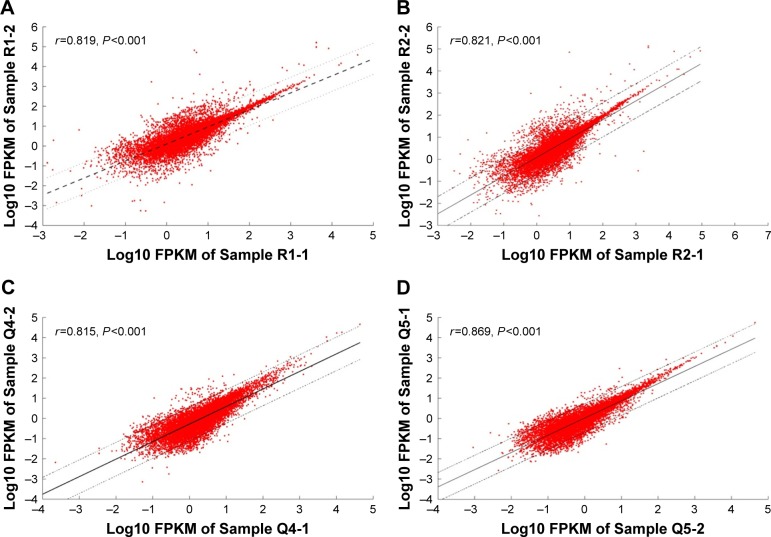
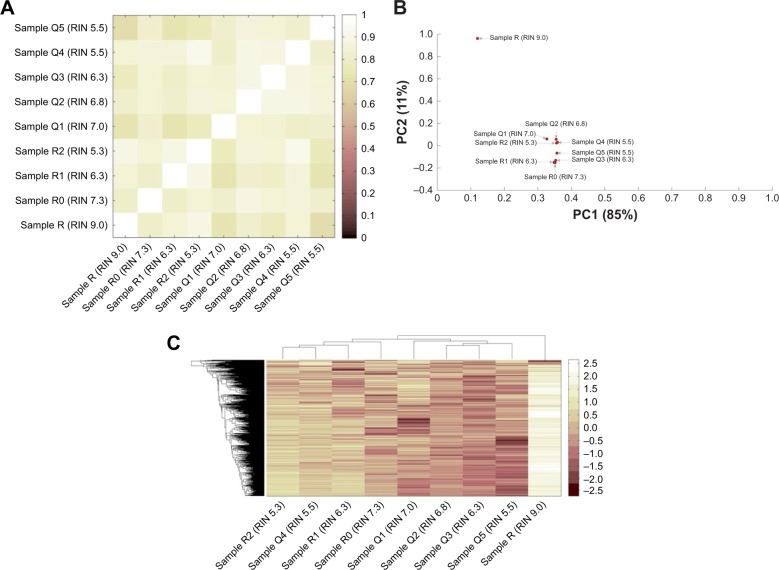
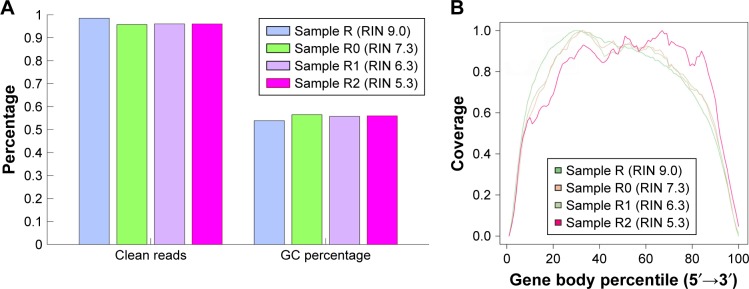
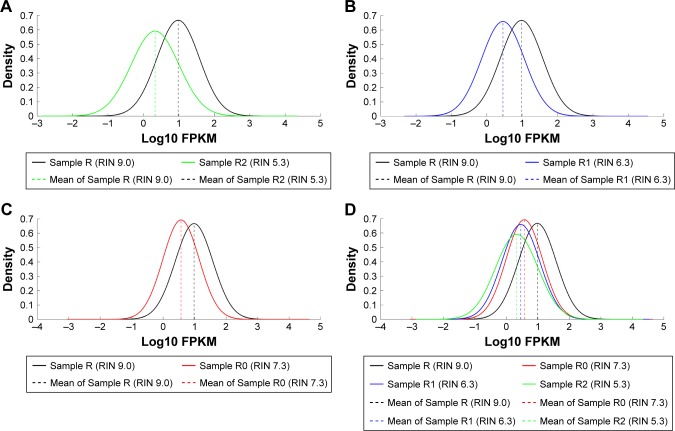
The RNAs were extracted from blood samples that were stored at different conditions and used for sequencing. The bioinformatic analyses were performed to evaluate the impact of RNA integrity and blood sample storage conditions on the gene expression analysis.
Our outcomes showed that the samples with RIN values more than 5.3 scarcely affected the quantitative results of RNA-seq, and the influence of inherent cellular physiological processes on RNA-seq output could be negligible.
The blood samples stored at 4°C within 7 days with RIN values more than 5.3 were available for RNA-seq.
RNA测序(RNA-seq)结果的可靠性受RNA质量影响,而RNA质量又取决于样本质量。因此,本研究旨在重新审视RNA完整性数值(RIN)的阈值,并提出一种简单有效的用于RNA-seq的血液样本保存方案。
从存储于不同条件的血液样本中提取RNA并用于测序。进行生物信息学分析以评估RNA完整性和血液样本存储条件对基因表达分析的影响。
我们的结果表明,RIN值大于5.3的样本几乎不影响RNA-seq的定量结果,固有细胞生理过程对RNA-seq结果的影响可忽略不计。
在4°C下保存7天且RIN值大于5.3的血液样本可用于RNA-seq。